


CitizenMidrange
Japanese maker founded in Tokyo in 1918; the light-powered Eco-Drive system traces to the 1976 Crystron Solar Cell and spread worldwide under the Eco-Drive name from 1995, while the Promaster dive and pilot lines remain in production.
Founded in Tokyo in 1918, Citizen is the Japanese maker behind light-powered Eco-Drive and the Promaster dive line. It spans no-battery quartz to affordable in-house mechanicals, and offers some of the best engineering-per-pound in the trade.
Citizen began in 1918 in Tokyo as the Shokosha Watch Research Institute, founded by Kamekichi Yamazaki. The brand name came from Tokyo mayor Shinpei Goto, the first Citizen pocket watch arrived in 1924, and Citizen Watch Co. was formally established in 1930. Today the company is the core of the Nishitokyo-based Citizen Group, and it remains one of the few Japanese houses that builds its own calibres, cases and even much of its production machinery in-house. Its defining engineering identity is Eco-Drive, the light-powered movement that simply never needs a battery change.
The catalogue sorts itself out quickly once you look closely. At the entry point sits the Promaster Diver BN0150-28E in black and the blue BN0151-09L: calibre E168 Eco-Drive solar quartz, 200 metres of water resistance, ISO 6425 dive certification, roughly 289 pounds in the UK and around 349 euro in Europe. For serious divers, the Promaster Professional Diver 300m arrived in April 2025 with calibre E365, a full year of running time on a charge and a helium escape valve, at about 540 pounds. On the mechanical side, the Tsuyosa Automatic NJ015 family uses the Miyota 82-series calibre 8210 on an integrated bracelet for a genuinely accessible 299 pounds. Above that sits Series 8: the 870 mechanical with the in-house calibre 0950 at around 1,600 pounds, and the GMT-equipped 880 with calibre 9054 from roughly 1,350 to 1,450 pounds.
From a buyer's chair, Citizen's strongest cards are availability and toughness. Eco-Drive models are always in stock at authorised dealers, there is no waitlist and no secondary-market premium; you buy these to wear, not to flip. Shopping a used Promaster or Tsuyosa, the checks are simple: confirm the Eco-Drive cell still holds a full charge, that the bezel turns cleanly, and on Super Titanium cases that the surface hardening has not worn through. Service is generally straightforward and inexpensive compared with Swiss equivalents.
What makes modern Citizen genuinely interesting are its two extremes. At one end is calibre 0100, the most accurate autonomous quartz the company has built: an AT-cut crystal oscillating at 8,388,608 Hz delivers plus or minus one second per year, with AQ6 limited editions that launched around 5,900 pounds in Super Titanium. At the other end are the young, sporty in-house mechanicals of Series 8. For most people, Citizen is a brand where you are buying engineering rather than status, and getting your money's worth doing it.
Citizen watches
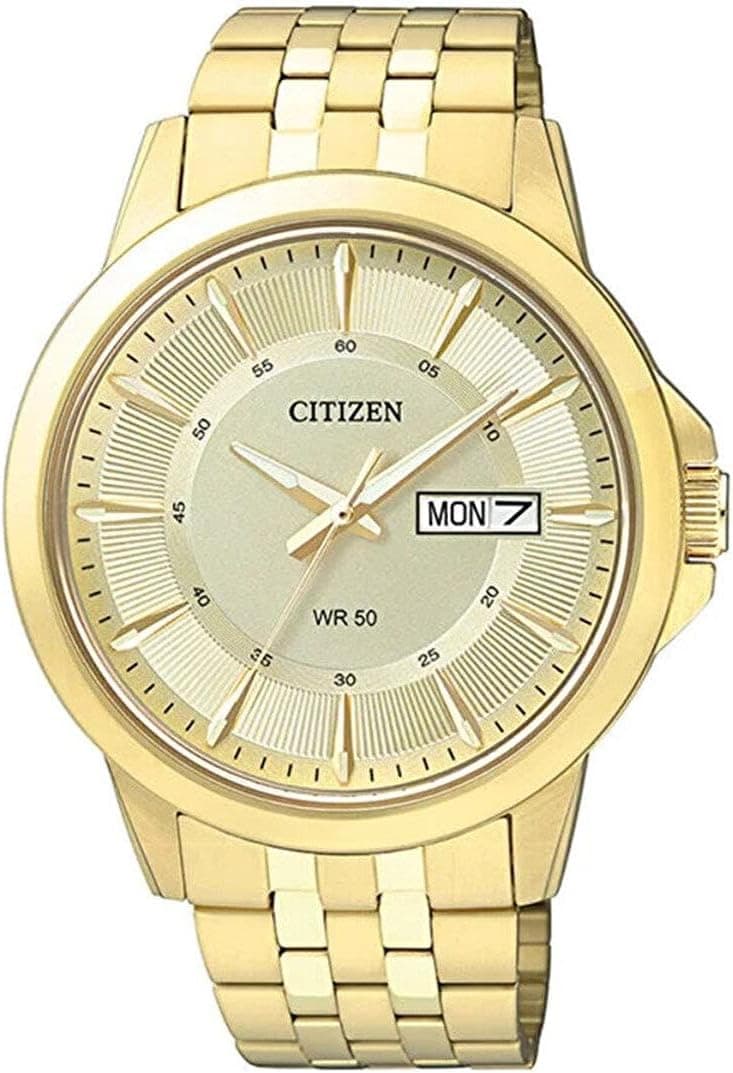


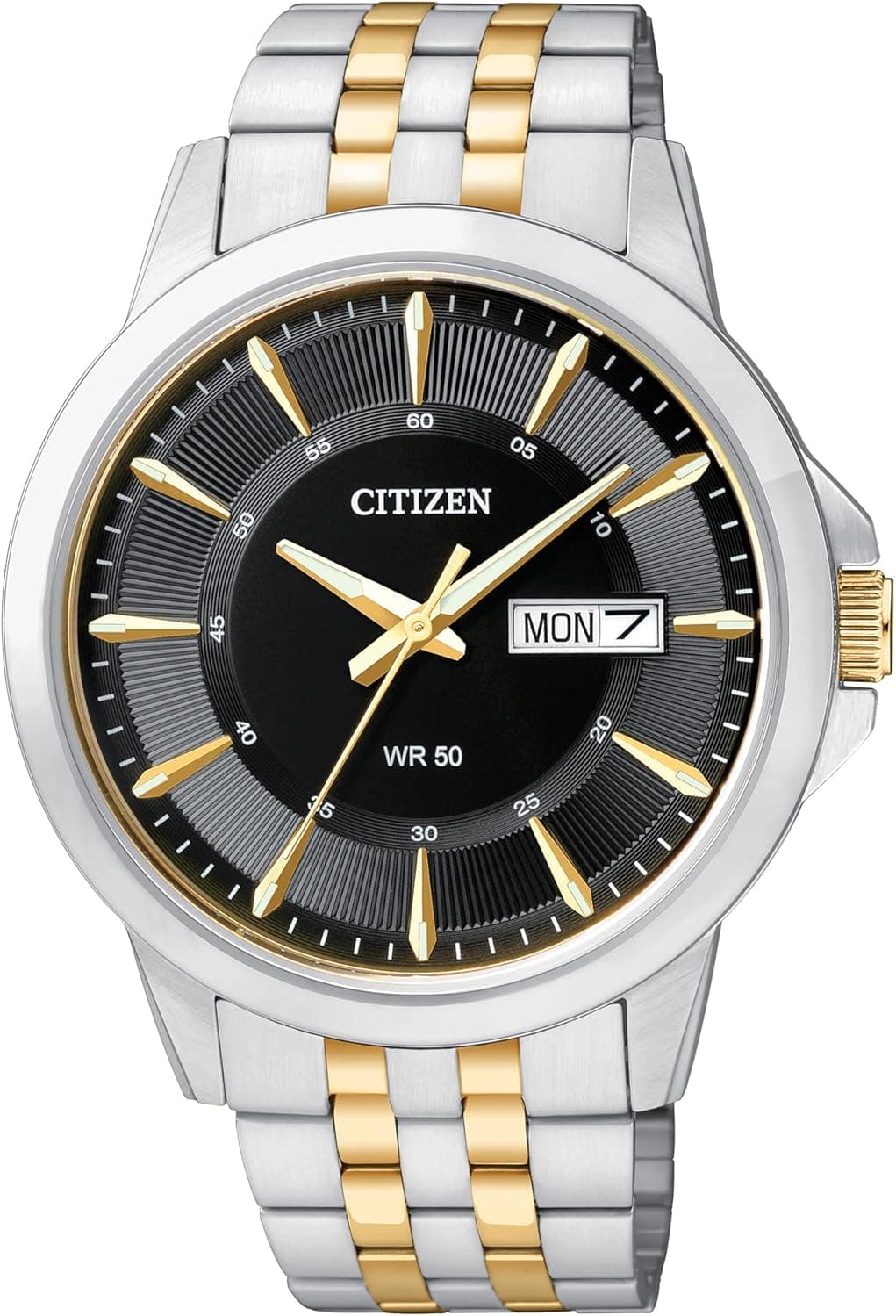
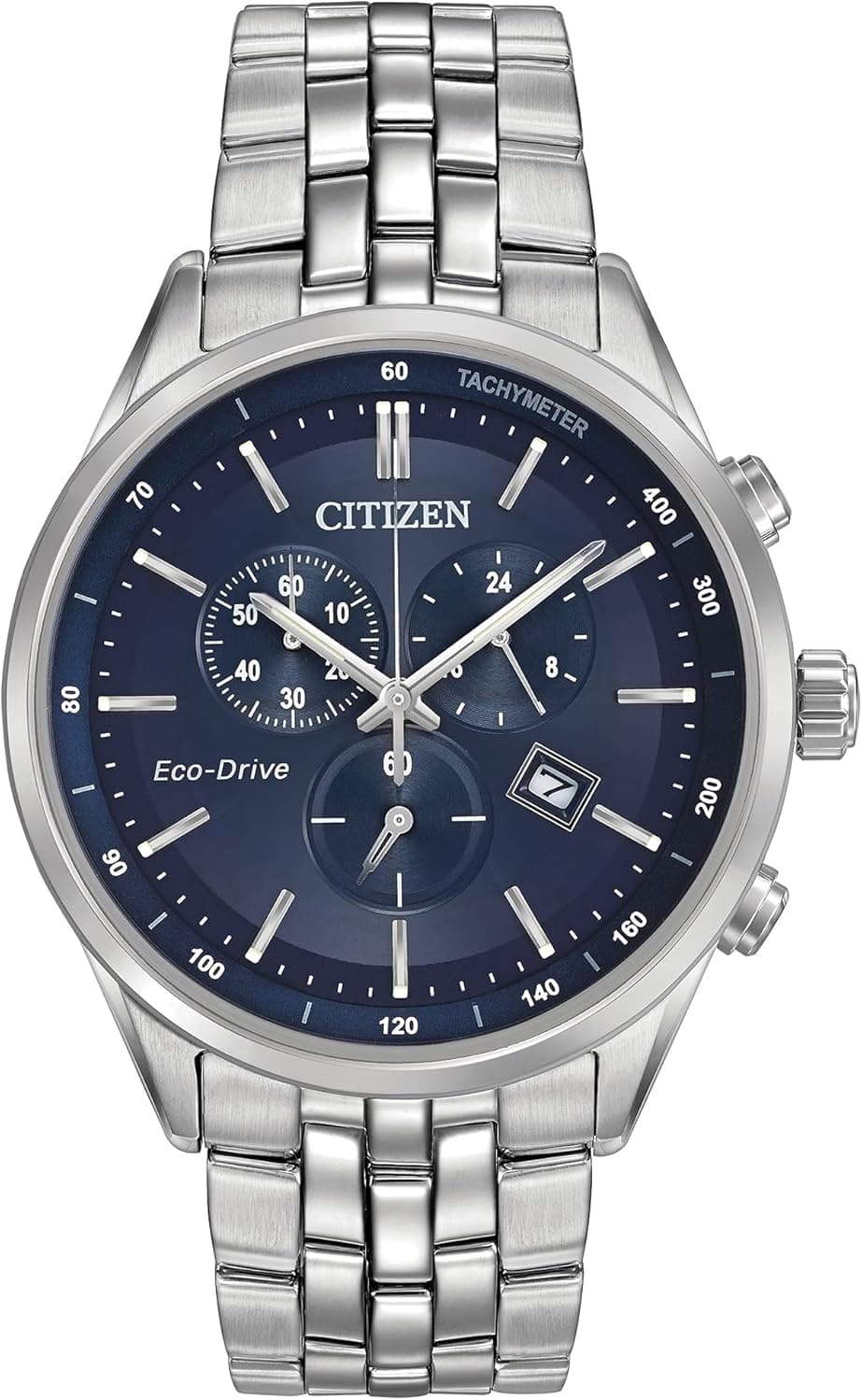
Frequently asked questions
Does Citizen Eco-Drive really never need a battery?
Eco-Drive converts light into energy through a cell under the dial and stores it in a rechargeable capacitor, so there is no disposable battery to swap. You will never schedule a routine battery change. After many years the capacitor can be replaced during service, but that is rare.
Should my first Citizen be a Promaster or a Tsuyosa?
If you prioritise water resistance, toughness and zero maintenance, the Promaster Diver makes sense: calibre E168, 200 metres and around 289 pounds. If you want the feel of a real mechanical watch with a swinging automatic rotor, the Tsuyosa NJ015 with calibre 8210 is a smart entry near 299 pounds.
Do Citizen watches hold their value?
Generally no, do not expect a meaningful secondary-market premium. You buy a Citizen to wear, not to flip. Eco-Drive and Tsuyosa models are always available at retail with no waitlist. The in-house Series 8 mechanicals hold value comparatively better, but none of these are investments.
What is the difference between Series 8 and a regular Citizen?
Series 8 is Citizen's in-house mechanical step up. The 870 runs the in-house calibre 0950 with a 50-hour reserve and noticeably better finishing, at around 1,600 pounds. Regular Eco-Drive models are quartz-based, far more affordable, and built around everyday durability rather than mechanical craft.
Is Citizen service expensive, and are parts available?
No, service is straightforward and inexpensive compared with Swiss brands. Eco-Drive maintenance usually amounts to checking the cell and refreshing gaskets. The authorised network is broad and parts availability is good; everyday Eco-Drive pieces often run for years without any intervention at all.