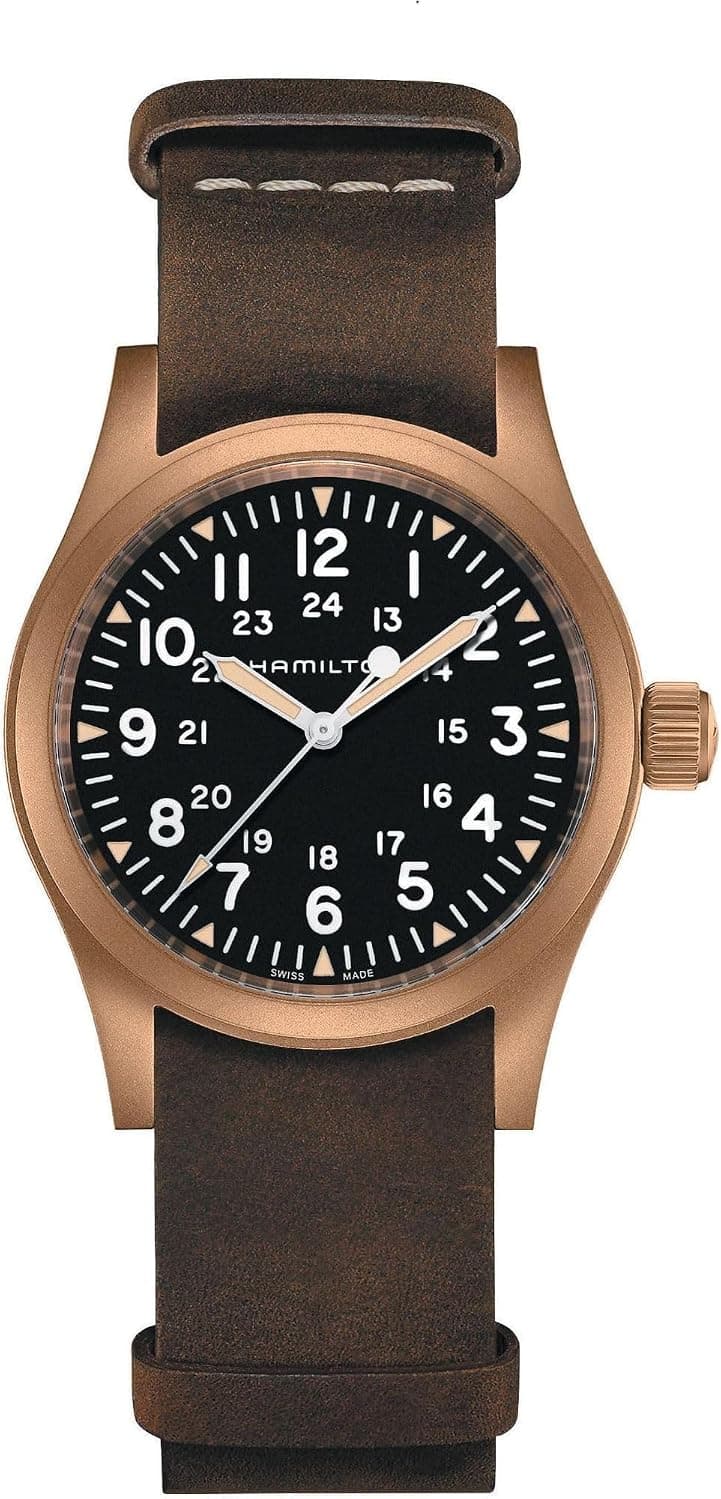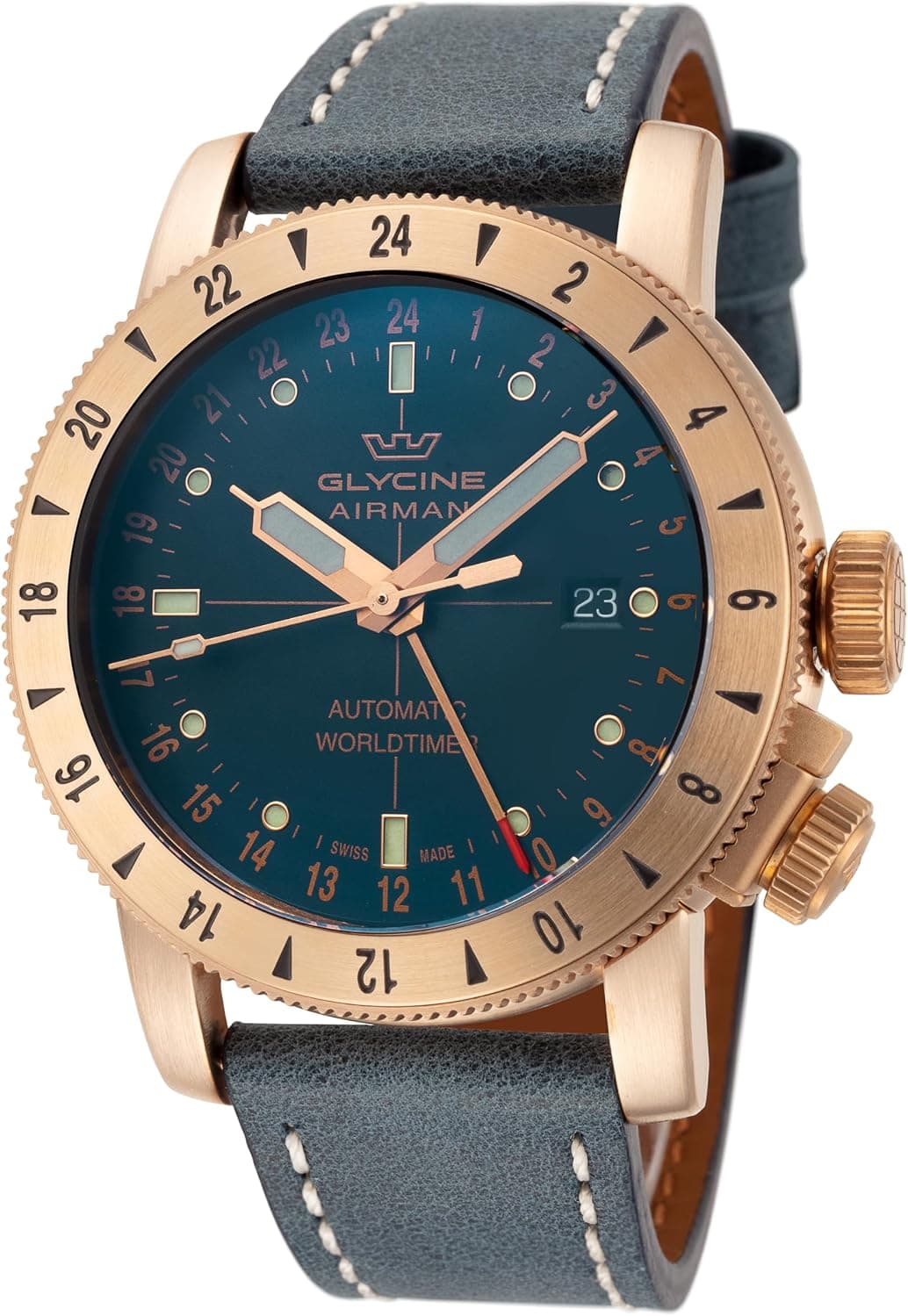
Bronze is an alloy made mostly of copper. The version that has become the watch industry standard is CuSn8: 92 percent copper, 8 percent tin. This marine-grade alloy oxidises at the surface to form a protective brown layer, the patina, and because that reaction responds to air, moisture and your own skin chemistry, no two bronze watches age quite the same way. Bronze has been used for centuries in ship fittings and marine hardware for its resistance to saltwater, which is exactly why it feels at home on a dive watch. A cheaper, harder alternative, aluminium bronze, tends to patinate to a lighter, more reddish brown.
The modern bronze trend really started with the 2011 Panerai Luminor Submersible 1950 Bronzo PAM382: a 47mm case, 300-metre water resistance, limited to 1,000 pieces. Today a 47mm Panerai Submersible Bronzo PAM968 sits around £14,800 with an in-house automatic and a three-day reserve. Lower down, the Tudor Black Bay Bronze runs about £3,550 with the in-house MT5601 calibre and a 70-hour reserve, while the Oris Big Crown Pointer Date Bronze, with a full bronze case and several dial colours, lands around £1,900. Christopher Ward's C65 and C60 bronze divers, mostly Sellita-based and often COSC-certified, make a strong entry point near £1,150.
A few practical things matter when you buy. The caseback is almost always stainless steel or titanium, kept separate so the bronze does not sit against your skin; bronze can leave a greenish mark or irritate when you sweat. Learn to tell the desirable warm brown patina from verdigris, the bright turquoise copper corrosion you see on the Statue of Liberty, which is decay, not character. If you want a case that stays bright and uniform, bronze is the wrong choice, because the patina is the point. If you value warmth, character and an object that visibly changes with you, bronze becomes more yours with every wear.
You can also steer the patina if you like. Some owners let it age naturally, some force it along with vinegar or egg fumes, and others polish it back to keep the case clean. On bronze bracelets, brands such as Zelos use outer CuSn8 links that patina alongside inner 316L steel links, balancing the look against skin comfort. The honest way to judge a bronze watch is not how it looks in the case, but how it will look after five years on the wrist.