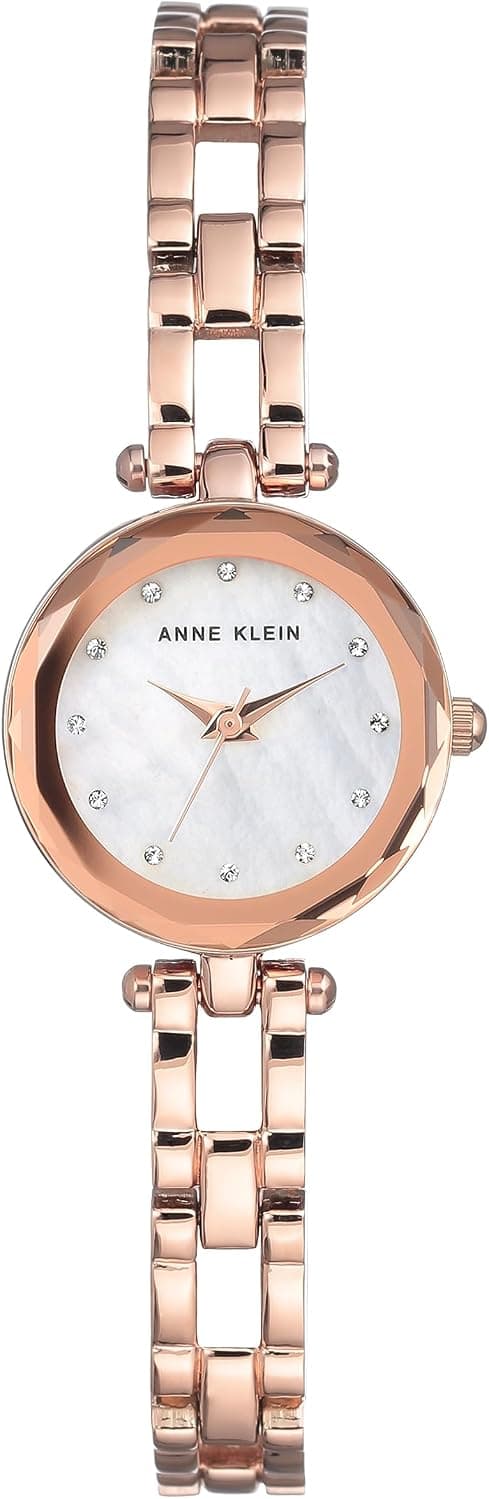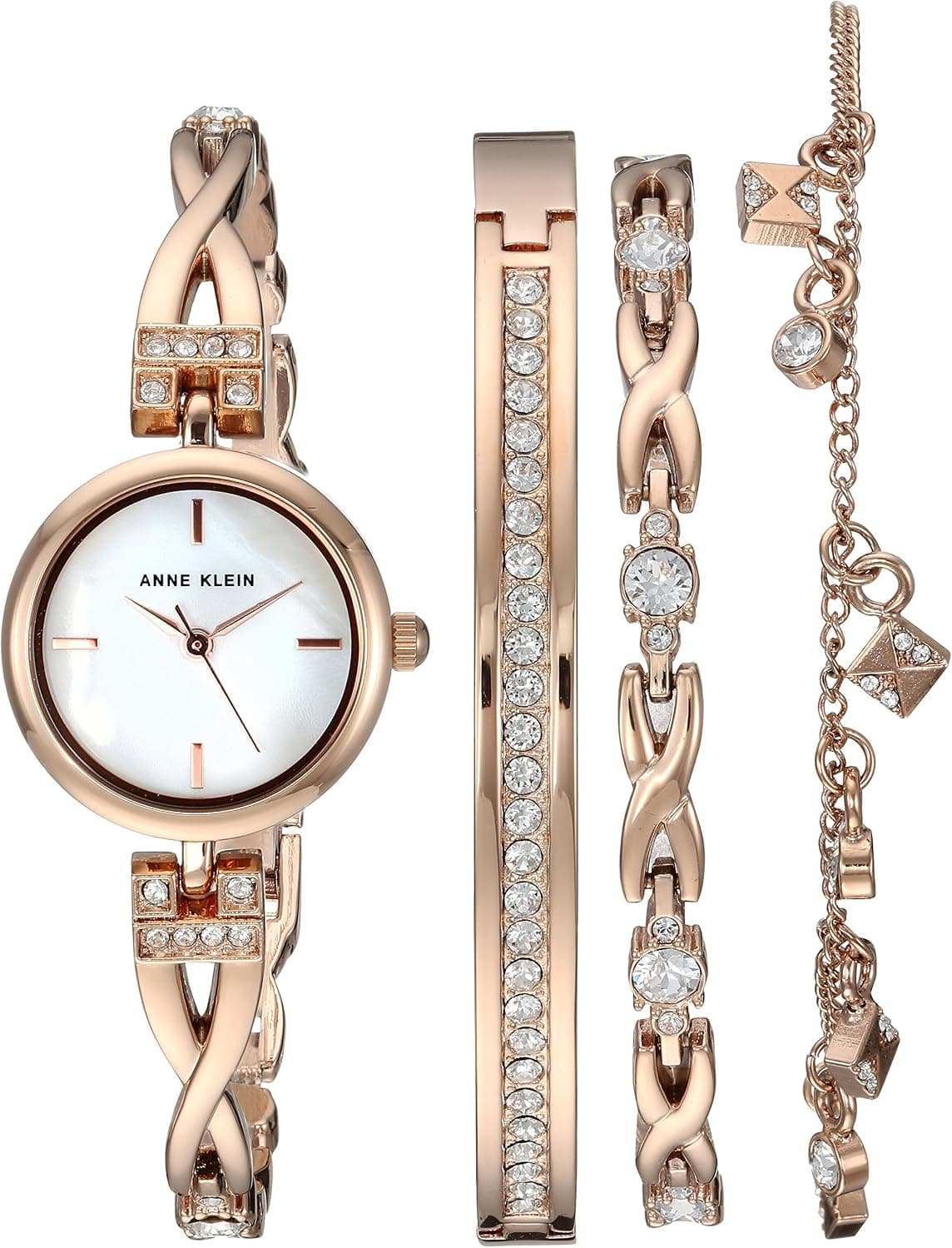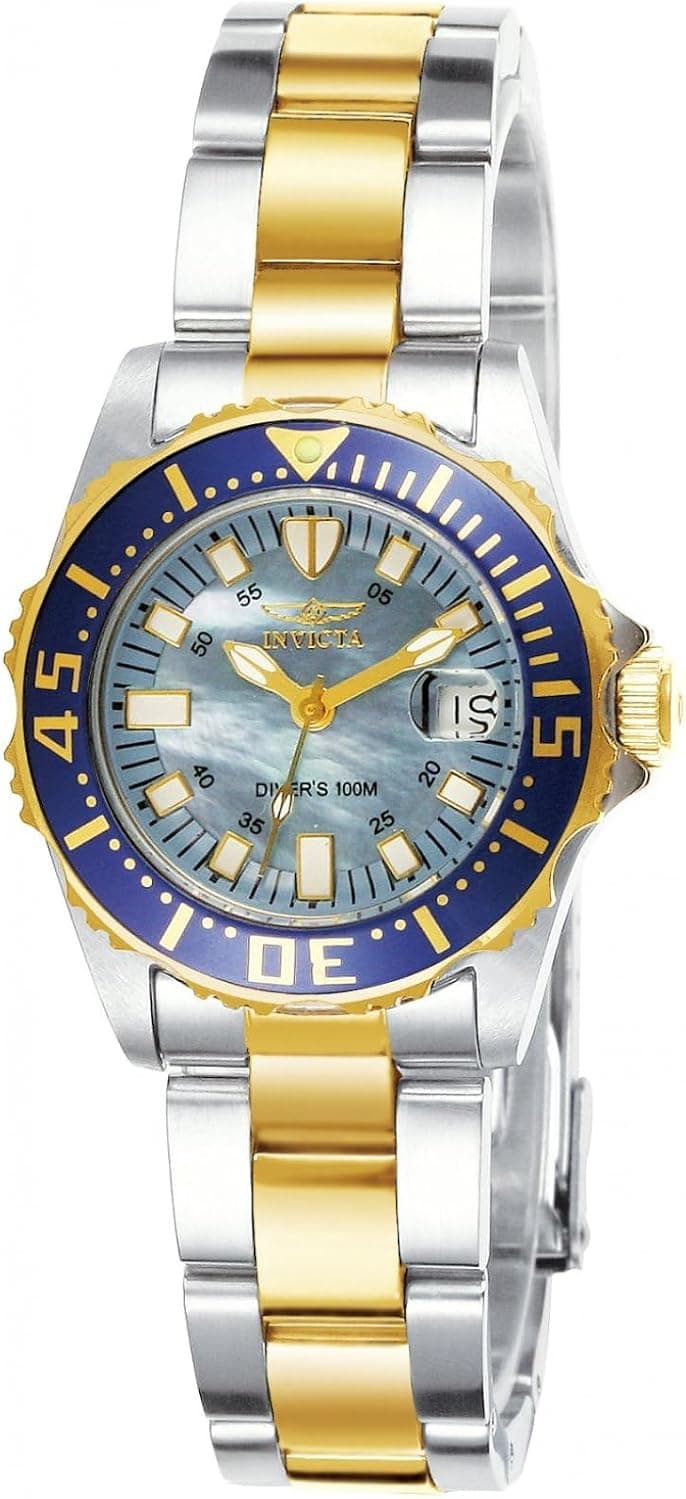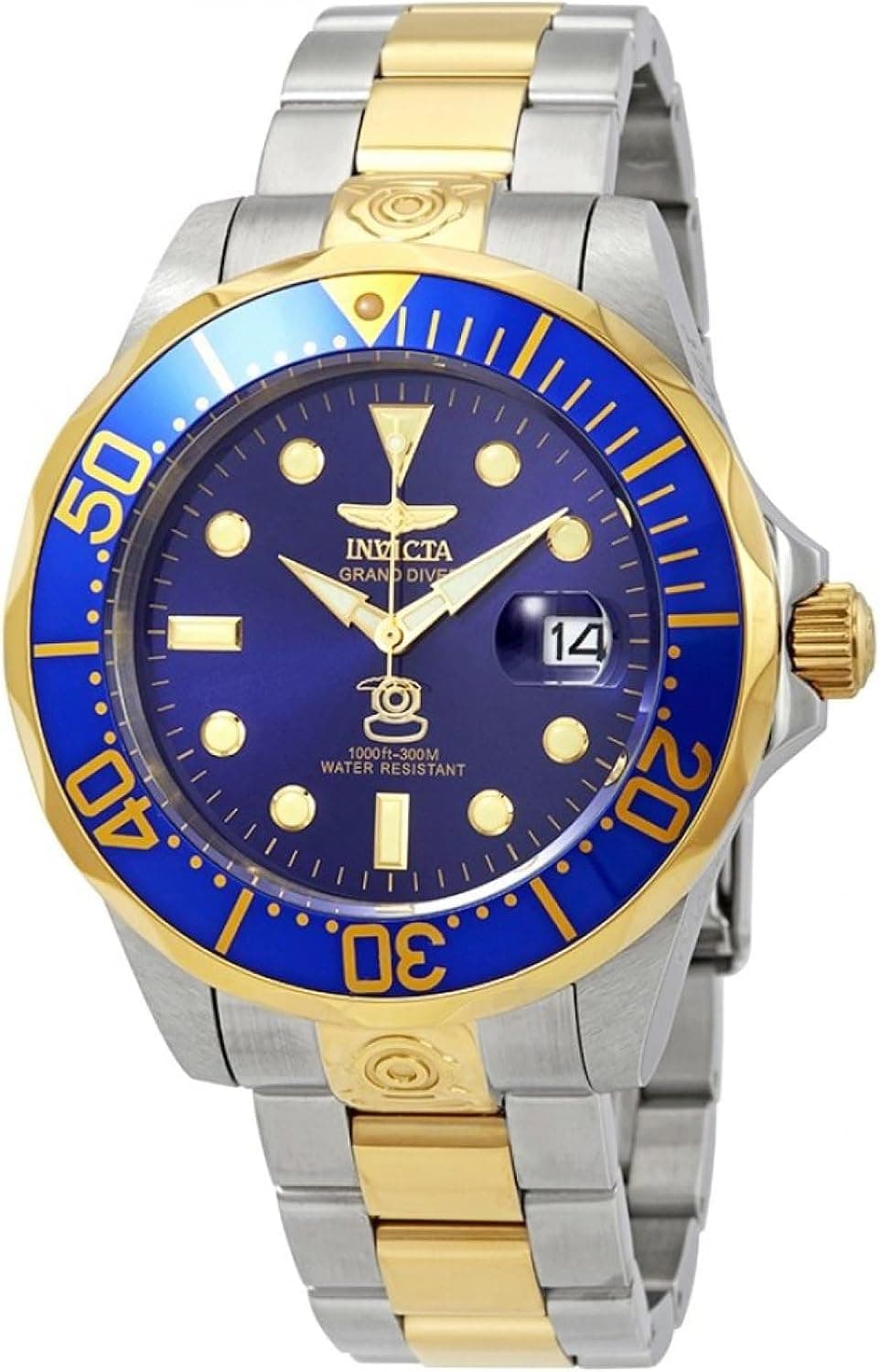
Mother-of-Pearl is cut from the nacre that lines the inner shell of molluscs such as oysters and abalone. That layer is built from microscopic calcium carbonate crystals, and the way light bounces between them creates the iridescent glow, the same thin-film interference that shifts the surface from white to pink to green to blue as you tilt your wrist. Because it is a natural material, no two dials are ever identical. Slicing the nacre thin and shaping it into a dial is fragile, patient work that can take weeks per piece, which is exactly what separates a real Mother-of-Pearl dial from a lacquered or sunray substitute.
Real examples sit across every price tier. Rolex fits factory Mother-of-Pearl to the Datejust in 31, 36 and 41mm, plus the Day-Date, Daytona and Pearlmaster, with prices running roughly £3,400 to £32,000 depending on metal, size and diamond setting. The Omega Seamaster Aqua Terra 150M offers a 34mm case with white or coloured nacre and diamond indexes, driven by the Co-Axial Master Chronometer calibre 8800, around £4,000 pre-owned. Grand Seiko pairs a pale-blue Mother-of-Pearl dial with Spring Drive calibre 9R65 in the SBGA407 Skyflake at roughly £4,600. Higher up, the Breguet Classique Dame 9065 Tahitian uses dark Tahitian nacre in 18k rose gold, limited to 28 pieces near £22,000, while a Cartier Ballon de Cartier in rose gold with a Mother-of-Pearl dial lands around £24,500.
When you shop, look closely at the natural veining and the play of colour; avoid the flat, dead plastic imitations found on cheap pieces. Because nacre is translucent rather than opaque, the base plate beneath it influences the final hue, so view the watch under several light sources before deciding. It scratches a touch more easily than lacquer, but the crystal protects it in daily wear, so this is rarely a practical worry. Models around £400 from Tissot, Seiko Presage and Frederique Constant make sensible entry points, and the look suits anyone, men and women alike, who wants a luminous, refined dial without shouting.
Knowing the variations helps. Classic white nacre is the most common and the most versatile. Tahitian Mother-of-Pearl comes from the black-lip oyster (Pinctada margaritifera) of French Polynesia and yields darker, dramatic dials in grey, charcoal and even green-purple tones. Pink, blue and champagne dials are usually tinted effects created by the base under the translucent shell. Whichever tone you choose, the appeal of Mother-of-Pearl is that it is never standardised: the dial on your wrist is genuinely one of a kind.