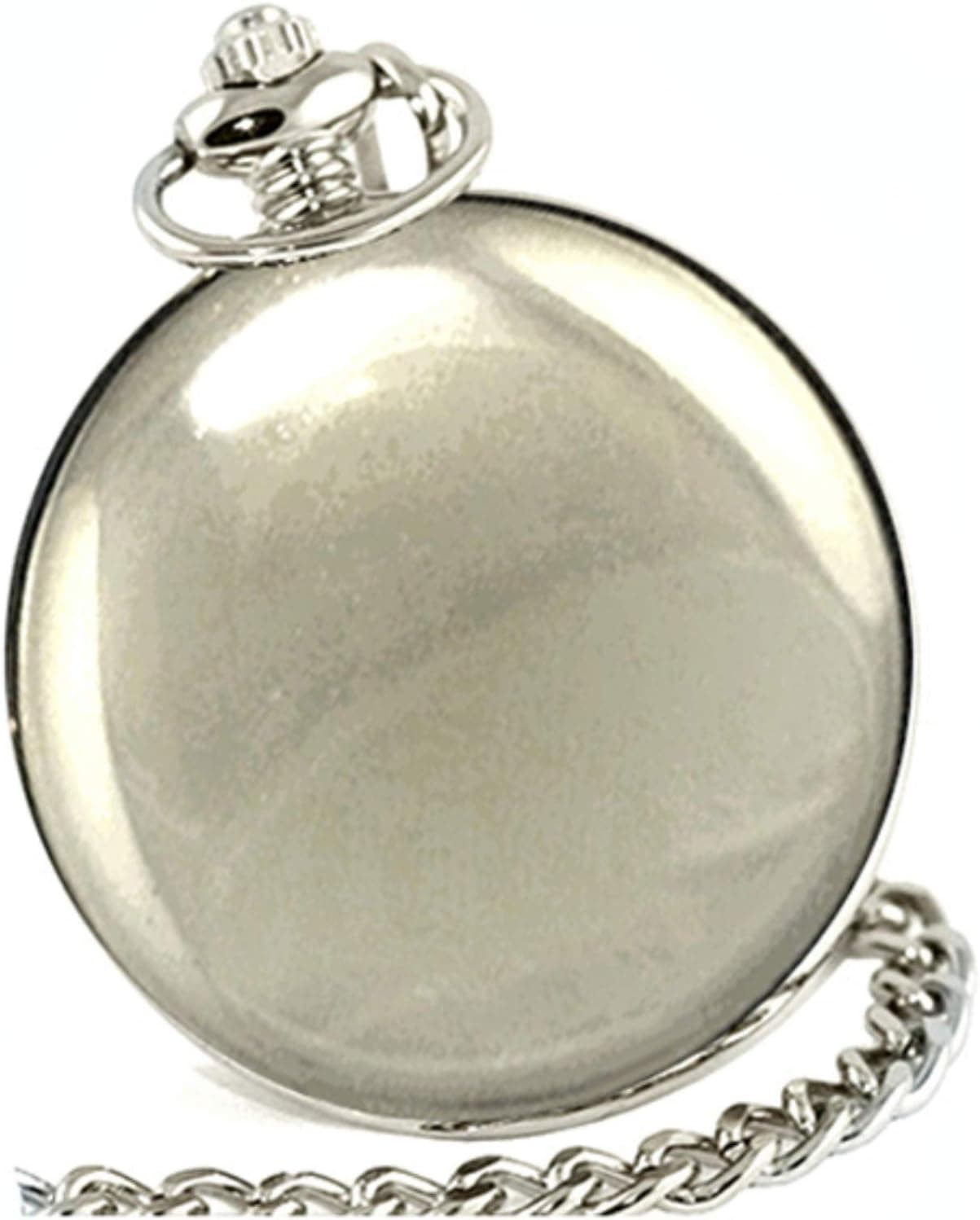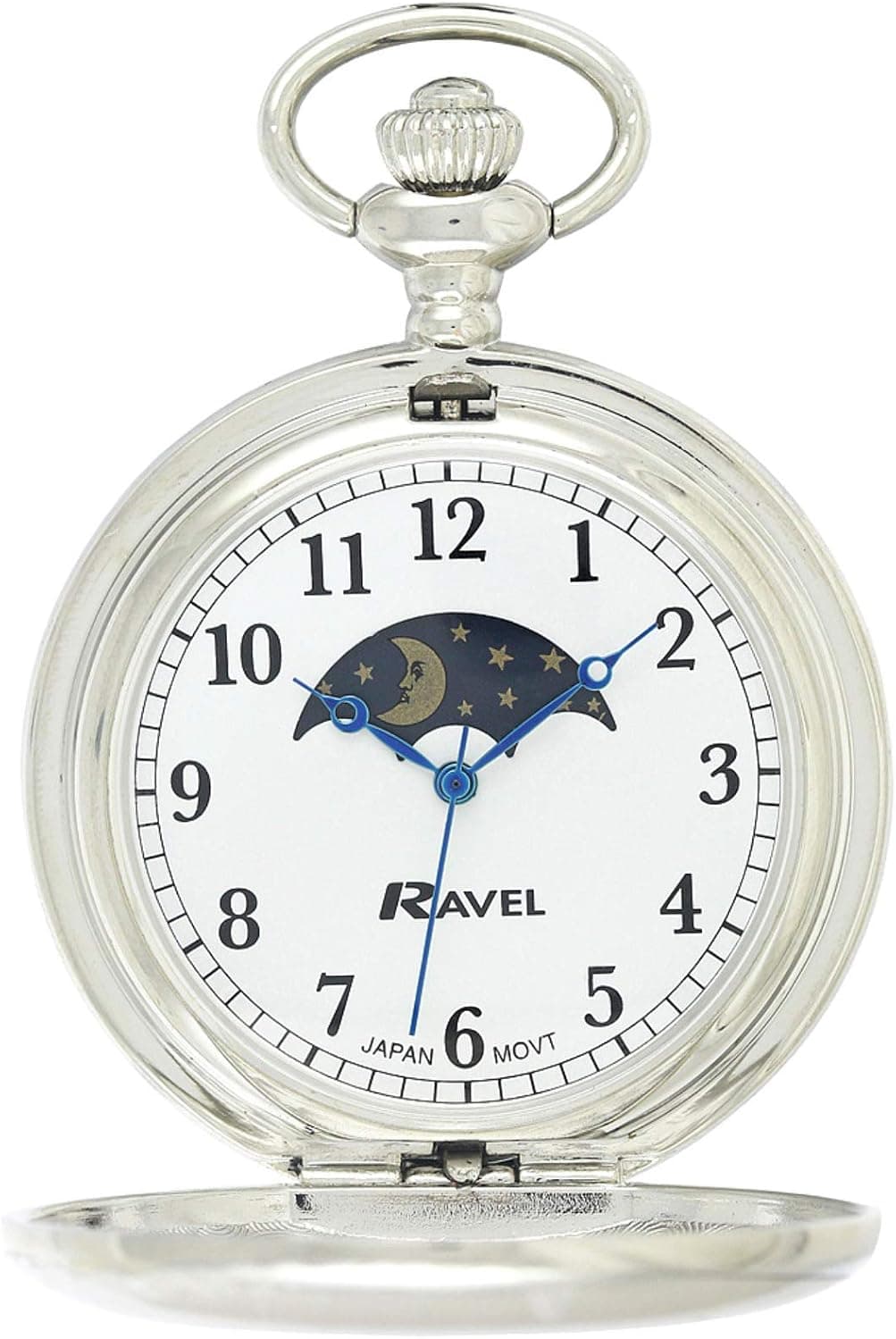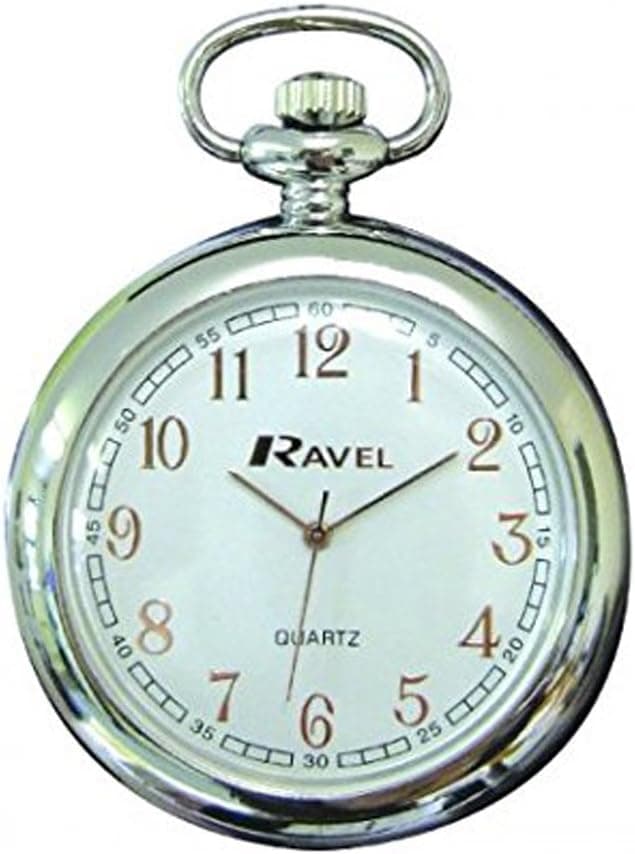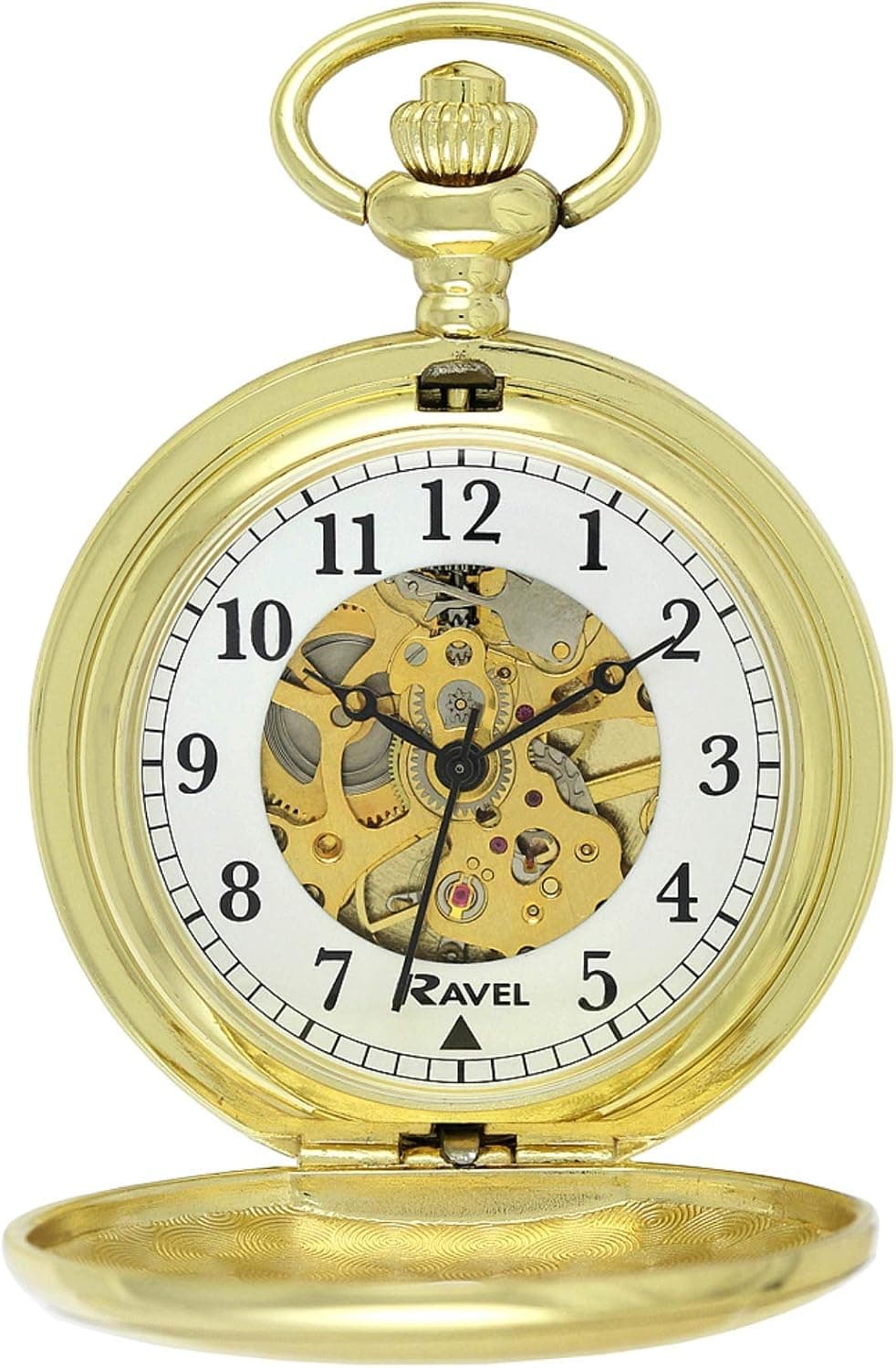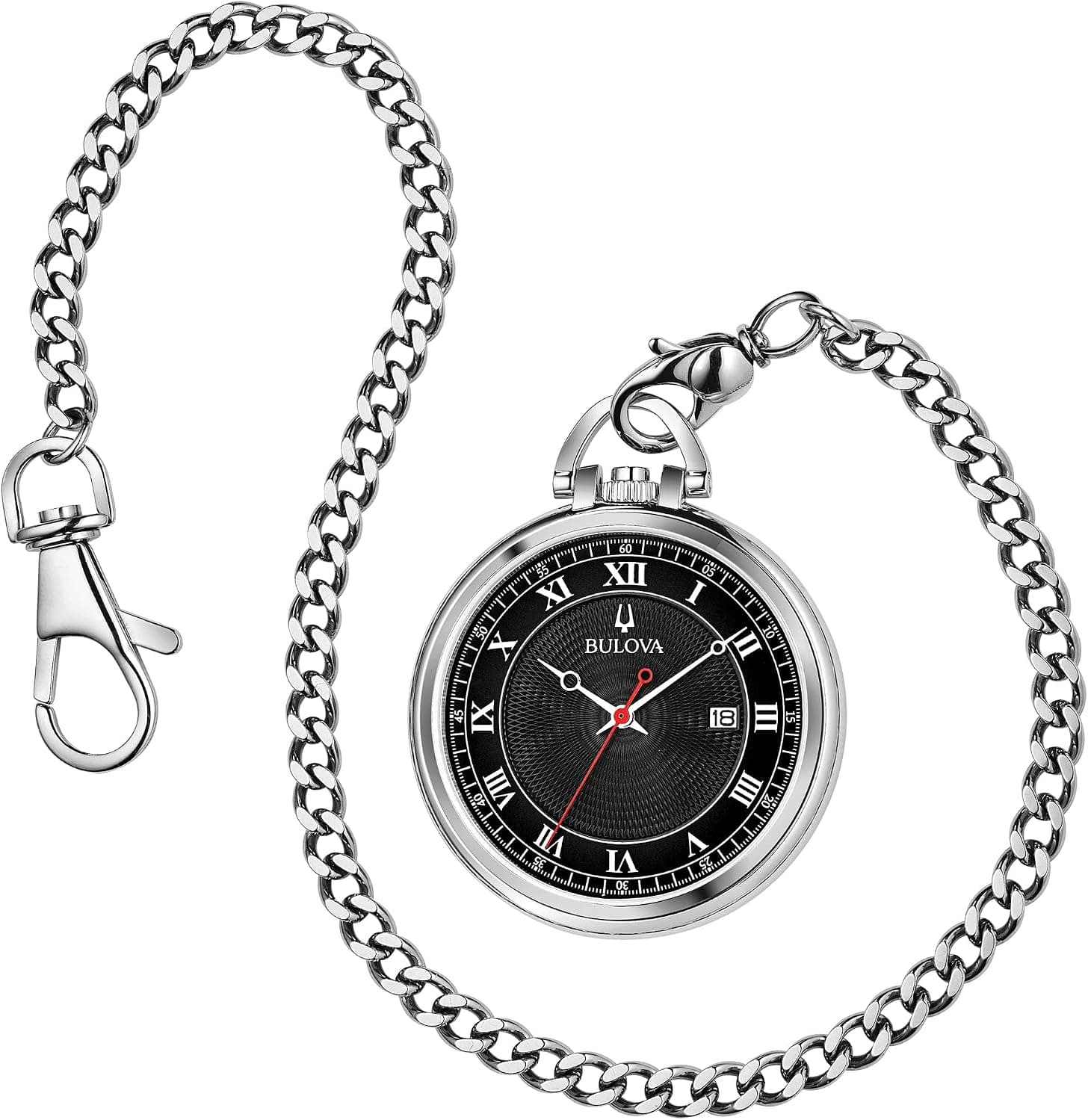
Pocket Watches were the dominant form of timekeeping from the 16th century until the early 1900s, and they remain the oldest watch type still in production. Two case styles define the field: the open-face (Lepine), which leaves the dial fully exposed, and the hunter, or Savonnette, which protects the dial under a spring-hinged metal lid. On a Lepine the crown sits at 12 with the small seconds at 9; on a Savonnette the small seconds shifts to 6. The earliest examples were key-wind and key-set; stem winding and stem setting arrived around 1850, an advance attributed to Patek Philippe. The railroad-grade standards adopted in 1893 demanded an open-face case, size 16 or 18, a minimum of 17 jewels, adjustment in at least five positions, and accuracy within 30 seconds a week, and after roughly 1908 lever setting became mandatory to prevent accidental time changes.
The most accessible way in today is Tissot. The T-Pocket Savonnette (ref T8674051901300) pairs the hand-wound ETA 6498-1 with a 316L steel case, a white Roman-numeral dial, and small seconds at 6, landing around £800. The Bridgeport Lepine uses the open-face ETA Unitas 6497-1 and sells for less. The vintage market is where the soul lives, and American railroad watches sit at its centre: Hamilton examples run roughly £1,250 to £5,400, Elgin and Waltham around £1,950 to £2,200, and Ball from £2,600 to £3,000. The 21-jewel Ball Grade 999B, made around 1947, is among the most sought-after railroad pieces. At the very top sit multi-million-pound grand complications such as Vacheron Constantin's 57-complication ref 57260 and the 63-complication Les Cabinotiers Berkley revealed in 2024.
Start by deciding what you actually want. A new Tissot is the sensible entry: robust, serviceable anywhere, and a clean way to feel hand-winding without vintage risk. For a vintage railroad watch, prioritise an honest dial, a working lever set, the correct original stem, and documented service history. Refinished dials and mismatched case-and-movement marriages gut the value, so have a specialist verify the movement against its serial number before you commit. A tired Savonnette hinge or lid spring is expensive to fix, which makes open-face pieces the lower-maintenance choice, though their crystal is more exposed.
Who is it for? Anyone chasing ritual rather than speed. If you enjoy the chain, the waistcoat, the deliberate act of winding, you will stay in this world. Open-face suits daily carry and quick reading; the hunter rewards those who want protection and mechanical satisfaction. The 2.5 Hz 6497/6498 family gives a calm seconds beat, so do not expect COSC-grade chronometry. Whatever the budget, put quality ahead of quantity: one good watch says more than ten ordinary ones.