


TissotMidrange
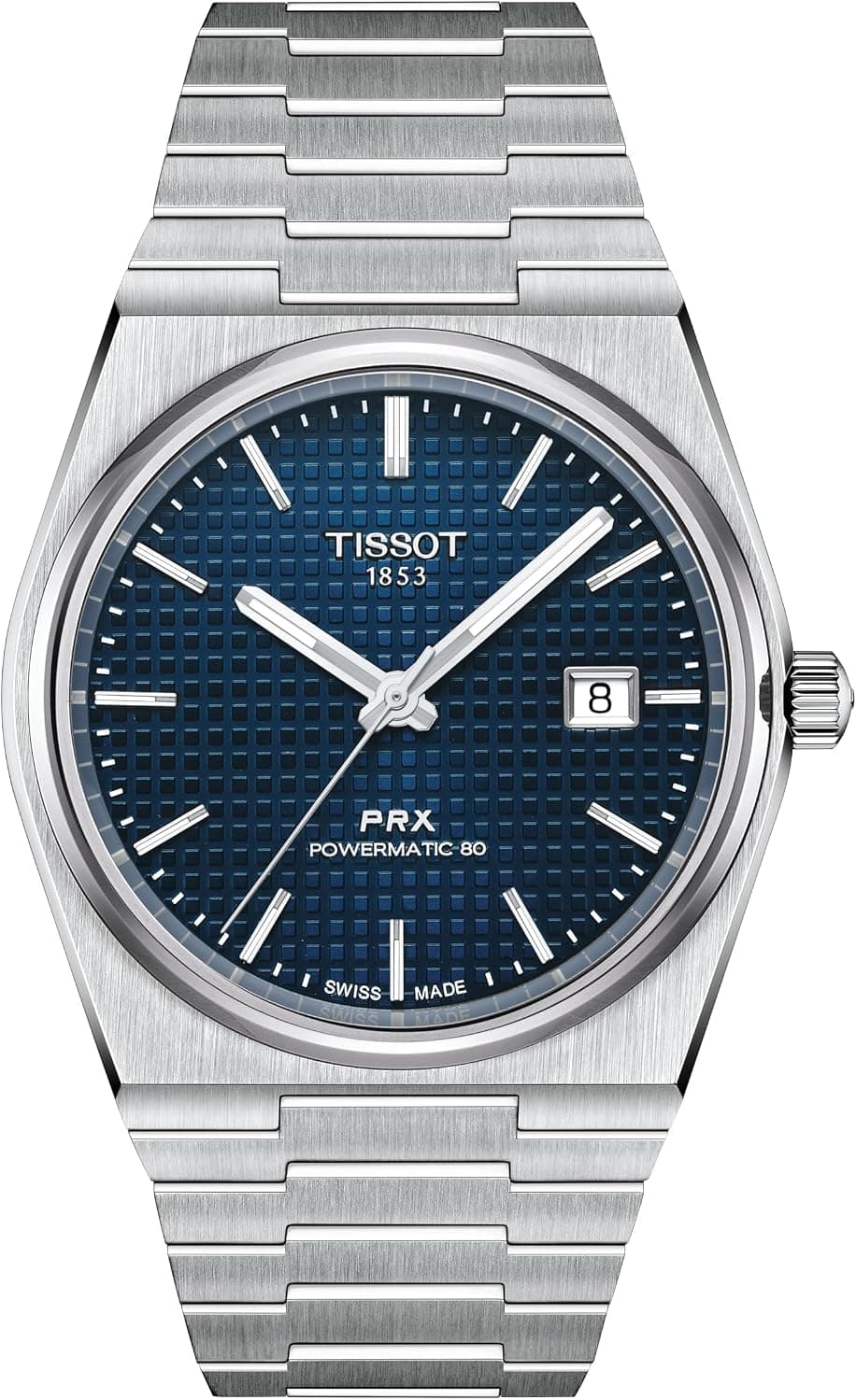
Maker founded by Charles-Félicien Tissot in Le Locle in 1853; the PRX Powermatic 80 (2021) brought integrated-bracelet sport-luxury to the entry tier with 80-hour power reserve.
Founded in Le Locle in 1853 and now part of the Swatch Group, Tissot is the most sensible entry into Swiss mechanical watchmaking, pairing the 80-hour Powermatic 80 caliber with prices that stay grounded in the midrange.
Tissot was founded in 1853 in Le Locle, in the Swiss Jura, by Charles-Felicien Tissot and his son Charles-Emile, and the brand is still headquartered in that same town. The father was a casemaker and the son a watchmaker; Charles-Emile soon opened up the Russian market and set the export habit that still defines the house. Early on, Tissot built a reputation on mass-produced pocket watches and dual-time-zone pieces. Today, as part of the Swatch Group, Tissot has direct access to ETA's manufacturing, which is exactly why it can offer genuine mechanical value at this price.
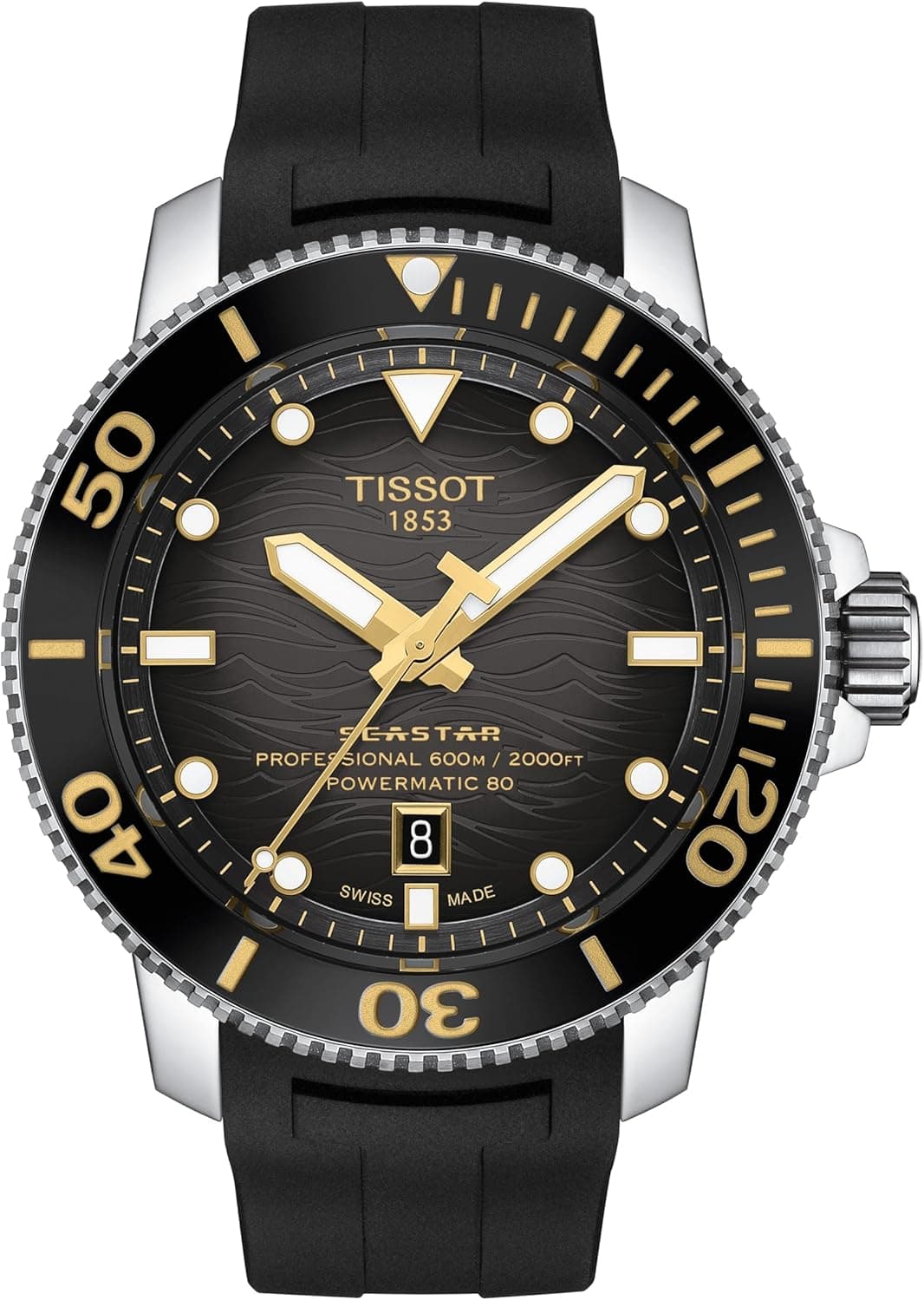
The backbone of the catalog is the Powermatic 80 caliber, an automatic built on the ETA C07.111 base, running at 21,600 vph with roughly 80 hours of power reserve. Most models carry a Nivachron antimagnetic hairspring, while the Silicium variants use a silicon balance spring. The watch that put Tissot back on enthusiasts' radar is the PRX Powermatic 80 40mm (the blue dial is ref T137.407.11.041.00), retailing around $650 to $825. The Seastar 1000 Powermatic 80, with 300 meters of water resistance, a unidirectional ceramic bezel and a sapphire crystal, runs roughly $700 to $875, while the dressy Le Locle Powermatic 80 with its clous de Paris dial sits between $420 and $750. The Gentleman Powermatic 80 Silicium (ref T127.407.11.041.00) lands around $710 to $875, and the automatic PRX Chronograph, powered by the Valjoux A05.H31, climbs to roughly $1,750 to $2,045.
From a collector's seat, you don't buy Tissot expecting it to appreciate; you buy it because it delivers a solid Swiss mechanical on day one for sensible money. The PRX line has held up relatively well on the secondary market since its 2021 resurgence, while the other collections typically trade below retail, which is good news if you're shopping used. When buying, check the obvious things: original box and warranty card, link wear on the integrated bracelets, any moisture marks on the dial, and whether the movement actually holds its full 80-hour reserve. A complete service through Swatch Group centers costs roughly $130 to $305 and comes with a two-year warranty on the movement.
In the modern era, Tissot also runs a parallel track with the T-Touch Connect Sport, a solar-recharged quartz connected watch with a titanium case and a tactile sapphire AMOLED display, priced around $995 to $1,075. The brand is easy to recommend for a first serious watch, because it offers a real Swiss-made mechanical caliber, backed by a deep service network, at a fraction of what luxury houses charge.
Tissot watches


Frequently asked questions
Which Tissot should I buy first?
For most people the PRX Powermatic 80 40mm is the most balanced entry: integrated bracelet, sapphire crystal, and an 80-hour power reserve for around $650 to $825. If you want a diver, look at the Seastar 1000; if you want something dressy, the Le Locle is the better call.
Do Tissot watches hold their value?
Generally no; Tissot isn't an investment piece. The PRX line has held up relatively well since its 2021 surge, but the other collections typically trade below retail on the secondary market. That actually works in your favor if you're happy buying pre-owned at a discount.
How much does a Tissot service cost?
A complete service through Swatch Group centers runs roughly $130 to $305 and includes a two-year warranty on the movement. For an automatic Tissot the interval is usually every few years; if you wear it daily, don't skip the water-resistance test during service.
Is the Powermatic 80 caliber reliable?
Yes. The Powermatic 80 is built on the ETA C07.111 base, derived from the proven ETA 2824 architecture, so it's a solid automatic. It offers around 80 hours of reserve and, on most models, a Nivachron antimagnetic hairspring that resists everyday magnetic exposure well.
What's the difference between the PRX Powermatic 80 and the PRX Chronograph?
The Powermatic 80 is a three-hand automatic at around $650 to $825. The PRX Chronograph is a genuine automatic chronograph powered by the Valjoux A05.H31, with a thicker case, and climbs to roughly $1,750 to $2,045. If you don't need a chronograph, the Powermatic 80 is plenty.