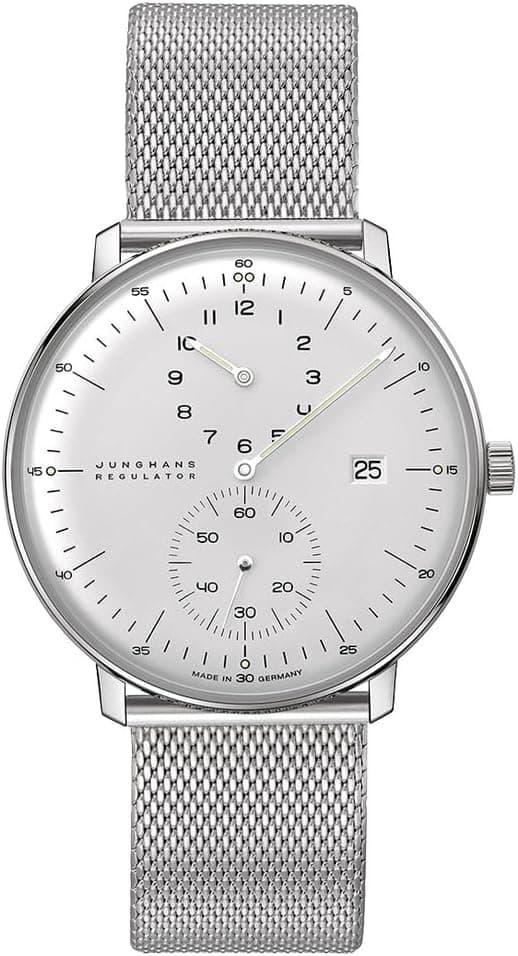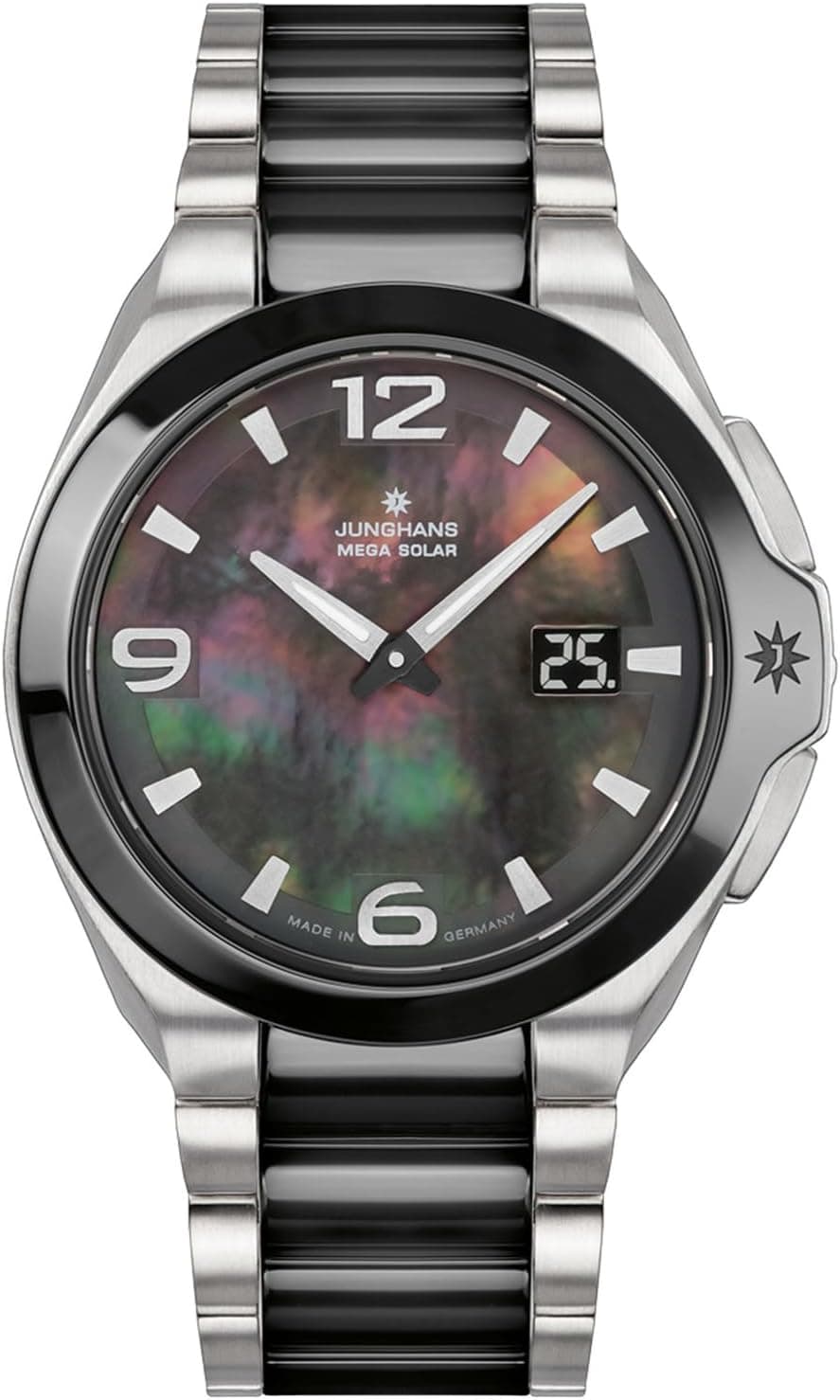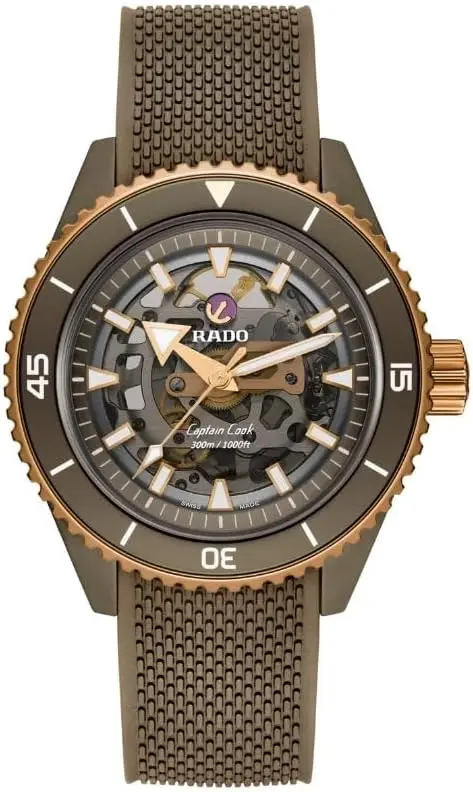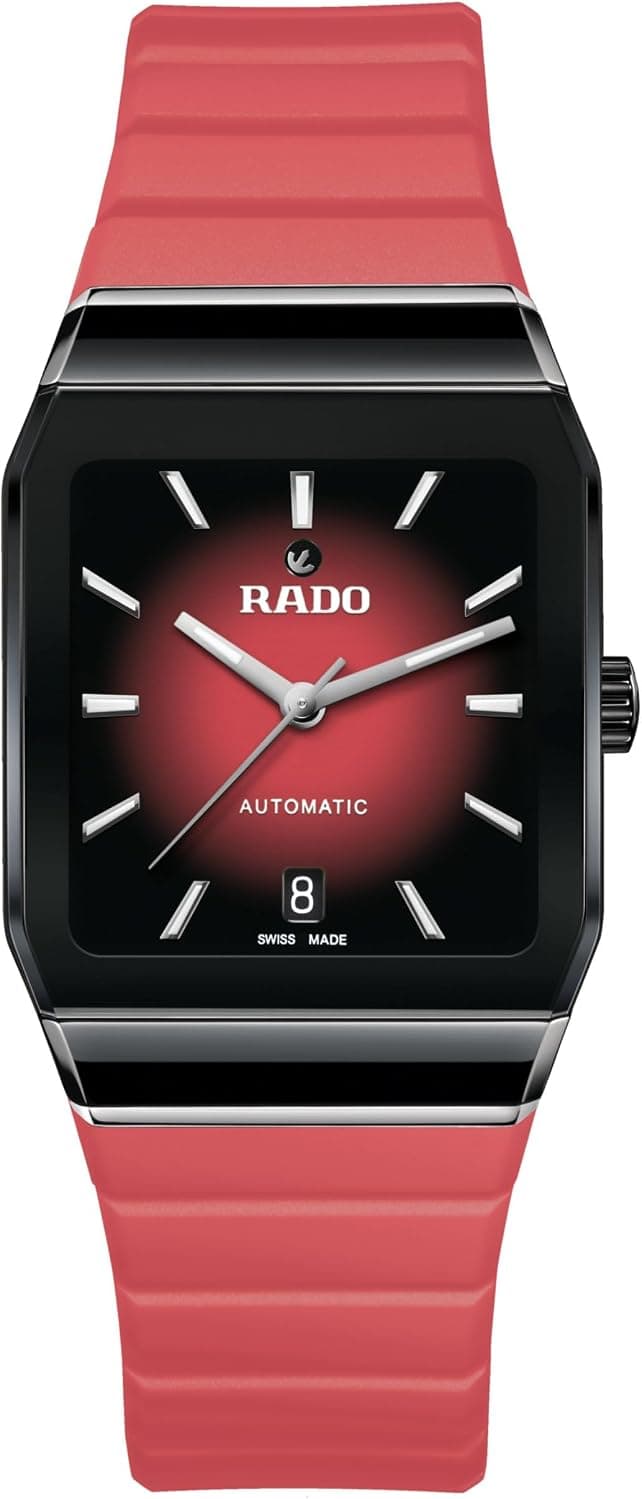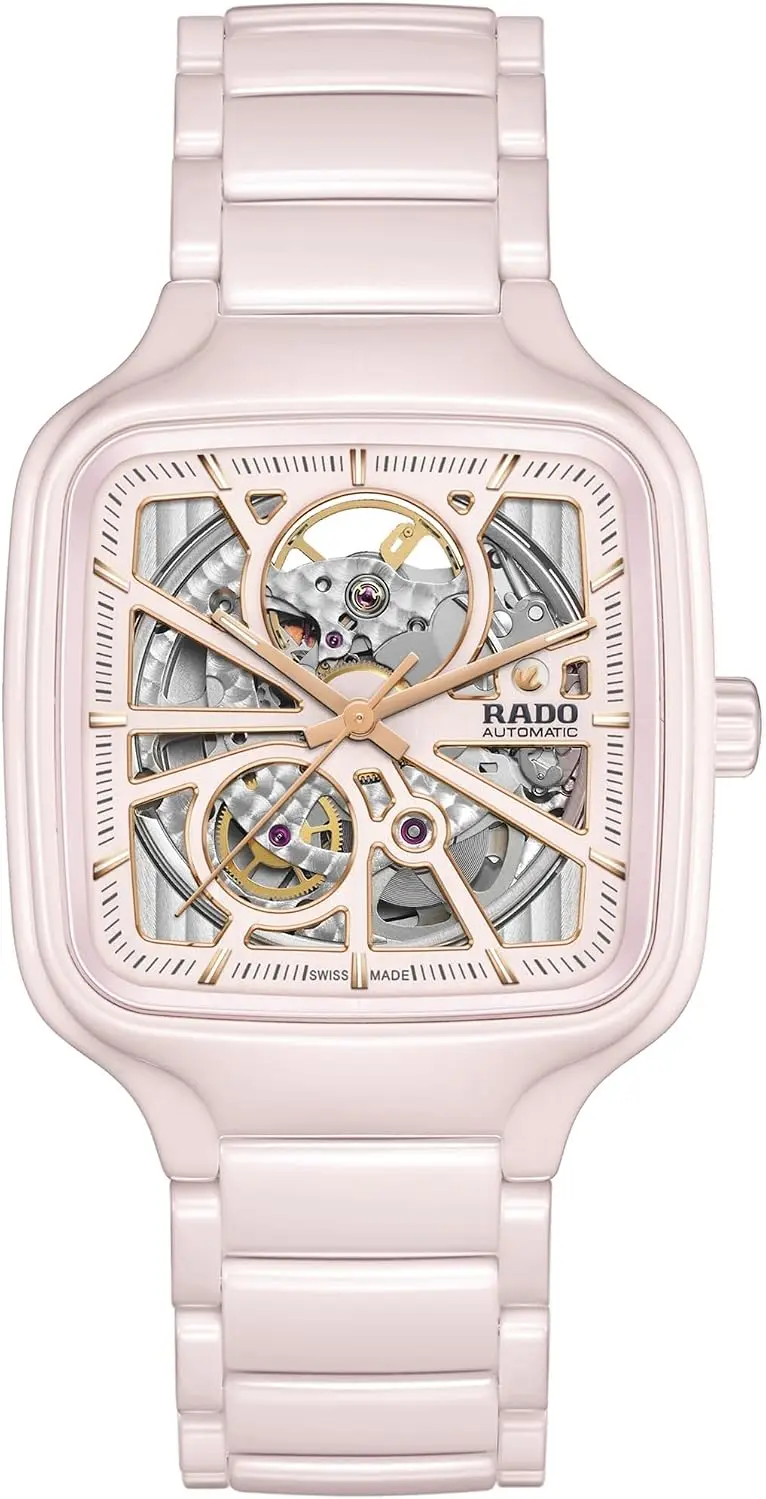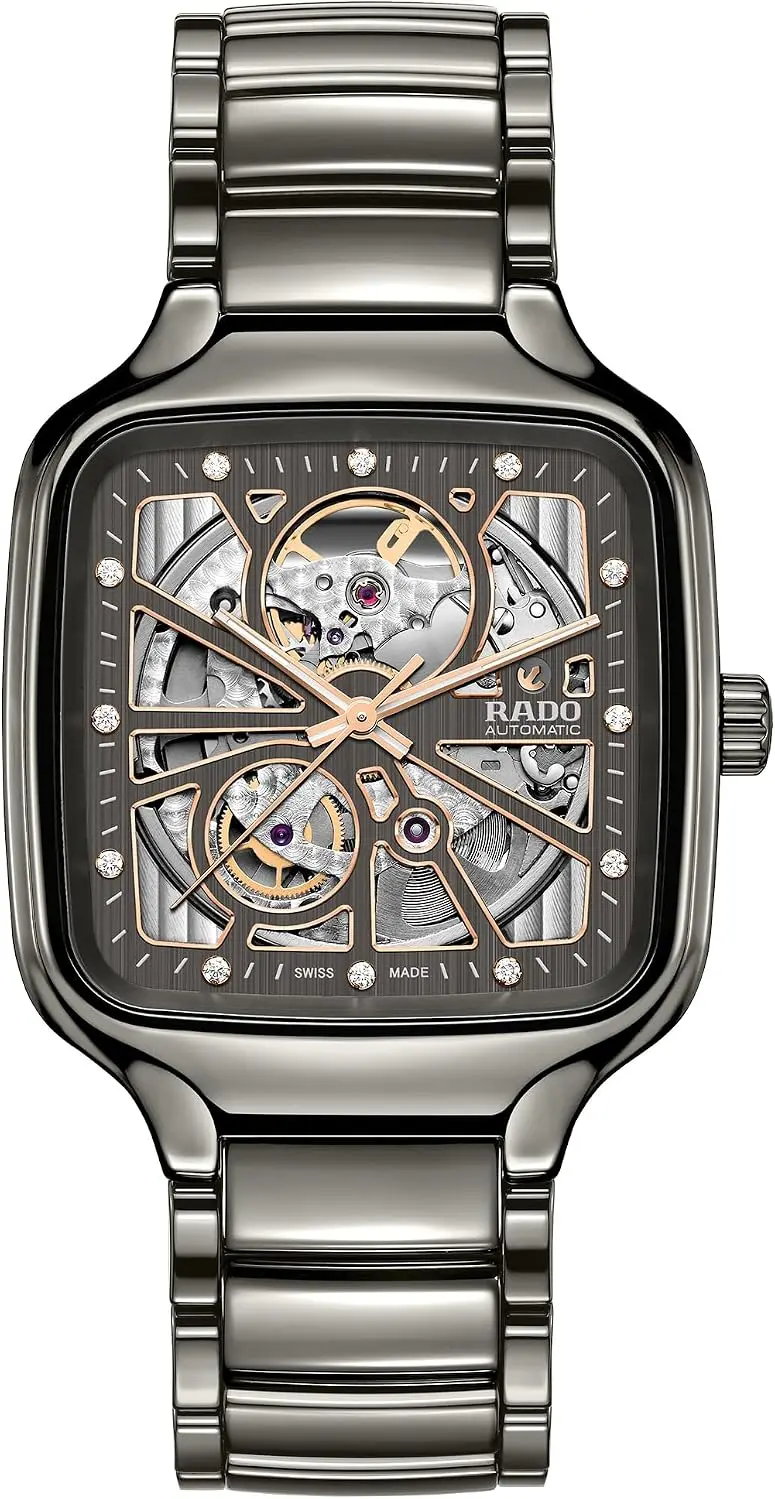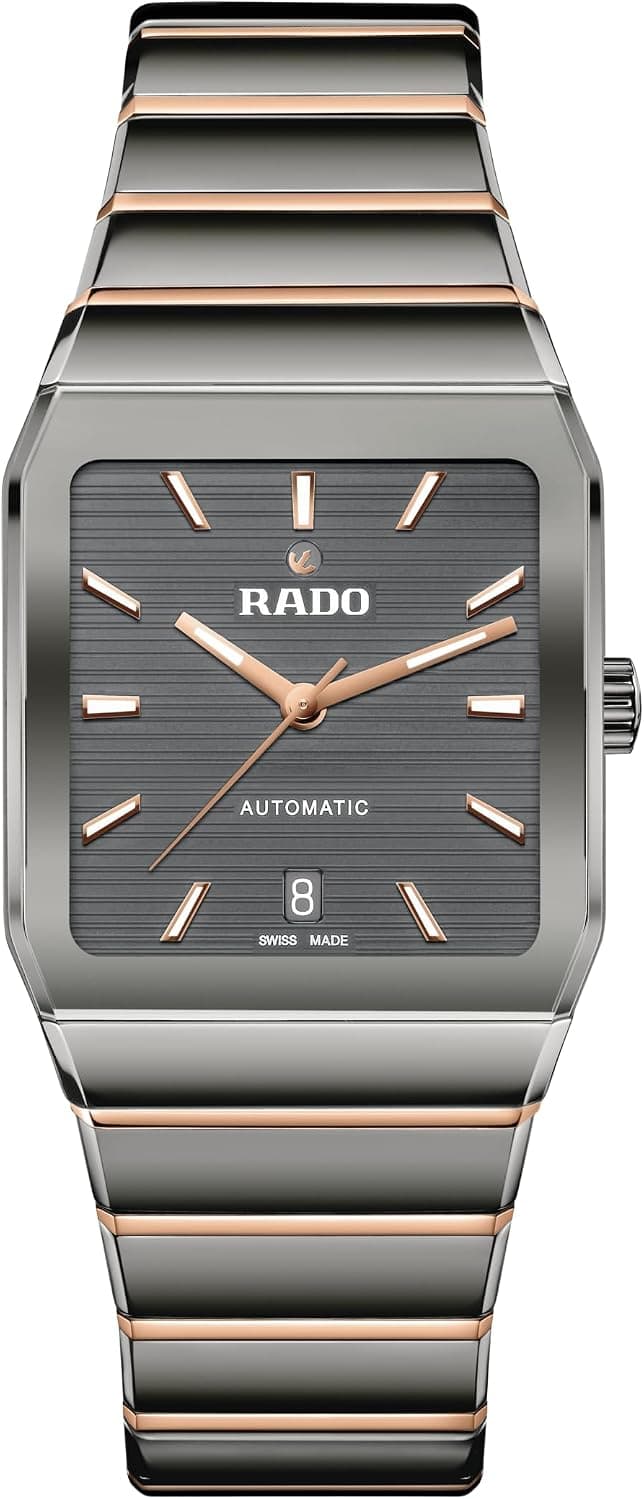
Ceramic in watchmaking means a case built by sintering zirconium oxide powder at high heat into a dense, extremely hard material. On the Vickers scale, high-tech ceramic sits around 1,250, well above steel at roughly 200, gold near 150 and grade 5 titanium around 300, so it shrugs off the everyday scratches that dull a steel case. Rado opened the door in 1962 with the tungsten-carbide DiaStar, moved to high-tech ceramic in 1986, and used it for both case and bracelet on the 1990 Ceramica, while IWC fitted a zirconium oxide case to the Da Vinci Perpetual Calendar in the mid-1980s. Because the color is baked into the material rather than applied on top, it never wears off or fades.
You can buy into ceramic at almost any budget today. At the accessible end, Rado's True line runs roughly $150 to $3,000, and the Captain Cook High-Tech Ceramic 43 lands around $4,500. Higher up, the Omega Speedmaster Dark Side of the Moon is milled from a single block of black zirconium oxide and retails around $15,700 to $16,400, while Omega's ceramic-cased Diver 300M models sit between roughly $8,500 and $12,400 new. The IWC Pilot's Watch Chronograph Top Gun in ceramic opens around $9,900, with the white-ceramic Lake Tahoe edition listed at a similar official price but often trading higher at dealers. Hublot's Big Bang ceramic pieces start around $24,000 at retail, though non-precious-metal examples can be found pre-owned closer to $7,000 to $15,000. Rolex takes a different route, using its Cerachrom ceramic only for the bezel insert; a steel-and-yellow-gold GMT-Master II runs roughly $16,450.
When shopping, the first question is whether the whole case is ceramic or only the bezel, because that changes both feel and price dramatically. A full-ceramic watch is about 30 percent lighter than steel and friendly to sensitive skin, which makes it a smart pick for anyone with a metal allergy or anyone who wants an all-day-light watch. Decide too between matte and polished finishes; polished ceramic looks sharp but shows every fingerprint and reflection. The one real weakness is brittleness. Ceramic does not flex, so a hard fall onto tile or stone can crack or shatter it rather than dent it. If you love a scratch-free case but tend to be clumsy, weigh that honestly.
It also helps to know the sub-types. Beyond pure high-tech ceramic, there are ceramic-metal composites like Rado's Ceramos and variants such as plasma high-tech ceramic that shift the color and sheen. Colored ceramic is harder to produce, so blue, brown or beige tones usually cost more than black. For buyers who want ceramic mostly for its fade-proof bezel, the Rolex Cerachrom and Omega ceramic bezels offer a balanced middle path, marrying a tough steel case with a color that will look the same in twenty years.