A hand-wound (manual) watch is a mechanical watch that draws its energy solely from winding the crown. As you turn the crown, the stem and ratchet wheel coil the mainspring inside its barrel, and that stored energy unwinds through the gear train to the escapement and balance wheel. The key difference from an automatic is the absence of a rotor, the weighted disc that converts wrist motion into power. That simpler architecture lets a watch sit thinner on the wrist and often presents a cleaner view through the caseback. Classic calibers tend to hold a power reserve of roughly 38 to 42 hours, which is why most ask to be wound daily.
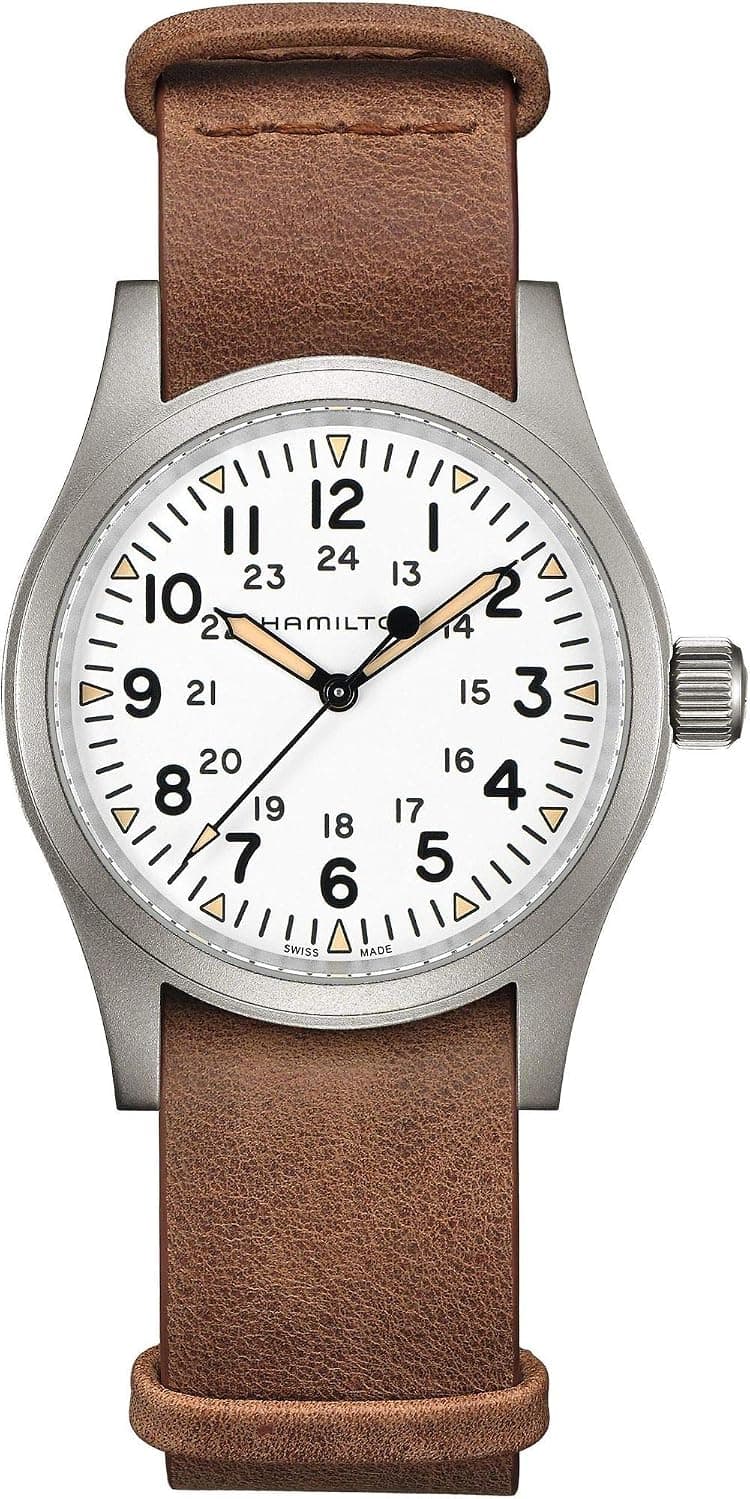
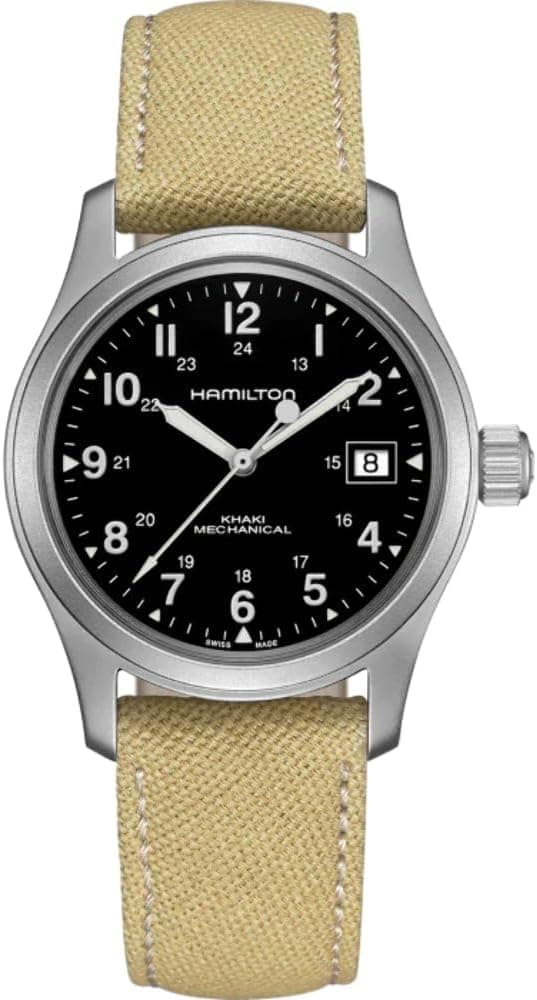
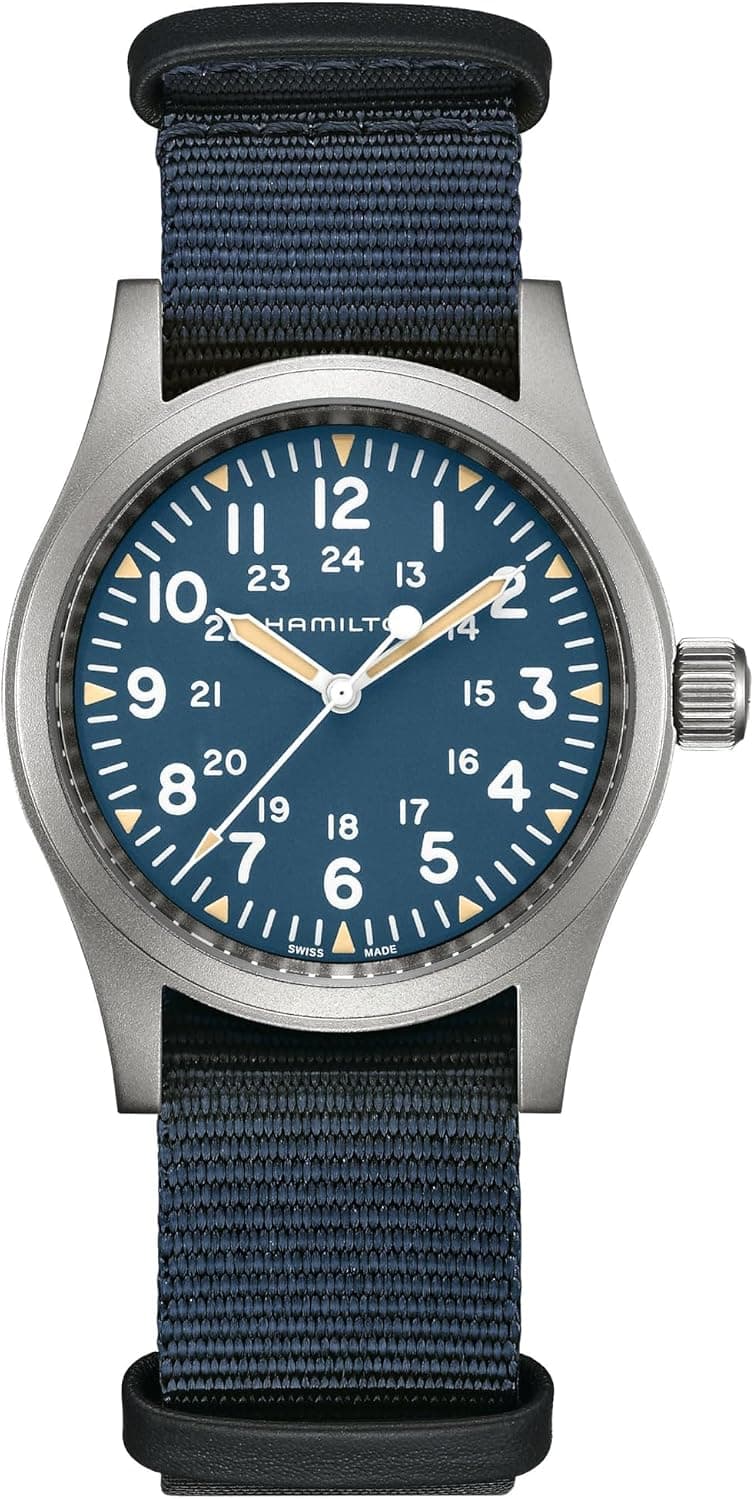
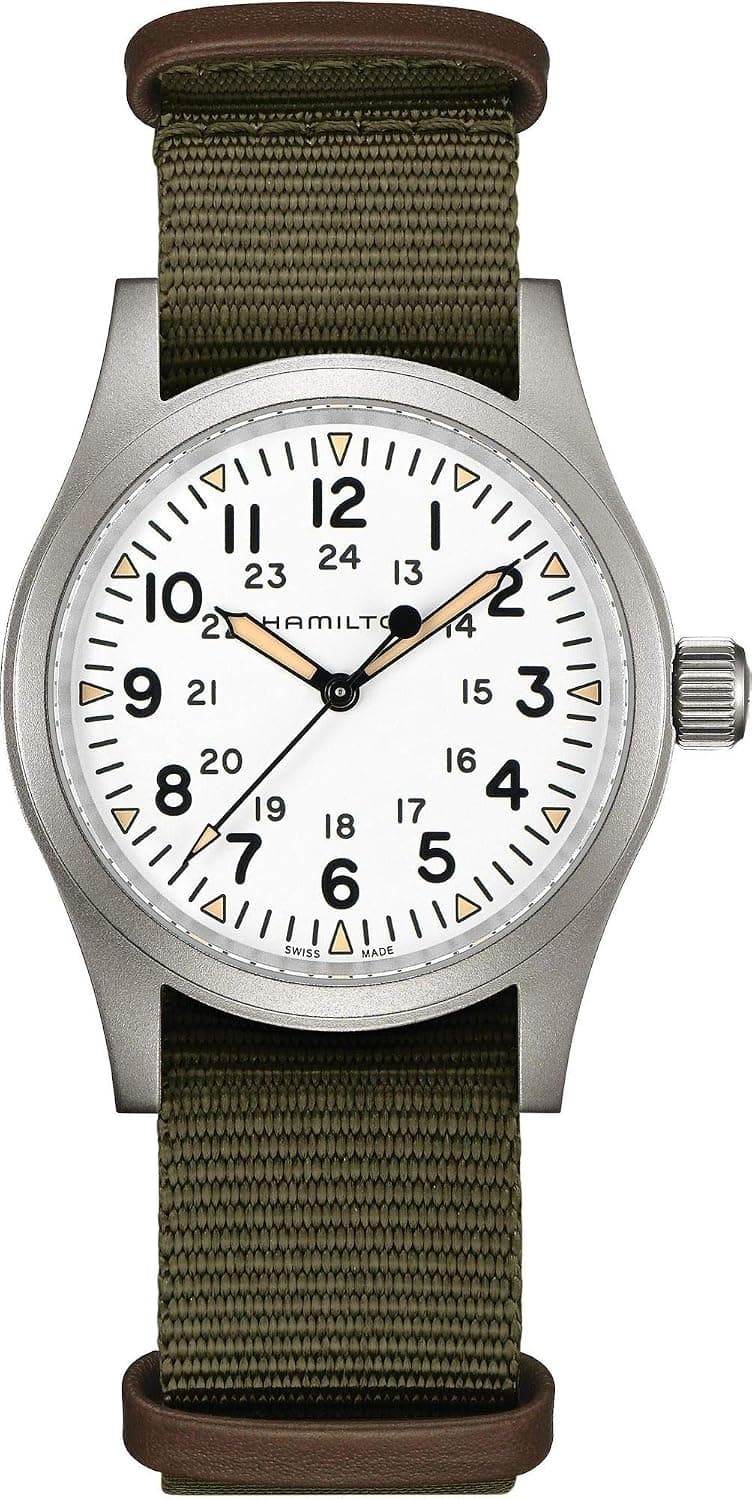
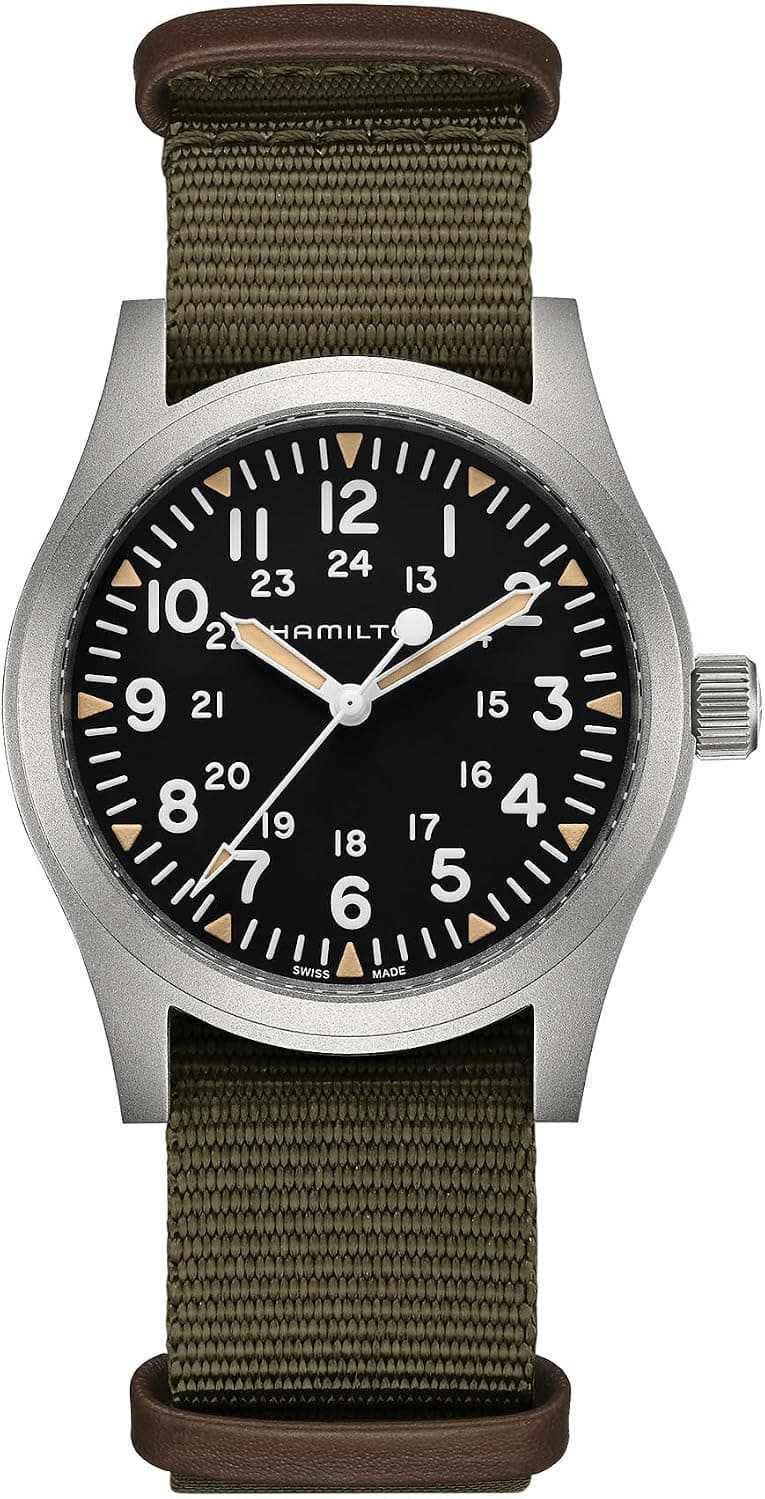
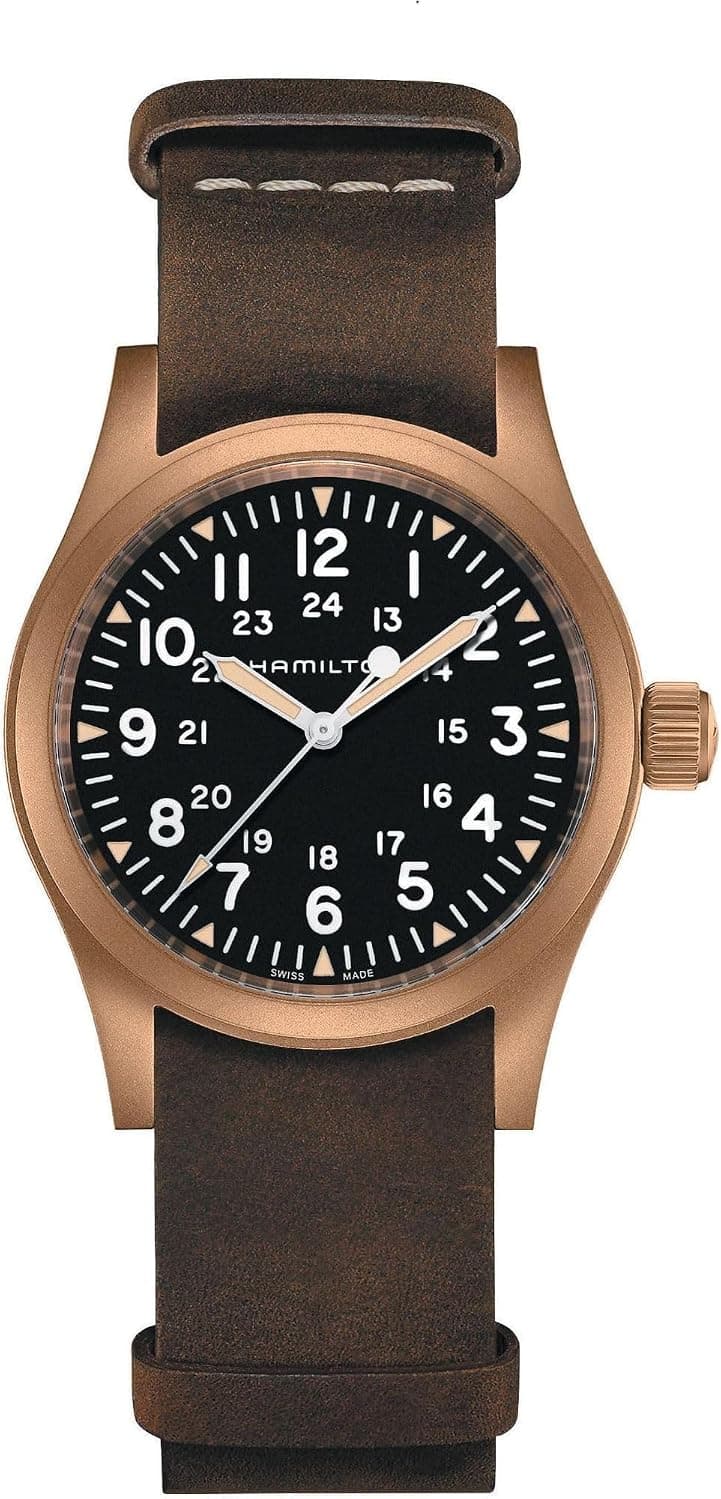
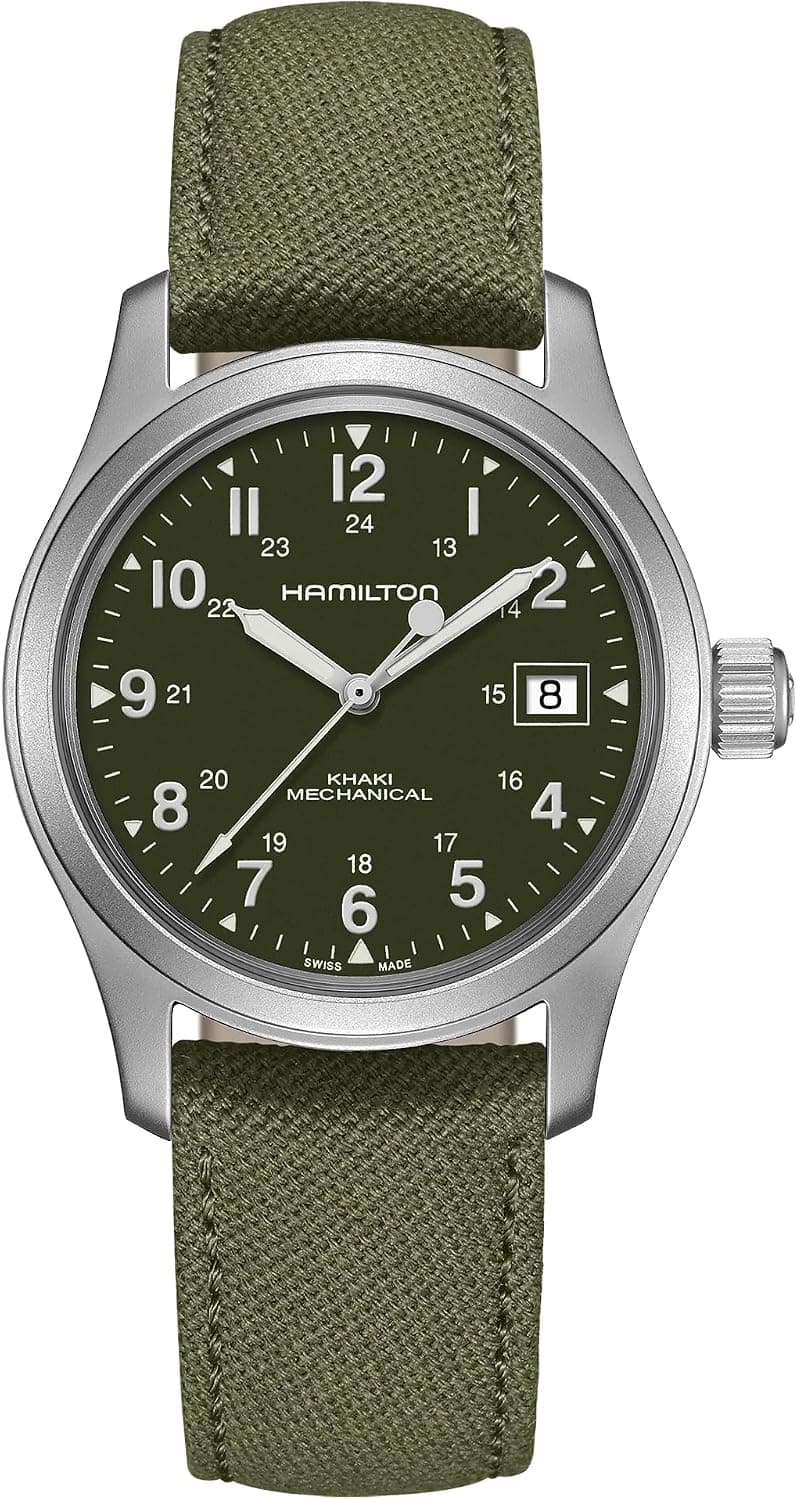
The field runs from honest entry pieces to serious haute horlogerie. The Hamilton Khaki Field Mechanical, built on the H-50 caliber, offers an 80-hour reserve and a Nivachron balance spring for around $595 to $700, and remains the obvious first hand-wound for many buyers. The Seagull 1963, with its ST19 chronograph movement, sits lower still. In the middle, the Nomos Tangente uses the in-house Alpha caliber with a 43-hour reserve and averages around $2,000. Higher up, the Omega Speedmaster Professional Moonwatch runs the hand-wound caliber 3861 at roughly $7,000 to $9,000, while the A. Lange & Sohne Lange 1, with its L121.1 caliber and 72-hour reserve, averages near $31,000.
When choosing one, start with power reserve and winding feel. Modern long-reserve barrels, like Hamilton's 80 hours, will survive a weekend off the wrist, whereas a classic 42-hour caliber rewards a steady daily habit. Crown size and the gearing behind it shape how satisfying that winding feels. This style suits the collector who wants to be close to the mechanics, the buyer after a genuinely slim dress watch, and anyone who enjoys picking the watch up each morning. It is less practical as a lone watch you wear sporadically, since it stops and needs resetting.
There are sub-types worth knowing. Pieces like the Calatrava 8 Day use two series-coupled barrels for an eight-day reserve, while hand-wound chronographs such as the Speedmaster show more mechanical theater on the wrist. With vintage examples, service history and mainspring condition matter most, so buy on the movement's health rather than the dial alone.