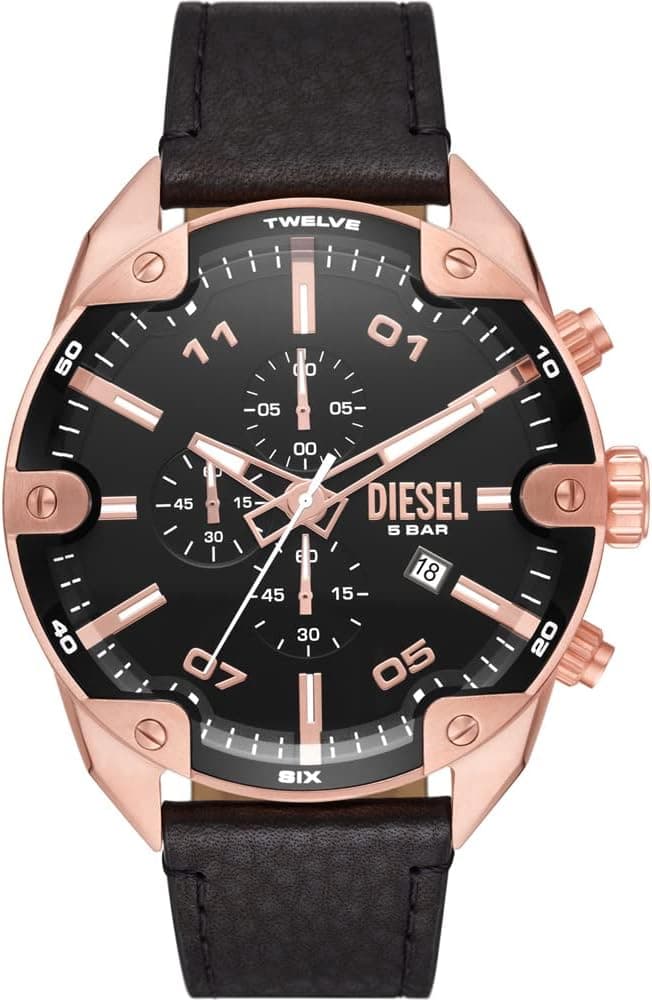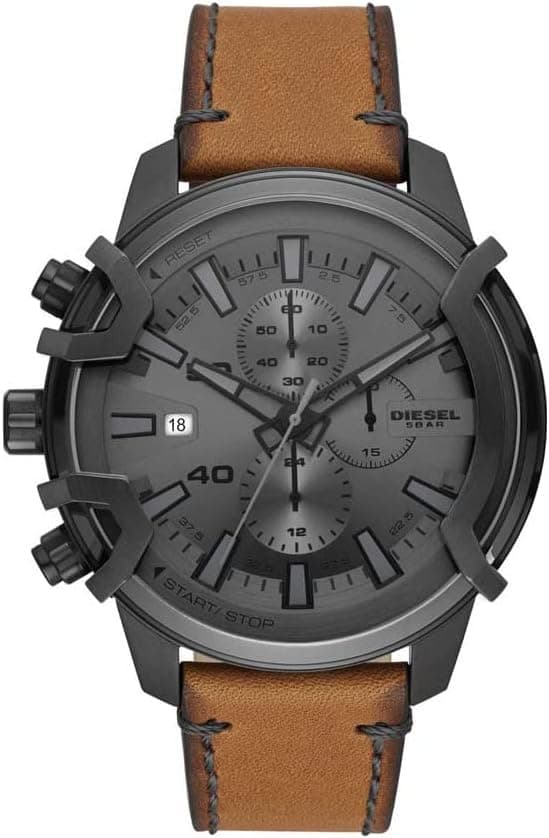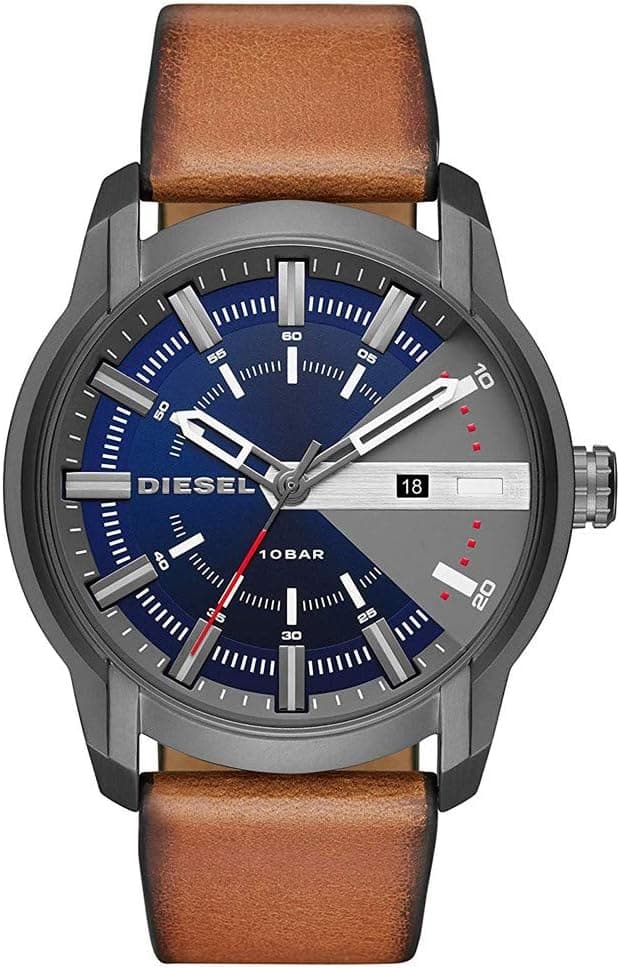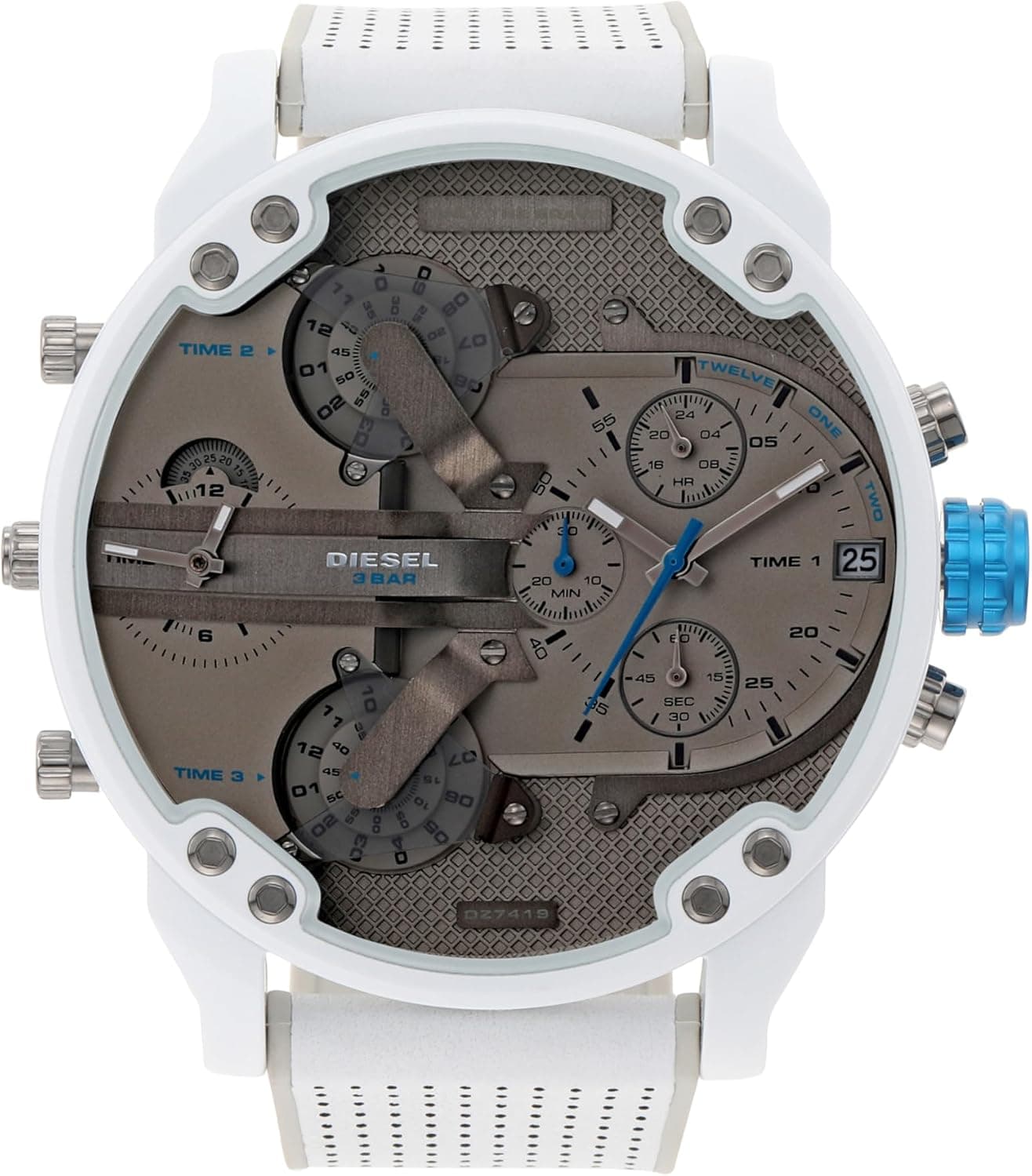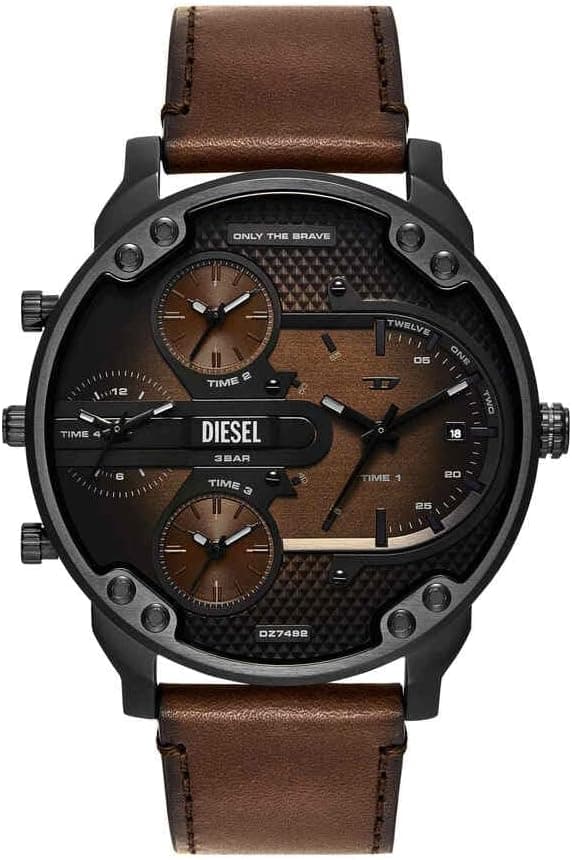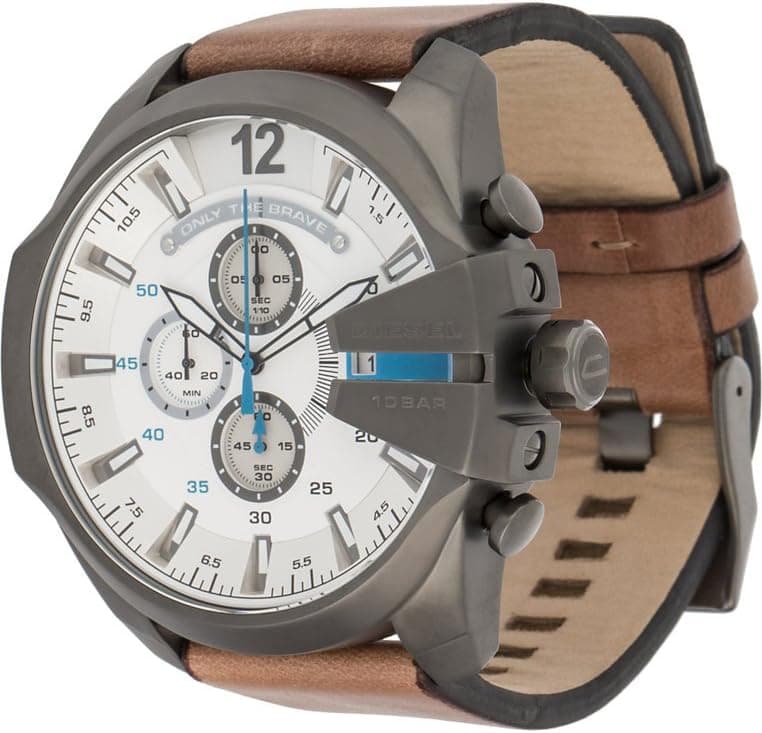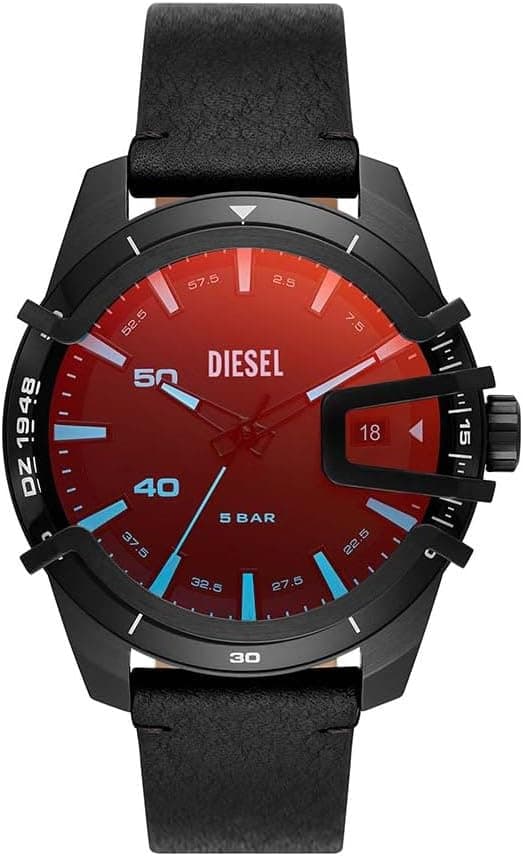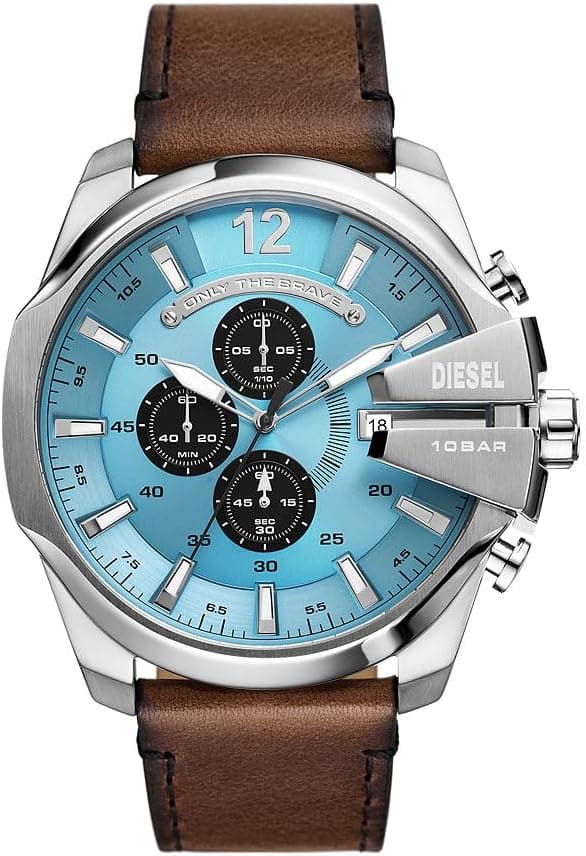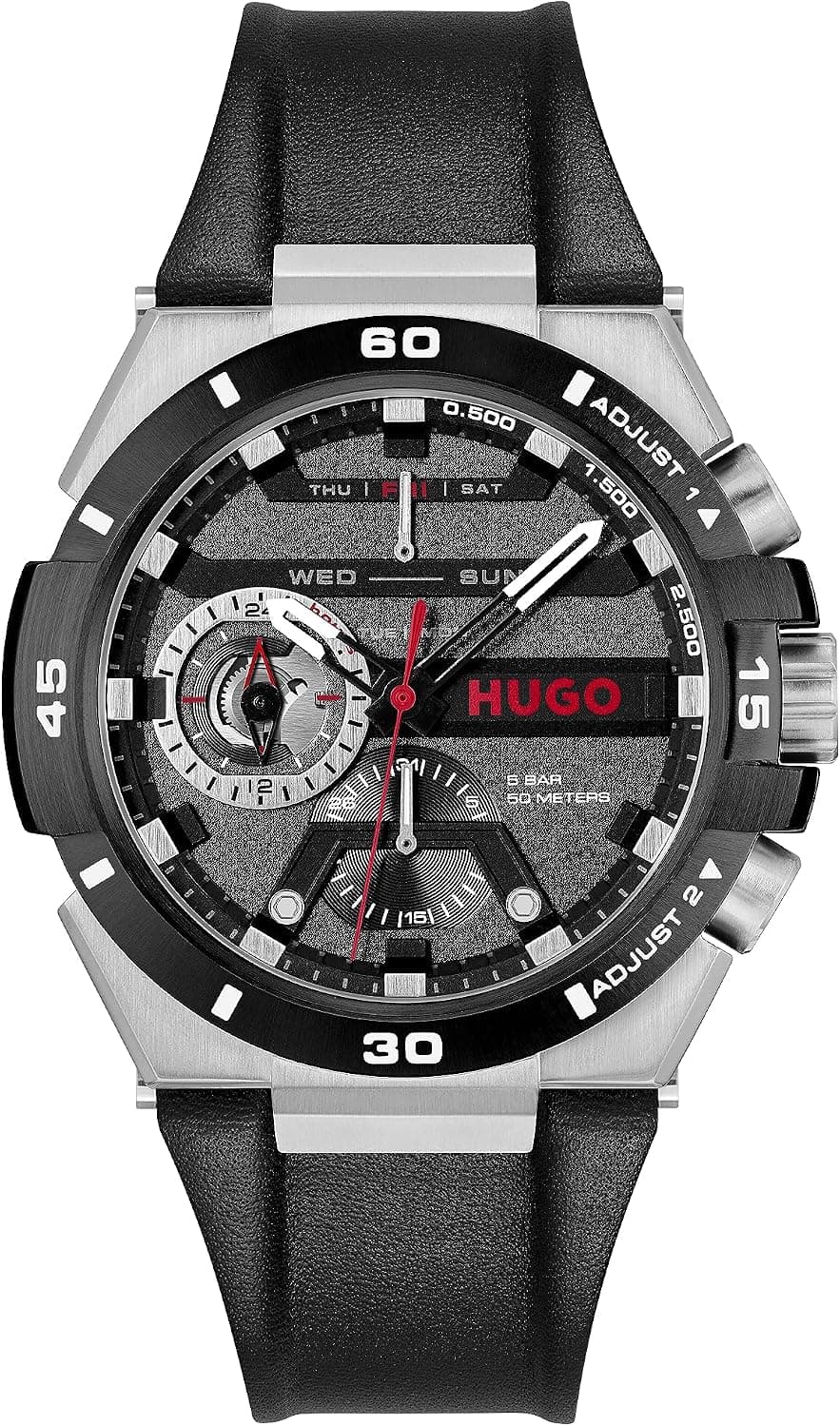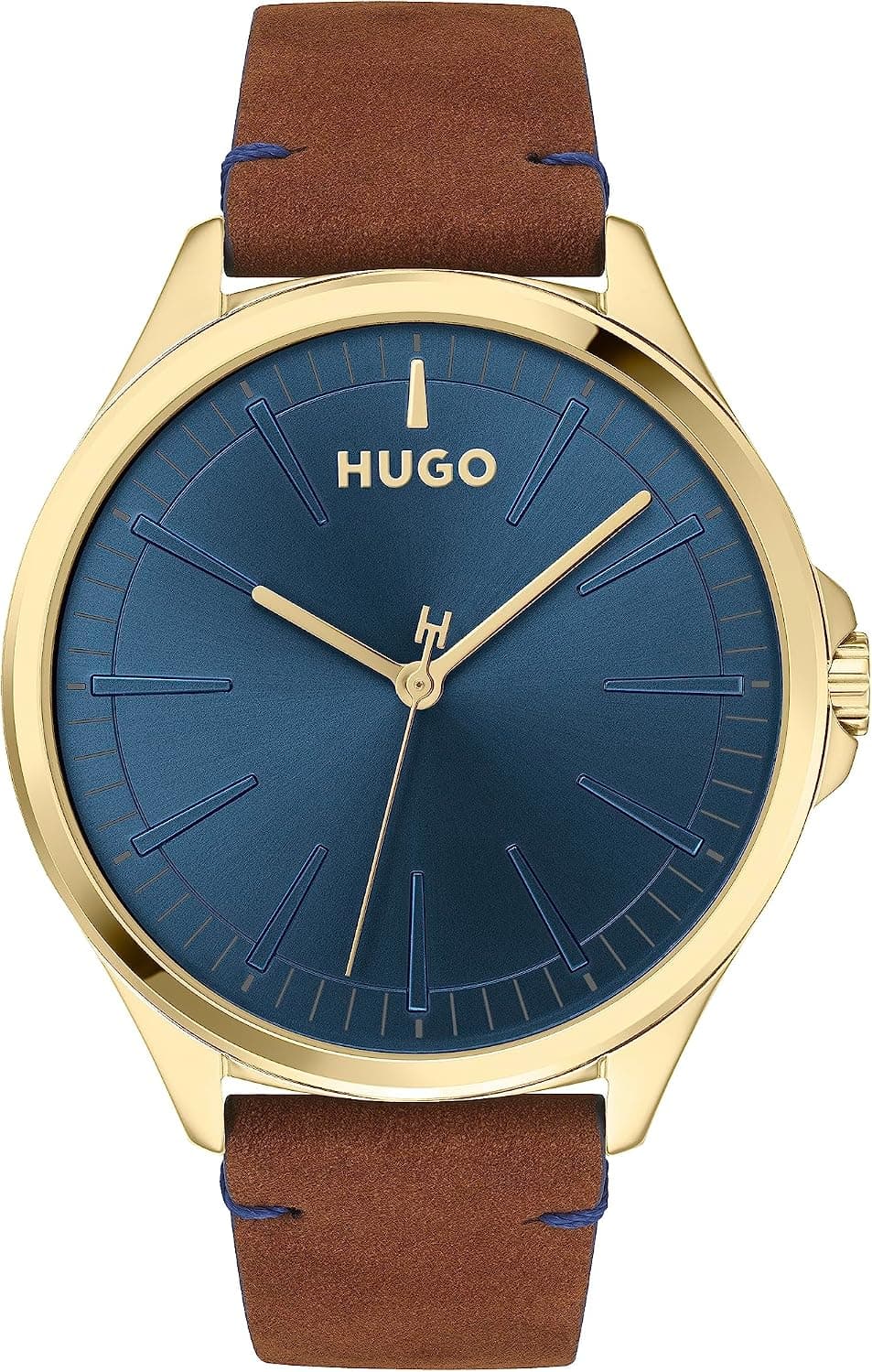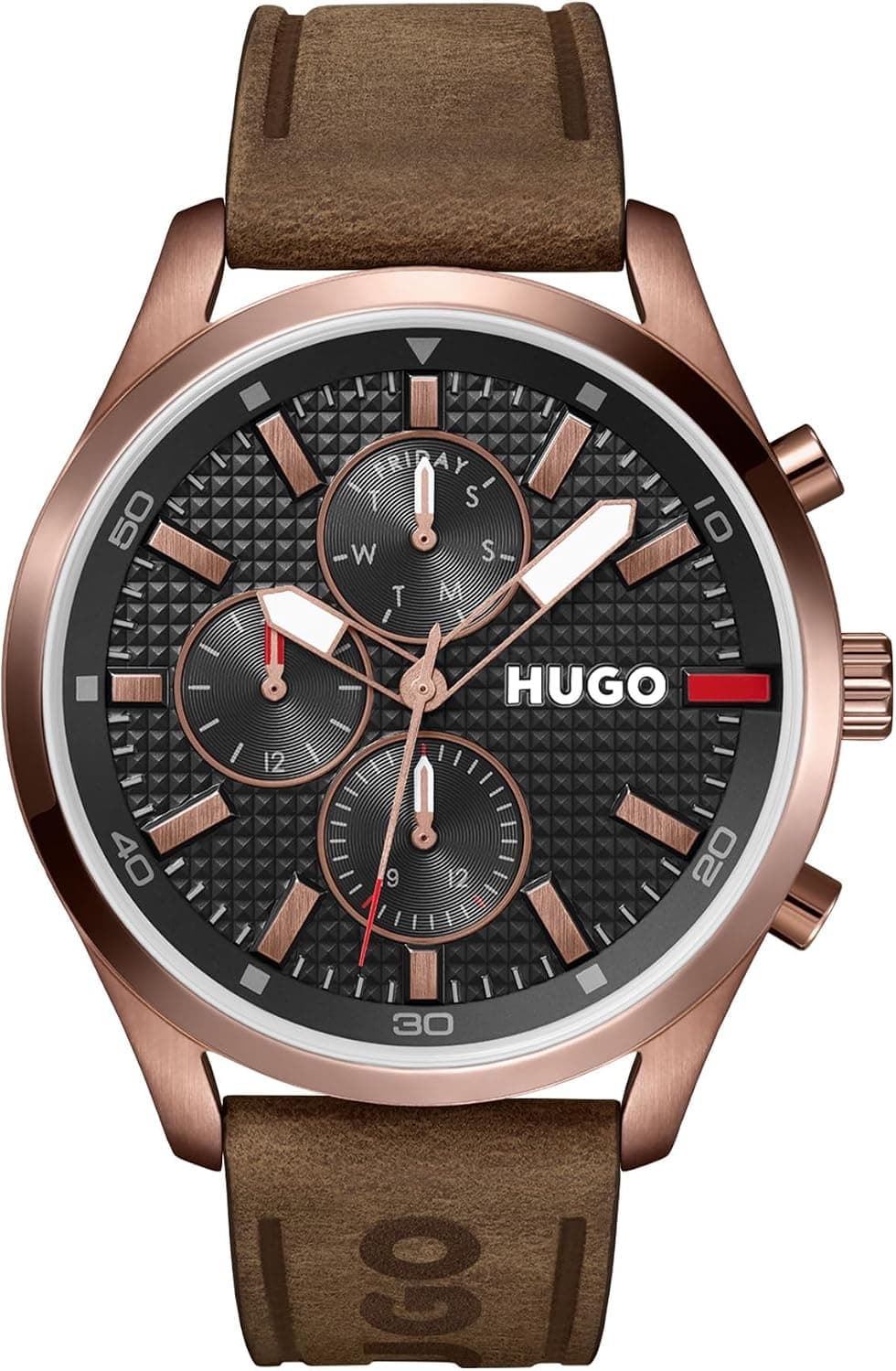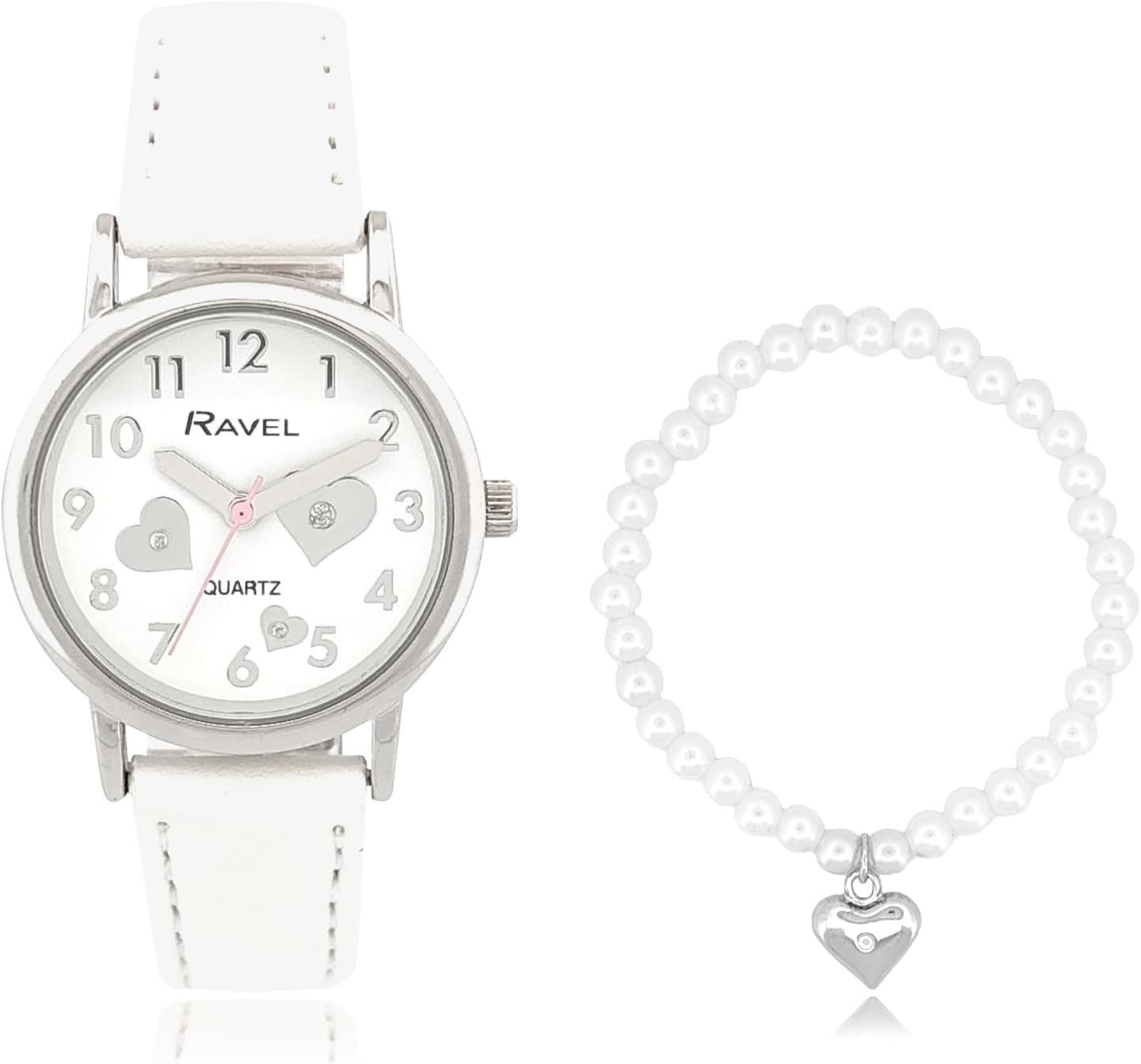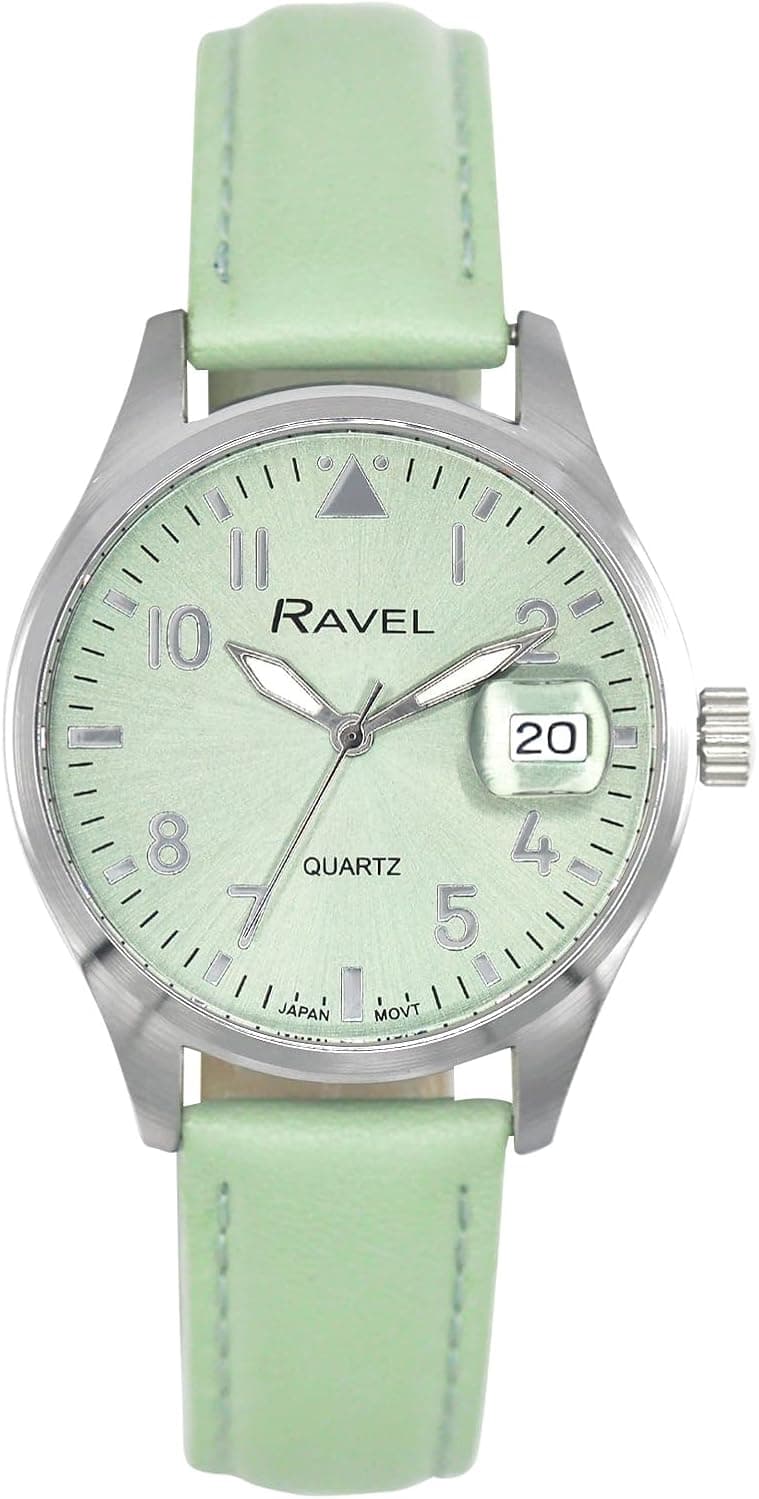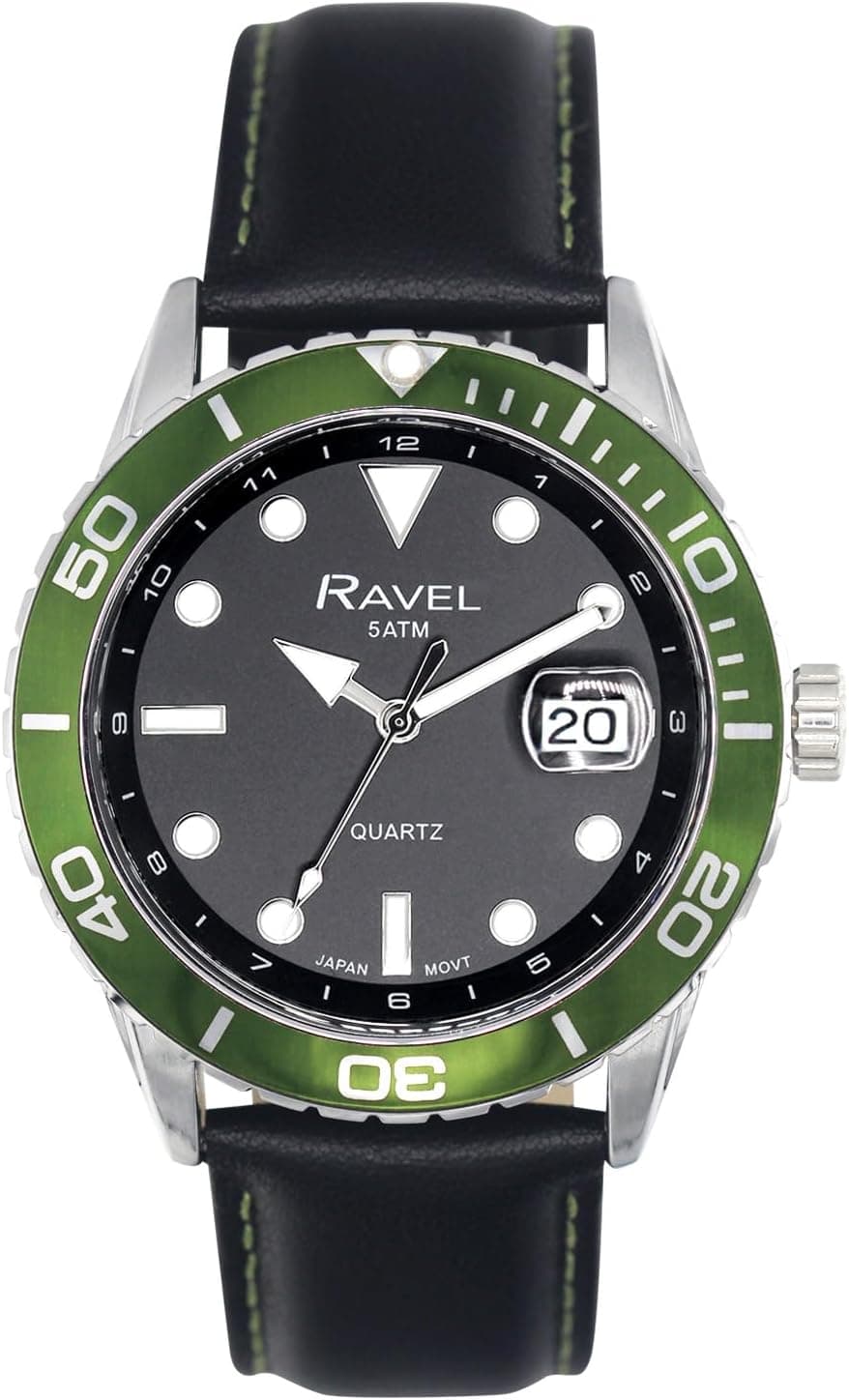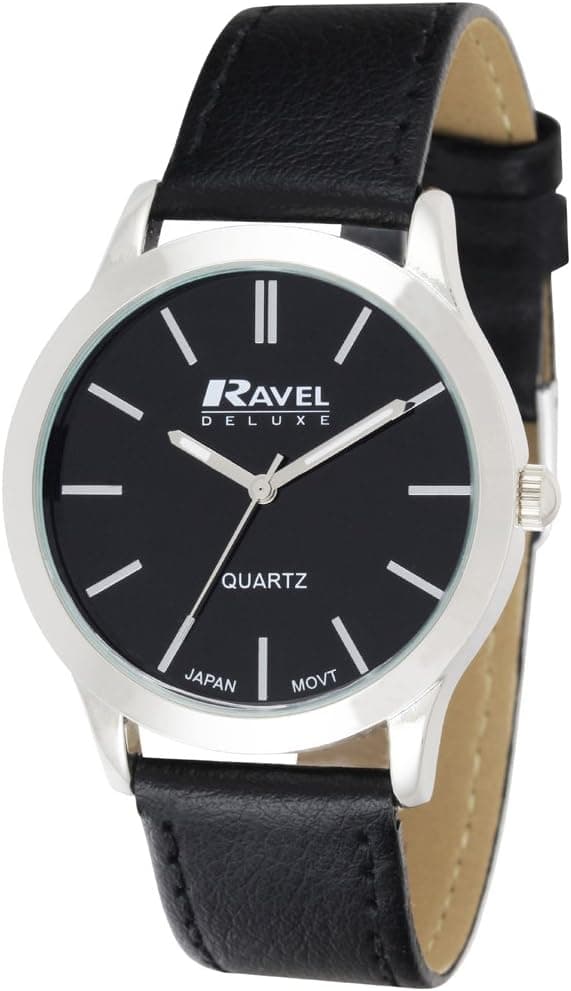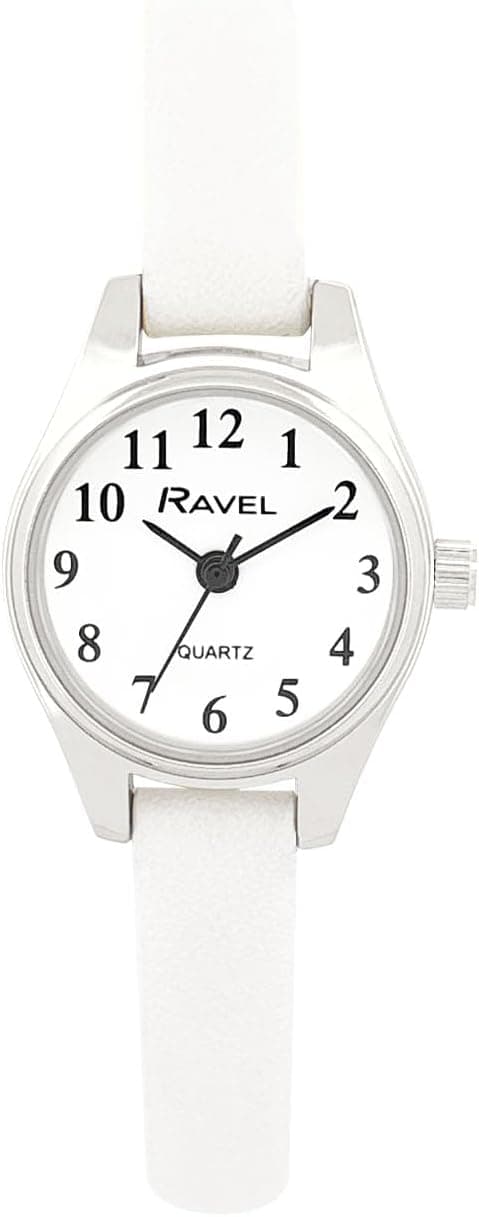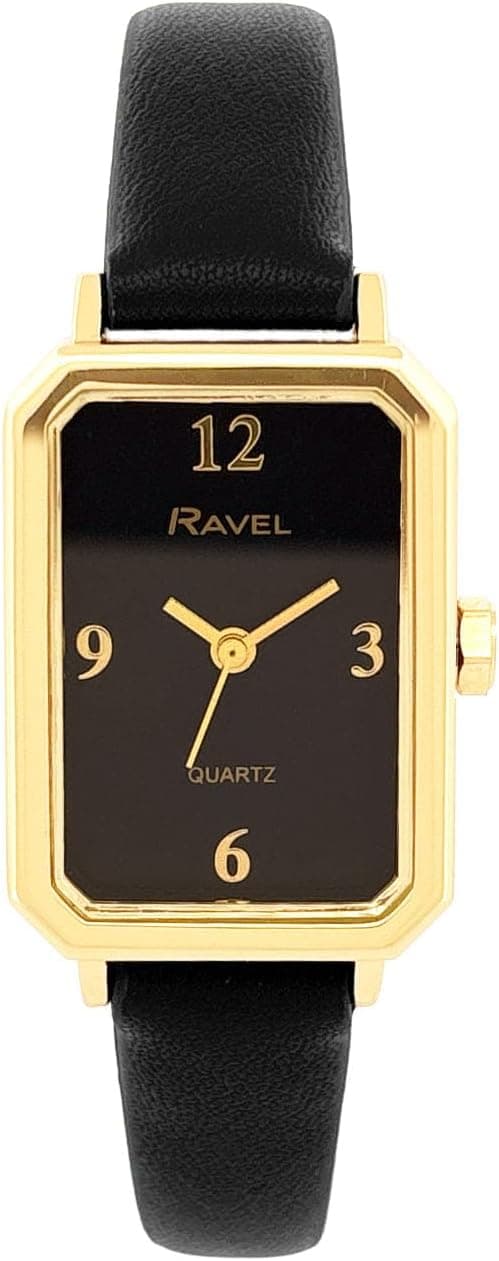
Leather is the oldest and most personal of strap materials, and it transforms a watch in minutes. The same steel case reads as a casual daily piece on dark calfskin and as a proper dress watch on glossy alligator. Two distinctions define a leather strap. The first is tanning: vegetable tanning uses natural tannins from tree bark and leaves over weeks, starts stiff, softens to your wrist and develops a patina that is genuinely yours; chrome tanning is the modern method behind around ninety percent of the world's leather, soft from day one and more resistant to water and stains, but it does not patinate the same way. The second is the cut of the hide. Full-grain leather keeps the outermost layer and its natural grain, giving you the best durability and the most beautiful ageing. If a tag only says 'genuine leather,' that is usually a lower grade built from the under layers or scraps.
In practice the category spans a wide range. Calfskin is the most common quality option, fine-grained and flexible, with a good example usually starting around $50 and climbing well past $100. Shell cordovan, an equine leather from the membrane in a horse's hindquarters rather than the hide itself, resists creasing, holds a glossy finish and sits around $120 on average while lasting for years. Alligator is the top of the dress-watch world, its fine scale pattern coming from the belly hide, with quality straps running from roughly $100 to $300 and up. Brand straps use the same materials: the Cartier Tank a Guichets arrived at Watches and Wonders 2025 on burgundy, dark grey, green and black alligator, the Jaeger-LeCoultre Reverso ships with alligator options, and Rolex, Omega and Montblanc all fit selected alligator.
When you buy, start with the measurement. Strap width is usually written as a taper such as 20/16, meaning 20mm at the lugs narrowing to 16mm at the buckle, so know your watch's lug width exactly. Look for even, dense stitching, and hand-painted, burnished edges as a sign of quality. If you wear a watch daily and love patina, vegetable-tanned full-grain calfskin is the right call; if your wrist sees heat and sweat or you would rather not fuss with care, chrome-tanned is more practical. Straps with quick-release spring bars let you swap tool-free, which makes living with several straps far easier.
At the high end the conversation turns to bespoke. Makers such as Camille Fournet, Jean Rousseau, Atelier du Bracelet Parisien and Delugs build to your measurements: ABP orders start around 200 euros and include quick-release bars, Jean Rousseau crocodile runs near $400, and a bespoke Camille Fournet alligator sits around $400. The one real drawback of leather is that it is more vulnerable to water and perspiration than a metal bracelet, so if you wear yours hard, rotating between two straps will extend the life of both considerably.