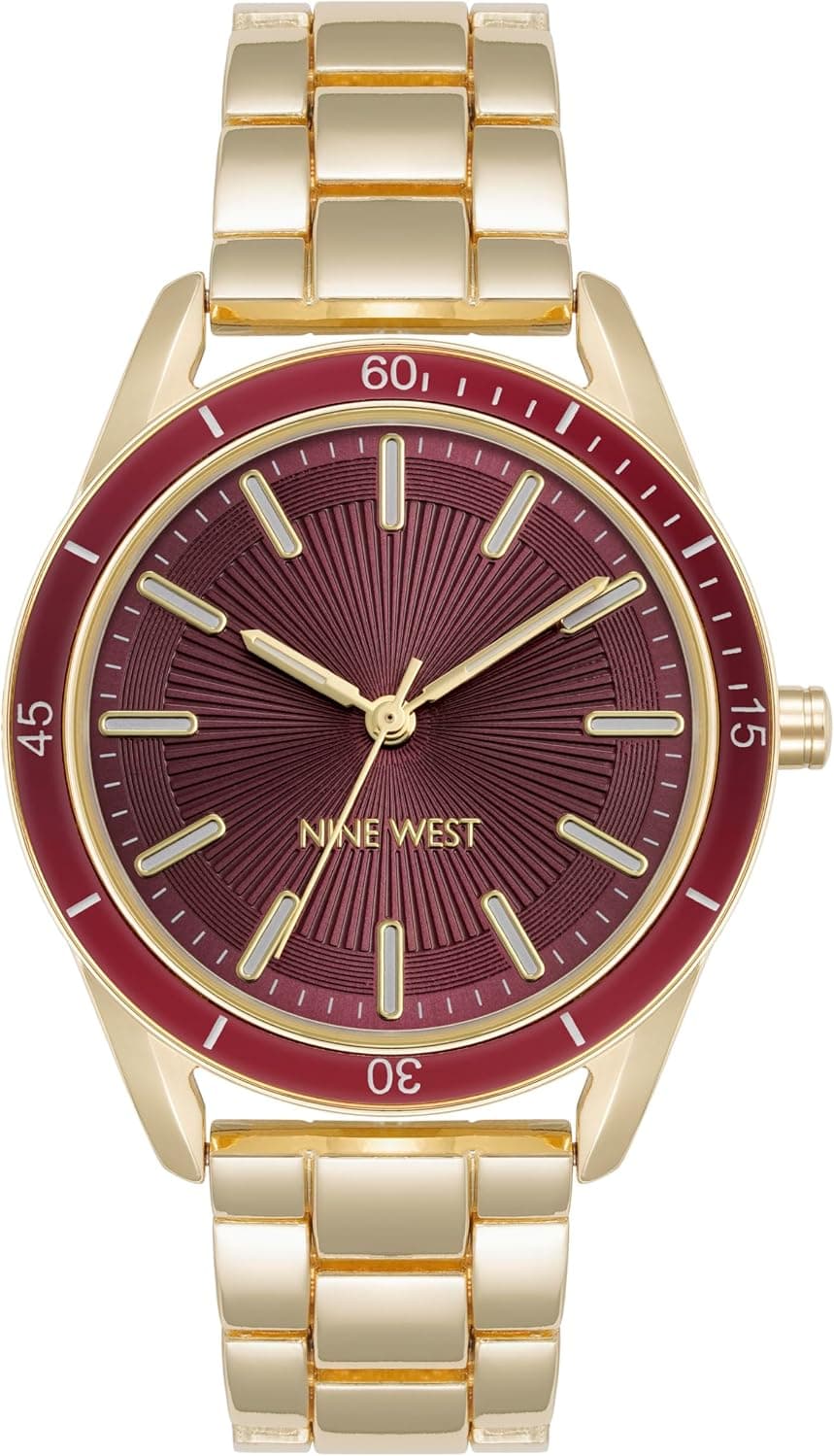
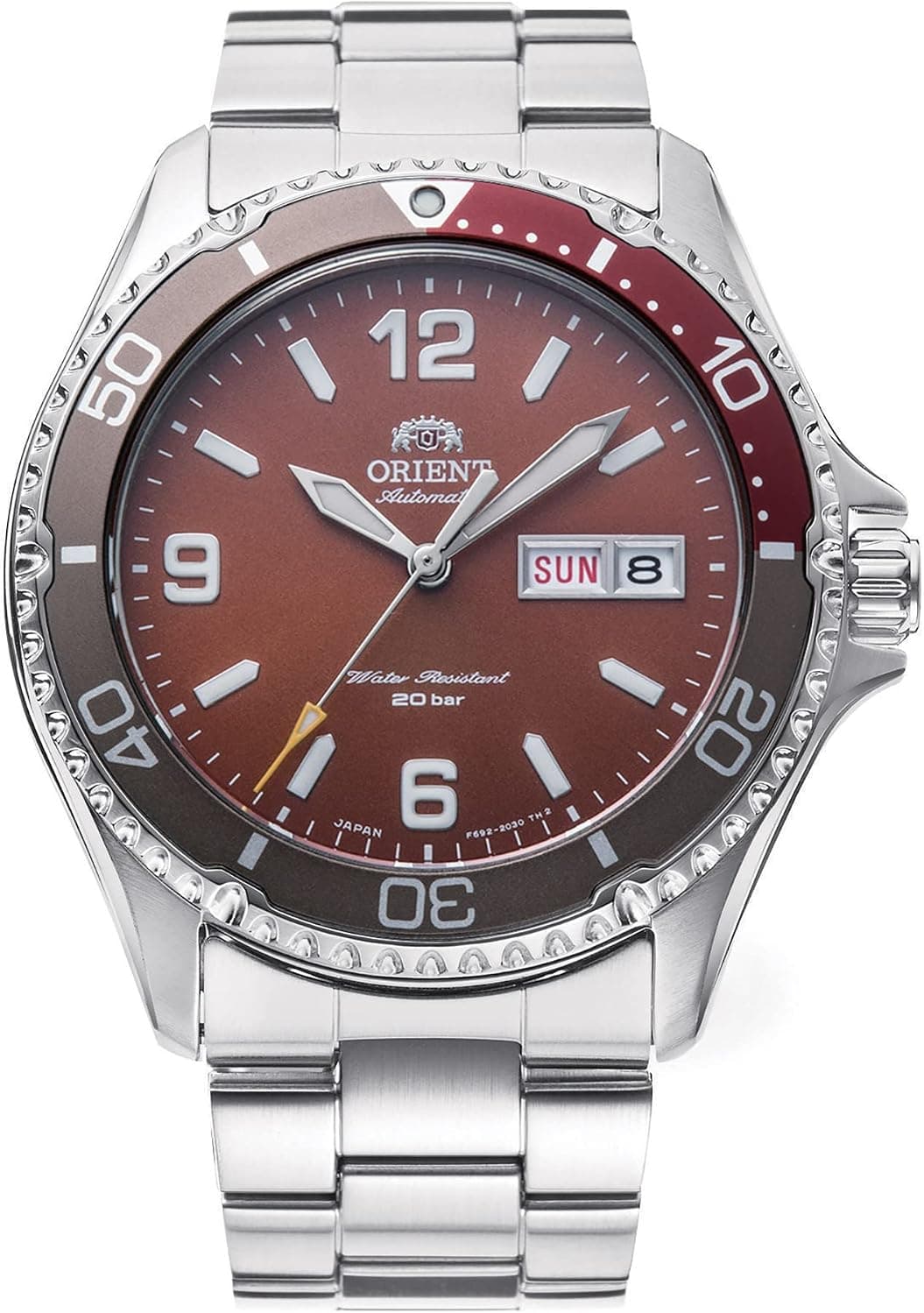
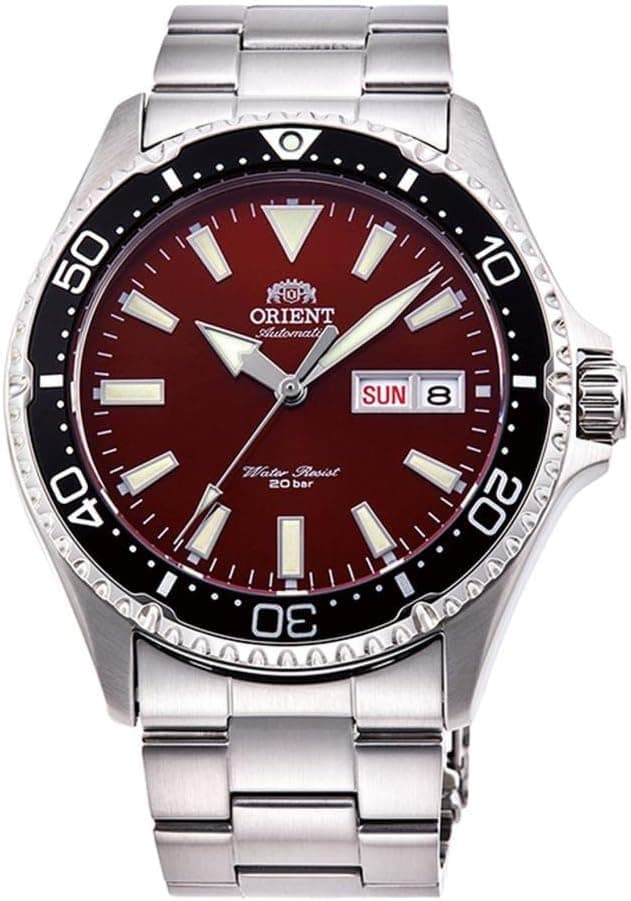
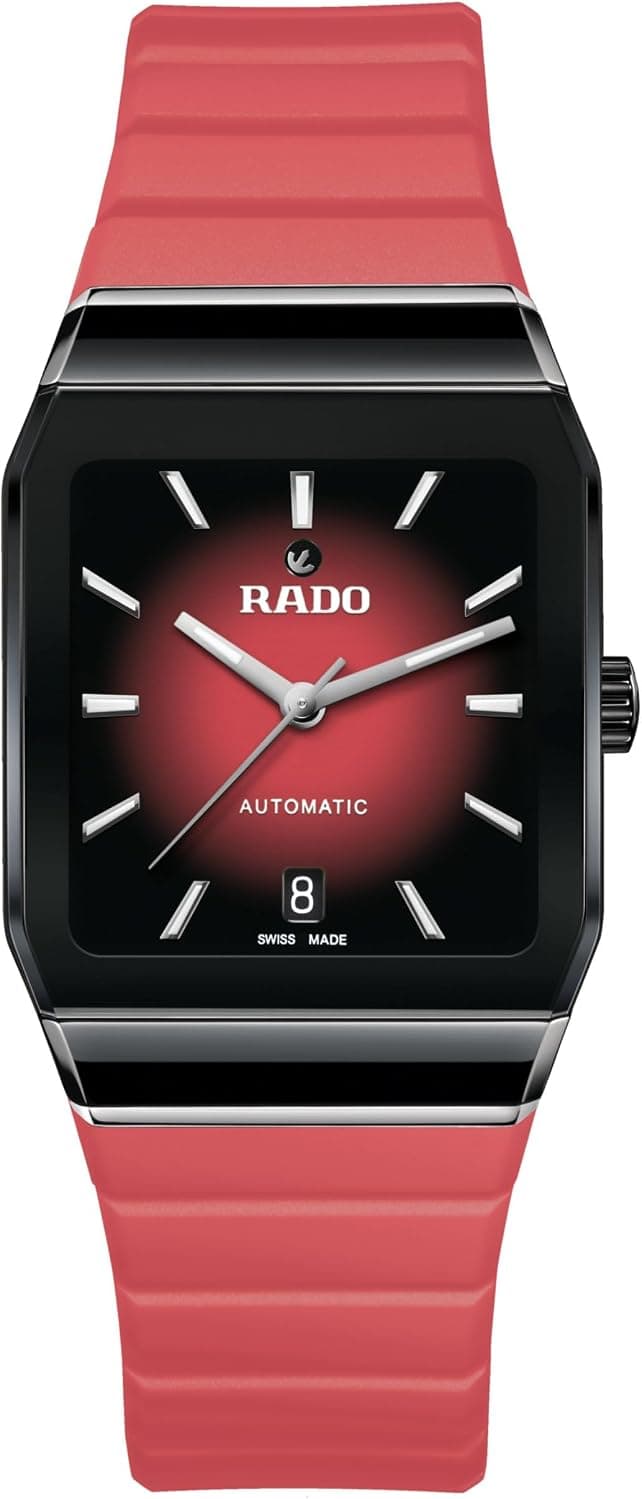
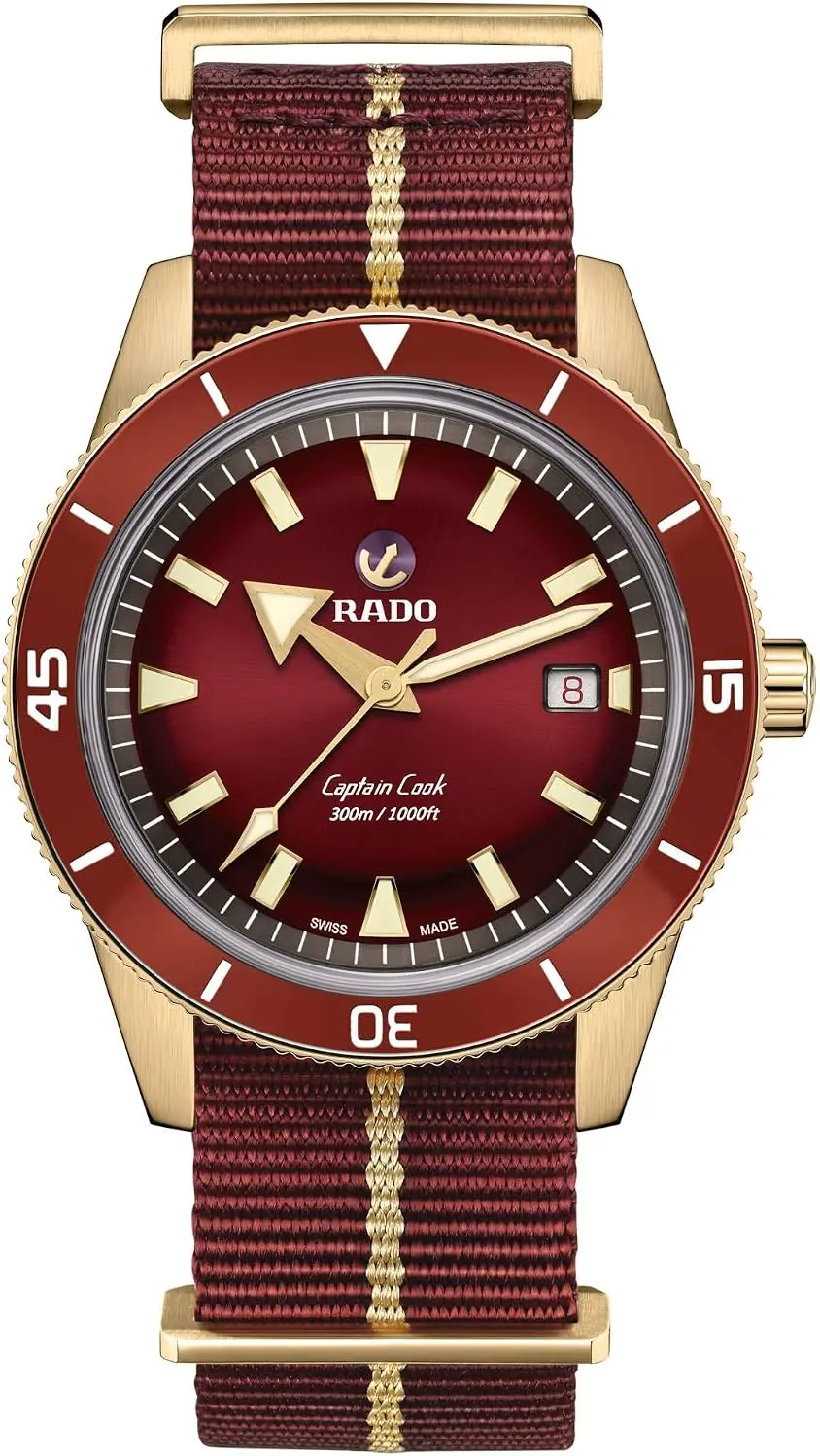
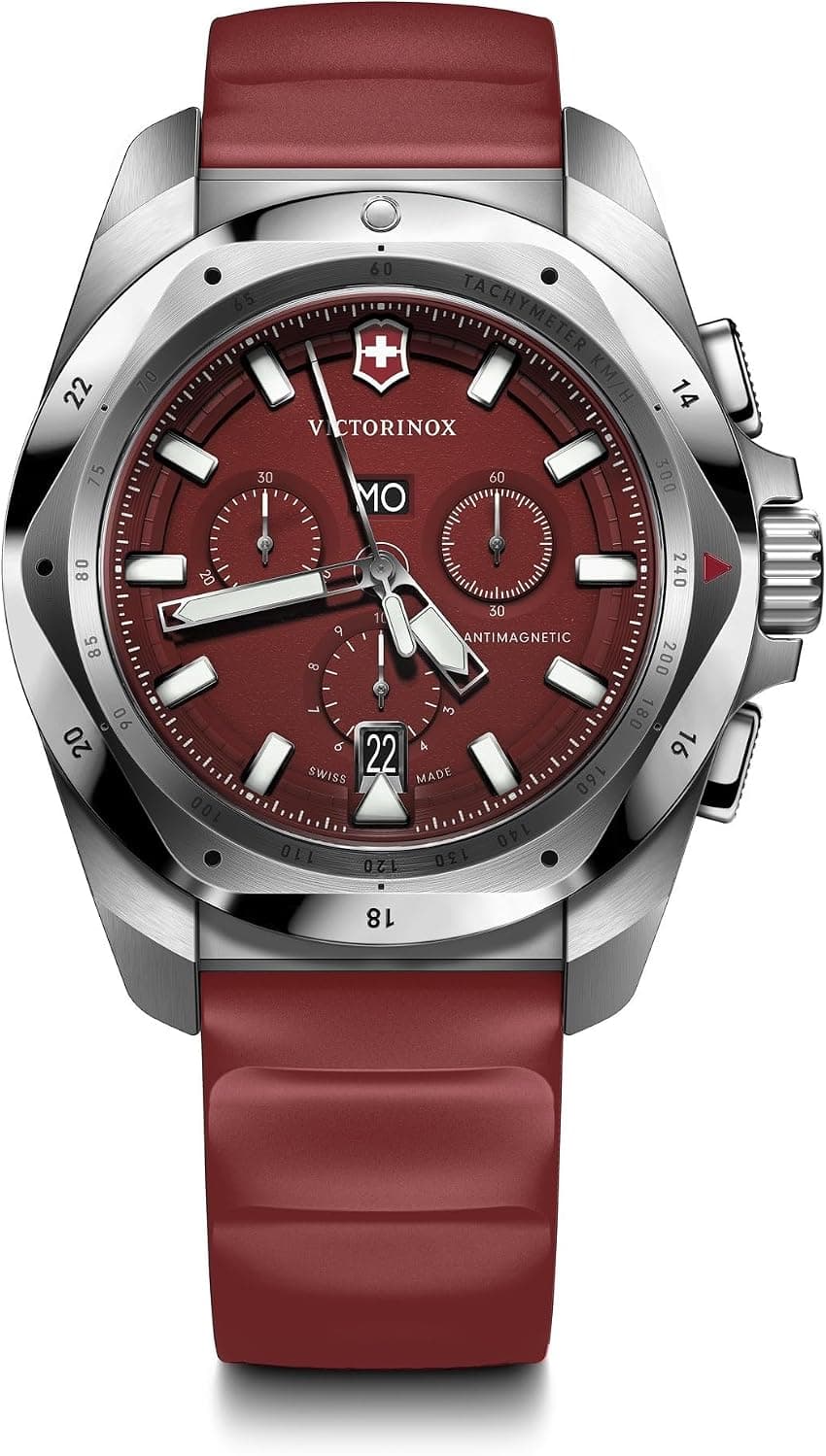
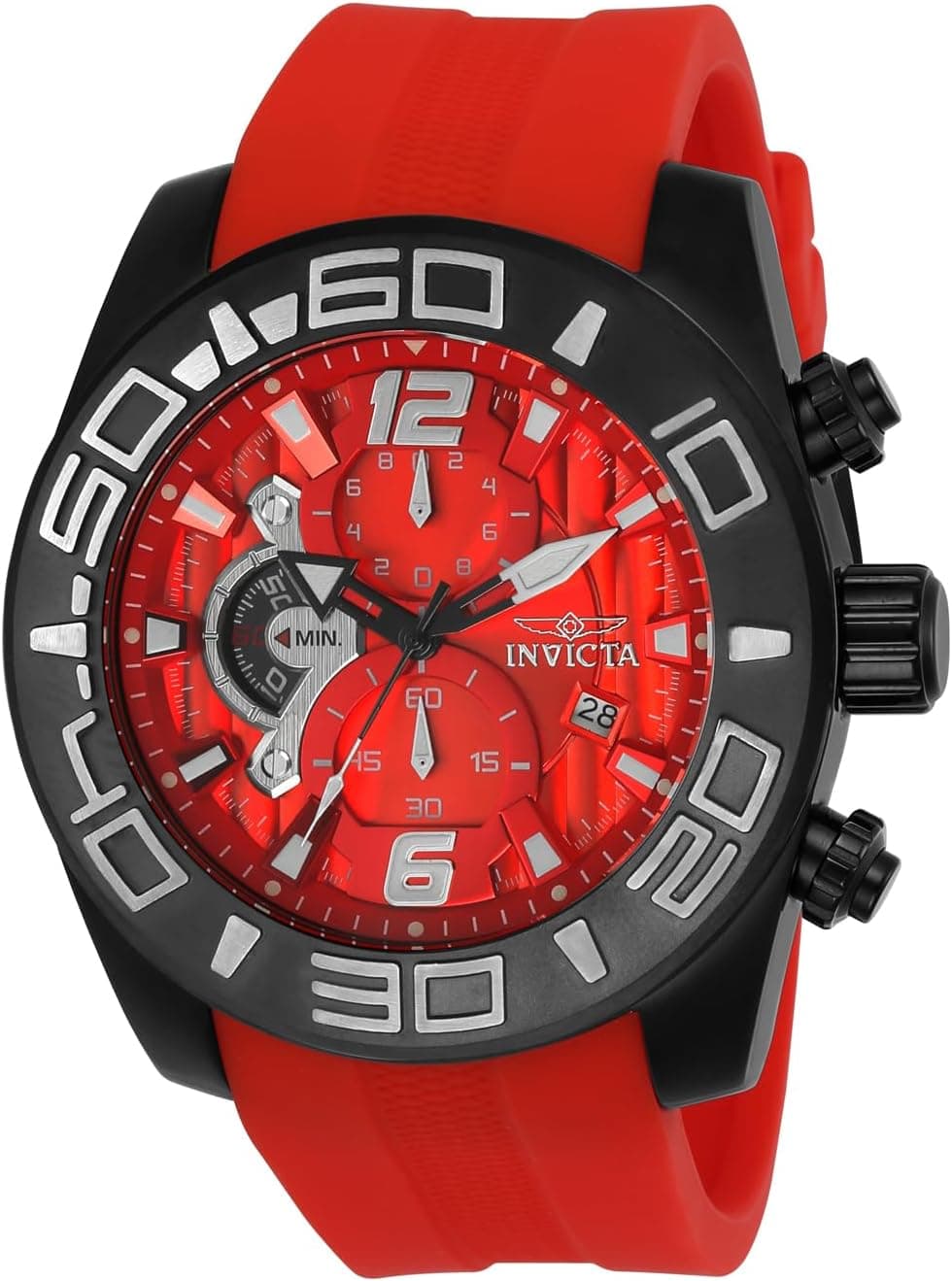
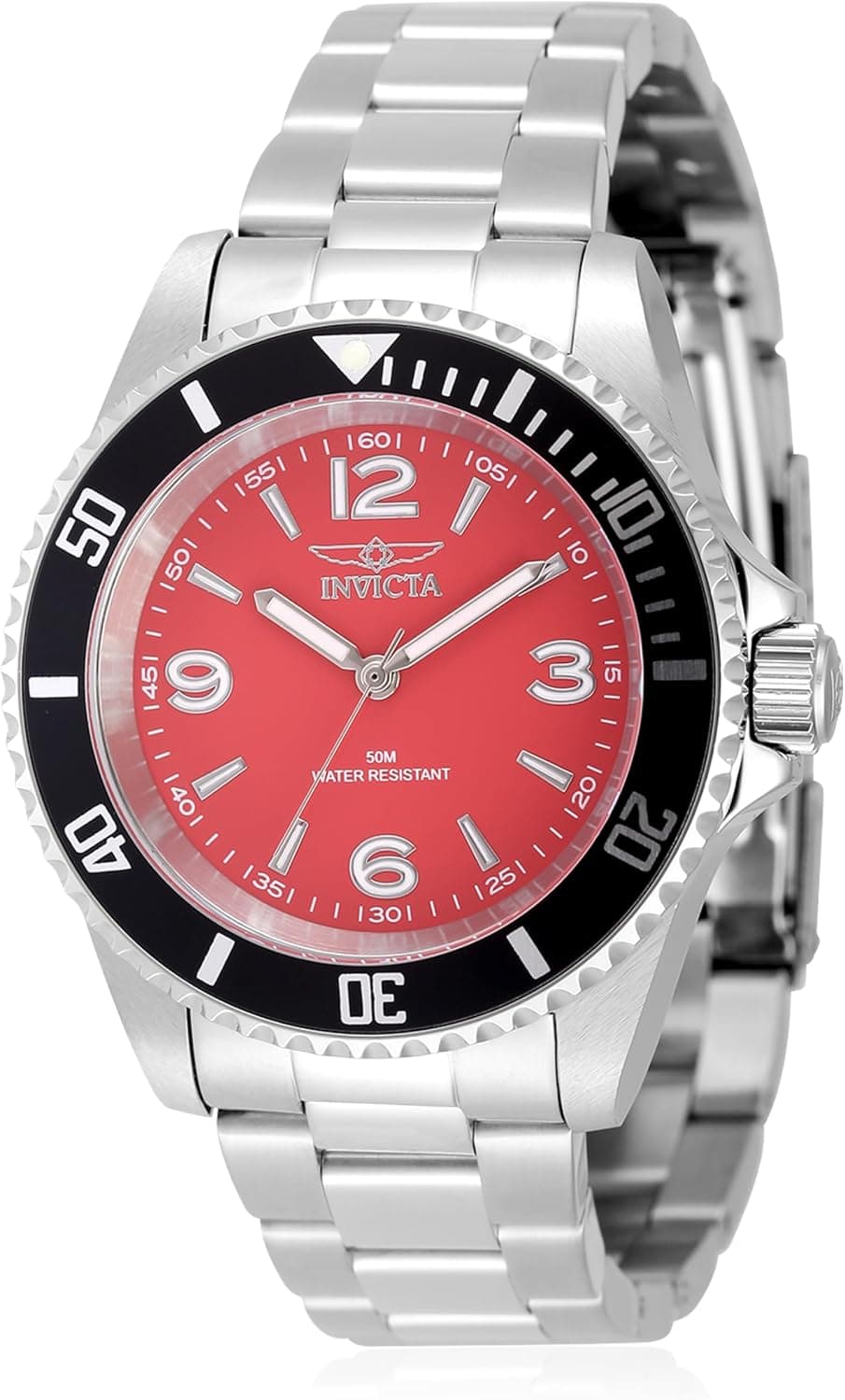
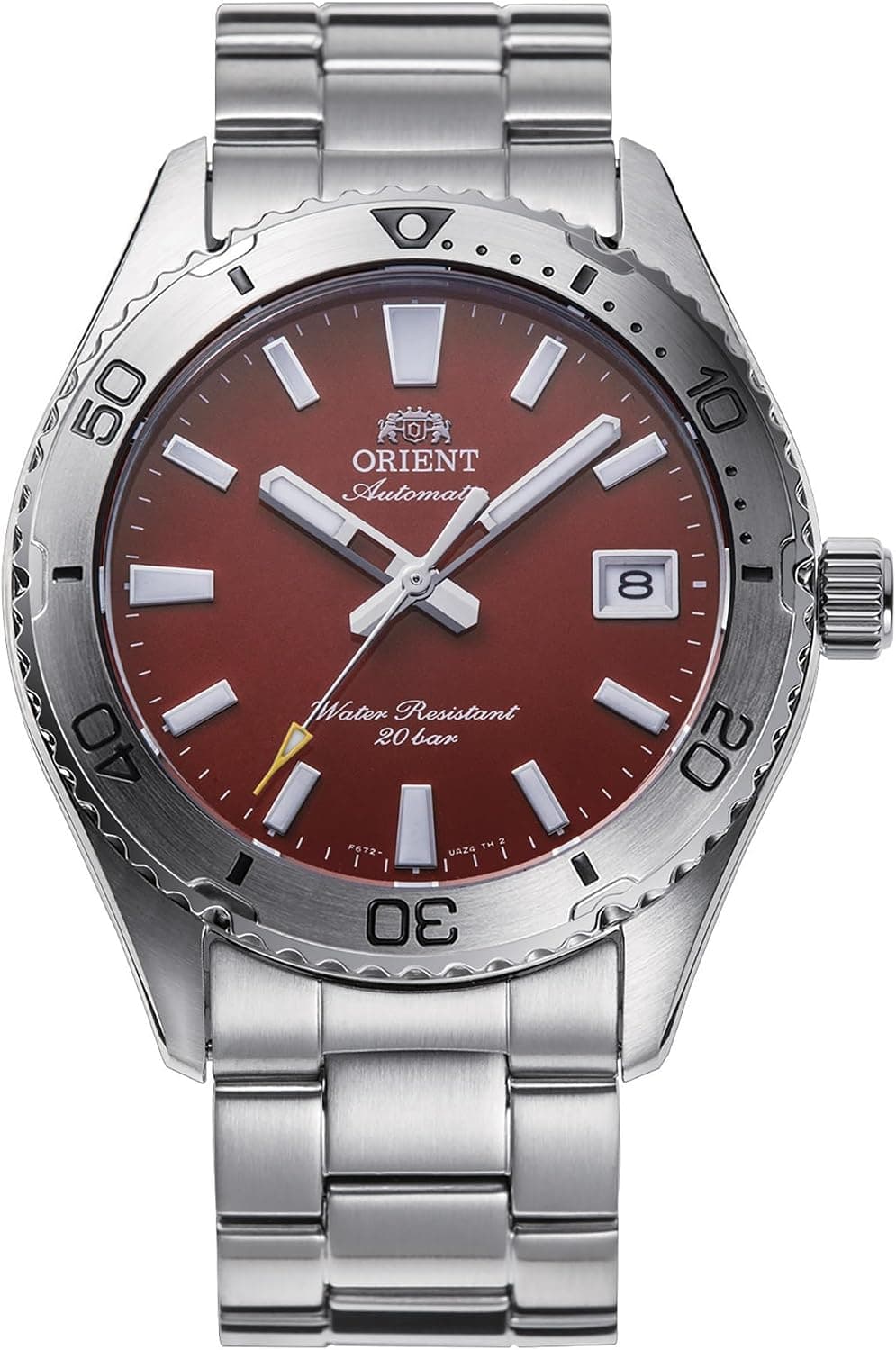
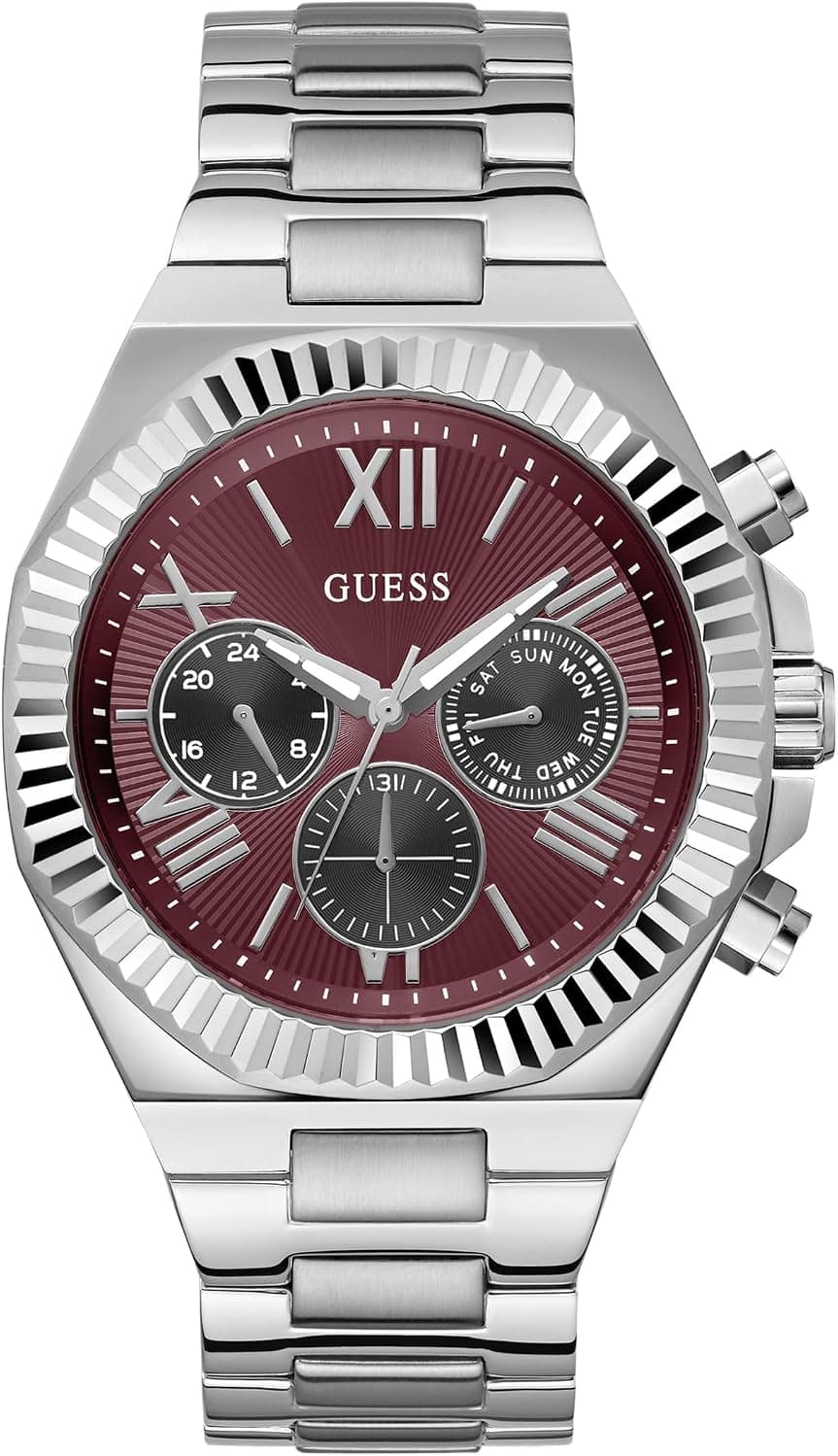
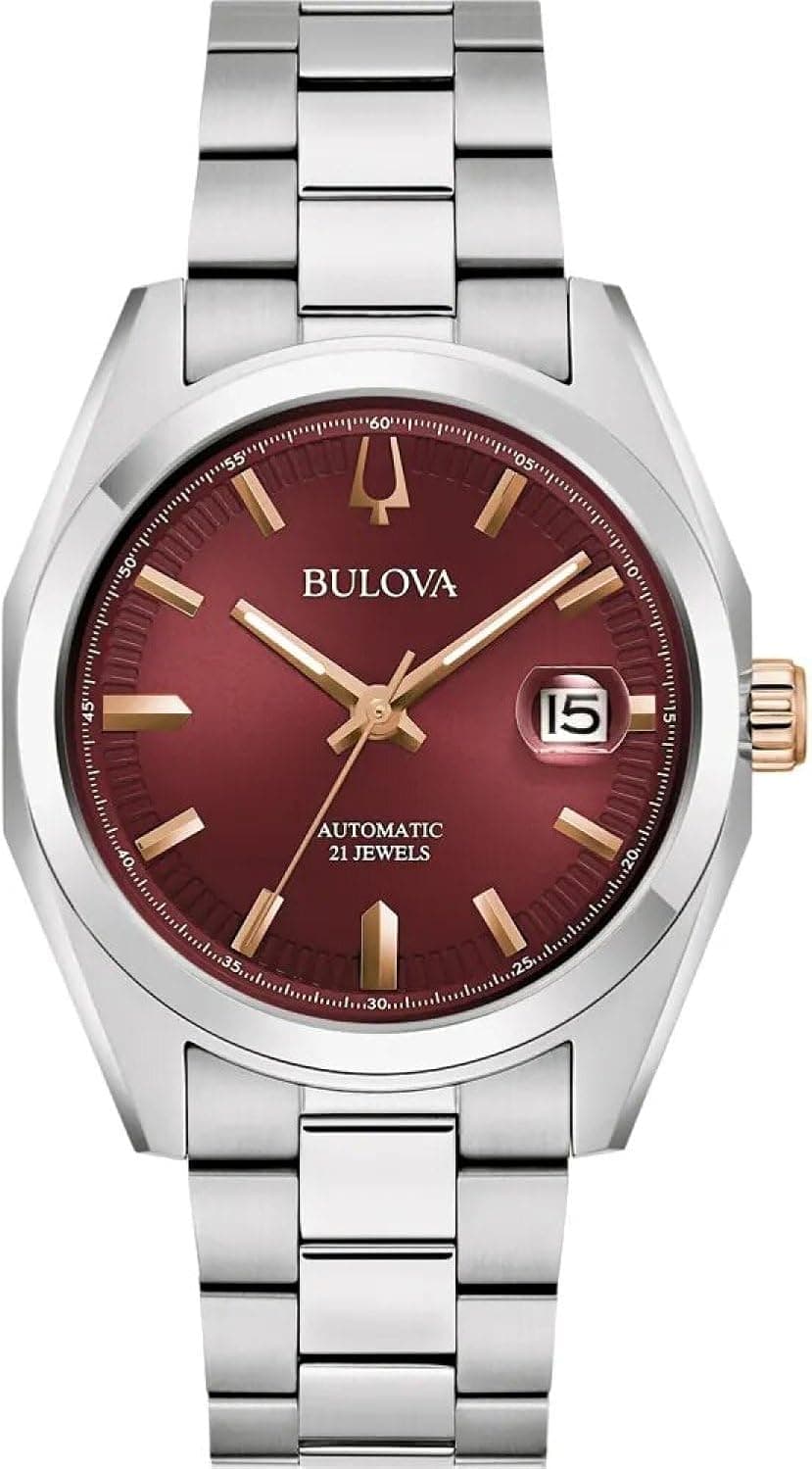
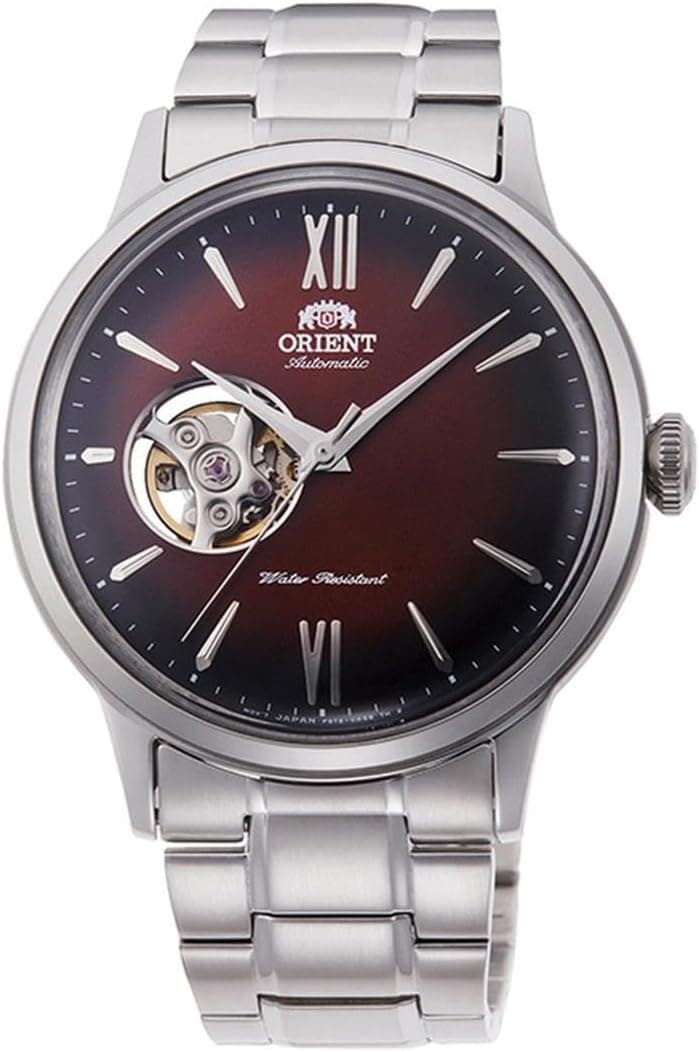
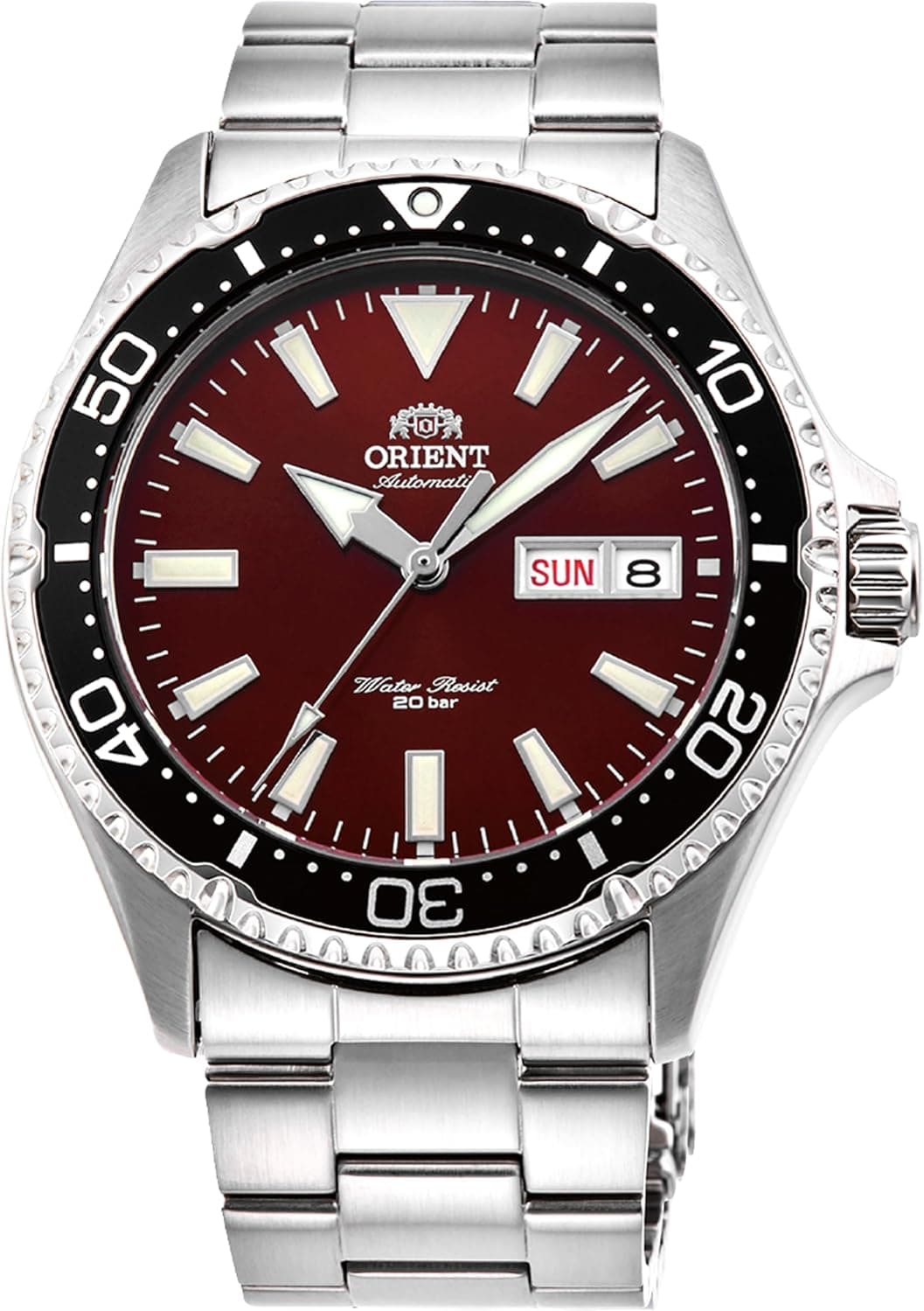
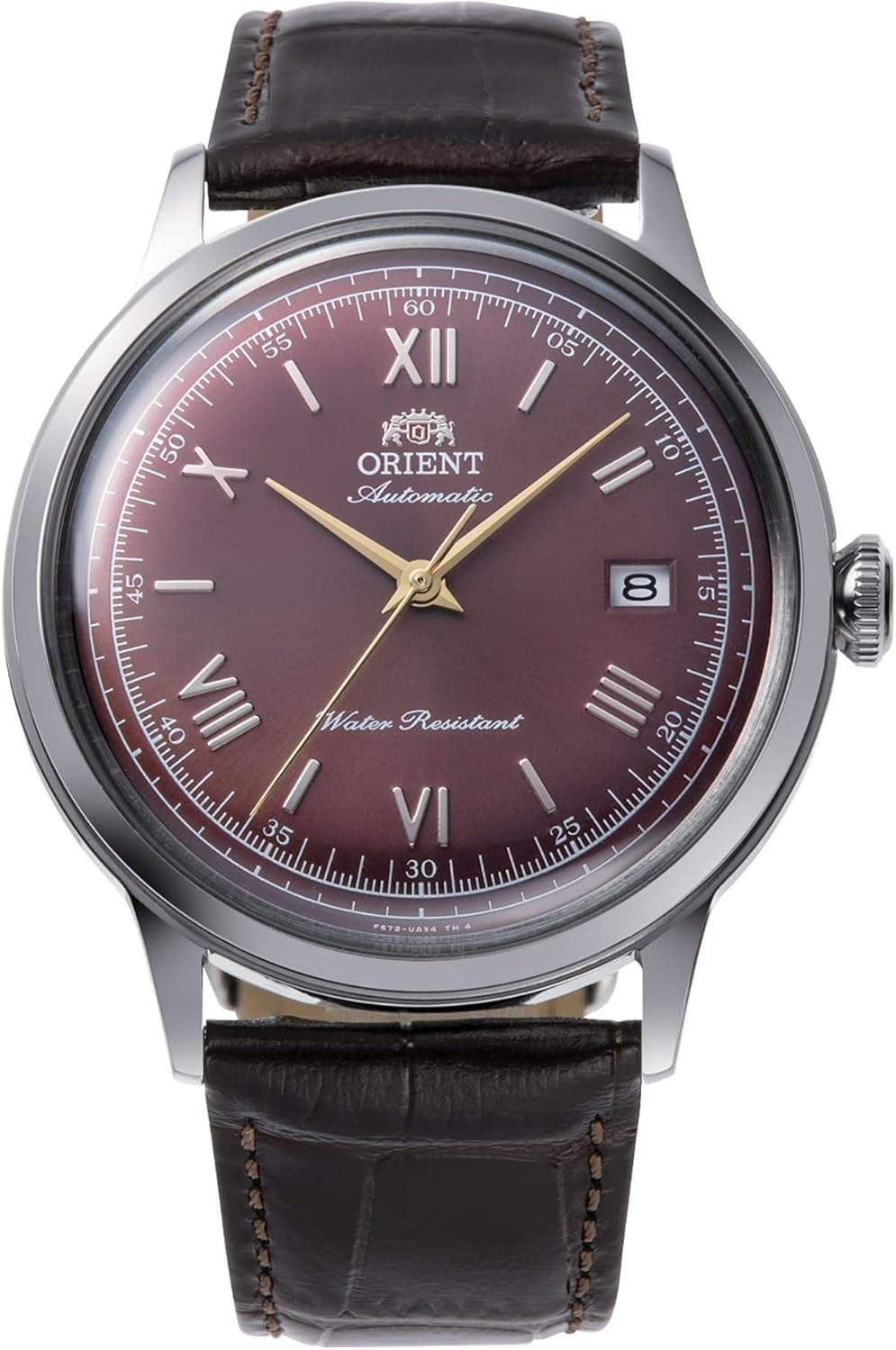
A red dial is one of the boldest color choices a watch can make, and it is genuinely rare. True, fire-engine red across a full dial is unusual outside fashion, digital and limited pieces, because it is hard to wear daily and harder still to keep legible. Most of what the trade calls red is in fact a deeper, more wearable family: burgundy, oxblood, maroon and wine. Finish does the heavy lifting here. A fume or smoked treatment, dark at the rim and brighter toward the center, is the most common way serious brands handle red, since it tames the saturation and adds depth. Sunburst burgundy catches light like any sunray dial, while flat lacquered red is reserved mostly for statement and sport pieces. It is worth being honest from the start: if you want red, you will choose from a short list, and much of that list is burgundy rather than scarlet.
Real examples sit mostly in the accessible and mid ranges rather than at the top. The Tissot PRX Powermatic 80 has appeared in a burgundy sunray dial around $725, one of the easiest ways into the look with a Swiss automatic and integrated bracelet. Seiko has run several red and burgundy dials, including 5 Sports and SPB-series field models, typically from roughly $300 to $550. The Oris Aquis offers a relief red dial near $2,400, a rare case of true red done for a dive watch, while Longines and Hamilton issue occasional burgundy fume runs in the $1,000 to $2,000 band. Higher up, red usually arrives as an accent rather than a field: the Omega Speedmaster and various Tag Heuer Carrera and Monaco references use red chronograph hands, tachymeter text or central seconds drawn straight from motorsport. Genuine full red dials from the big houses tend to be limited editions, so prices move with availability rather than a list figure.
When choosing, separate the two paths clearly. If you want everyday wearability, burgundy or maroon fume is the answer: it behaves almost like a warm gray-brown in most light and only flashes red in the sun, so it pairs with navy, charcoal and brown leather without shouting. If you actually want red to be seen, accept that it is a statement watch and plan around it, ideally on steel or a muted strap so the dial stays the only loud element. Racing fans are often better served by a dark dial with red accents than by a red field, since the contrast is what makes a tachymeter or seconds hand pop. Whatever you pick, view it in person or in natural light first, because red and burgundy photograph very differently from how they wear.
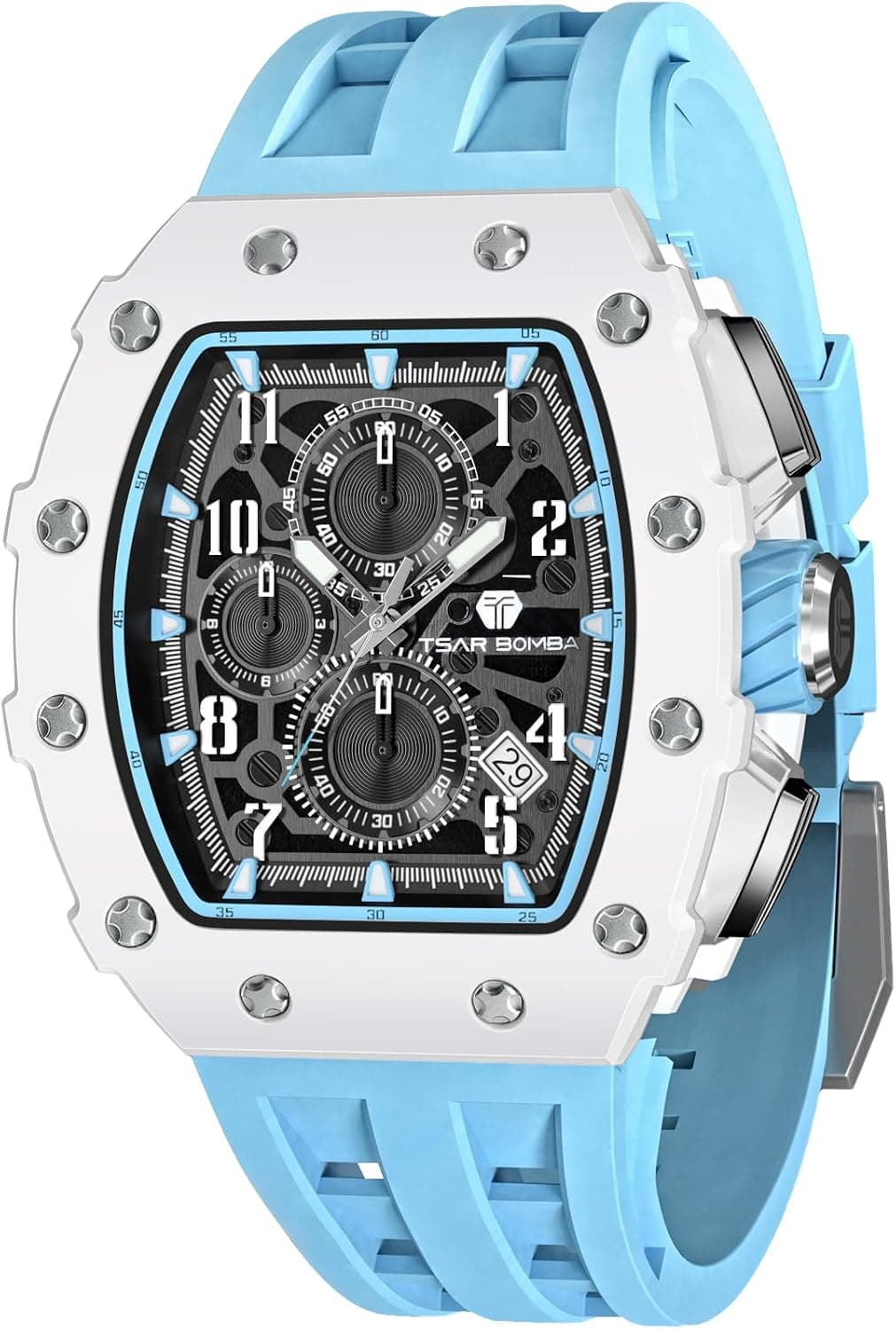
It helps to think in sub-types. Burgundy fume is the grown-up, wearable end and the safest first red. Salmon, often grouped nearby, is really a pink-coral tone with its own vintage following and should not be confused with true red. Racing red lives as an accent on chronographs and motorsport pieces. Flat lacquered red and multicolor digital belong to fashion, sport and statement watches. Red rewards restraint: because so few watches wear it well, the right one becomes instantly recognizable, which is exactly the point.