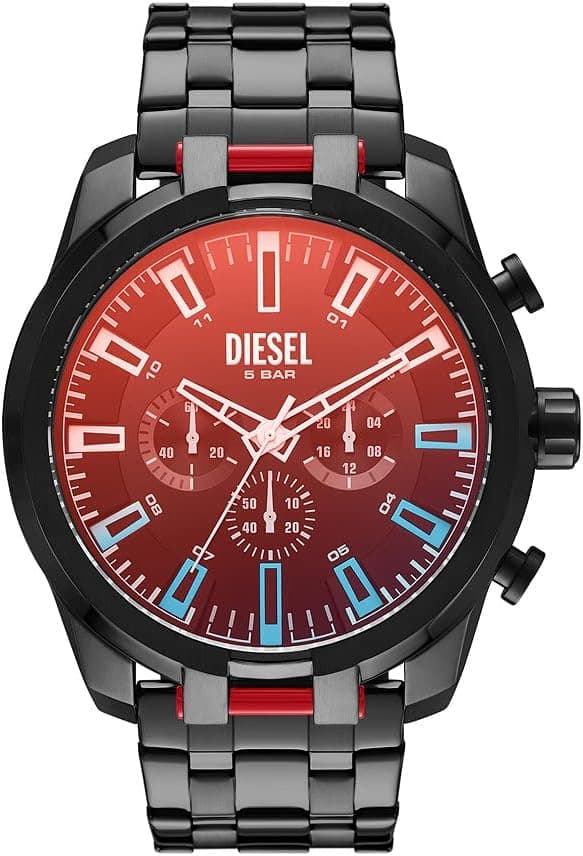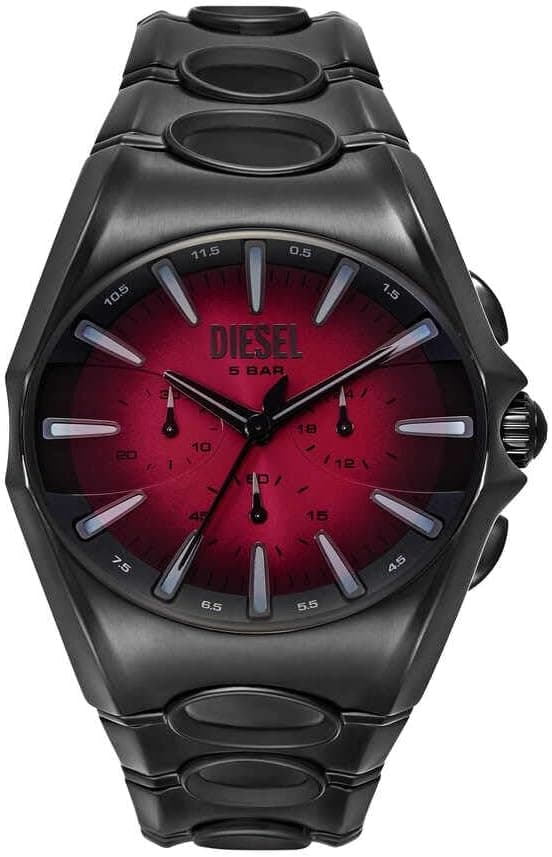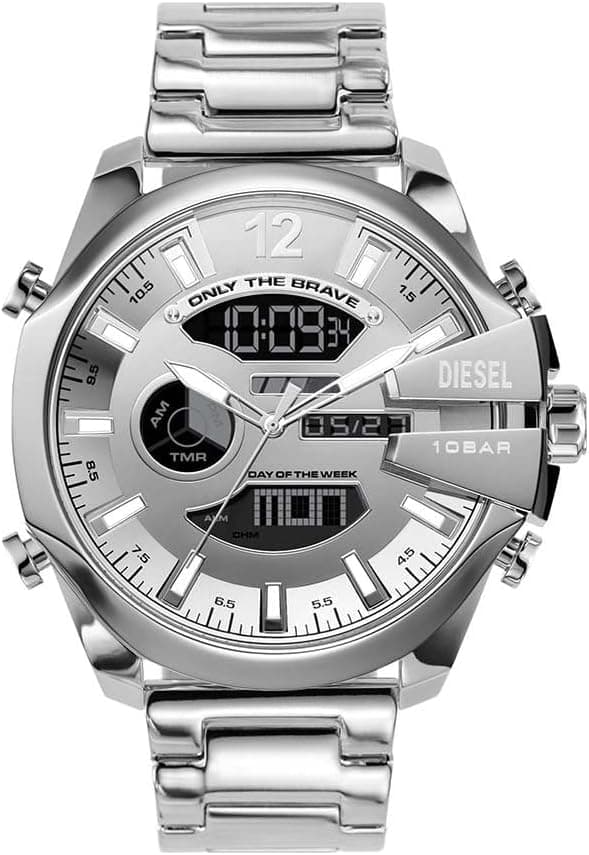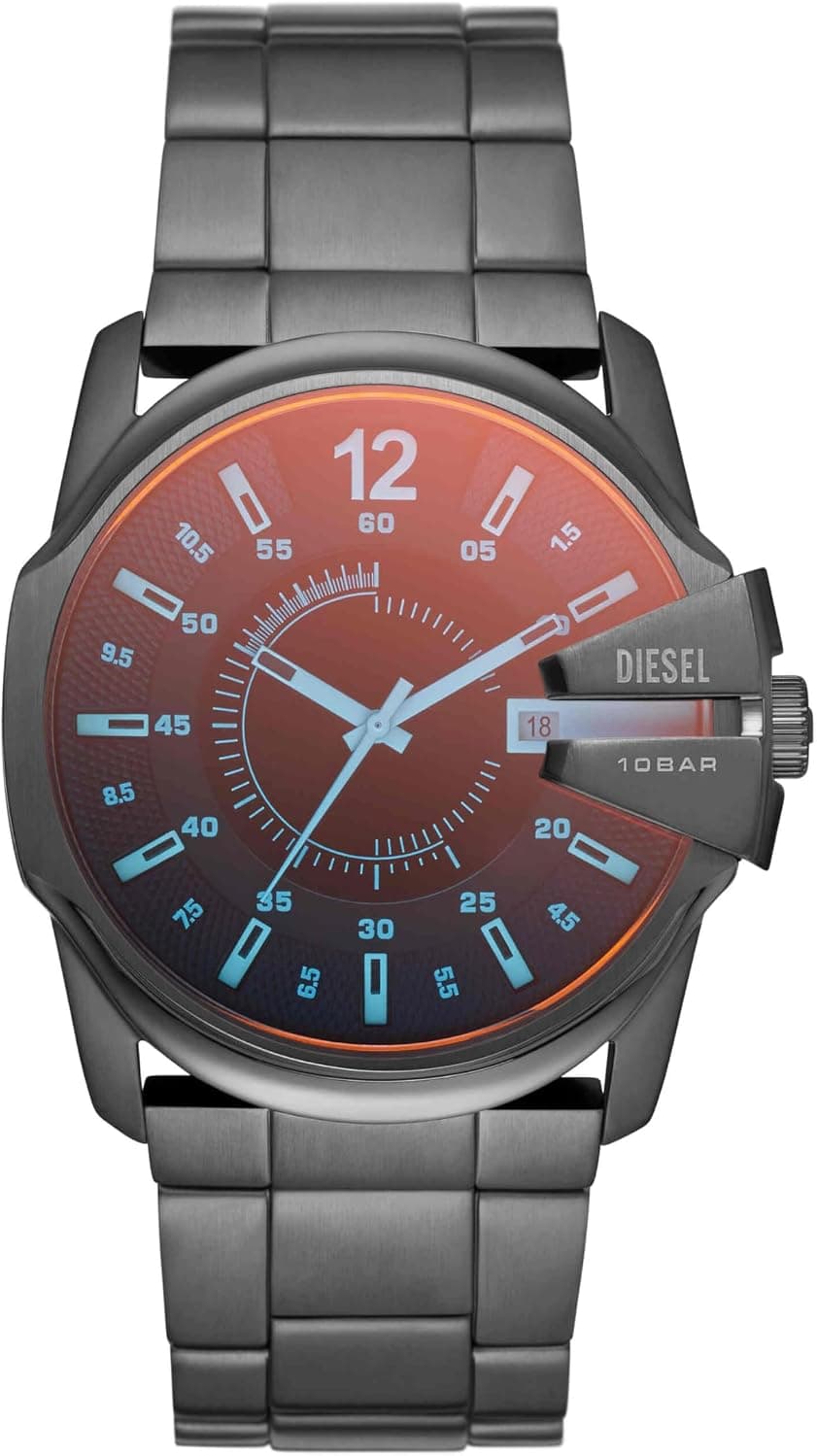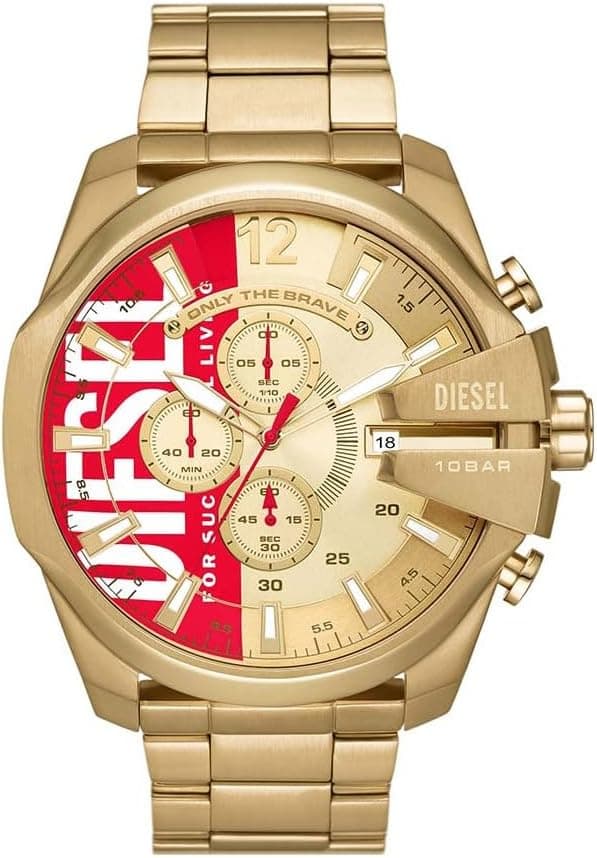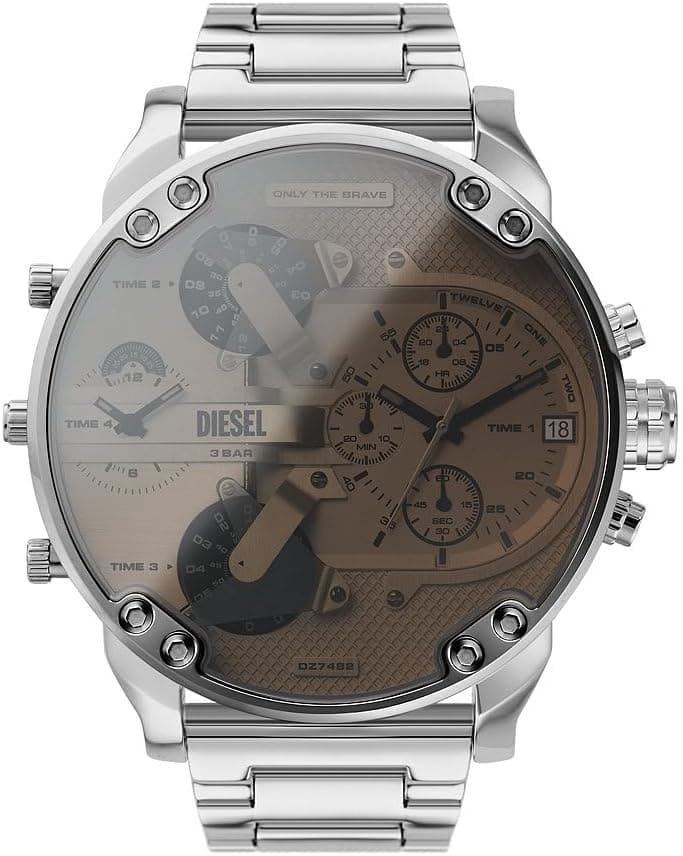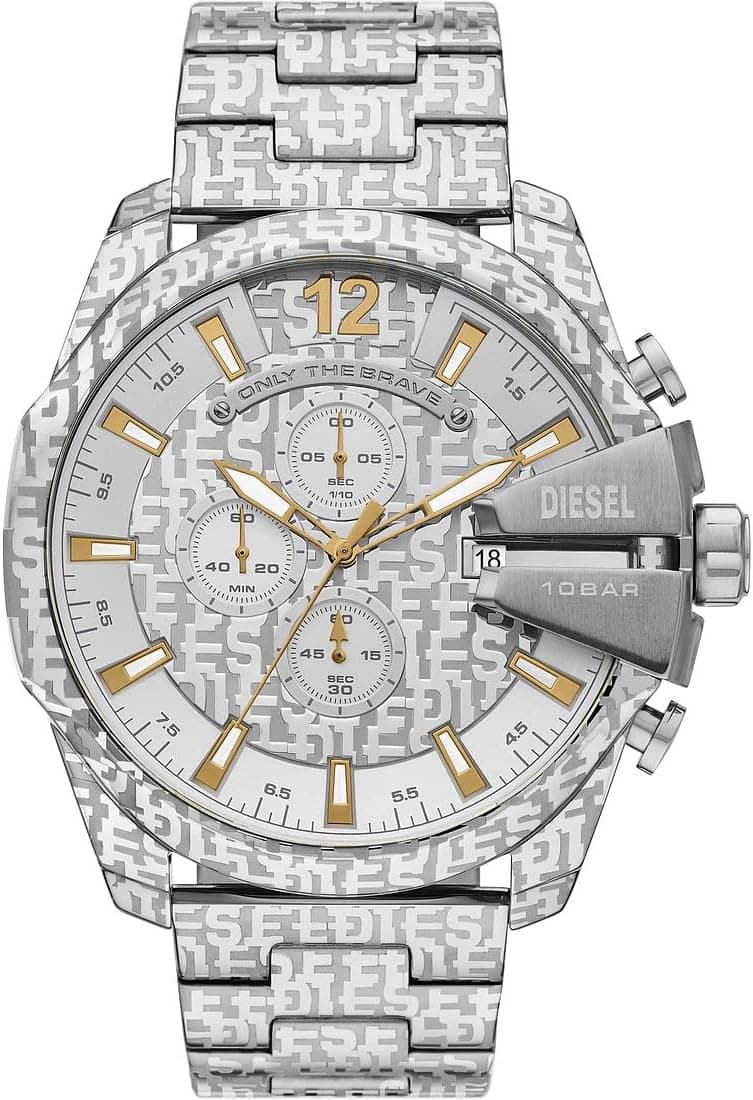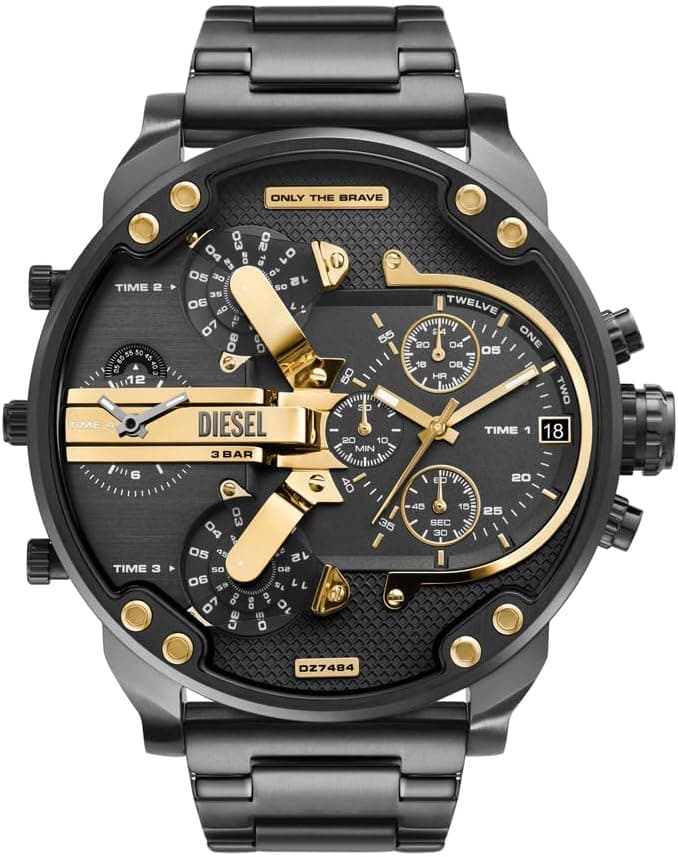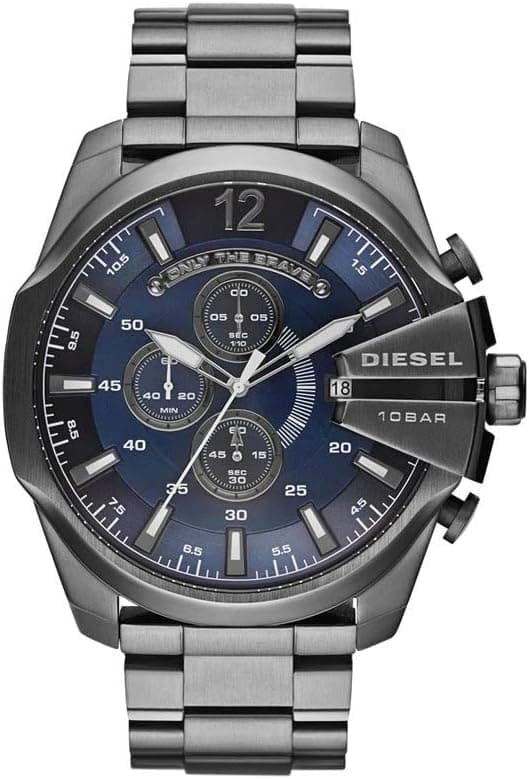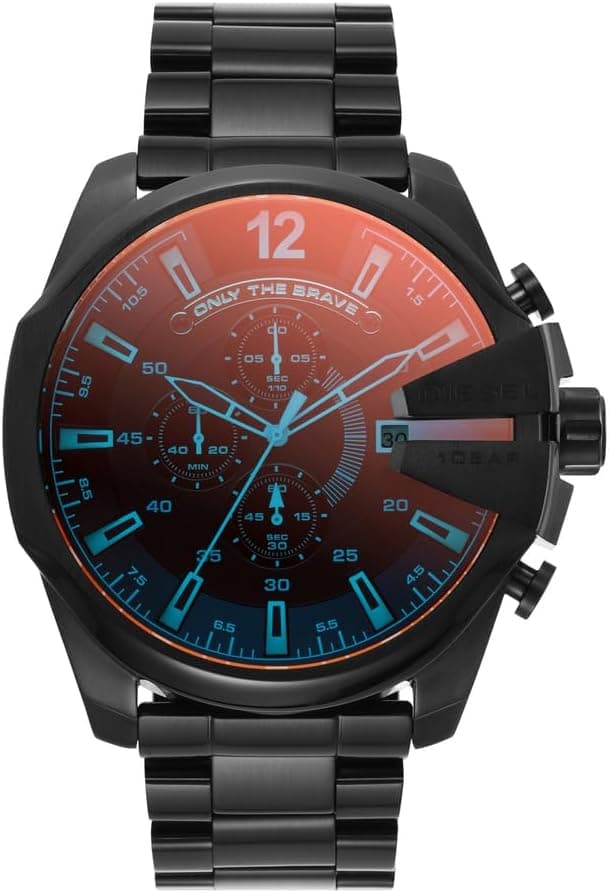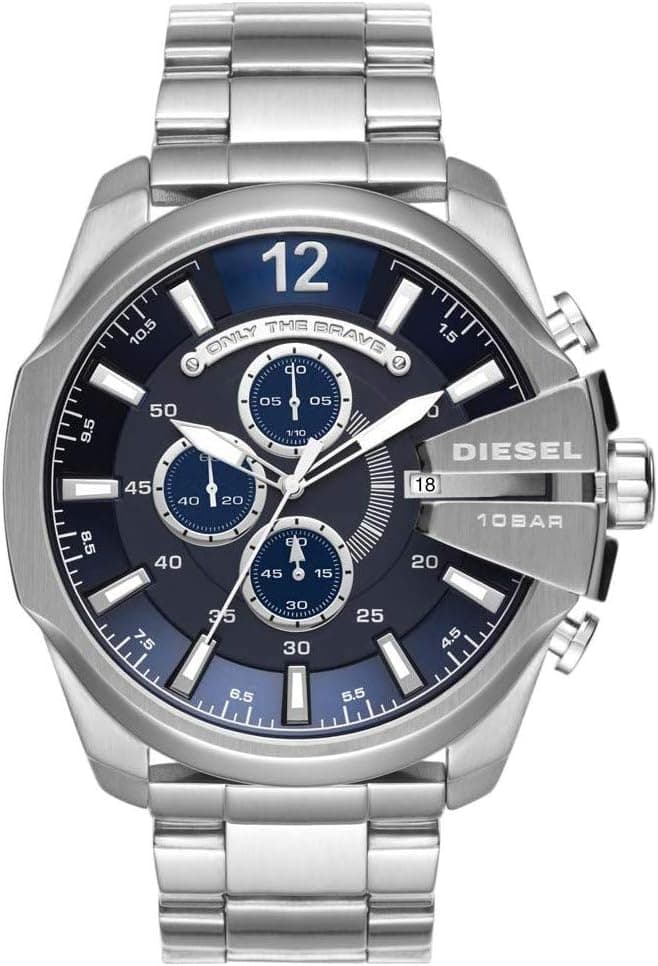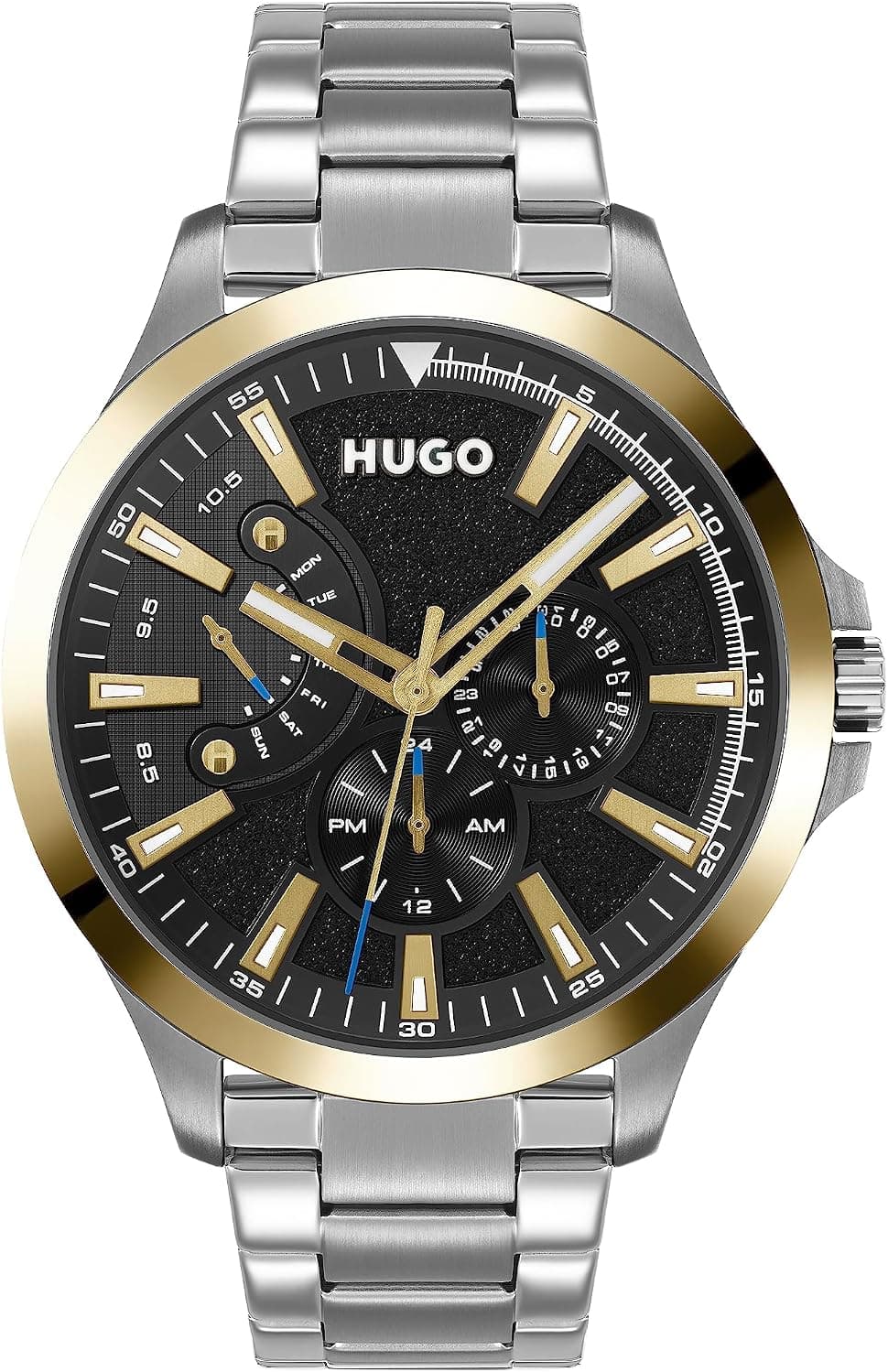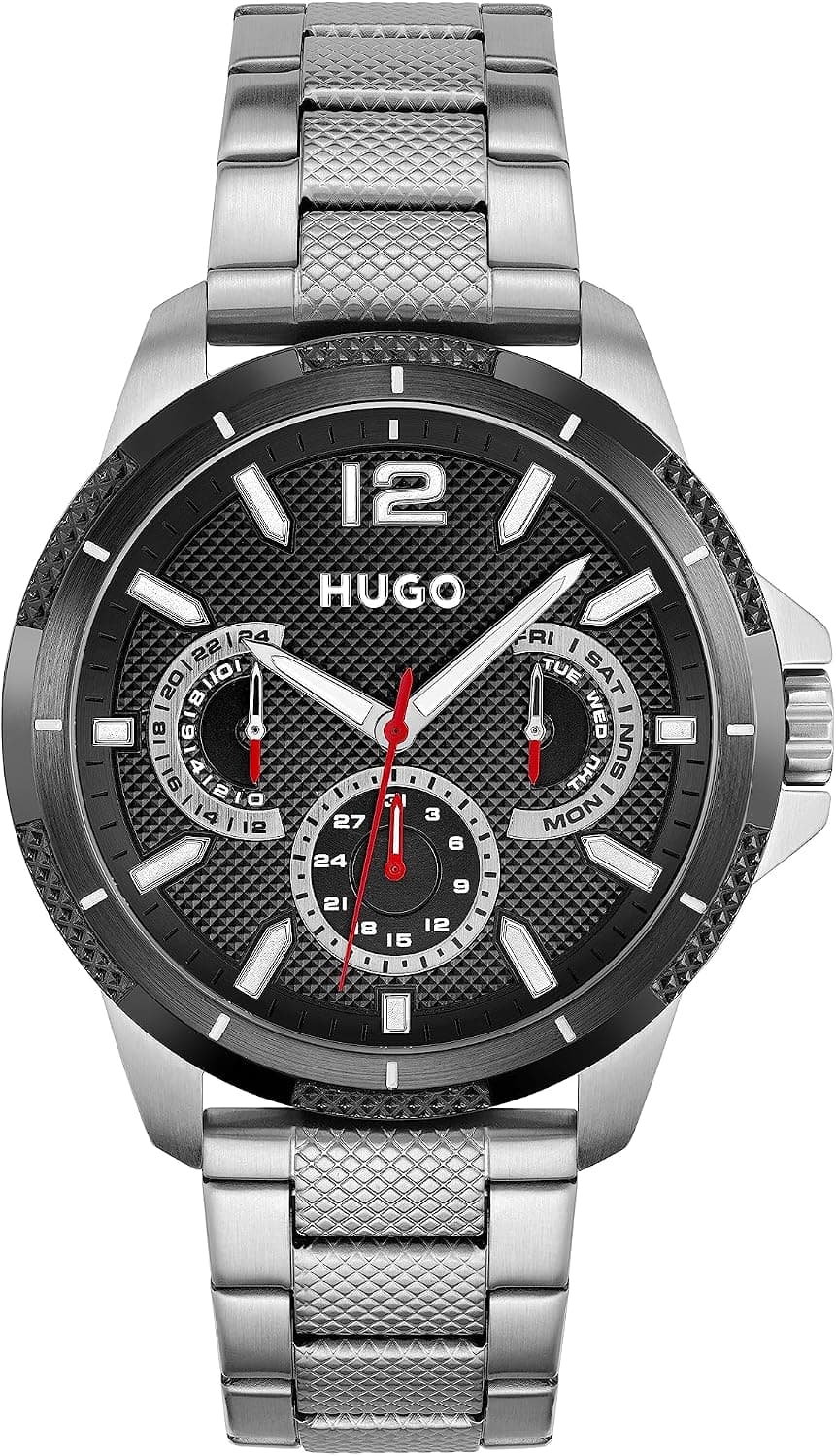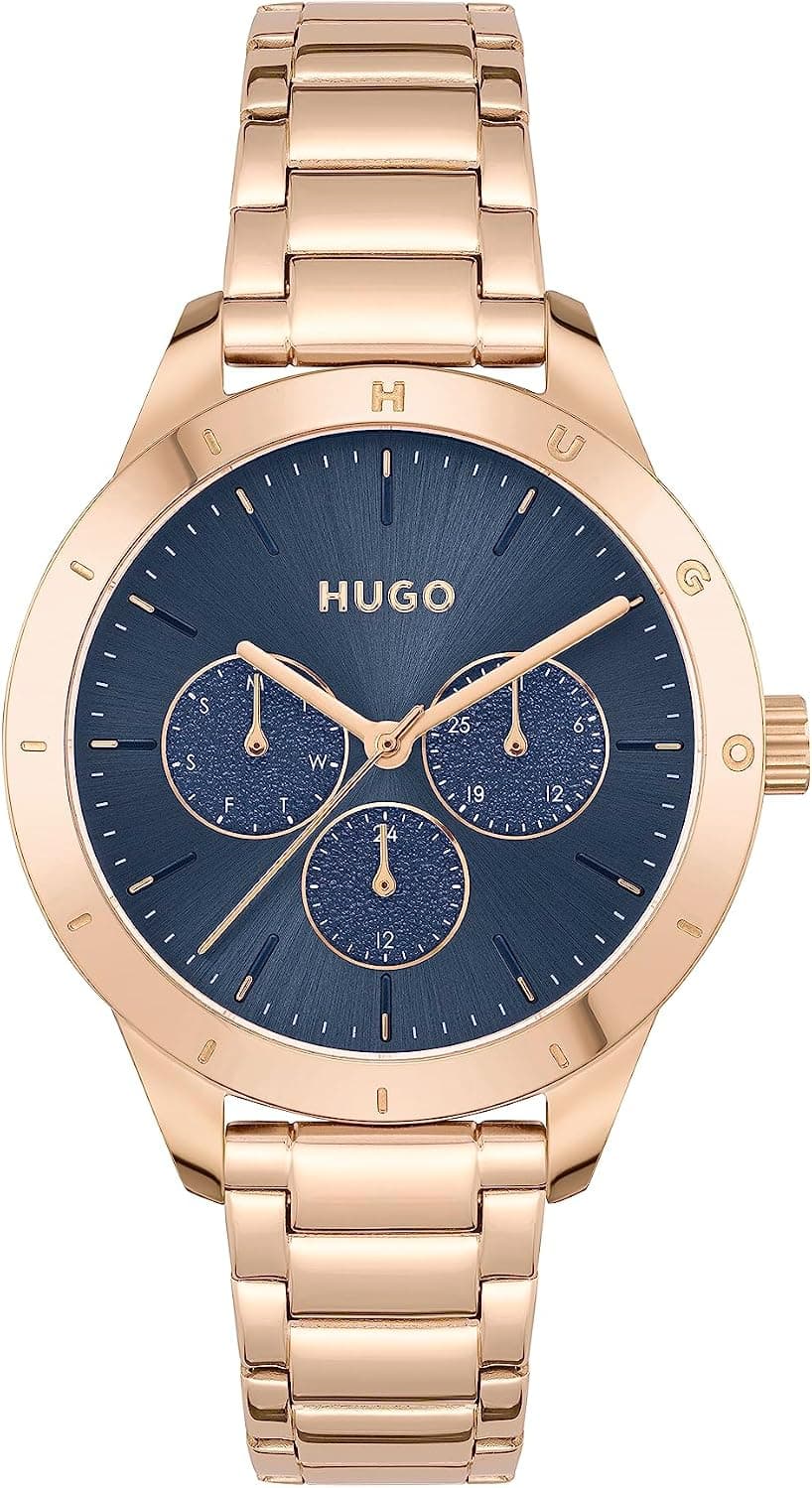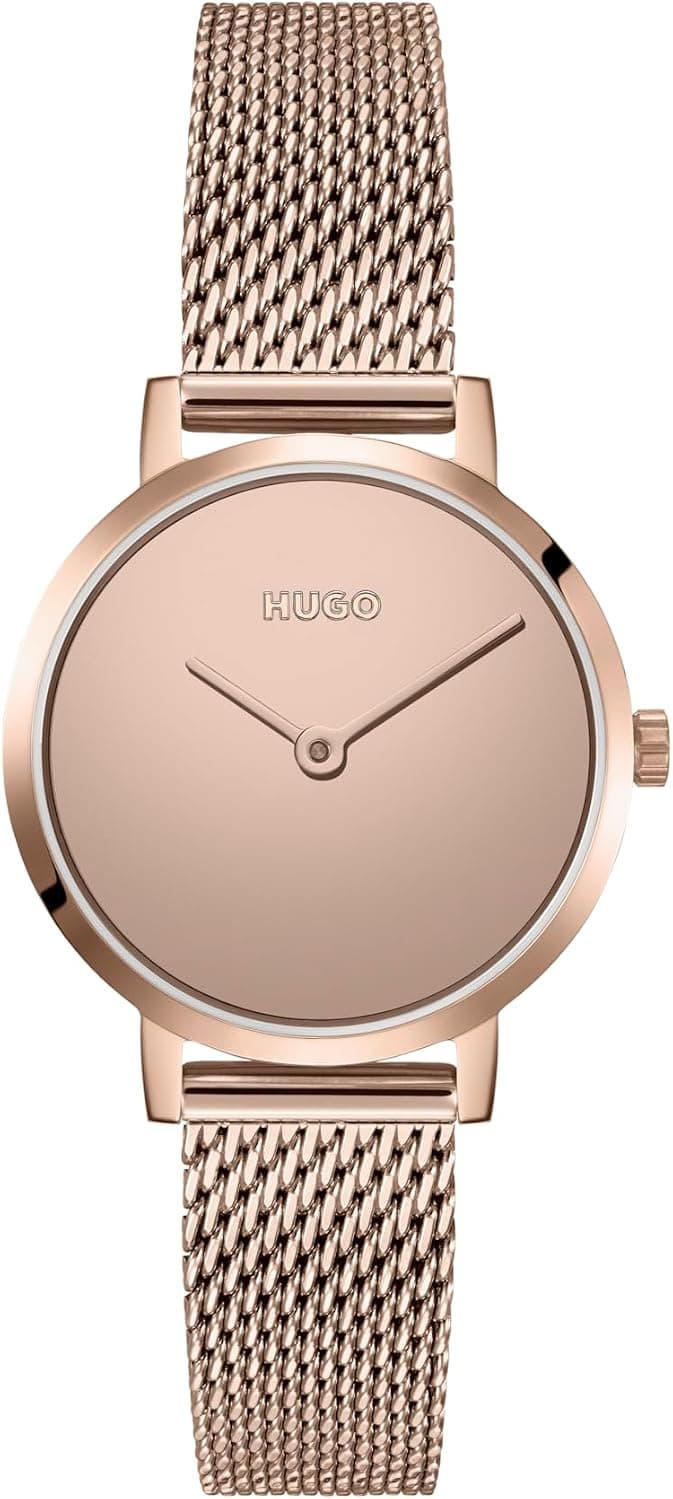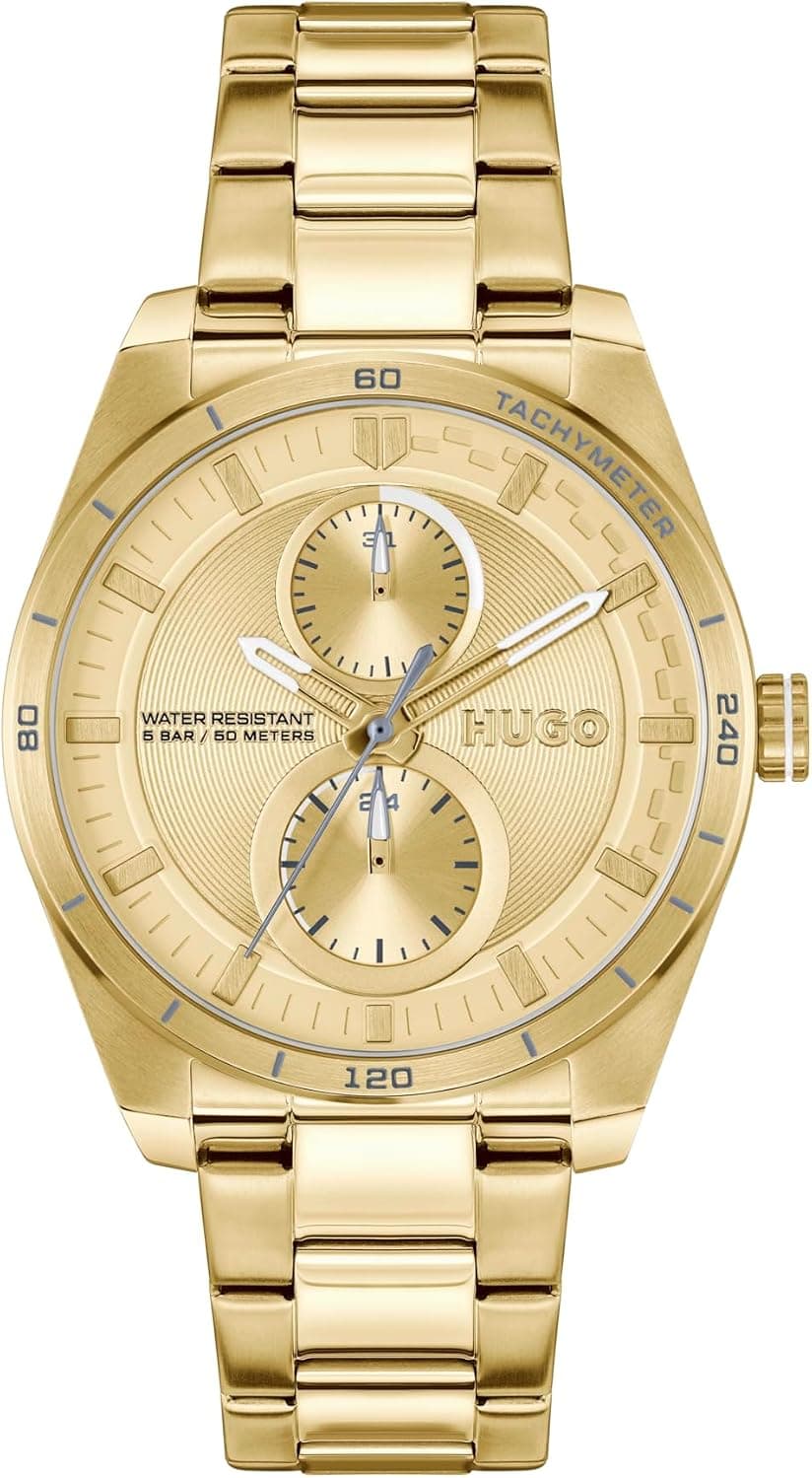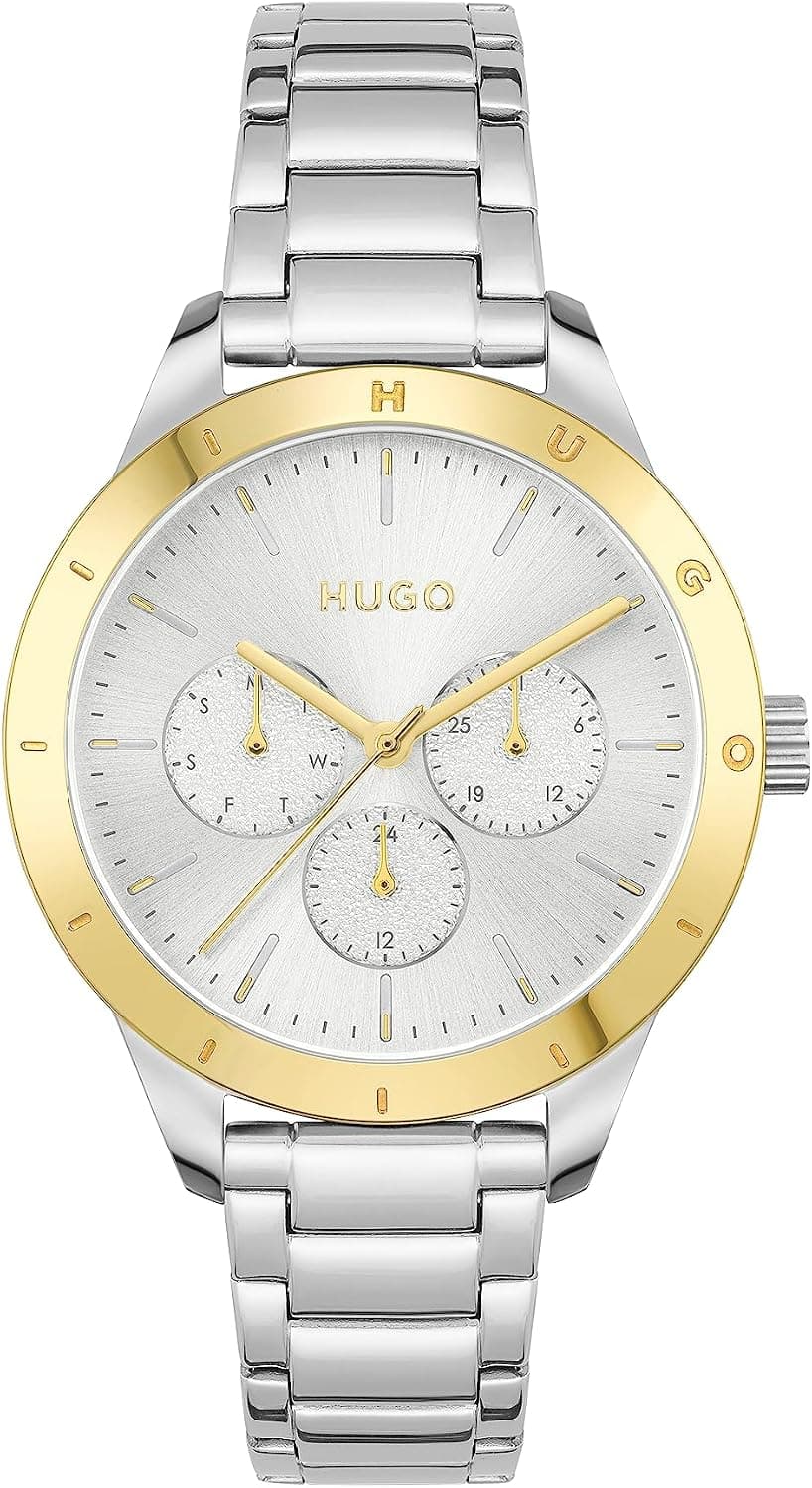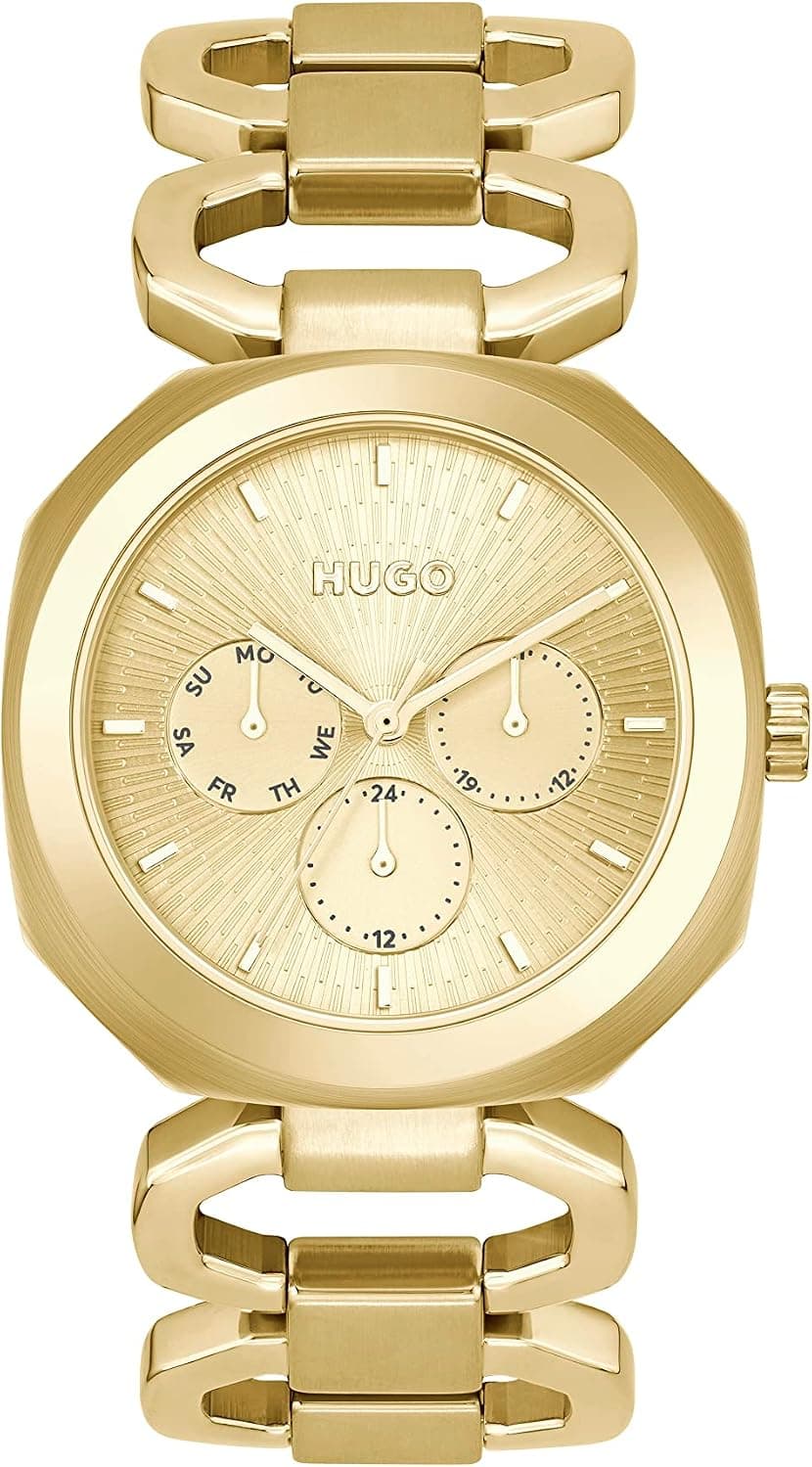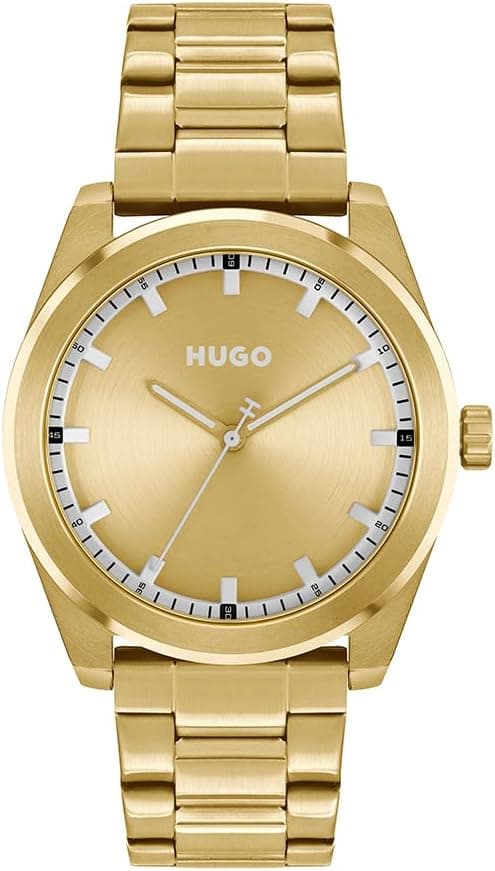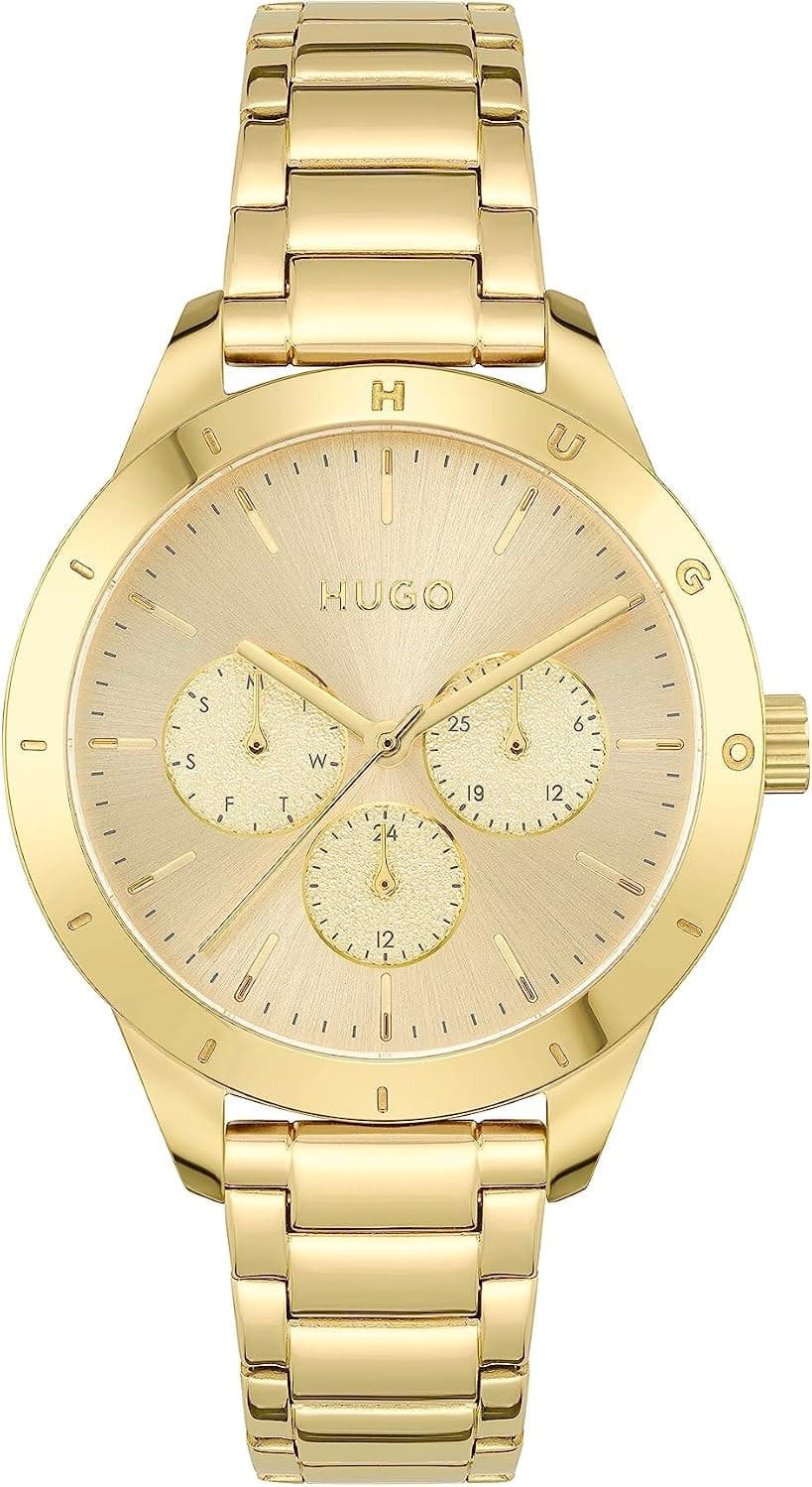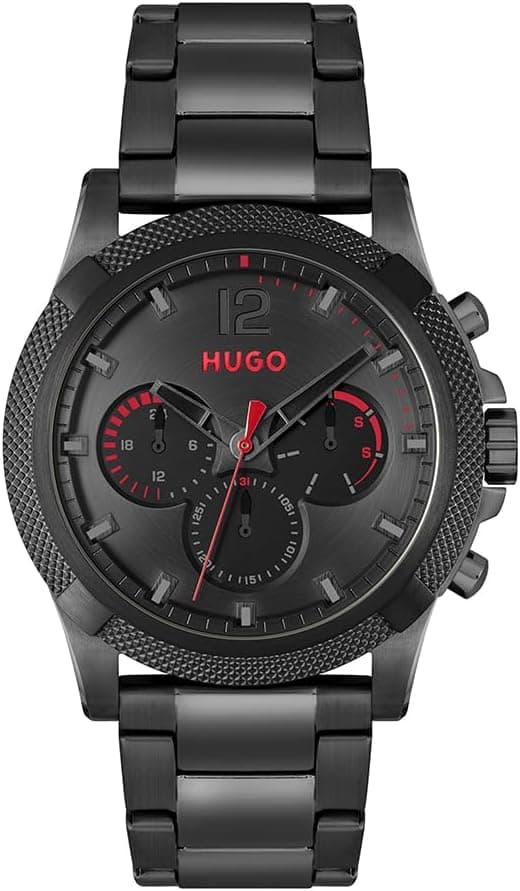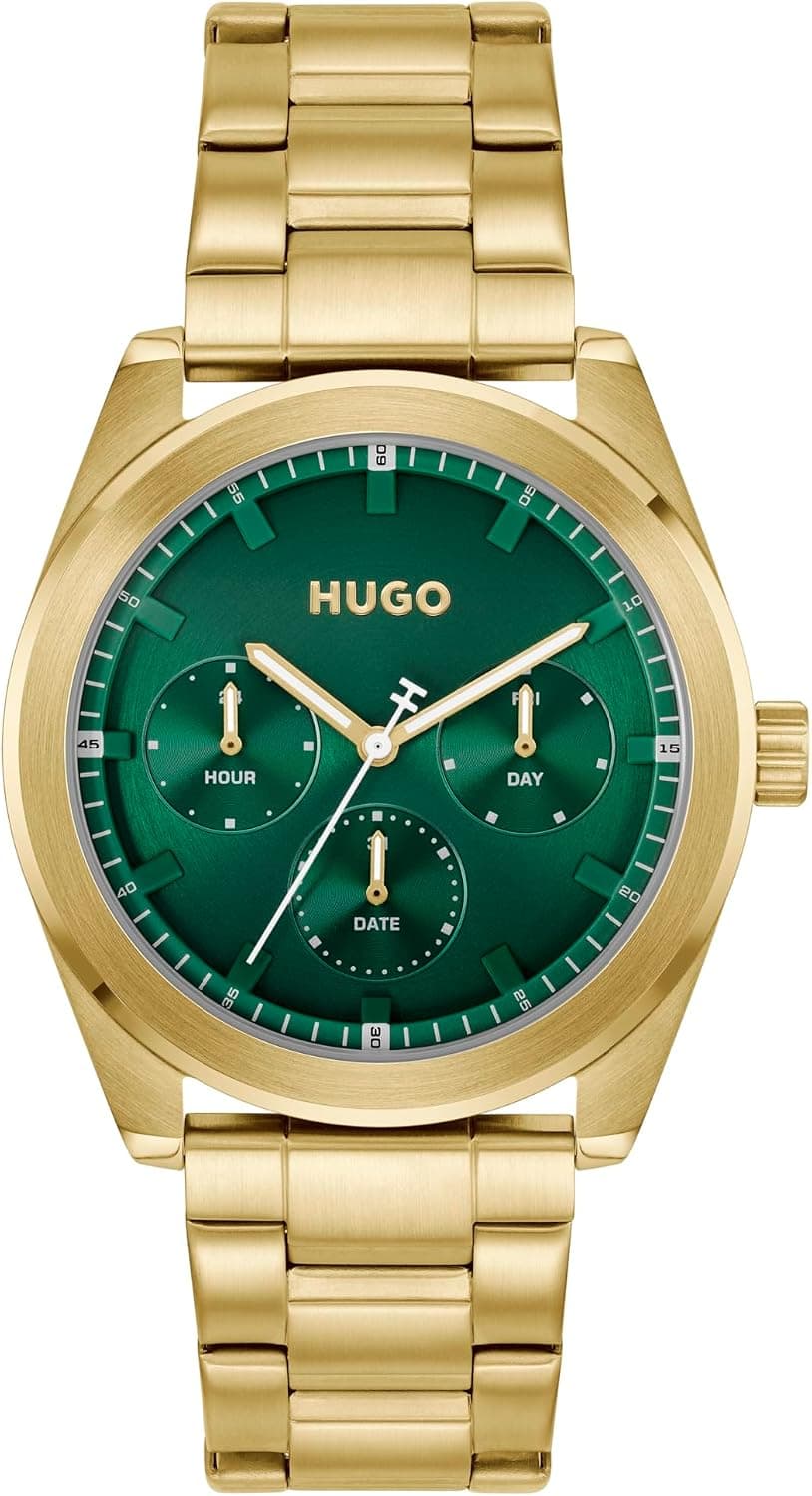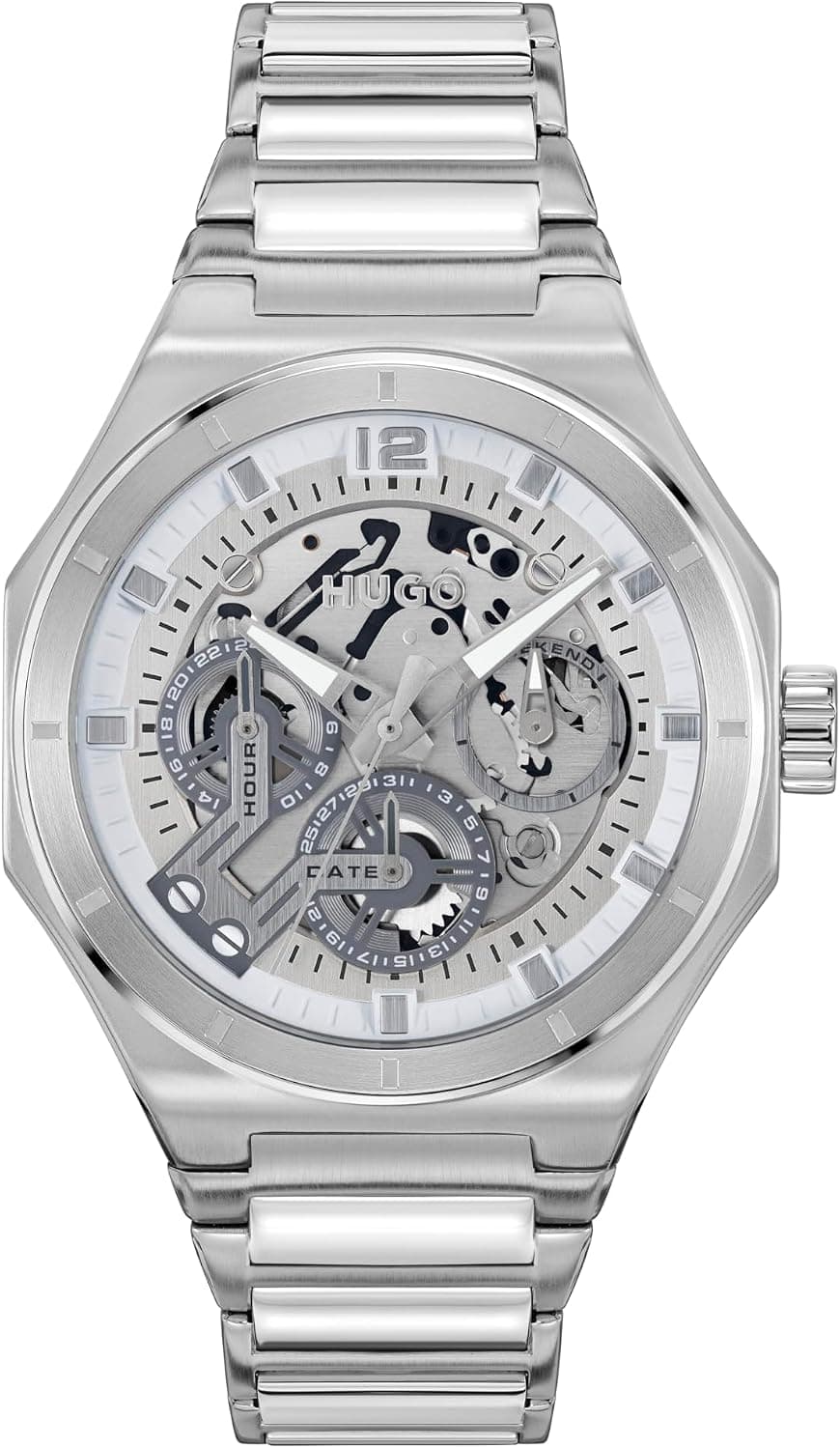
A metal bracelet, unlike a leather or rubber strap, is built from metal links riveted or pinned together to carry the watch on the wrist. Most are stainless steel, though titanium, gold and two-tone versions are common. A handful of core architectures dominate. The three-link Oyster, introduced by Rolex in the late 1940s, has broad flat links and reads sporty and tough. The five-link Jubilee, which debuted on the 1945 Datejust, uses smaller links for a suppler, dressier feel. The President, fitted to the Day-Date since 1956, runs semicircular links for a more formal line. Alongside these sit Milanese mesh woven from fine wire, beads of rice, and the integrated bracelets born in the 1970s, each opening a different aesthetic world.
Real examples map the range well. At the entry end, the Seiko 5 Sports SRPD line ships with a solid-link steel bracelet for roughly £235. In the middle, a Tudor Black Bay 41 on its steel bracelet lands around £4,080, while an Omega Seamaster Diver 300M steel bracelet alone runs about £640. Rolex uses 904L Oystersteel, and on a steel GMT-Master II the Jubilee option adds roughly £160 over the Oyster at retail. The integrated bracelet world traces back to Gerald Genta's 1972 Audemars Piguet Royal Oak and the 1976 Patek Philippe Nautilus. If you want lightness, Citizen's three-hand Super Titanium Zenshin sits near £399, about five times harder than steel and some 40% lighter.
Two technical details decide everything when you buy: end links and the clasp. Solid end links are milled from one piece, sit heavier and stay put; hollow end links are folded thin steel, lighter but prone to rattle over time. On the clasp, micro-adjustment matters. Rolex's Glidelock expands up to 20mm tool-free, each click about 2mm, while the Easylink folds out roughly 5mm to rescue a swollen summer wrist. A Jubilee's polished centre links look elegant but scratch easily, whereas an Oyster's brushed surface hides scuffs better. For someone who wants one daily watch that shrugs off sweat and water, a metal bracelet is the most practical answer.
Material nuances also steer the choice. Stainless steel is durable and affordable; titanium is hypoallergenic and cuts wrist fatigue on big cases; two-tone and gold bracelets look richer but demand more care. If your wrist is slim, a five-link Jubilee or a mesh wraps more kindly, while a broad wrist carries the Oyster's heft well. Models that offer half-links or screwed links give you the best chance at a precise, comfortable fit.