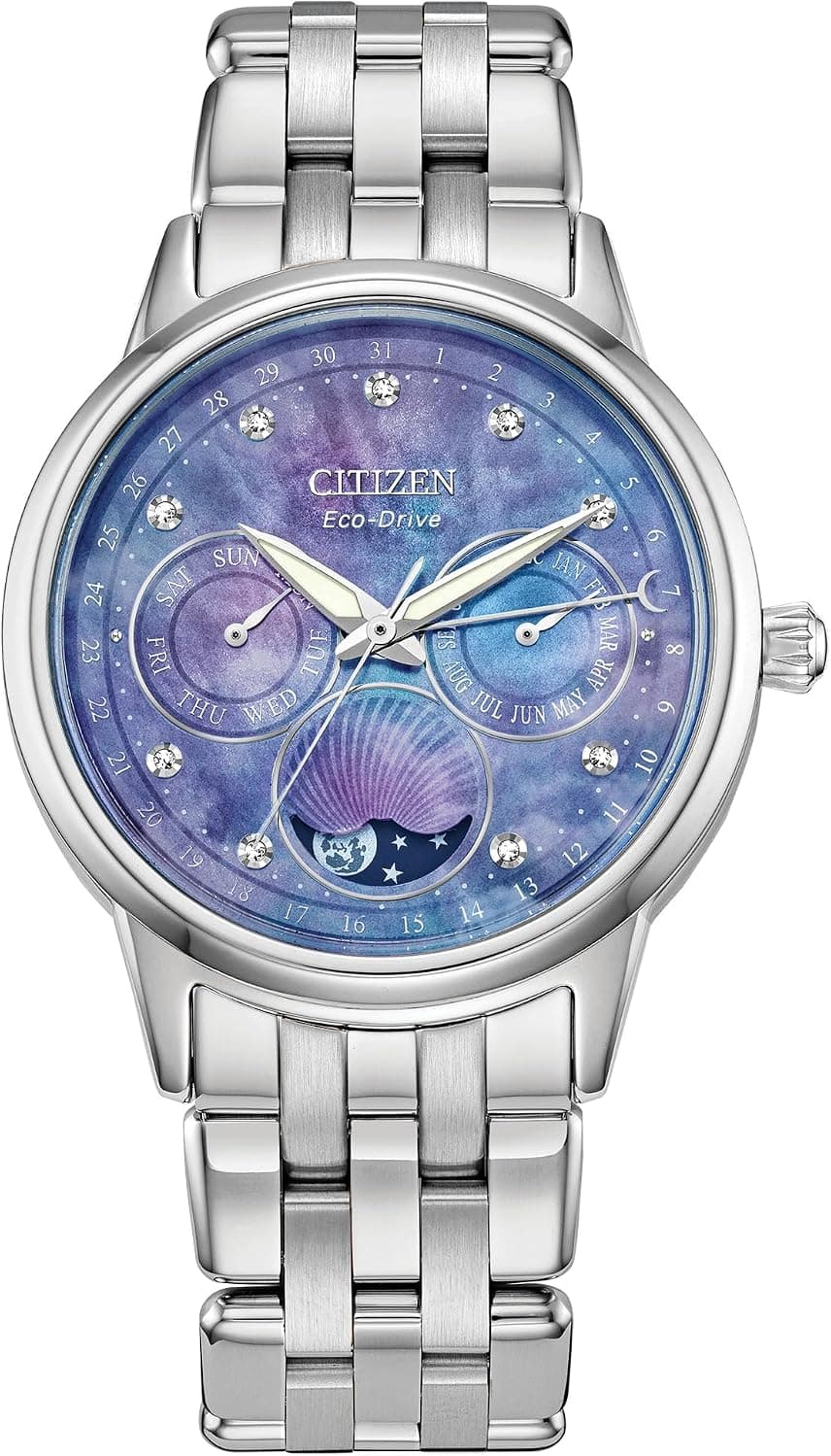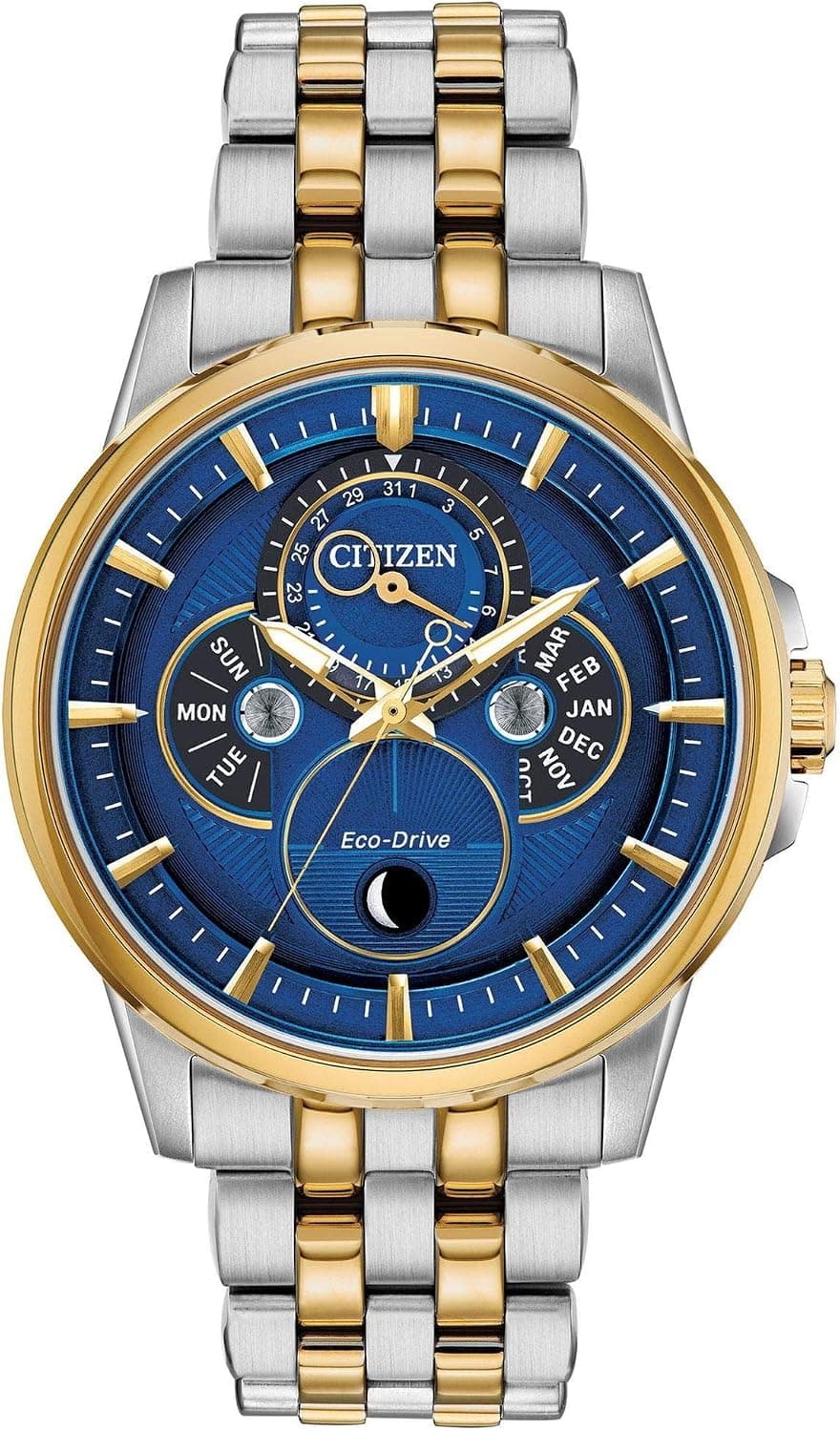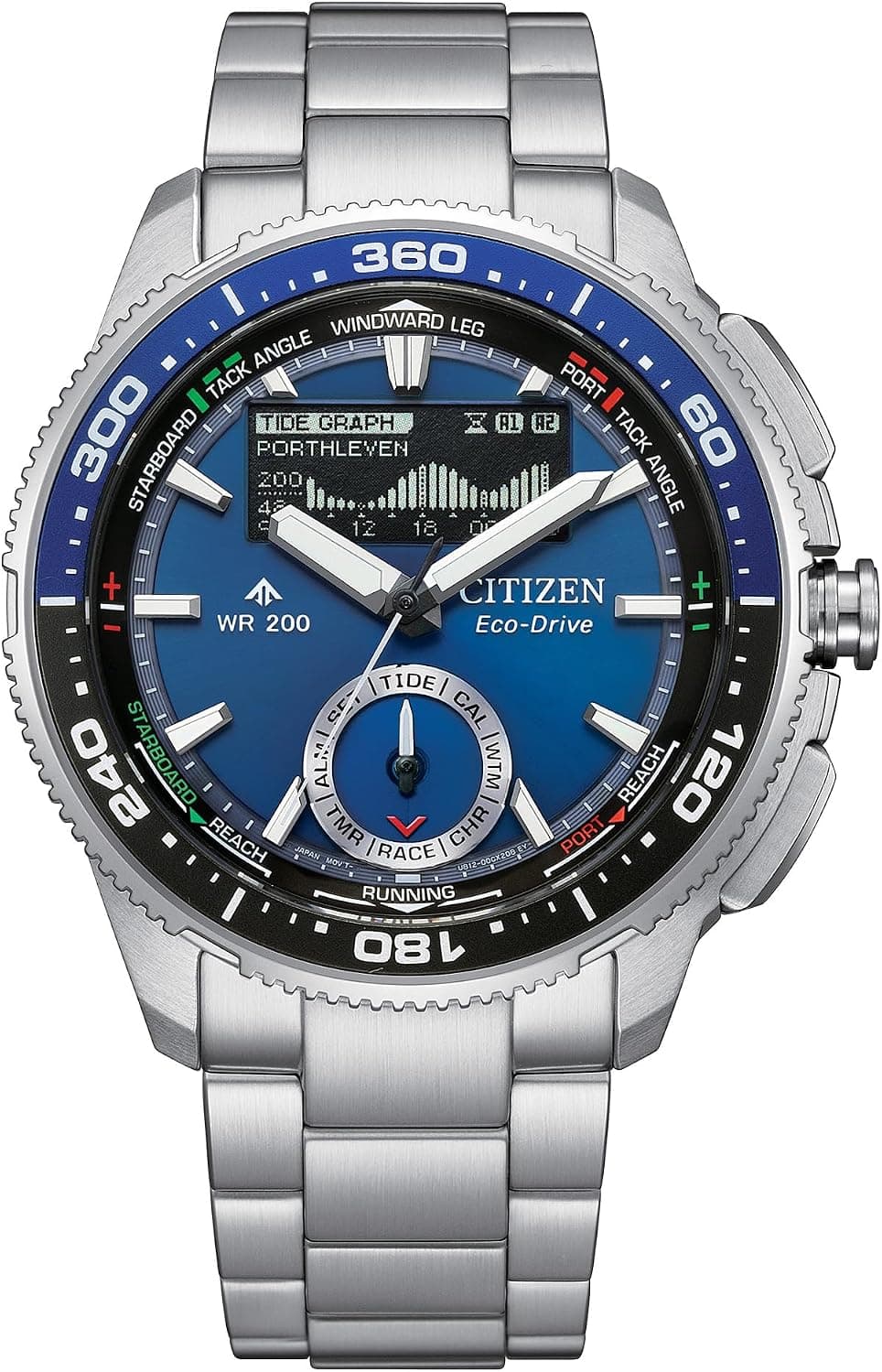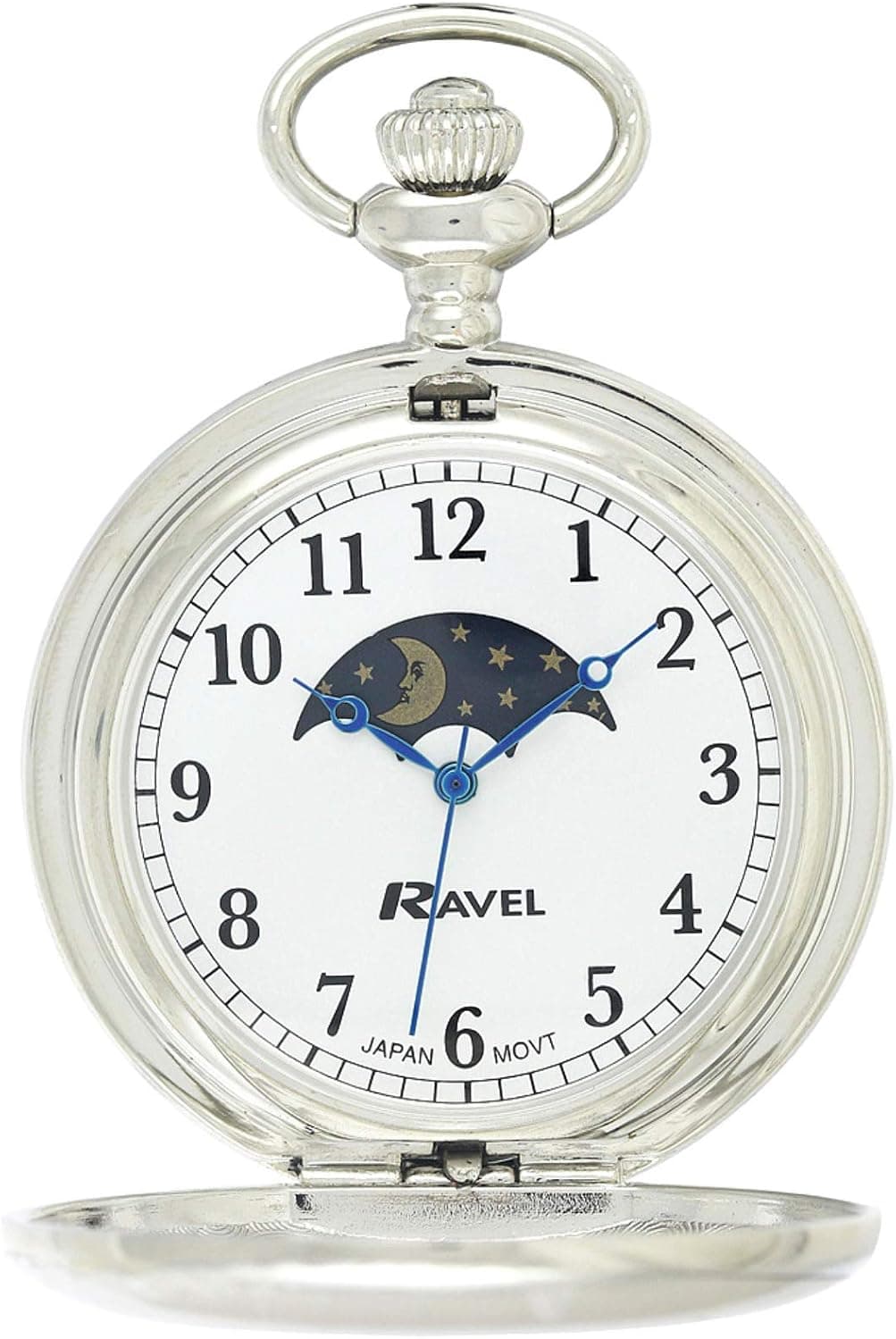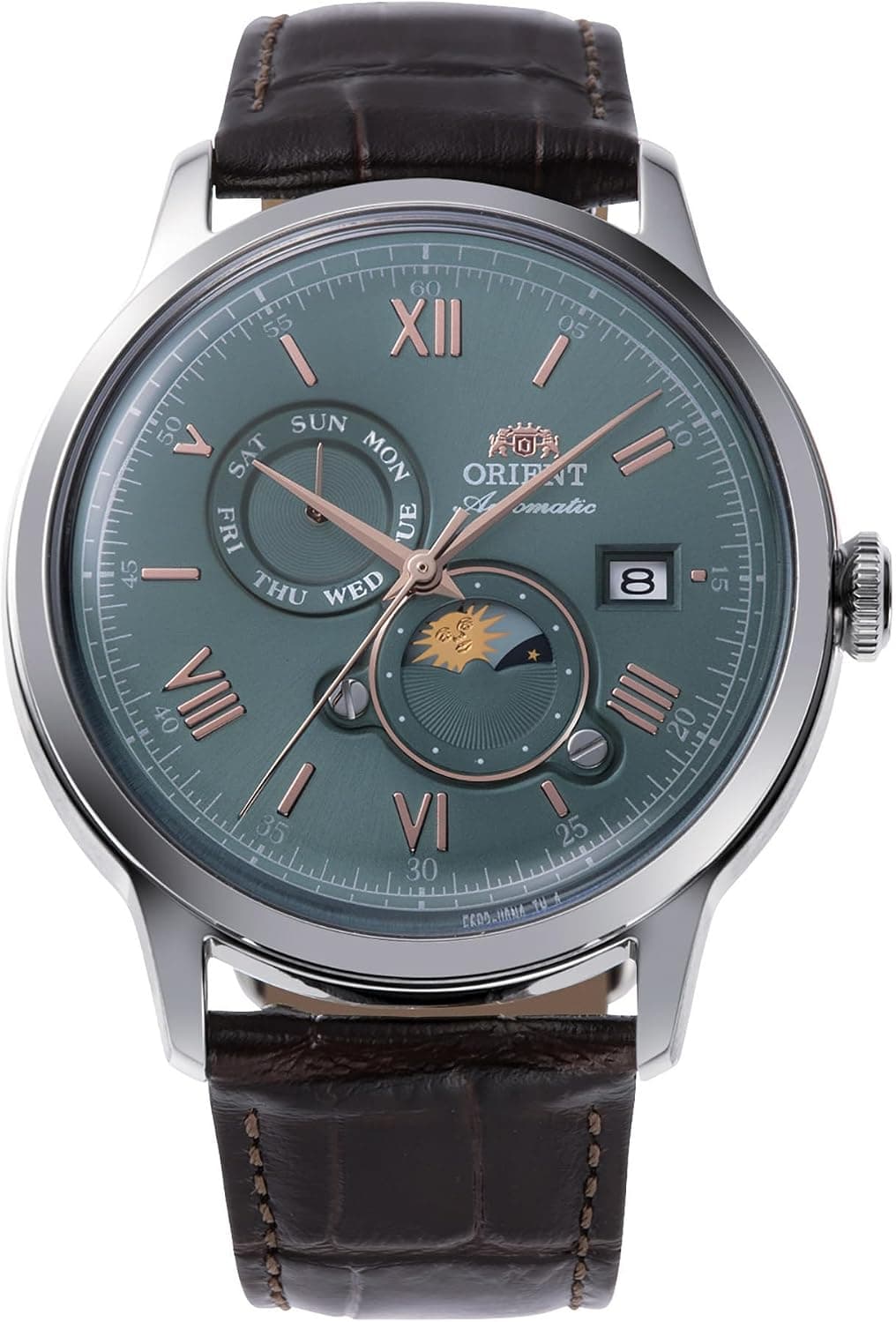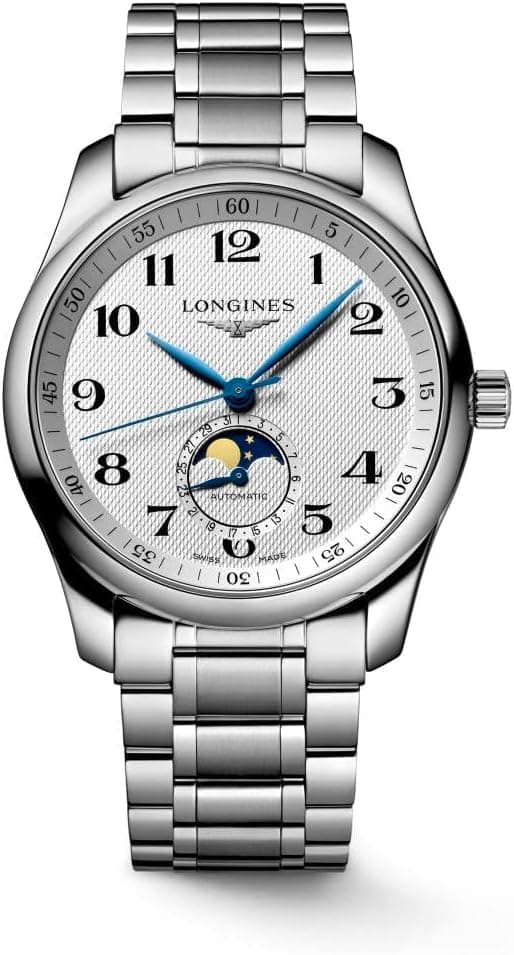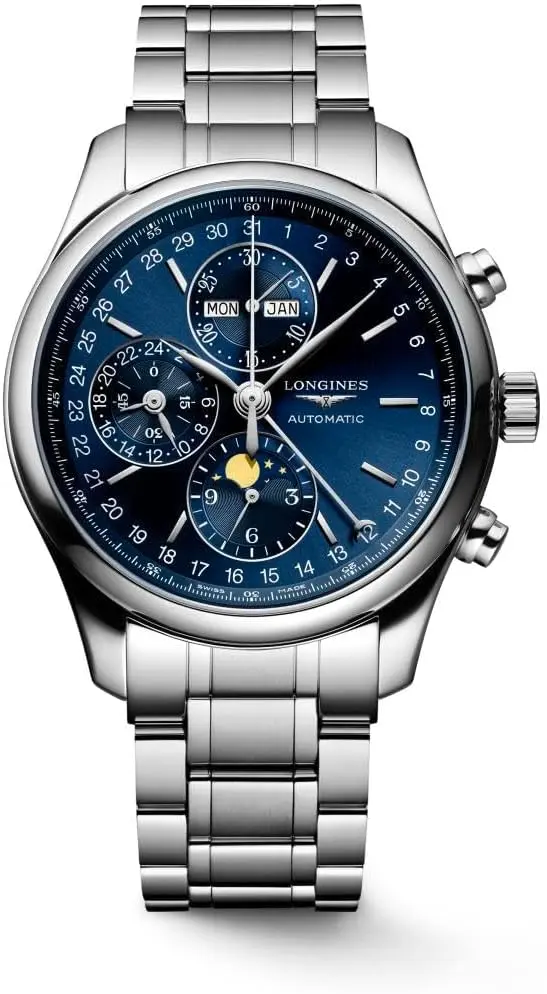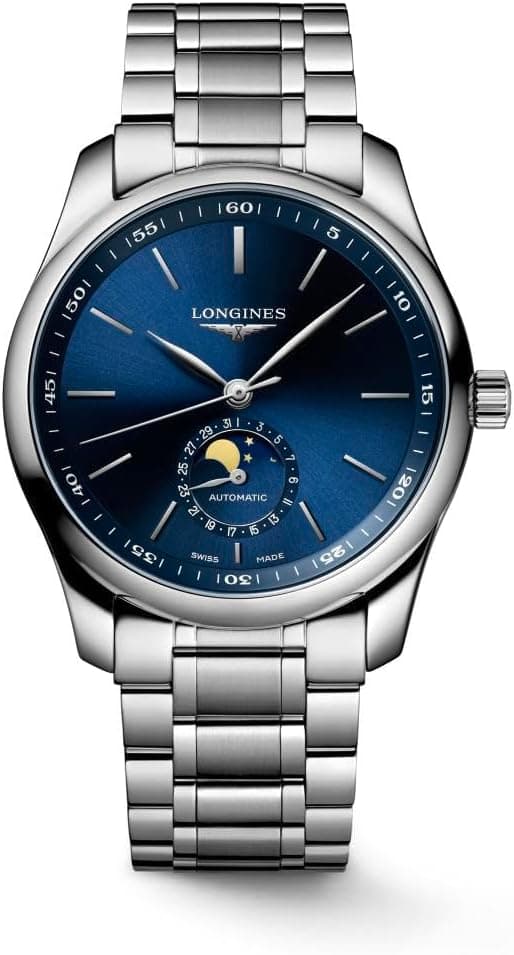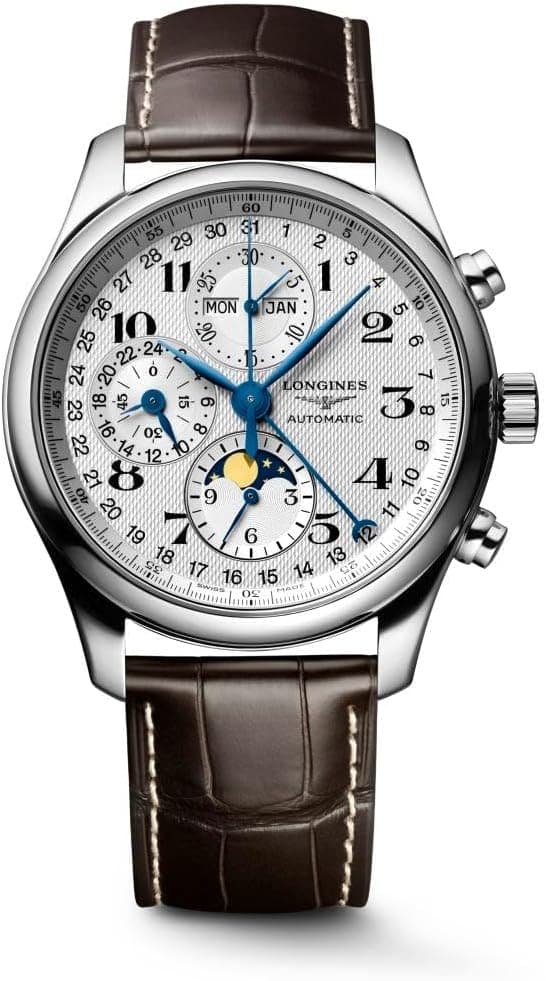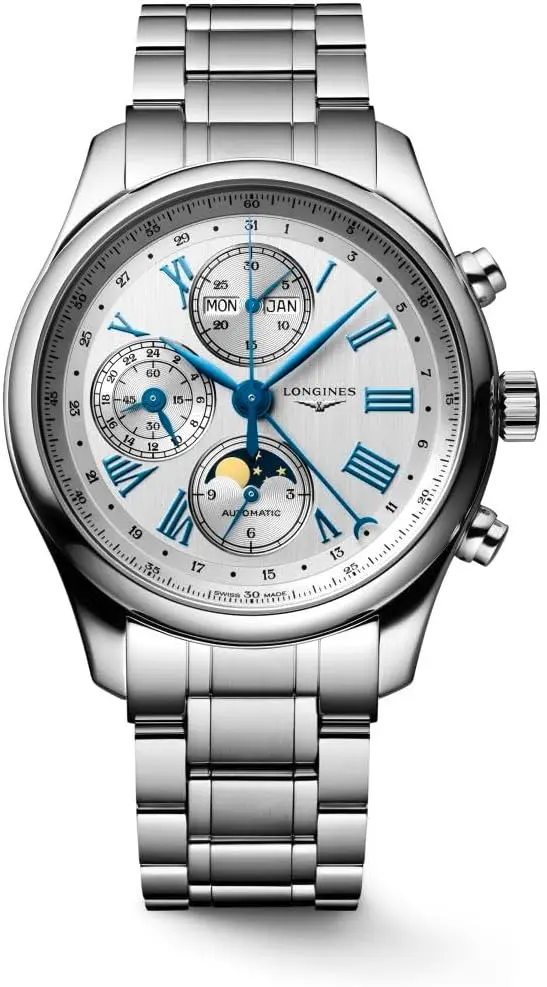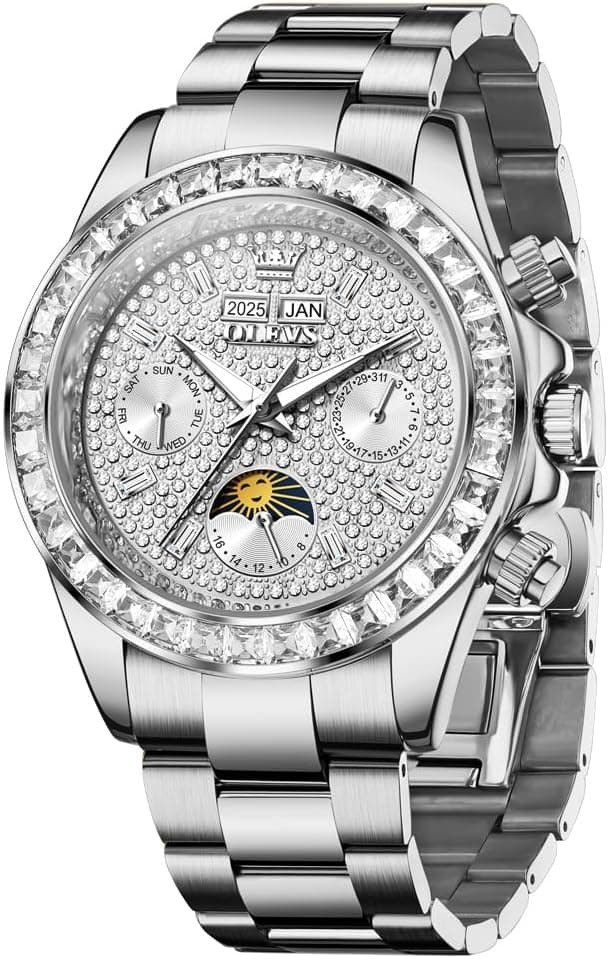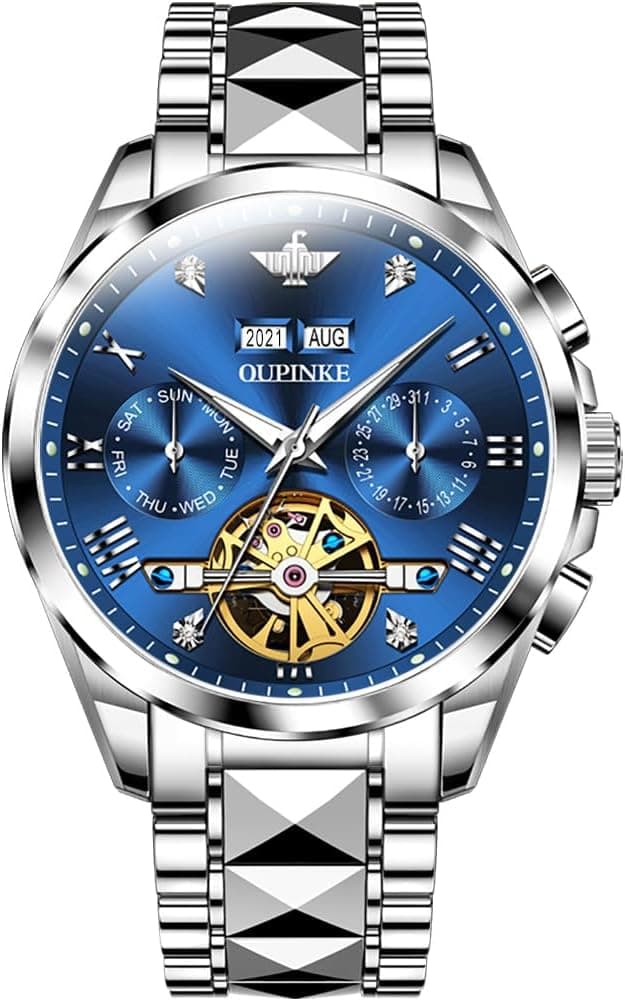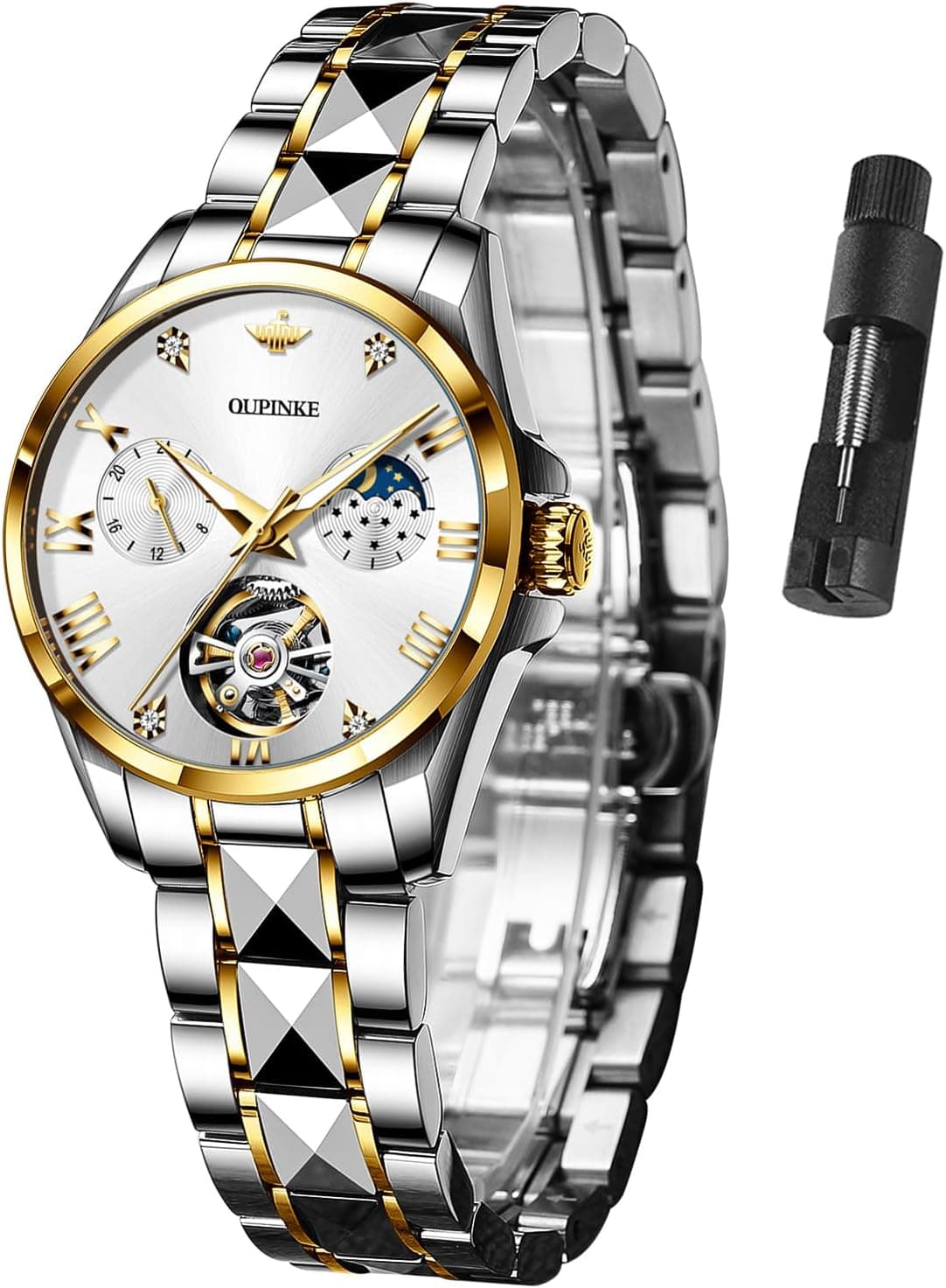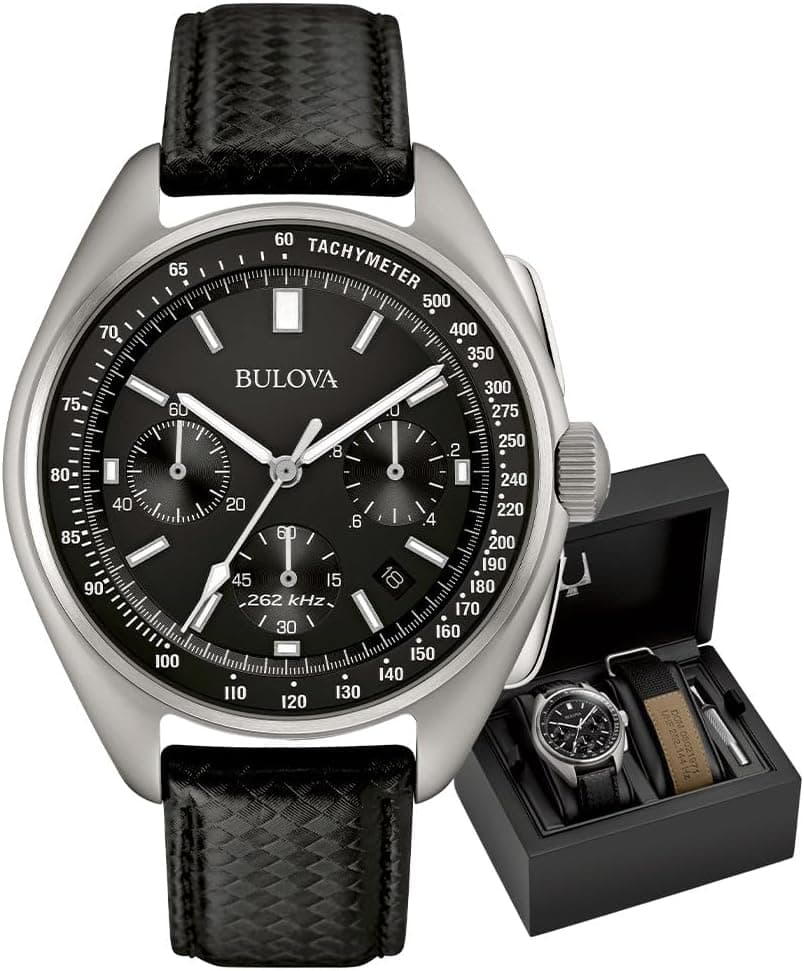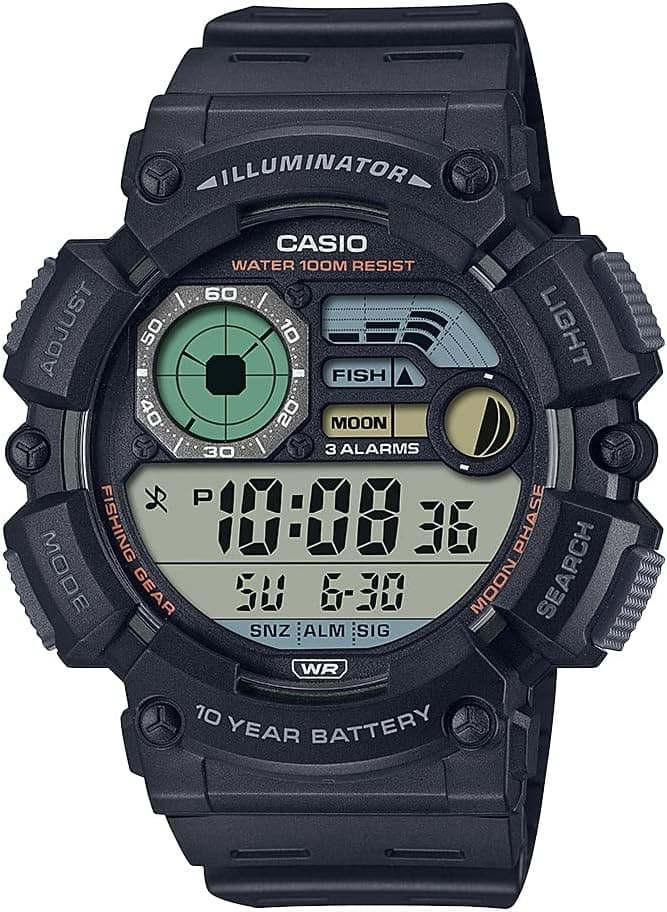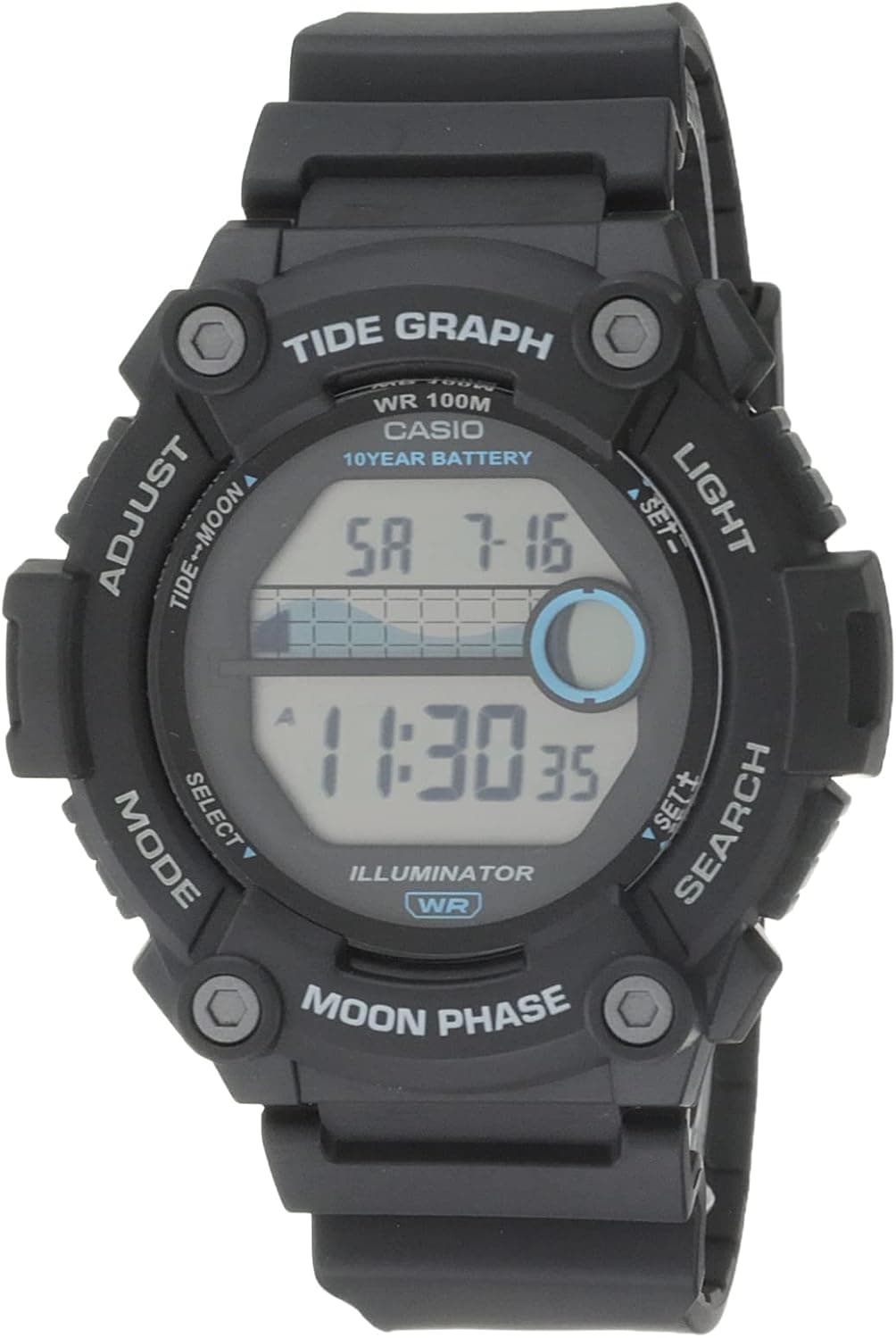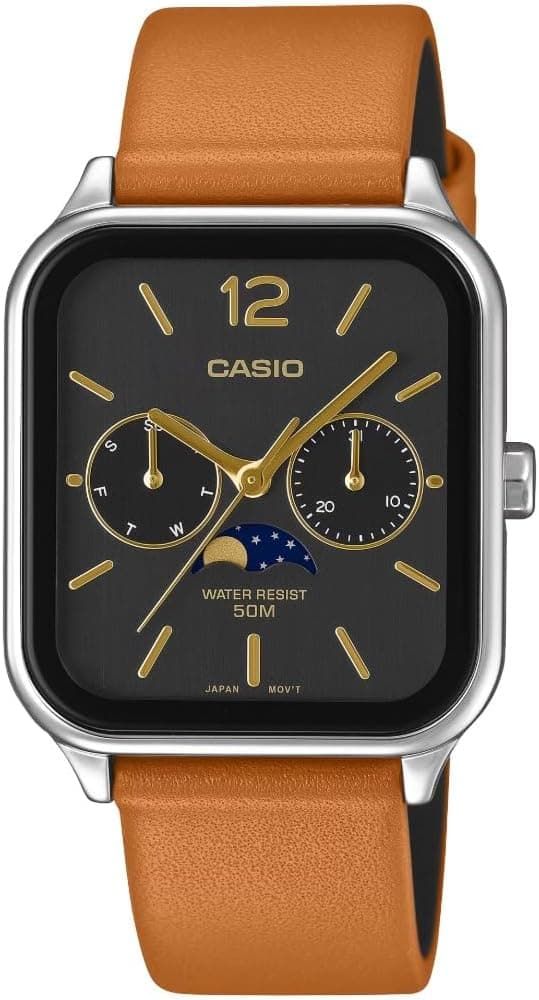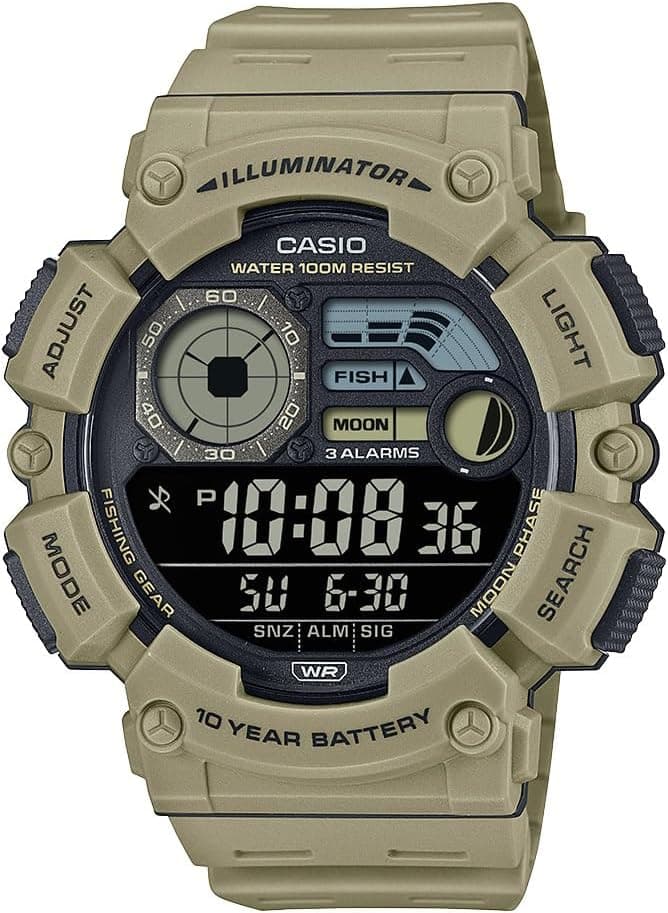
A Moon Phase complication shows the moon's journey from new to full and back, usually through a disc and aperture above six o'clock. Its lineage stretches back to the Antikythera mechanism around 150 BC, and it migrated from pocket watches to the wrist as a quietly romantic indication. The conventional version rounds the lunar month to 29.5 days, so it drifts roughly one day every two years, seven months and twenty days. The precision or astronomical version gears the cycle to 29.53059 days, stretching the correction interval to about 122 years. That 122-year figure became a reference point after Kurt Klaus designed his Da Vinci perpetual calendar gear train at IWC in the 1980s.
Real examples span every budget. The Jaeger-LeCoultre Master Ultra Thin Moon is just 9.3mm thick, automatic, carries a 122-year precision moon, and sits around £9,500, which I still consider one of the smartest dress-watch buys out there. A. Lange & Sohne's Saxonia Moon Phase uses calibre L086.5 with a patented deep-blue gold lunar disc, deviating one day in roughly 122.6 years, at about £32,000. From Patek Philippe, the 5396 Annual Calendar Moon Phase runs near £54,000, while a pre-owned 5054 Power Reserve Moonphase trades around £21,500. Lower down, the Frederique Constant Classics Moonphase quartz often turns up between £320 and £400, its in-house FC-712 Manufacture version near £2,300, and the Orient Sun and Moon delivers an automatic with sapphire crystal and display back for a few hundred pounds.
When buying, start with the mechanism. For most people the classic 29.5-day disc is honestly plenty; a precision moon is more about collector pride and the comfort of almost never correcting it. The artistry of the moon disc matters just as much: laser-pierced real stars or a hand-painted galvanic-blue ground reads completely differently from a cheap printed sky. Check the setting method too, since a recessed corrector pin beside the case is fussier than crown-based adjustment. If a watch stops, you must reset the phase, so a winder or easy correction helps for occasional wearers.
The Moon Phase reaches you in three broad forms today: a standalone dress complication, a partner inside an annual or perpetual calendar, and oversized or dual-hemisphere astronomical interpretations. Houses like H. Moser & Cie, A. Lange & Sohne and Patek Philippe have built mechanisms accurate beyond a thousand years, and Andreas Strehler's Sauterelle a lune perpetuelle holds a 2014 Guinness record at roughly two million years. Choose according to whether you want quiet elegance or genuine astronomical engineering.