

The Best Japanese Watches
 Serdar D.Watch Editor
A Japanese watch is the most engineering for the least money. Want mechanical, go Orient. First serious watch, the Seiko 5. Strap it on and forget it for years, that is Casio or a Citizen Eco-Drive. I'll walk through why all four earn their keep, down to the calibers, the prices, and the actual models you can buy.
Key takeaways
- Orient is about the only brand putting its own automatic caliber in a watch at three-figure money. The Mako-3 gives you a 200 meter diver for roughly 258 dollars.
- The Seiko 5 is the right way into mechanical. The newer 4R36 5 Sports hand-winds and hacks, the older 7S26 does neither.
- Casio is set-and-forget. The F-91W has been in production since 1991, runs about 38 dollars and 21 grams, and a G-Shock survives 200 meters.
- A Citizen Eco-Drive charges off light, never needs a battery swap, and runs for months in the dark on a full charge.
- On water resistance, read the number: 30m for hand-washing, 100m for swimming, 200m for diving. No watch is "waterproof."
- Drop the phrase "cheap Japanese watch." This isn't cheapness, it's engineering trimmed in the right places.
Why Japan does this both cheap and well
The answer hides in two words: vertical integration. Seiko makes its own steel, its own dials, its own hairsprings, its own calibers, and waits on no outside supplier. Citizen built its first light-powered analog watch in 1976 and still runs that technology today under the Eco-Drive name. Orient has been casting its own automatic movements since the 1950s. And in 1983 Casio buried the old assumption that a dropped watch is a broken watch with the first G-Shock.
The irony writes itself: Japan kicked off the quartz revolution in 1969 with the Seiko Astron, so the very people who nearly killed the mechanical watch are also the ones who kept it alive at a sane price. For the same money in Switzerland, most brands buy a stock ETA or Sellita caliber and stamp their own name on top. The Japanese houses spend the budget on the movement instead of the marketing, and that's where the price gap comes from. Add that the same country plays at the summit of haute horology with Grand Seiko and Credor, and the word "cheap" tells you nothing about this picture.
Answer three questions before you buy
Sort out what you actually need before you pick a brand. The rest is easy.
Mechanical or quartz
A mechanical (automatic) watch is a feeling: the sweep of the second hand, the rotor spinning behind a display caseback, the small pleasure of winding it. In return you accept a few seconds of drift a day and a service every few years. Quartz is accurate and maintenance-free, running for years off a battery or off light. If this is your first watch, know which camp you're in going in.
Case size and your wrist
A 38 to 40 mm case is the safe zone for most wrists. The number that actually matters isn't the diameter but the lug-to-lug measurement. If that distance overhangs the flat part of your wrist, the watch will dig in no matter how thin it is. A slim wrist is happiest at 36 to 38 mm, a broad wrist sits fine at 42 mm and up.
What water resistance really means
The number on the dial is a lab pressure rating, not a real-world one. 30 meters is hand-washing and rain, not swimming. 100 meters covers swimming and snorkeling, and 200 meters is genuine diving, where watches that meet the ISO 6425 standard carry the "diver's" stamp. There's no such thing as a "waterproof" watch, only water resistance, and the gaskets tire over the years.
If you want a mechanical automatic, start with Orient
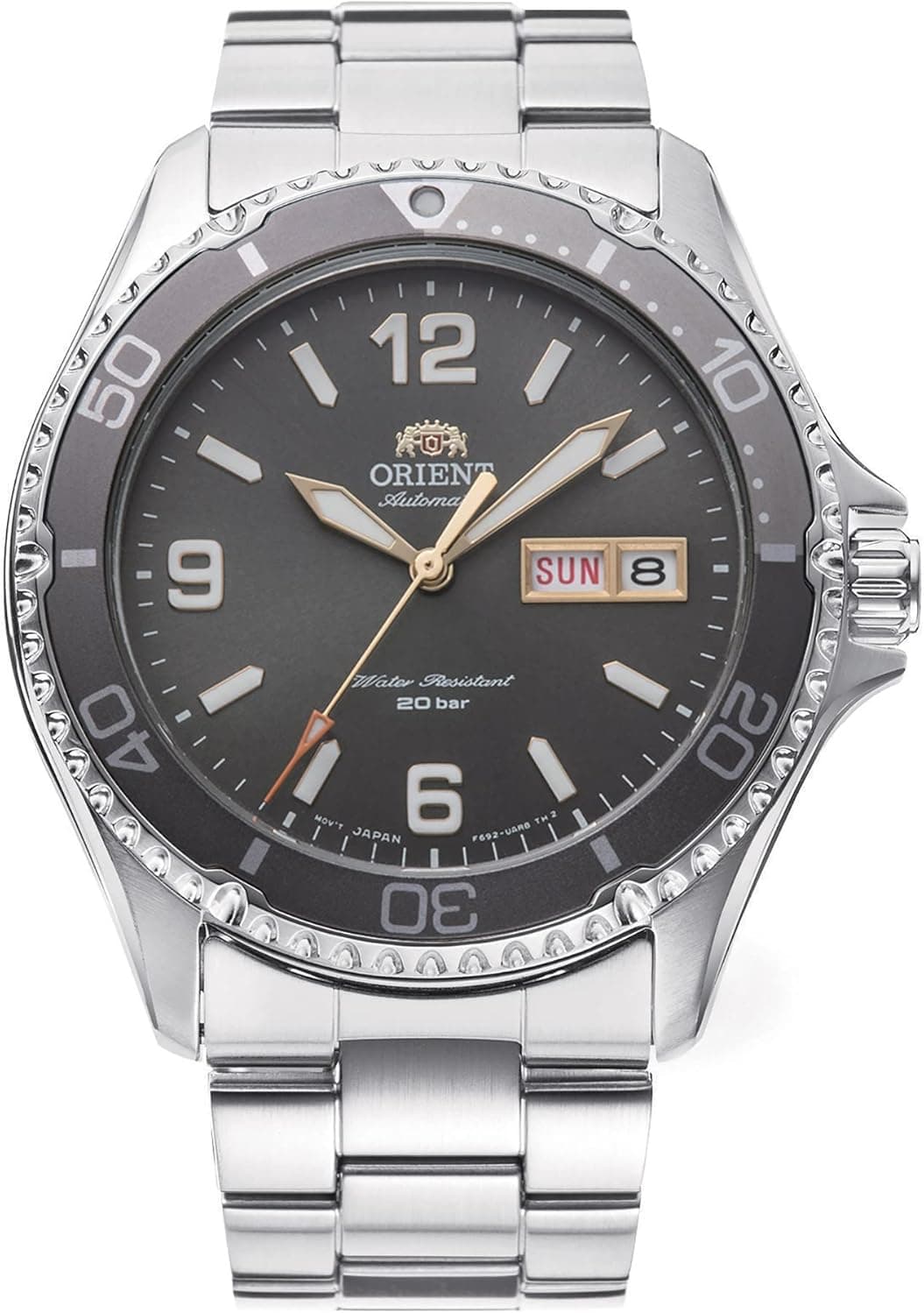
What makes Orient special is that it puts its own caliber in the case for around 258 dollars. The current Mako, Ray, and Kamasu run the F6922: 22 jewels, 21,600 beats per hour, roughly 40 hours of power reserve, with both hand-winding and hacking. Pull the crown and the second hand stops, so you can set the watch to the second. At this price, that combination isn't a given across every brand.
The Mako, Ray, and Kamasu are really dial and bezel variations on the same 41.8 mm, 200 meter diver. The steel bracelet doesn't give off that hollow rattle you get on cheap watches, it settles on the wrist. The honest downside: the lume isn't as strong as Seiko's, and on some examples the date wheel likes to creep around midday rather than snap over.
Orient Mako-3 RA-AA0819N39B, 42mm, Gray Dial, Stainless Steel Bracelet
View productFor the full hands-on, see our Orient Mako-3 review.
On the dressier side there's the Bambino. A domed crystal, a slim 38.4 mm case, a domed dial; a shape that slides under a shirt cuff and that you'll struggle to match under two hundred dollars. The Bambino isn't a dive watch, the water resistance is 30 meters, so wash your hands and move on. Some of the older versions don't hand-wind or hack, the newer generation is better. But on looks alone it goes toe to toe with dress watches at twice the price.
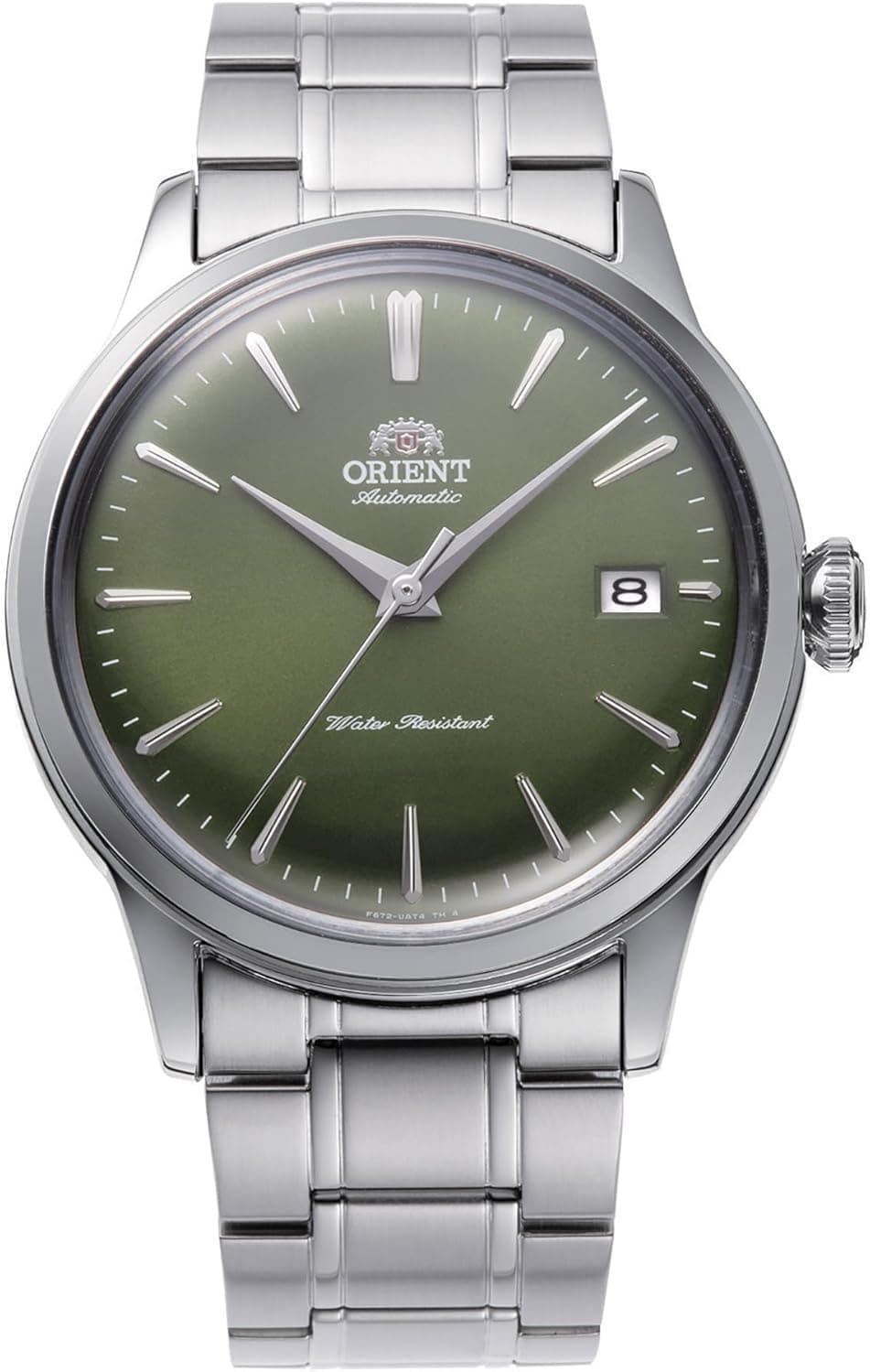
Orient Bambino Version 7 RA-AC0M09E30B, 38mm, Green Dial
View productMake your first serious watch a Seiko 5
The Seiko 5 takes its name from five features: automatic winding, water resistance, a day-date window, a four-position crown, and a tough case and bracelet. For fifty years it has been the definition of "cheap but right" entry. In 2019 the line was repositioned as "5 Sports" and got the 4R36 caliber inside: 24 jewels, 21,600 beats, roughly 41 hours of reserve, hacking and hand-winding. For about 235 dollars, you watch the automatic breathe through a clear caseback.
There's one distinction you need to know here. The old SNK and SNXS models are still lovely, with smaller 35 to 37 mm cases and a field-watch silhouette that flatters a slim wrist; but the 7S26 inside them neither hacks nor hand-winds. They sell for around 199 dollars, which isn't wrong, just ask which caliber you're buying when you buy one.
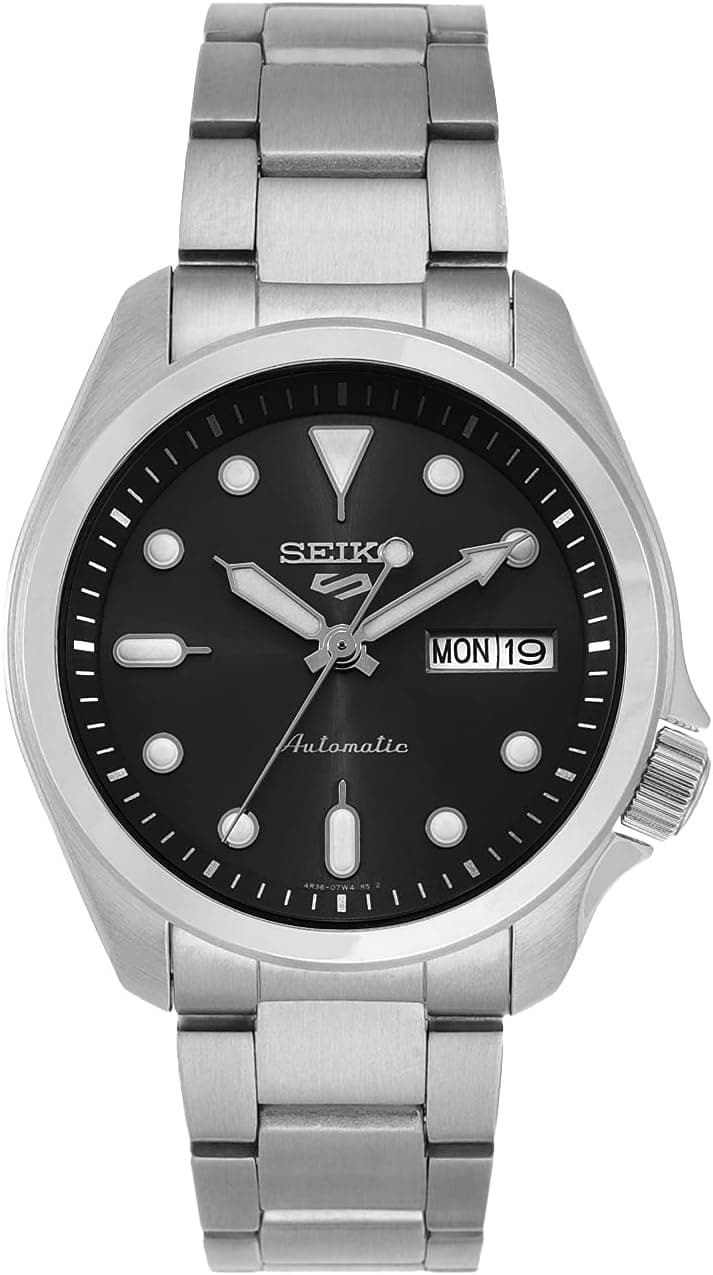
Seiko 5 Sports SRPE55K1, 40mm, Black Dial, Silver Stainless Steel Bracelet
View productSet your expectations right: the Seiko 5 runs to a wide tolerance, plus twenty-five and minus fifteen seconds a day is normal, and that's the nature of this segment. If you want real diving and tighter water resistance, step up a rung to the Prospex at around 450 dollars; that's Seiko's serious, ISO 6425 dive line.
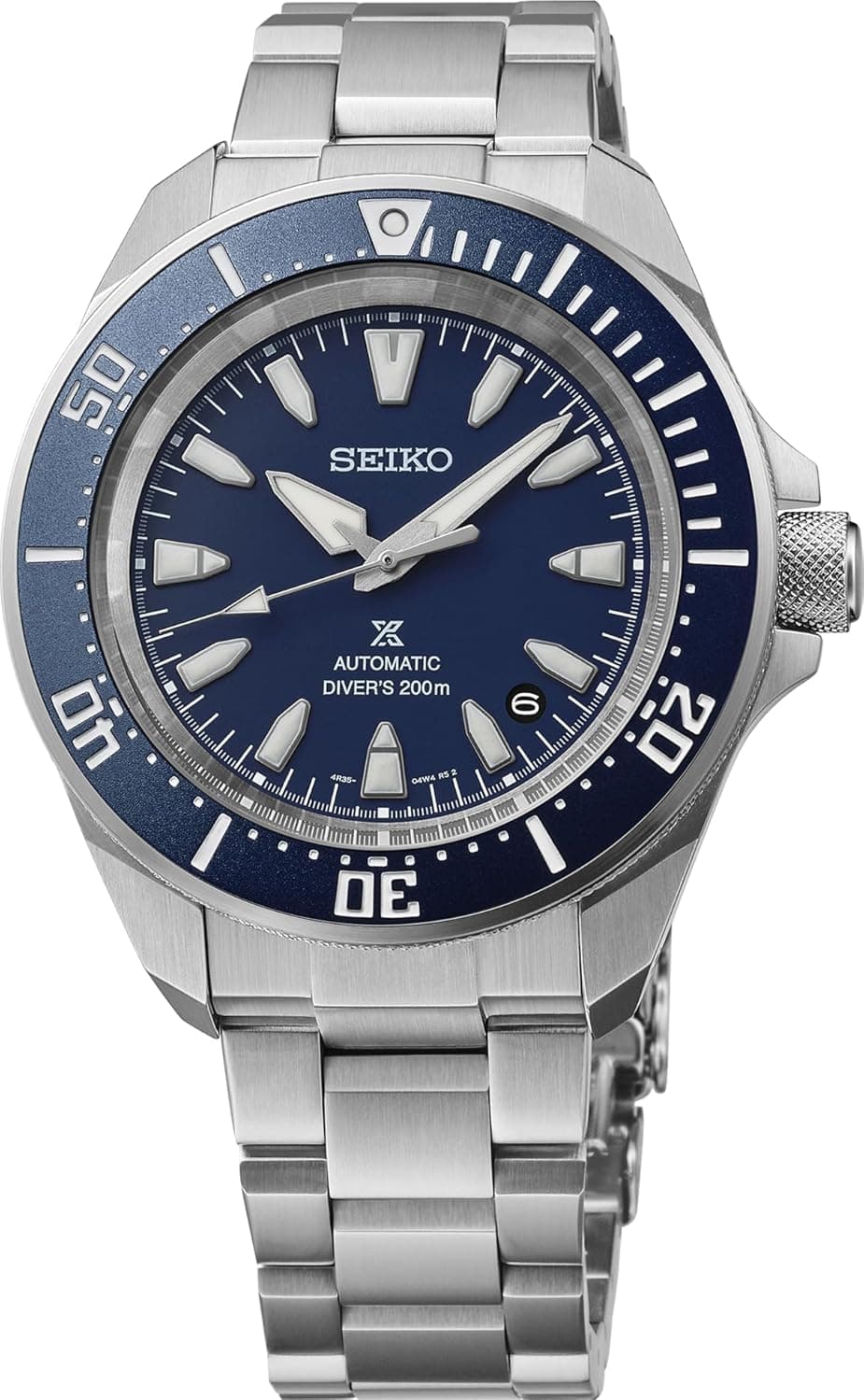
Seiko Prospex SRPL51, Blue Dial, Silver Stainless Steel Bracelet
View productCasio and Citizen for strap-it-on-and-forget
Two different philosophies of not caring. Casio makes the most practical watches on the planet. The F-91W has been in production since 1991, runs for years on a battery thanks to its module 593, weighs about 21 grams, and at roughly 38 dollars is one of the best-selling watches anywhere. Just set the expectation right: the F-91W's 30 meter rating is good for hand-washing and rain, not swimming.
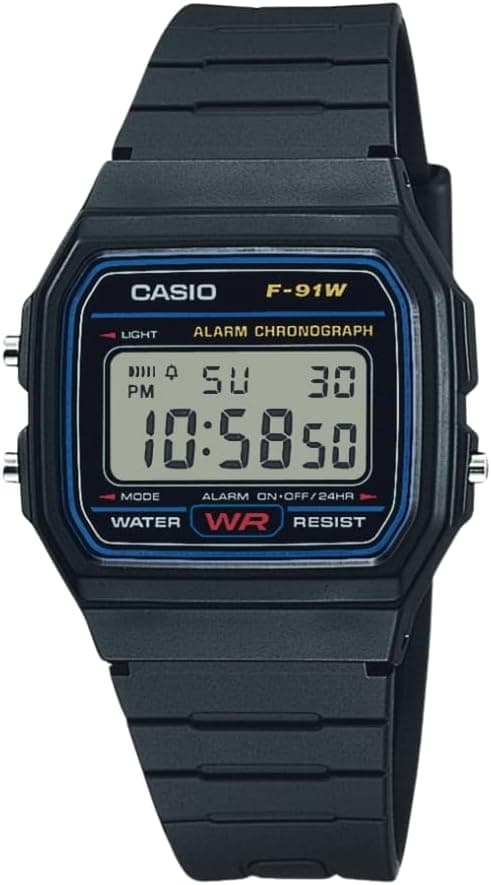
Casio F-91WM-1BCF, 36mm, Gray Dial, Black Resin Band
View productIf you're actually getting in the water, heading into the field, or refusing to worry about dropping it, the G-Shock takes over: 200 meters of water resistance, multi-layer shock protection, and around 94 dollars. Hand it to a kid, a soldier, a tradesman who needs durability, and the argument is over. Casio's one honest downside is that the resin cases can feel a touch toy-like in hand; but the function sits well above the price.
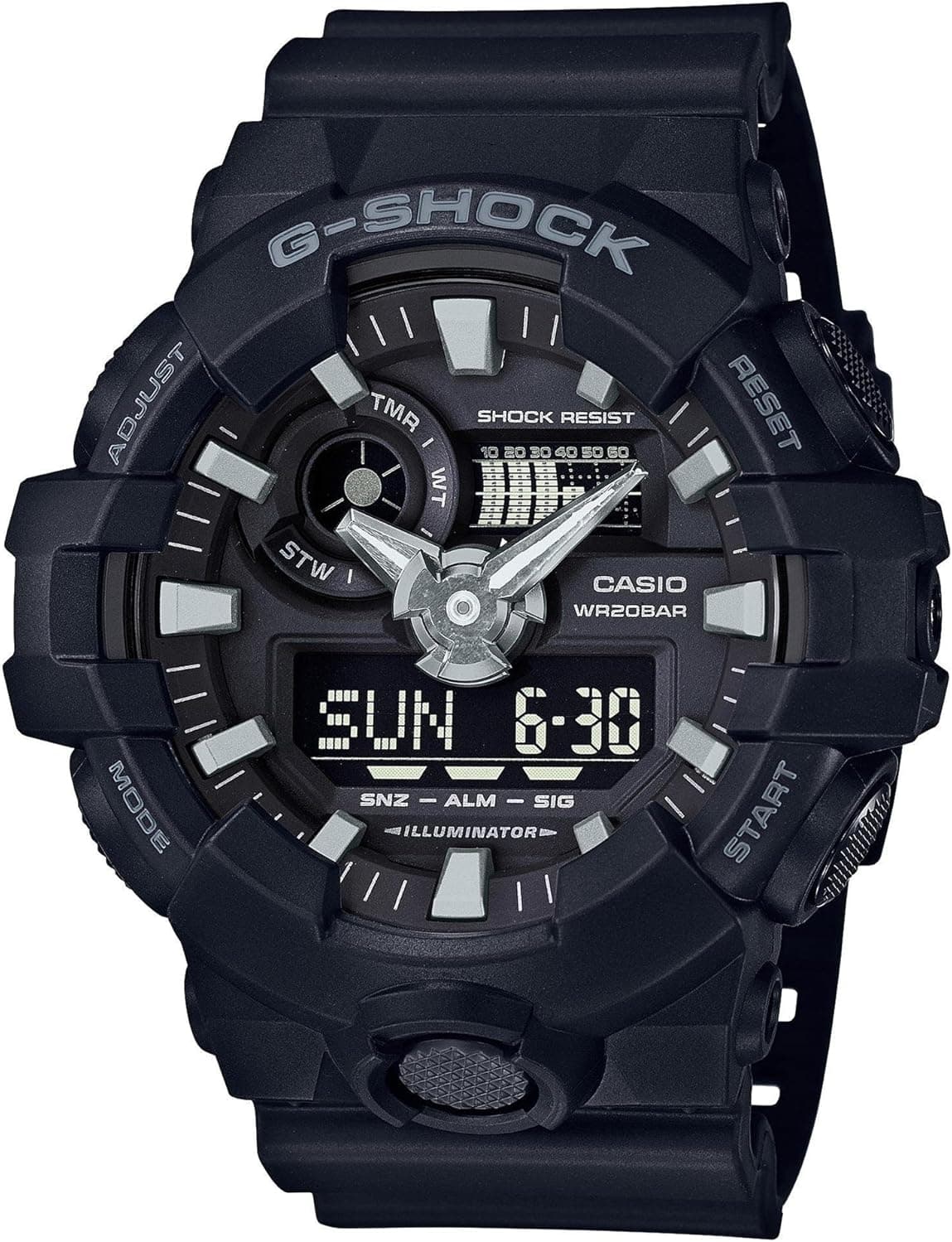
Casio G-Shock GA-700-1BDR, 53mm, Black Dial, Black Resin Band
View productCitizen makes a different promise. Eco-Drive turns the light hitting the dial into energy; a fully charged watch runs for months in the dark, the cell inside lasts for decades, and there's no battery to ever replace. For most people who say "I put it on and forget about it," that's the right answer, with no dead battery in the trash to boot. At around 374 dollars, the Corso is the tie-friendly, classic chronograph face of that idea.
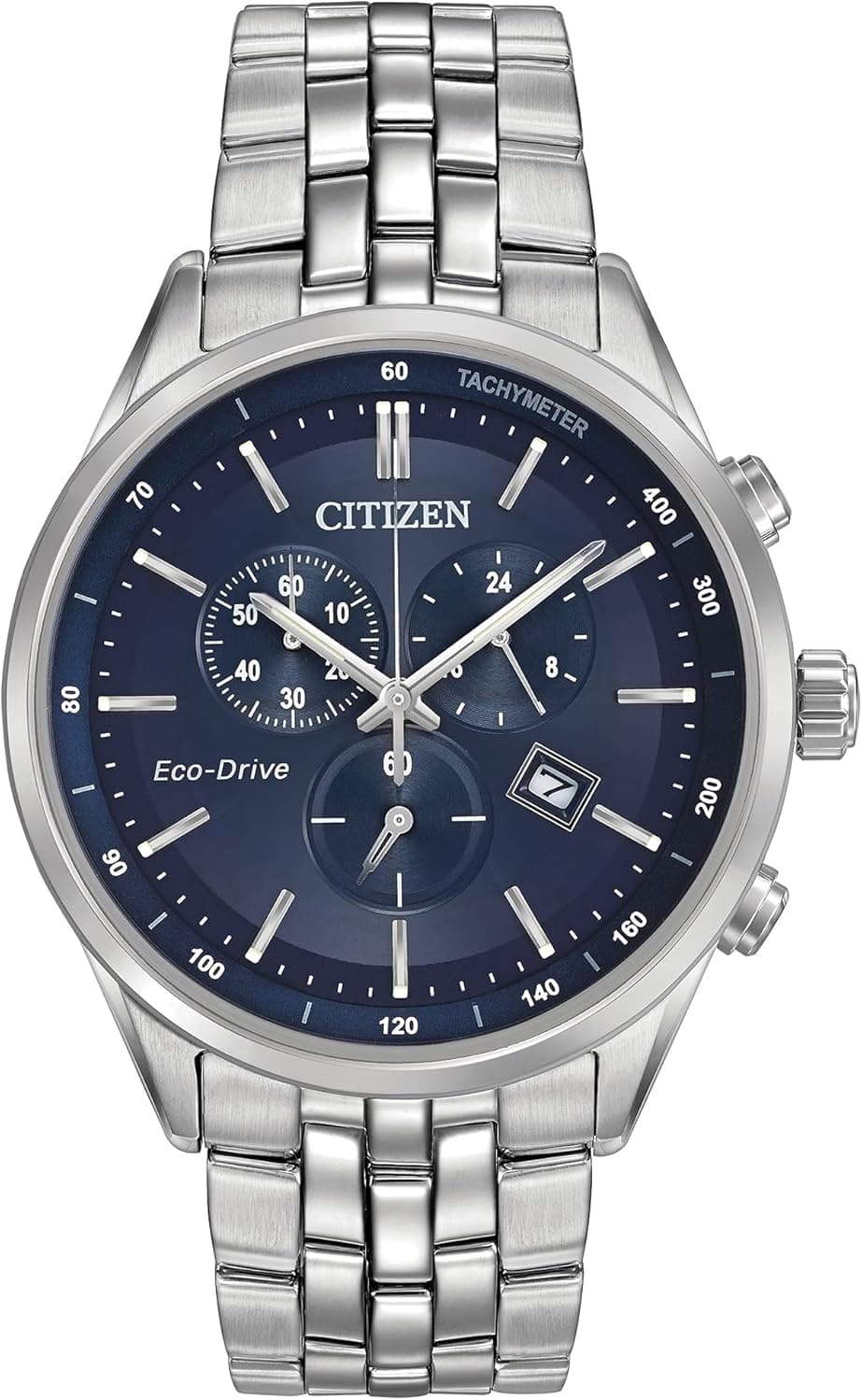
Citizen Classic Corso AT2141-52L, 42mm, Blue Dial, Silver Stainless Steel Bracelet
View productThe comparison at a glance
| Model | Movement | Case | Water resistance | Price (2026, ~) |
|---|---|---|---|---|
| Orient Mako-3 | Automatic (F6922) | 41.8 mm | 200 m | 258 $ |
| Seiko 5 Sports SRPE55 | Automatic (4R36) | 40 mm | 100 m | 235 $ |
| Seiko Prospex SRPL51 | Automatic | Diver | 200 m | 450 $ |
| Citizen Eco-Drive Corso | Eco-Drive (light) | 42 mm | 100 m | 374 $ |
| Casio G-Shock | Quartz | 52.8 mm | 200 m | 94 $ |
| Casio F-91W | Quartz | 30 mm | 30 m | 38 $ |
Prices are as of June 2026 and may change; check the product page for the current price.
What to skip and what to watch for
Because these brands are accessible, they invite fakes, and Seiko and Orient get copied most. Buy through an authorized channel, check the box, the serial number, and the warranty card; if the price is too good to be true, it usually is. I cover how to spot a counterfeit watch in a separate piece.
Second, put your expectations in the right place. These watches aren't "cheap," they're engineering trimmed in the right spots; but they do have a ceiling on finishing, dial work, and precision. The day you want a crisper bevel, a deeper lacquered dial, and chronometer accuracy, your direction is Grand Seiko or entry Swiss, not fashion brands. Handing the same money to a fashion brand running a stock quartz movement inside is the exact opposite of this guide.
Which one should you buy
The decision is in the need, not the price:
| Need | Watch |
|---|---|
| Mechanical feel, least money | Orient Mako-3 |
| First automatic, everyday wear | Seiko 5 Sports SRPE55 |
| One watch, zero maintenance | Citizen Eco-Drive Corso |
| Won't break, goes in the water | Casio G-Shock |
| Suit and tie, classic | Orient Bambino |
Every one of them is a right answer in its place. The only wrong move is to dismiss these watches as "cheap" and walk past.
Watches we recommend
Frequently asked questions
Are Japanese watches worse than Swiss ones?
No, just different. For the same money, Japan usually gives you more technology and its own caliber. Switzerland's edge starts at the upper end, in finishing and brand prestige, not at three-figure prices.
Should I get the Seiko 5 or the Orient Mako?
Want a day-date and a smaller case, go Seiko 5. Want a sturdier dive feel and a caliber that hand-winds and hacks at the same money, go Orient Mako-3. Both are a right call for a first automatic.
For my first watch, Seiko 5 or Casio?
Want the mechanical feel and a watch you bond with, Seiko 5. Want zero maintenance and a daily watch that shrugs off water and knocks, Casio. They answer two different needs.
When does an Eco-Drive battery die?
There's no battery to replace in an Eco-Drive. The rechargeable cell inside easily clears ten years in normal use, tops itself up as it sees light, and runs for months in the dark on a full charge.
Is the Casio F-91W really water resistant?
Its 30 meter rating handles hand-washing and rain, not swimming. For swimming and diving, a G-Shock rated to 200 meters is the better call.
Why does my automatic run slow?
Automatics aren't as precise as quartz; on models like the Seiko 5, a few seconds of drift a day is normal. Wearing it regularly to keep it wound, and resting it in a specific position overnight, both reduce the drift.

About the author
Serdar D.Watch Editor
View profileSerdar D. is the editor at BraveryWatch. He believes a good watch should be not just expensive but right. He gets deep into the details, then turns them into something that is genuinely a pleasure to read. He gives relaxed, useful advice through the eyes of someone who truly cares about watches.