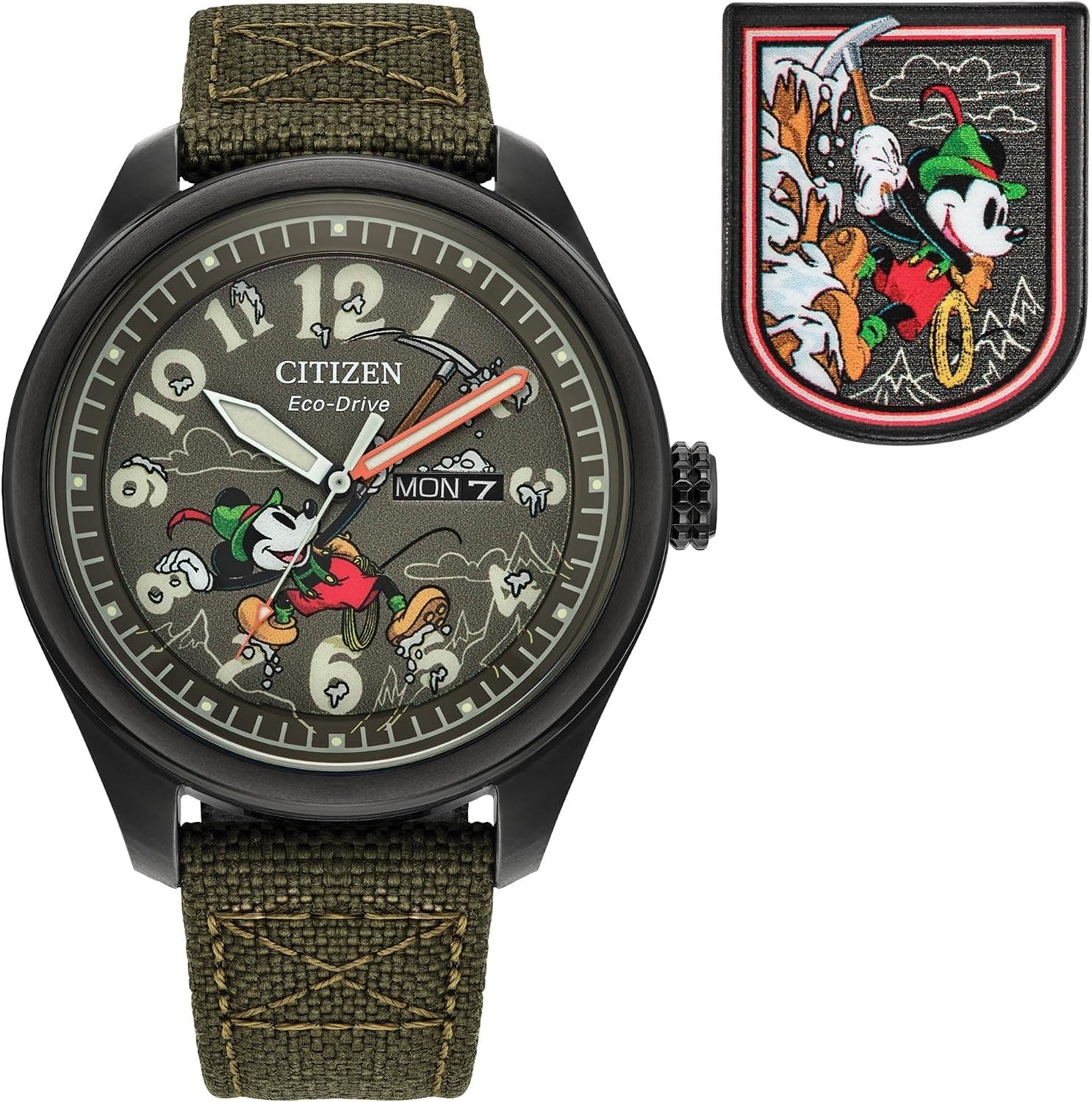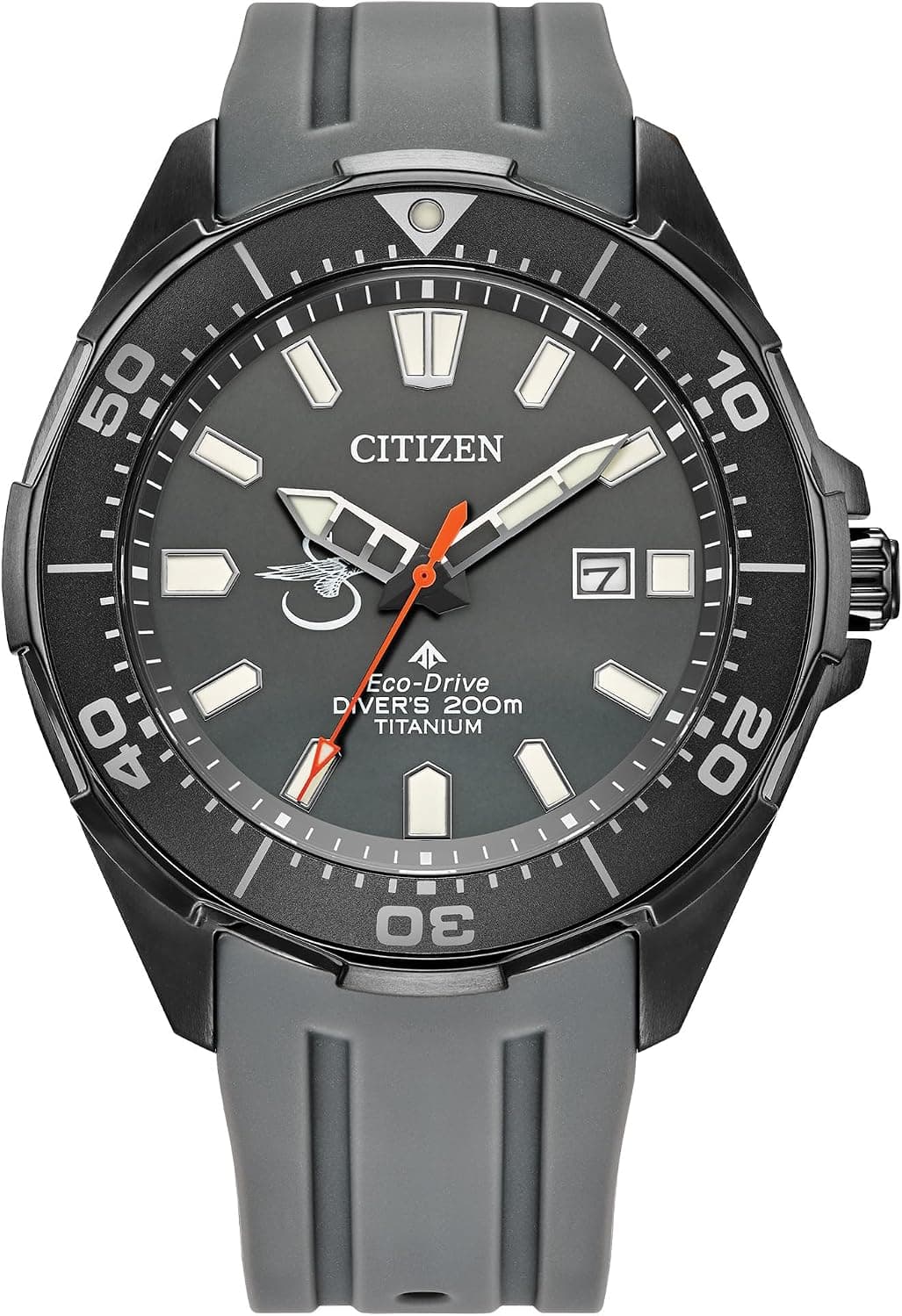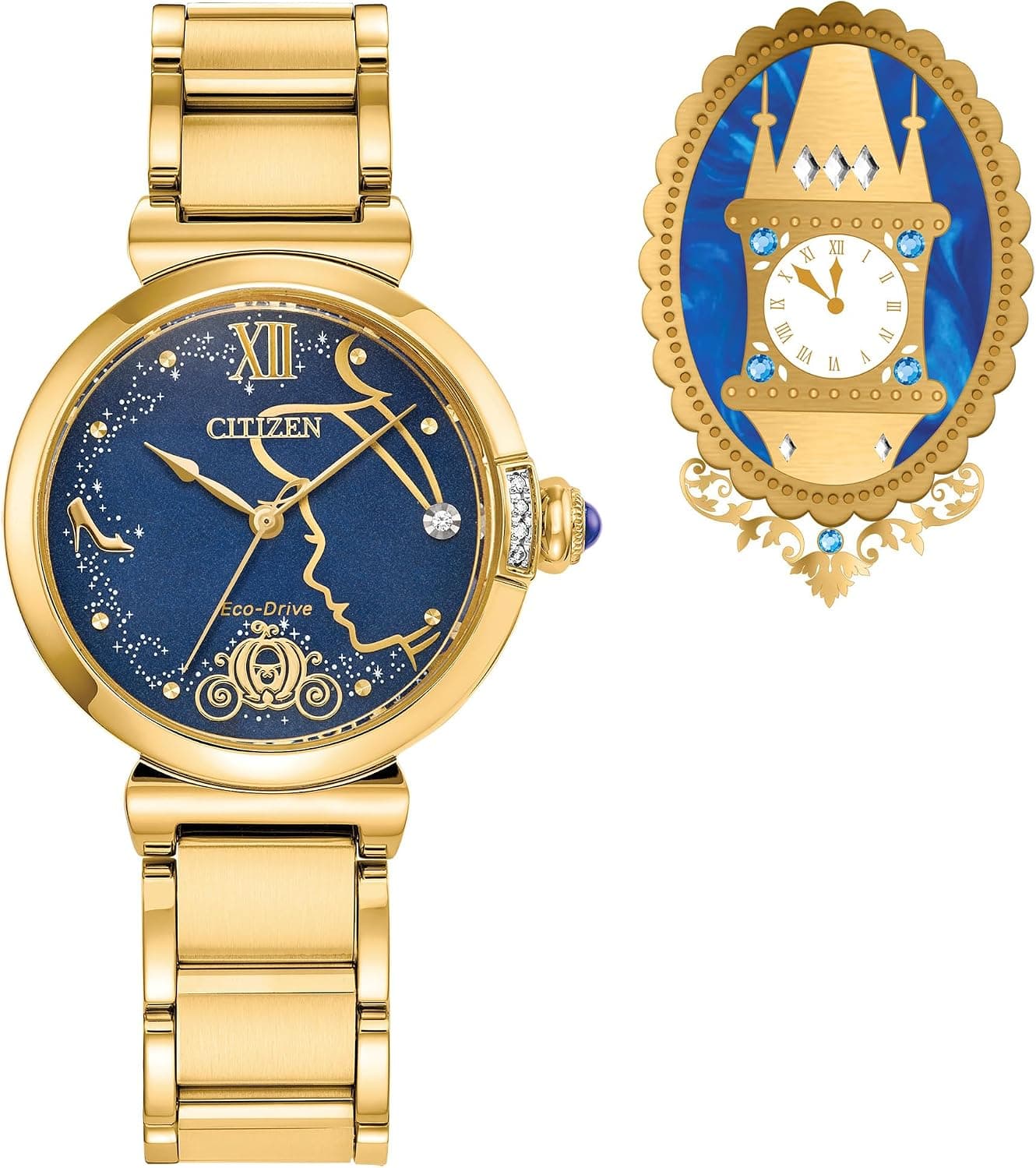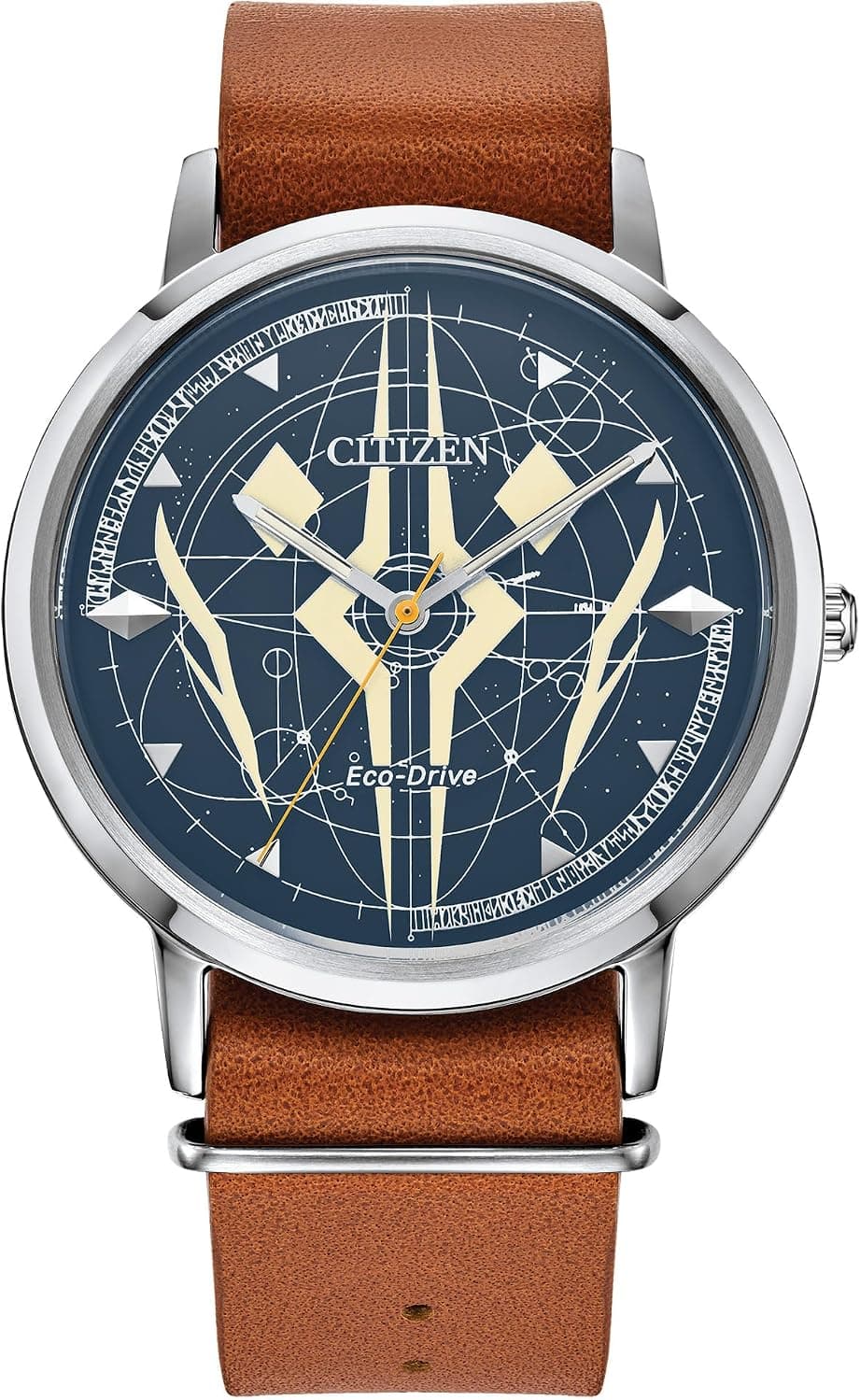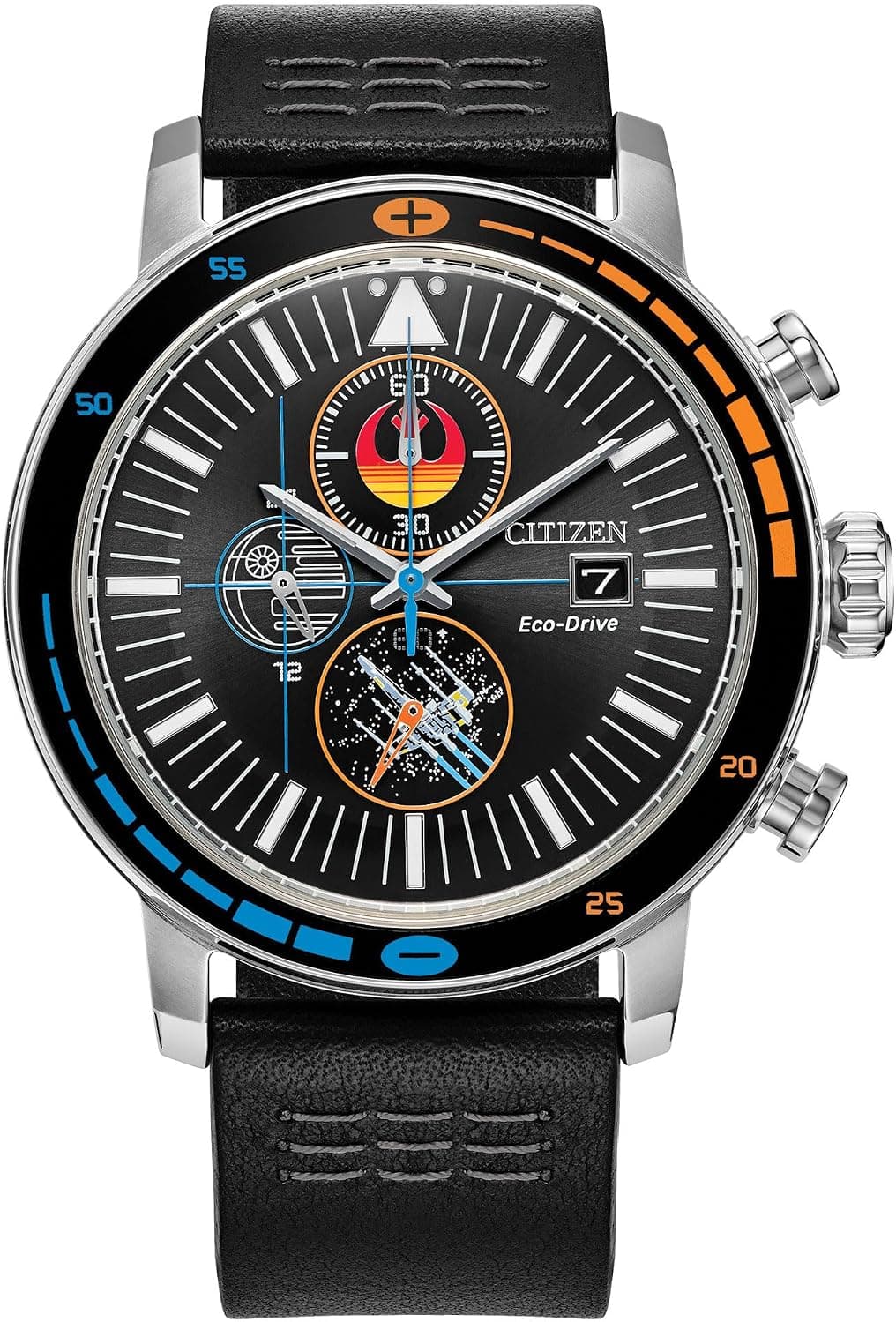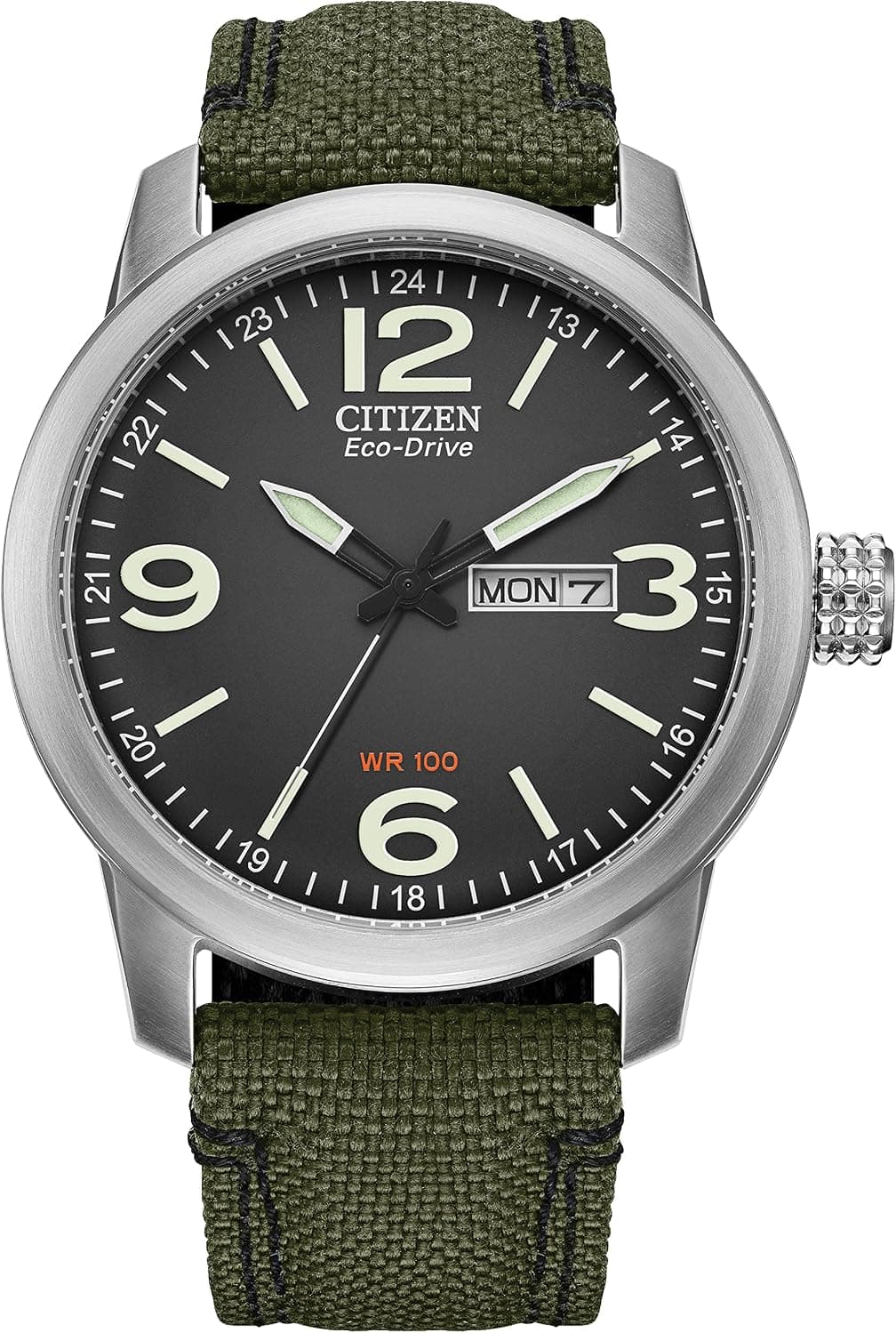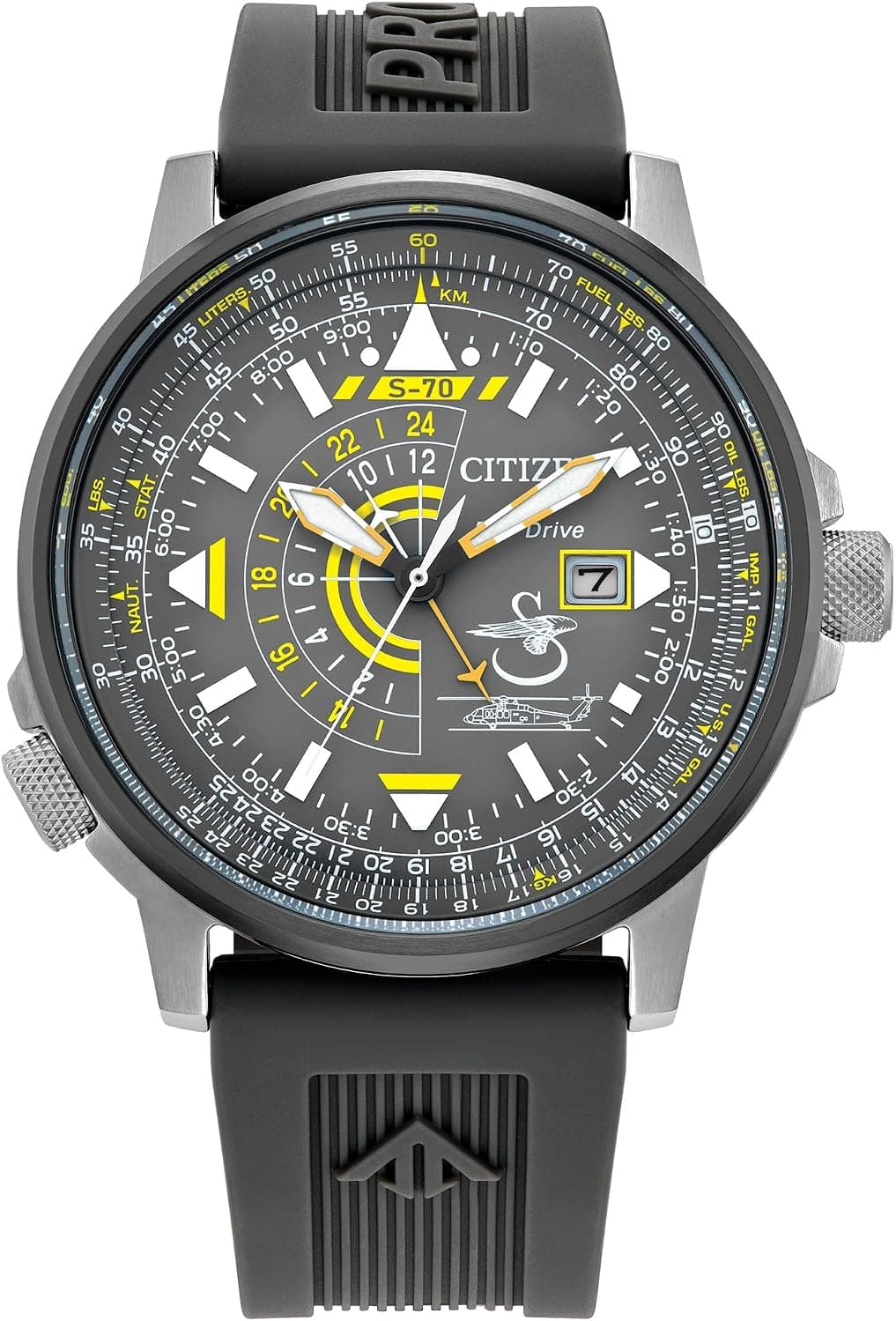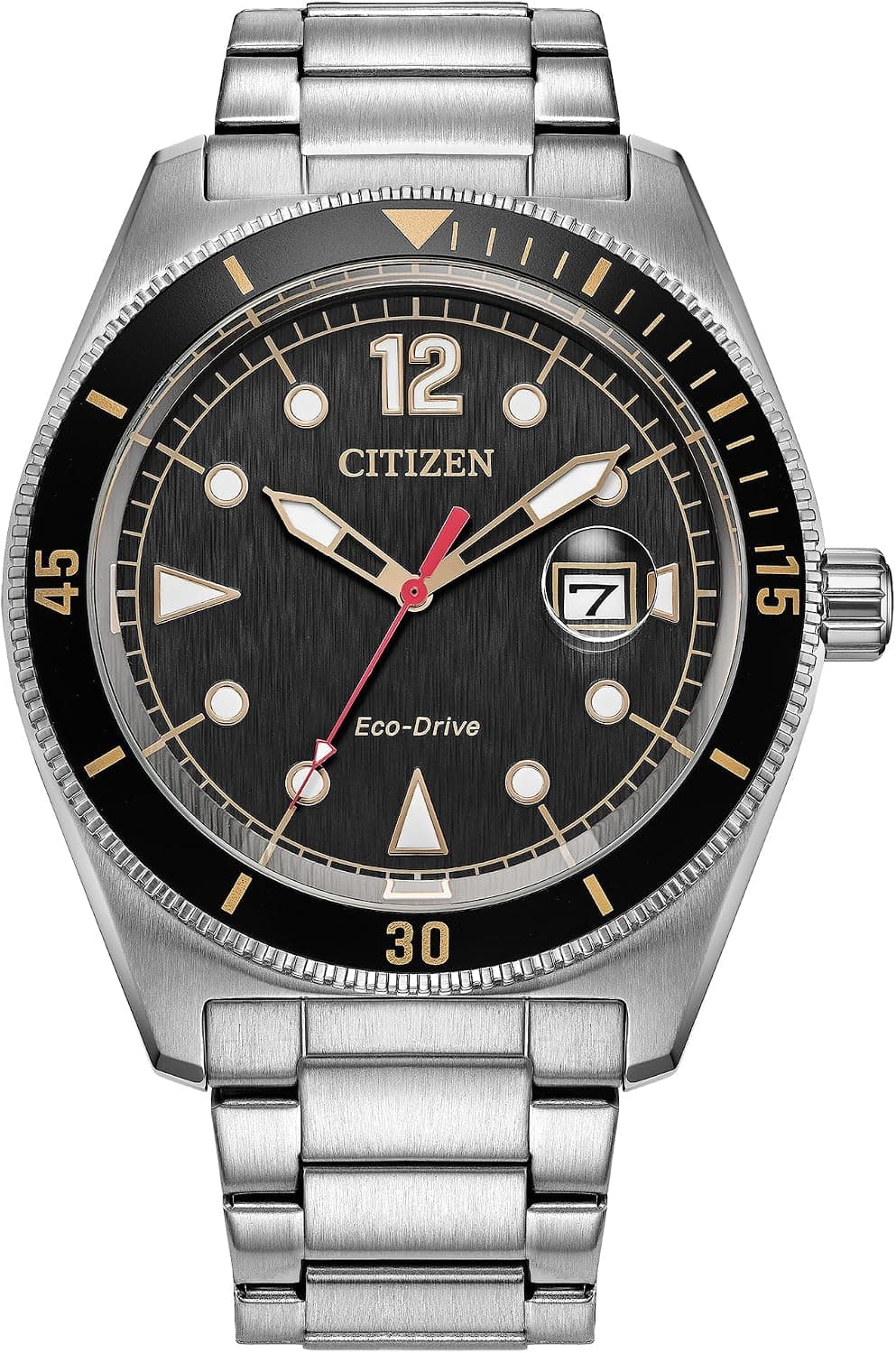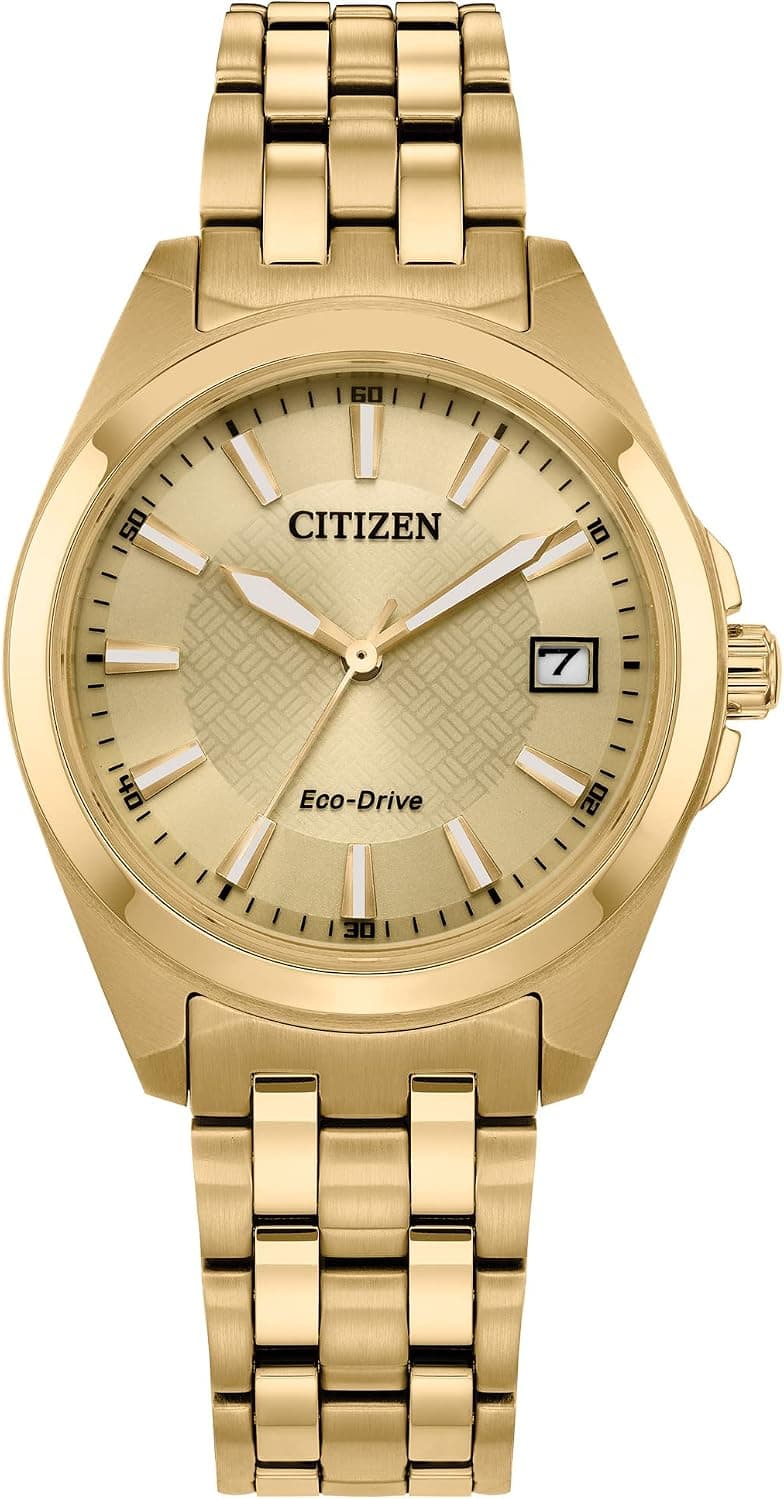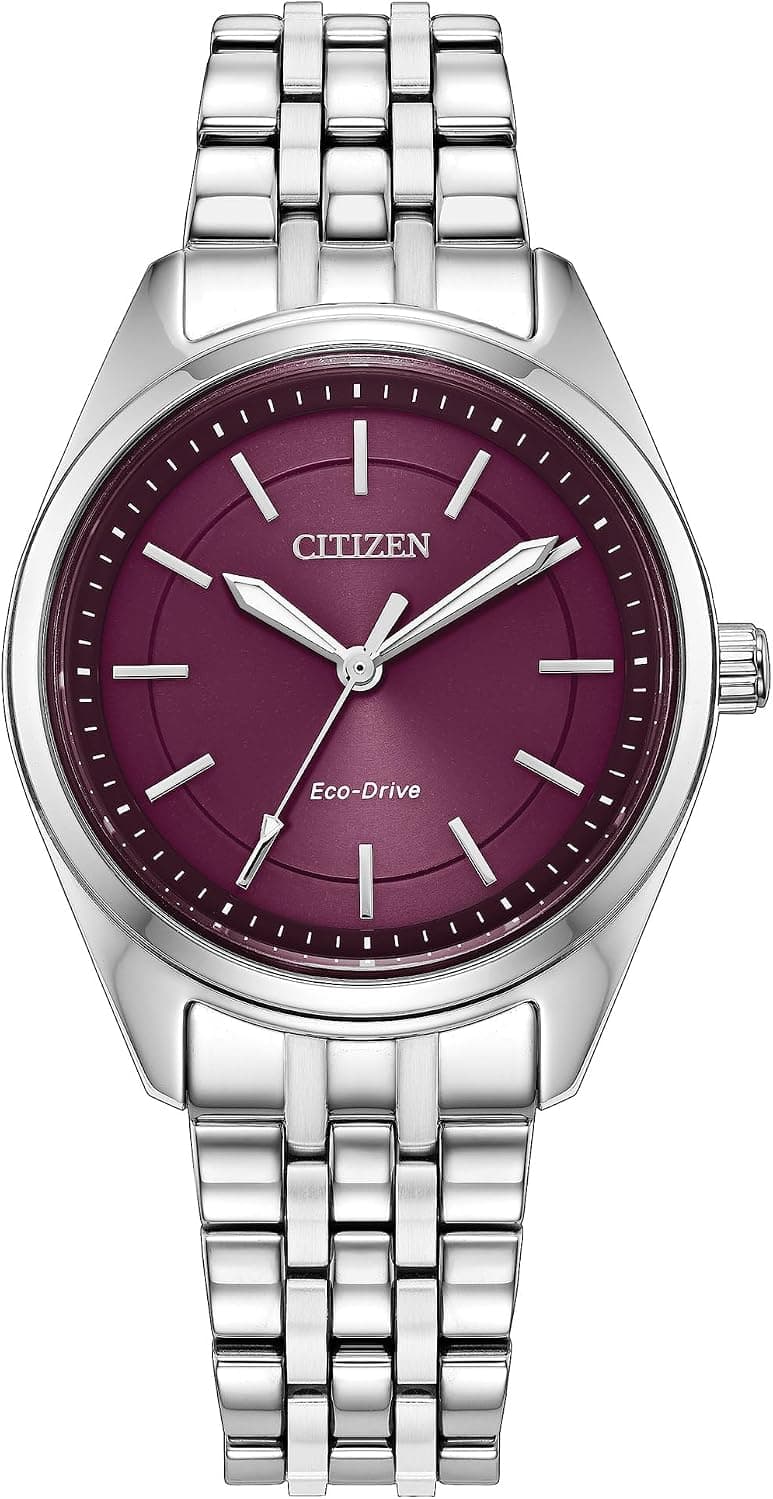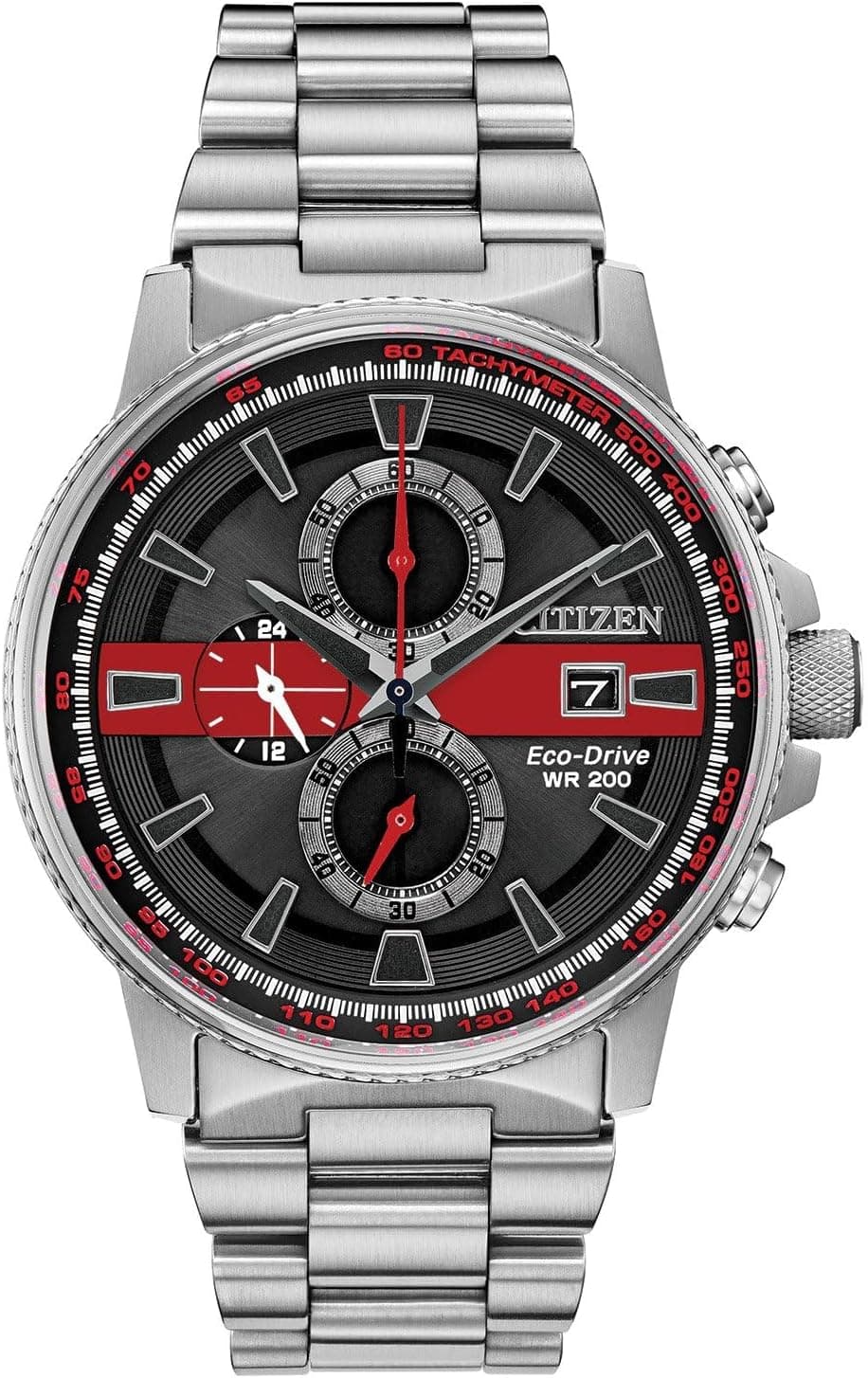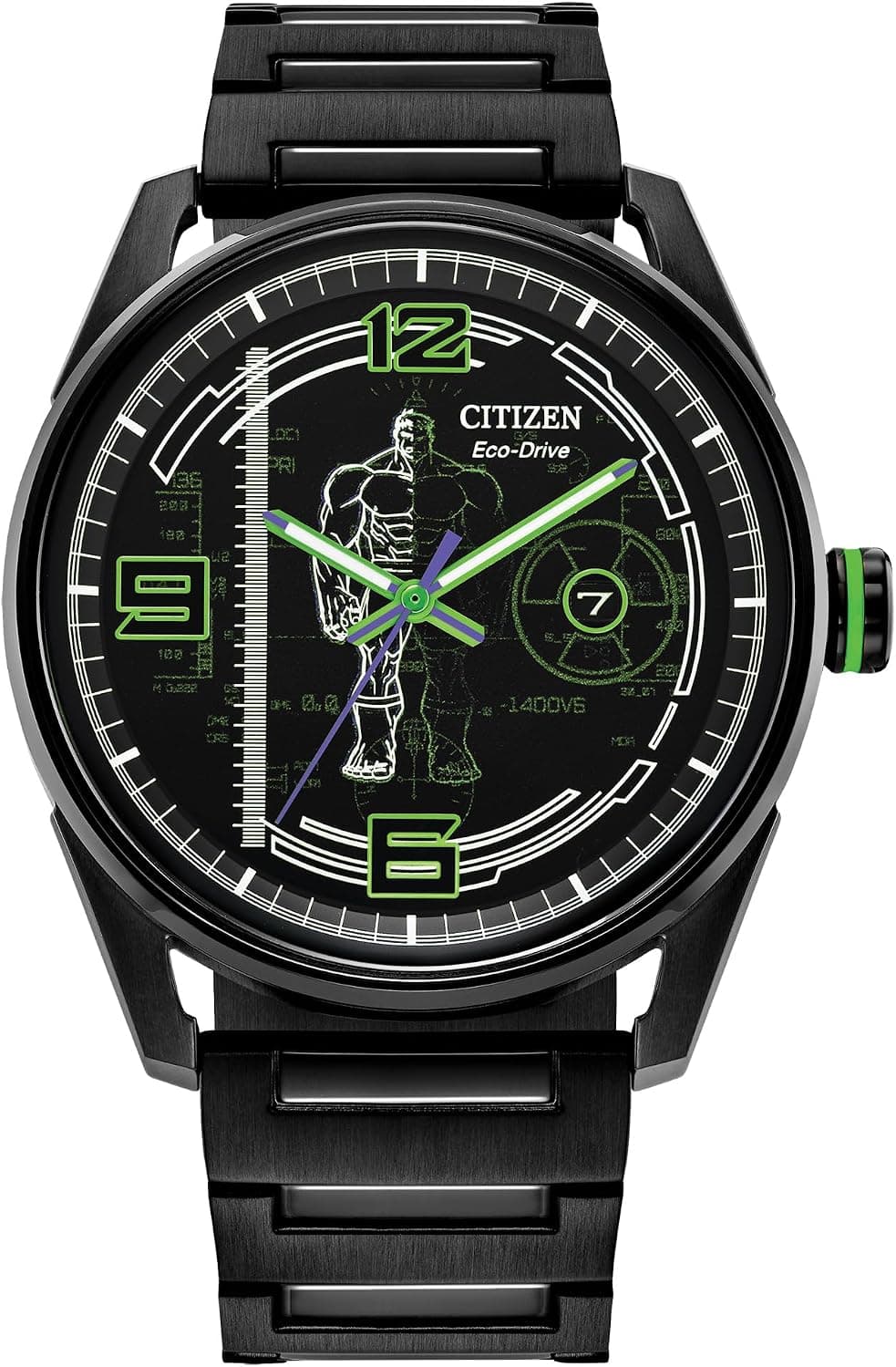
Solar (Quartz) means a quartz movement draws its power from a photovoltaic cell set under or around the dial rather than from a throwaway battery. The cell turns sunlight, or even fluorescent and desk-lamp light, into electricity, which is banked in a rechargeable secondary cell so the watch keeps running in the dark. Citizen introduced the world's first analog solar watch, the Crystron Solar Cell, in 1976, with eight solar cells openly arranged across the dial. That technology became Eco-Drive, which reaches its 50th year in 2026; modern cells hide beneath thin light-transmitting dials, so you would never know they are there.
Three Japanese houses define the field. On the Citizen side, the Promaster Eco-Drive Diver 300m (caliber E365, a full year of reserve in total darkness) sits around $695, the entry Promaster Diver near $250, and the Super Titanium Field around $450. Seiko Solar covers the Prospex Solar Diver (V157 movement, 200m, roughly a 10-month reserve) and the SNJ025 'Arnie' hybrid digital-analog diver near $520. Casio's Tough Solar G-Shocks pair solar charging with Multi-Band 6 radio sync. Higher up, the radio-controlled solar Junghans Max Bill Mega Solar runs about $1,500 and the touchscreen-sapphire Tissot T-Touch Connect Solar around $1,000.
When buying, check the dark-running reserve first. A module like the E365, good for a year unlit, will still be ticking even if you leave it in a drawer for a season. The secondary cell is lithium-ion based and typically lasts 10 to 20 years, replaceable during a service rather than a routine battery swap. For anyone who gets a few hours of light a day, solar is about as close to maintenance-free as watches get. The trade-off is that it does not carry the romance of a mechanical caliber, but if accuracy and convenience are your priorities, it makes obvious sense.
Function layers vary across the category. Plain three-hand solar models are the most affordable; add radio-controlled sync (Multi-Band 6) or the GPS solar timekeeping that Seiko's Astron pioneered and both price and capability climb. You will find ISO 6425 solar divers for the water, multi-zone GPS pieces for travel, and clean titanium-cased designs for everyday wear.