How to Wind an Automatic Watch
 Serdar D.Watch Editor
To start a stopped automatic, wind the crown clockwise about 20 to 30 turns, set the time, then put it on. Daily wear keeps it running, as your wrist motion spins the rotor and feeds the mainspring. On modern watches there is no overwinding, because a slipping clutch releases any excess.
Key takeaways
- To start a stopped automatic, wind the crown clockwise about 20 to 30 turns, then set the time.
- Daily wear spins the rotor and keeps the watch wound, so you often never touch the crown.
- Modern automatics cannot be overwound; a slipping clutch releases the excess once the mainspring is full.
- A typical power reserve is around 40 hours, so the watch runs for closer to a day and a half to two days off the wrist.
- Not every automatic hand-winds and not every automatic hacks; check the calibre specs.
How an automatic watch actually works
An automatic watch winds itself from motion. Inside it sits a half-circle weight that swings with every move of your wrist; that part is the rotor. As the rotor turns, it winds the mainspring and keeps the watch running. So as long as you wear it, the everyday use of your arm keeps it wound. There is no battery, just a spring that gets coiled and slowly releases its energy. Once that logic clicks, winding, setting and restarting all become intuitive.
Hand-winding through the crown
If your watch has stopped, or you have not worn it for a while, the cleanest way to start is to wind the crown by hand. If the crown screws down, first turn it anticlockwise to release it, then begin winding clockwise.
- Wind clockwise with the crown in its resting position, not pulled out
- About 20 to 30 turns is plenty; the watch will start ticking
- Wind gently and evenly until you feel light tension in the spring, and do not force it
- Then pull the crown to set the time and date, push it back in, and lock it again if it screws down
Hand-winding shares the same motion as manual winding; the only difference is that on an automatic the rotor does most of the work for you.
The overwinding myth
The worry I hear most often is, "If I wind too much, will I snap the spring?" On a modern automatic, no. In these watches the mainspring is connected to a slipping clutch that releases any excess once it is full. Past a certain tension the spring stops coiling tighter and simply slips. So you never hit a hard wall while winding; you just feel a gentle resistance and stop there. The one thing to mind: wind calmly rather than aggressively, as steadiness matters more than speed.
Keeping it wound by wearing it
With a watch you wear daily, you will often never touch the crown at all. Even at a desk, the motion of your arm is enough to feed the rotor. On days you barely move, the watch slowly winds down, and this is where power reserve comes in. Power reserve is how long the watch keeps running after you take it off before it stops. On a typical automatic calibre that is around 40 hours, so a watch you take off on Friday evening has usually stopped by Sunday morning. Everyday automatics like the Seiko 5 Sports and the Orient Mako 3 are built around exactly this cycle.
Restarting it after it has stopped
If the watch has stopped, there is no need to panic. First hand-wind it 20 to 30 turns, then set the time and date. One caution when changing the date: on most mechanical watches the date gears are engaged around midnight, roughly between 9 pm and 3 am, so do not change the date by hand inside that danger window. The safest habit is to move the hour hand into the afternoon and set from there. On a classic date watch like the Orient Bambino Version 7, this small habit protects the mechanism for years.
Not every automatic is the same
An important point: not every automatic hand-winds, and not every automatic hacks. Hacking means the seconds hand stops when you pull the crown, which lets you set the time to the second. Some older or simpler calibres allow neither hand-winding nor hacking; to start those you shake them for a minute or put them on and move around. You can find out whether a watch hand-winds or hacks from its calibre specs. For how these behaviours relate to upkeep, read the mechanical watch care guide. If your watch keeps running fast or slow even when wound, the problem is not the winding; I cover the reasons in why an automatic watch runs fast or slow. For anyone thinking of learning this on a Seiko 5 first, is the Seiko 5 worth it is a good place to start.
Specifications
| Specification | Value |
|---|---|
| Hand-wind turns | About 20 to 30 turns |
| Winding direction | Clockwise |
| Typical power reserve | Around 40 hours |
| Date danger window | Roughly 9 pm to 3 am |
Pros
- Winds itself as long as it is worn, needing no input most days
- No overwinding risk on a modern calibre, thanks to a slipping clutch
- Hand-winding gives a quick, clean way to start it
- One movement carries both sporty and dress wear
Cons
- Stops and needs resetting if left unworn for a few days
- Sedentary days can drain the power reserve quickly
- Not every calibre offers hand-winding or hacking
- Date setting needs care around the danger window
Verdict
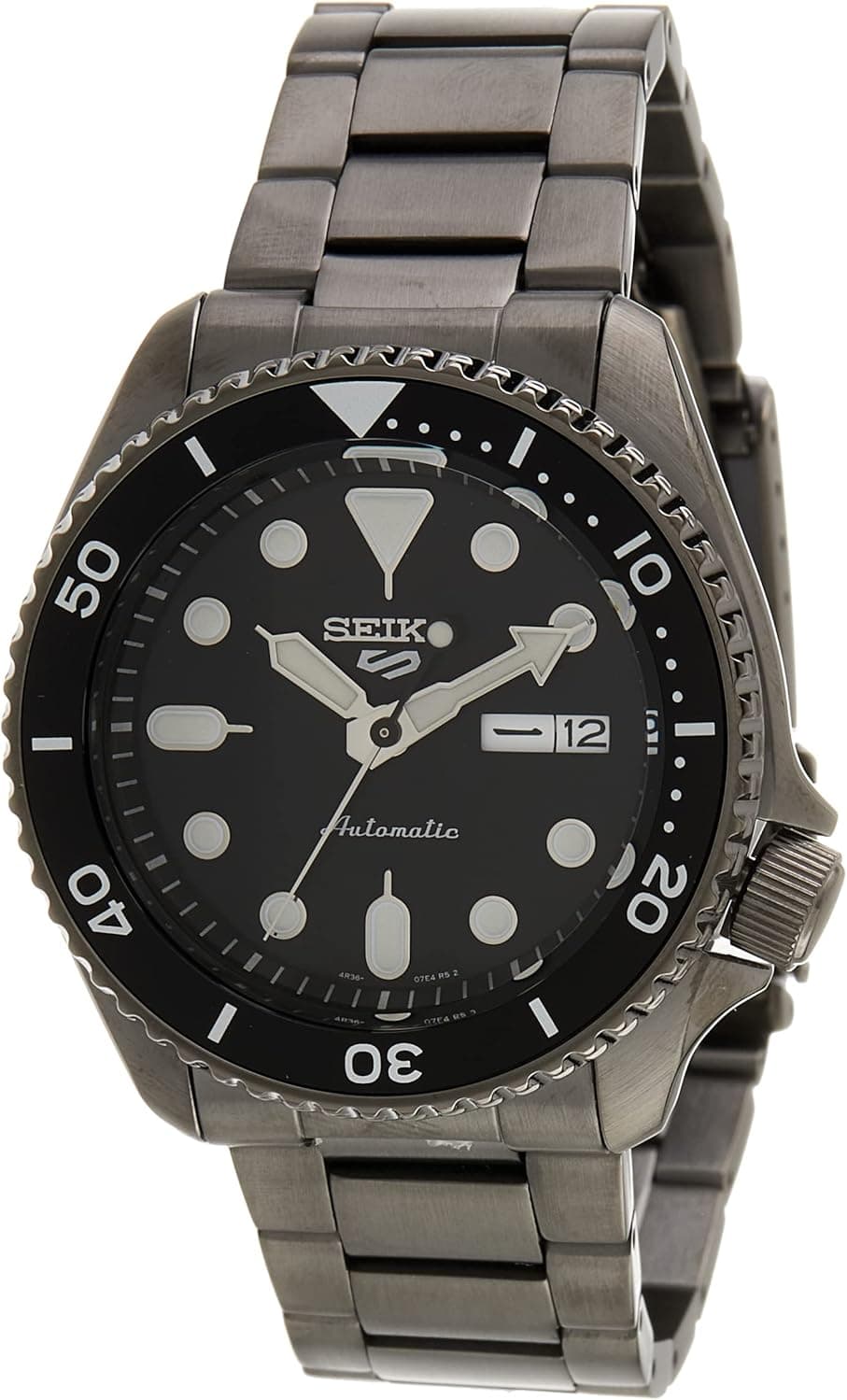
Winding an automatic is simple once you learn it: if it has stopped, give the crown 20 to 30 clockwise turns, set it, then wear it; your wrist handles the rest. For a first automatic to learn this on, I recommend the Seiko 5 Sports as the safest start, as its hand-winding and hacking let you practise every step.
Watches we recommend
Frequently asked questions
How many turns should I wind an automatic watch?
To start a stopped automatic, about 20 to 30 clockwise turns of the crown are enough. Stop once the watch ticks and you feel light resistance in the spring; then wear it and let the rotor finish the job. There is no need to force it.
Can I overwind an automatic watch?
On a modern automatic, no. The mainspring is connected to a slipping clutch that releases any excess once it is full, so past a certain point the spring simply slips rather than winding tighter. Still, wind calmly and steadily; feeling no hard stop is normal.
My automatic watch has stopped, how do I restart it?
First hand-wind it by turning the crown 20 to 30 times clockwise, then pull the crown out and set the time and date. Change the date with the hands away from the midnight danger window, ideally with the hour hand in the afternoon. Then push the crown back in, and lock it if it screws down.

About the author
Serdar D.Watch Editor
View profileSerdar D. is the editor at BraveryWatch. He believes a good watch should be not just expensive but right. He gets deep into the details, then turns them into something that is genuinely a pleasure to read. He gives relaxed, useful advice through the eyes of someone who truly cares about watches.