How to Care for a Mechanical Watch

 Serdar D.Watch Editor
A mechanical watch will run for generations when it is handled right. Five habits protect it: wind it off the wrist, keep it clear of magnets and hard knocks, always close the crown before water, have it serviced every four to seven years, and store it flat and dry when it is off your wrist.
Key takeaways
- Always take the watch off and wind it in your palm; winding it on the wrist wears the stem.
- If an automatic stops, give it 20 to 30 turns by hand; a few seconds of drift per day is normal, not a fault.
- A magnet is the sneakiest enemy: if the watch suddenly runs fast, have it demagnetised. Take it off for sport and heavy work.
- Close or screw down the crown before water; gaskets age, so periodic pressure testing matters.
- Service fully every four to seven years; store unworn watches flat, dry and away from magnetic fields.
Why a mechanical watch needs care
A mechanical watch is a tiny machine in which hundreds of small parts ride on a film of oil and touch one another as they work. That is exactly what sets it apart from a battery watch: it draws its energy from a mainspring, not from electronics. So a mechanical watch, handled correctly, will run for decades and even across generations, whereas a neglected one dries out and wears its parts. The good news is that almost everything an owner needs to do comes down to simple habits.
Daily handling and winding
The most common mistake is turning the crown while the watch is on the wrist. That puts side pressure on the winding stem and wears it over time. Take the watch off and wind it in your palm.
- Hand-wound watch: Turn it gently until you feel light resistance, and never force it. That resistance tells you the spring is full.
- Automatic watch: The daily motion of your arm winds the spring. If it has stopped, give it 20 to 30 turns by hand before you put it on.
A few seconds of drift per day is normal for a mechanical movement; it is the nature of the machine, not a fault. Always push the crown back in, or screw it down, after you set the time.
Magnetism and shocks
The sneakiest enemy of a mechanical watch is a magnet. Speakers, tablet covers, bag clasps and fridge magnets can magnetise the balance spring and push the watch minutes fast in a day. If your watch suddenly starts running well ahead, magnetism is the likely culprit, and a watchmaker can demagnetise it in minutes.
A shock tires the movement physically. Knocking the watch against a door frame or dropping it on a hard floor can crack the balance staff. Take the watch off for sport, garden work or heavy tool use.
Water and the crown
Water resistance is not absolute; it is a promise that rests on the seals. Those rubber gaskets harden with age, so a "100 metres" stamp is not valid forever.
- Before water, make sure the crown is fully closed or screwed down.
- Never pull the crown out underwater or while the watch is wet.
- Skip hot showers and saunas: heat expands the gaskets and steam can seep in.
For a watch that sees regular water, have a pressure (water-resistance) test done every couple of years.
Service intervals
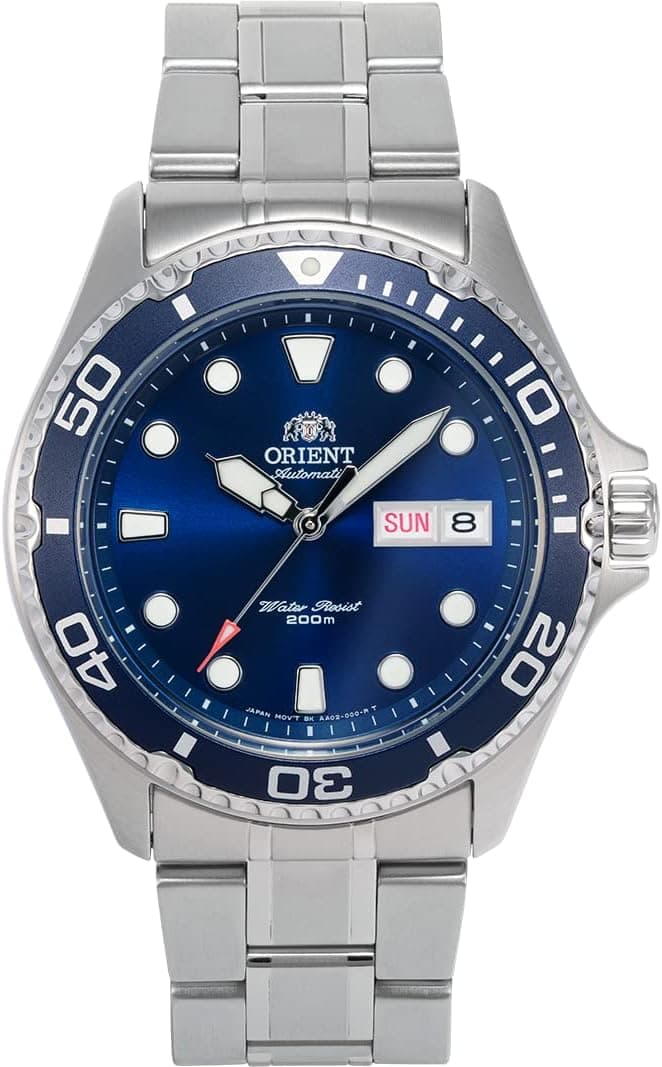
The oil in a mechanical watch does not last forever. The general rule is a full service every four to seven years: the watch is opened, stripped, cleaned, re-oiled and regulated. Fog under the crystal, noticeable gaining or a shrinking power reserve are all signs that service time has arrived. Sturdy Japanese automatics I wear daily, such as the Orient Mako 3 and the Seiko 5 Sports, hold that interval comfortably, but like any watch they will eventually want a watchmaker's bench.
Storage
Keep the watches you are not wearing somewhere flat, dry and away from magnetic fields. You do not need a winder to keep an automatic running every day; letting it stop does no harm, you simply restart it before wearing. If you own several pieces, rotation is good. Do not toss a slim dress watch like the Orient Bambino Version 7 next to hard cases, as it will scratch. If you want to dig deeper into how automatics work, see my Orient Mako 3 review and, for the wider picture, the best Japanese watches guide.
Specifications
| Specification | Value |
|---|---|
| Recommended service interval | 4 to 7 years |
| Starting an automatic | 20 to 30 hand winds |
| Water-resistance test | Every couple of years with regular water contact |
| Storage | Flat, dry, away from magnetic fields |
Pros
- With proper care a mechanical watch runs for generations
- Most care is free habit: correct winding, correct storage, avoiding magnets
- A symptom-based approach avoids unnecessary service costs
- Sturdy Japanese automatics hold long service intervals comfortably
Cons
- Periodic service and water-resistance testing are real costs
- More sensitive to magnets and shock than a battery watch
- A few seconds of daily drift can bother those expecting precision
- An automatic stops when unworn and needs resetting
Verdict
Caring for a mechanical watch is not complicated, just consistent: wind it off the wrist, protect it from magnets and shocks, close the crown before water, service it when symptoms appear, and store it flat and dry. For anyone learning these habits on a first watch, I would point to the Seiko 5 Sports, forgiving to use and easy on its service interval.
Watches we recommend
Frequently asked questions
Do I need to wind my automatic watch every day?
No. If you wear it daily, the motion of your arm keeps the spring wound, so no extra winding is needed. If it has been sitting and stopped, just give it 20 to 30 turns by hand before wearing. Letting it stop does no harm.
Why has my mechanical watch suddenly started running fast?
The most likely cause is magnetism. Magnets in speakers, tablet covers or bag clasps can magnetise the balance spring and push the watch minutes fast a day. A watchmaker can demagnetise it in minutes, which usually solves the problem.
How often should I service a mechanical watch?
The general rule is a full service every four to seven years, in which the watch is opened, cleaned, re-oiled and regulated. Fog under the crystal, noticeable gaining or a shrinking power reserve signal that service time has come. Otherwise avoid unnecessary early servicing.

About the author
Serdar D.Watch Editor
View profileSerdar D. is the editor at BraveryWatch. He believes a good watch should be not just expensive but right. He gets deep into the details, then turns them into something that is genuinely a pleasure to read. He gives relaxed, useful advice through the eyes of someone who truly cares about watches.