

Orient Mako 3 Review
 Serdar D.Watch Editor
The Orient Mako 3 is one of very few divers at this price with its own automatic calibre. You get a true 200 metres, the hacking F6922 movement and a solid steel bracelet. Its only real compromise is middling lume; the glass is sapphire. For a first proper automatic, or a budget diver you can actually swim in, it is the right place to start.
Key takeaways
- In-house F6922 automatic calibre, rare at this price, with both hand-winding and hacking.
- A true 200 metres, screw-down crown and unidirectional bezel make it a real diver, not just a watch that looks the part.
- The 41.8mm case (roughly 46mm lug to lug) suits medium to fuller wrists; the smaller Mako 40 is the call for slim ones.
- The steel bracelet is good quality with no hollow rattle, the crystal is flat sapphire and the lume is middling.
- The closely related Kamasu (around $283) also has sapphire, so pay more only for its usually better lume.
- At roughly $258 it is one of the soundest starting points for a first proper automatic or a budget diver.
What the Mako 3 is and who it suits
For well over a decade the Orient Mako has been one of the first names mentioned whenever someone asks for a first proper automatic. The Mako 3 is the current iteration of the line, and it can be summed up in a sentence: it is one of very few divers at this price with its own automatic calibre. Who is it for? Anyone after a first mechanical watch, or anyone who wants a true 200 metres without paying for an expensive diver. Who it is not for, I have set out honestly at the end.
First impressions, case, dial and on the wrist
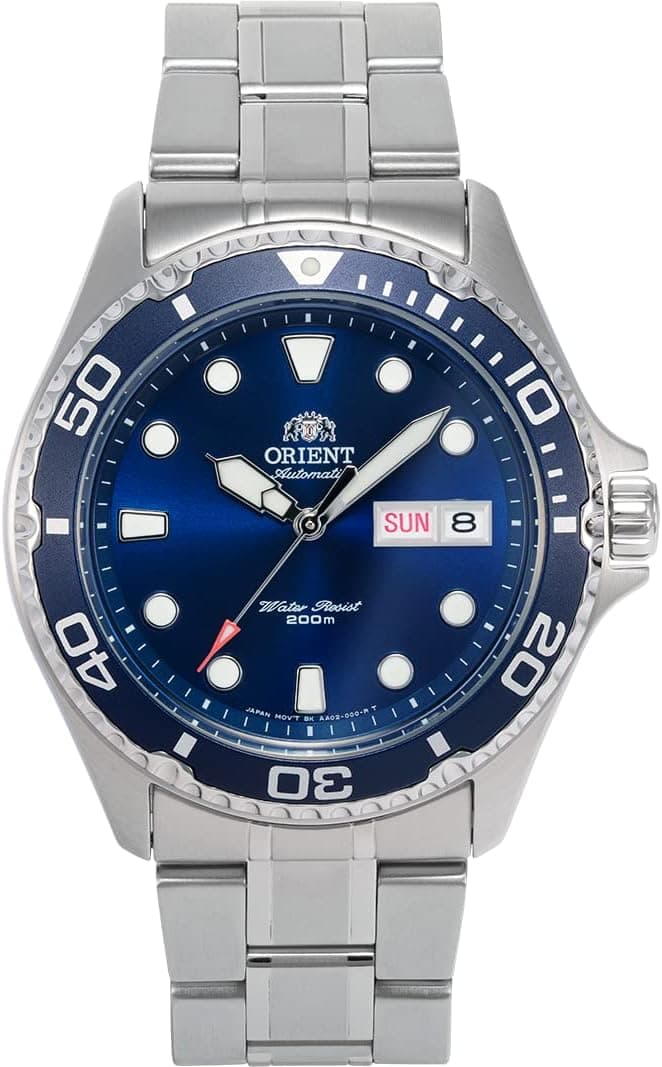
A 41.8mm steel case, roughly 46mm lug to lug and about 13mm thick. In the hand it feels dearer than it has any right to: the steel bracelet has none of the hollow rattle you find on cheaper watches, and it sits properly on the wrist. The bezel is unidirectional and turns with crisp, defined clicks, so it is sound for timing a dive. The dial is clean, and the indices are applied rather than flat-printed. The crystal is flat sapphire, the same scratch-resistant material the Kamasu uses.
The calibre inside, Orient's F6922
This is the heart of the matter. The F6922 is Orient's own automatic calibre: 22 jewels, 21,600 beats per hour and around 40 hours of power reserve. Two features stand out. You can hand-wind it (turn the crown to start a stopped watch), and it hacks (pull the crown and the seconds hand stops, so you can set the time to the second). That pairing is far from universal at this price; Seiko's old 7S26, for instance, does neither. On accuracy, expect a few seconds of drift a day, which is normal for a watch that makes no chronometer claim. Wear it regularly and rest it in a consistent position overnight and you can rein the drift in yourself.
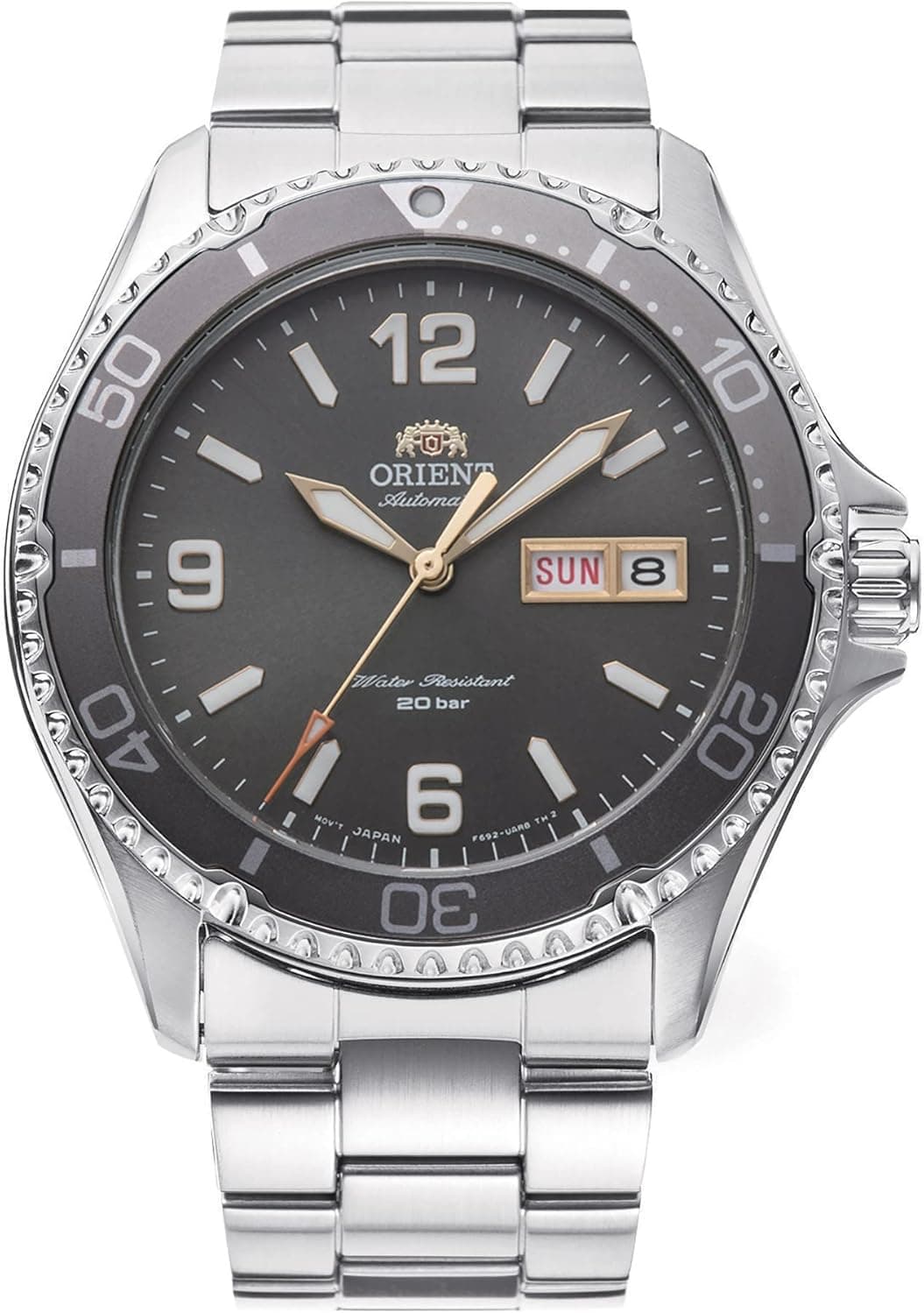
Orient Mako-3 RA-AA0819N39B, 42mm, Grey Dial, Stainless Steel Bracelet
View productEveryday use, water and legibility
A true 200 metres and a screw-down crown mean swimming, snorkelling and freediving pose no problem, provided the crown is screwed fully home before the watch goes near water. Everyday durability is good and the steel case shrugs off knocks. The weak point is legibility in the dark: the lume works, but it is neither as bright nor as long-lasting as Seiko's LumiBrite, so it does fall a little short in the small hours. In daylight the dial is perfectly clear.
Mako 3 or Kamasu
This is the most common dilemma. The Kamasu is really the same family's sibling, also with sapphire glass and usually better lume; same F6922 calibre, around $283. The Mako 3 is roughly $258 and has sapphire glass too. Since both have sapphire, the Kamasu's roughly $25 premium mainly buys its usually better lume, not a tougher crystal. If you will wear it seldom, and with care, the Mako 3 is more than enough. For a slim wrist, neither is ideal; the 39mm Mako 40 is the better fit.
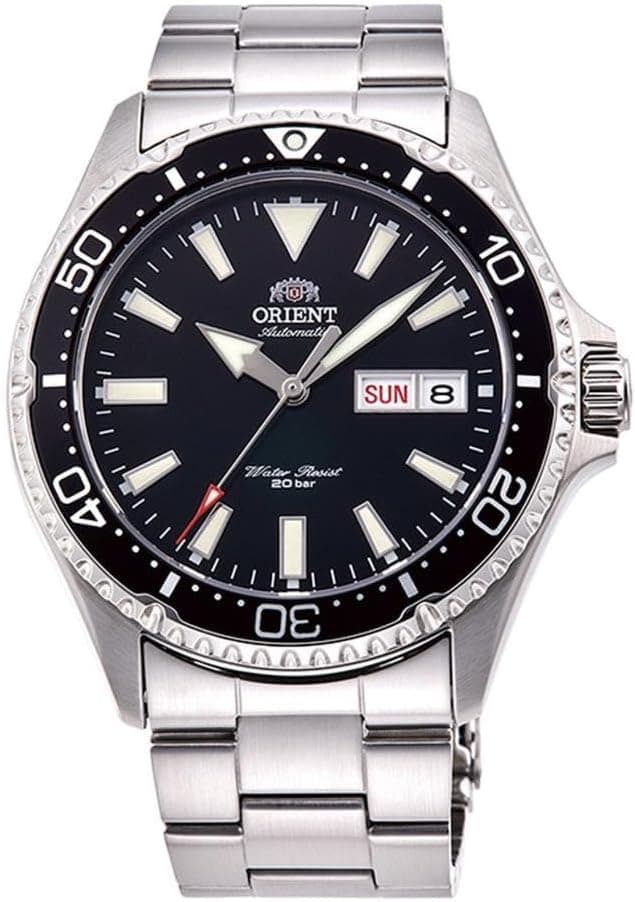
Orient Kamasu RA-AA0001B19B, 42mm, Black Dial, Grey Stainless Steel Bracelet
View productThe specs at a glance
| Specification | Mako 3 |
|---|---|
| Calibre | Orient F6922, automatic |
| Jewels and frequency | 22 jewels, 21,600 vph |
| Power reserve | ~40 hours |
| Case | 41.8mm, ~46mm lug to lug |
| Crystal | Sapphire (flat) |
| Water resistance | 200m, screw-down crown |
| Price (2026) | ~$258 |
Price is correct as of June 2026 and may change; check the product page for the current figure.
Who I would not recommend it to
Let me be straight. On a slim wrist (under 16cm) 41.8mm can wear large, and the 39mm Mako 40 is the better call. If brighter lume matters most to you, skip the Mako 3 and take the Kamasu; both have sapphire glass. If the best lume is your priority, stretch the budget a touch and look at a Seiko Prospex. But if the brief is a first automatic, or a budget-friendly diver you can genuinely swim in, you will struggle to find a sounder place to start than the Mako 3.
Pros
- Its own automatic calibre at this price (F6922), with hand-winding and hacking
- A true 200 metres, with a screw-down crown and unidirectional bezel for a full diver spec
- Good-quality steel bracelet that sits well and never feels cheap
- Strong value in its class at roughly $258
- Dependable everyday durability
Cons
- The lume works but is neither as bright nor as long-lasting as Seiko's
- On some examples the date wheel changes sluggishly around midday
- The 41.8mm case can wear large on a slim wrist
Watches we recommend
Frequently asked questions
Is the Orient Mako 3 worth buying?
Yes. At this price it is one of very few divers that combine their own automatic calibre, a true 200 metres of water resistance and a good-quality steel bracelet, which makes it one of the soundest starting points around, especially for a first automatic or a budget-friendly diver you can actually swim in.
Should I buy the Orient Mako 3 or the Kamasu?
Both carry the same F6922 calibre, the same true 200 metres and scratch-resistant sapphire glass. The Kamasu usually has better lume and costs around $283, while the Mako 3 costs around $258. If lume matters to you, choose the Kamasu; otherwise the Mako 3 is enough.
Does the F6922 calibre hand-wind and hack?
Yes. The Orient F6922 allows both hand-winding (starting a stopped watch by turning the crown) and hacking (the seconds hand stops when you pull the crown out). That is a feature you will not find on every brand in this price band.
Is the Mako 3's 200 metre water resistance genuine?
Yes, the Mako 3 is a true 200 metre diver with a screw-down crown, which is more than enough for swimming, snorkelling and freediving. Make sure the crown is screwed fully home before the watch goes near water, and if you dive in earnest, have the seals tested periodically.
Does the Mako 3 suit a slim wrist?
With its 41.8mm case and roughly 46mm lug to lug, it sits best on medium to fuller wrists. On a slim wrist (under 16cm) it can wear large; in that case the 39mm version of the same diver, the Mako 40, is the better choice.

About the author
Serdar D.Watch Editor
View profileSerdar D. is the editor at BraveryWatch. He believes a good watch should be not just expensive but right. He gets deep into the details, then turns them into something that is genuinely a pleasure to read. He gives relaxed, useful advice through the eyes of someone who truly cares about watches.