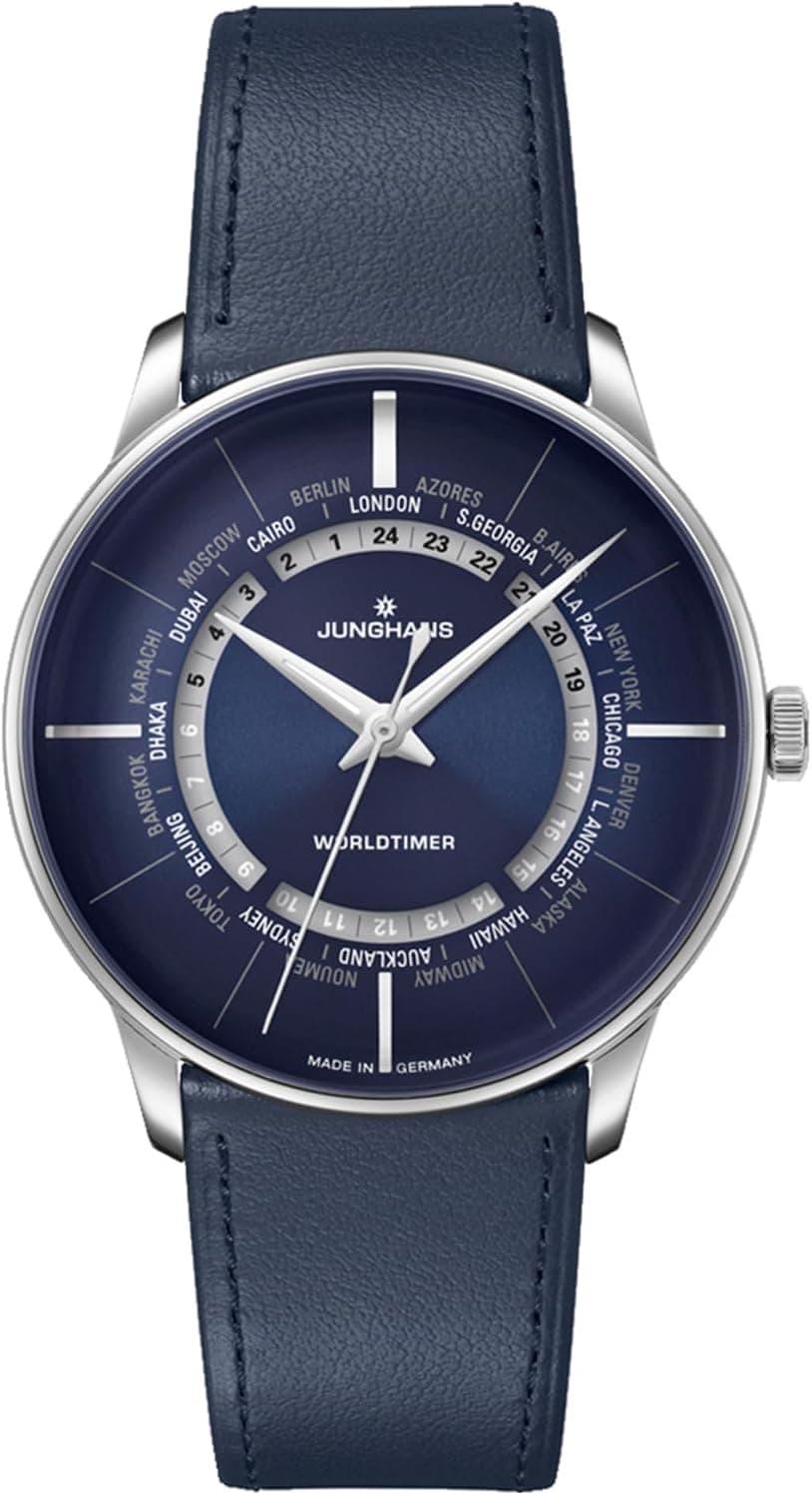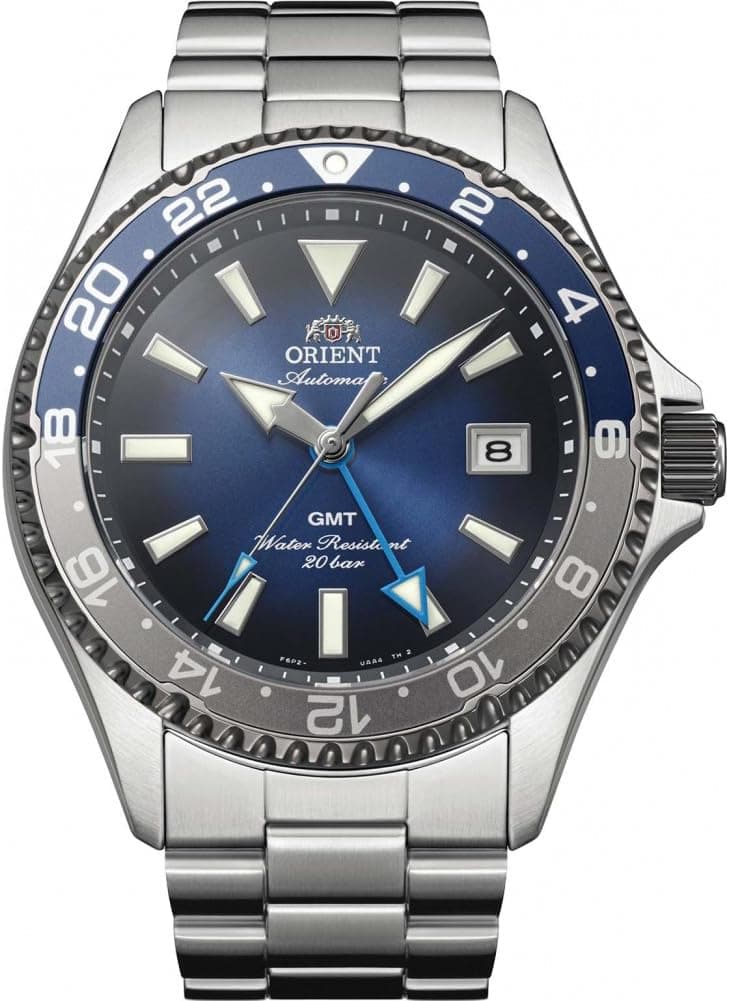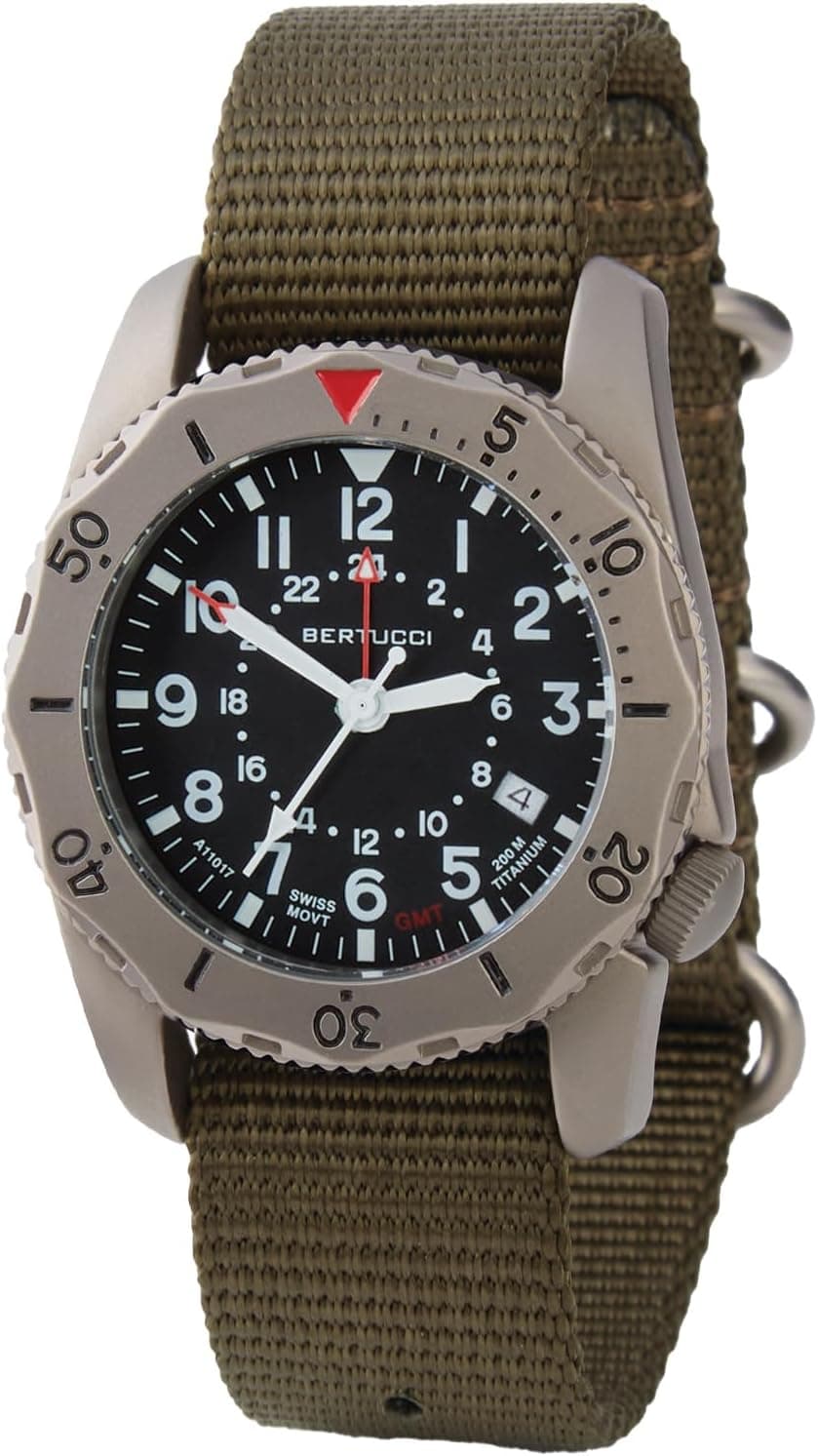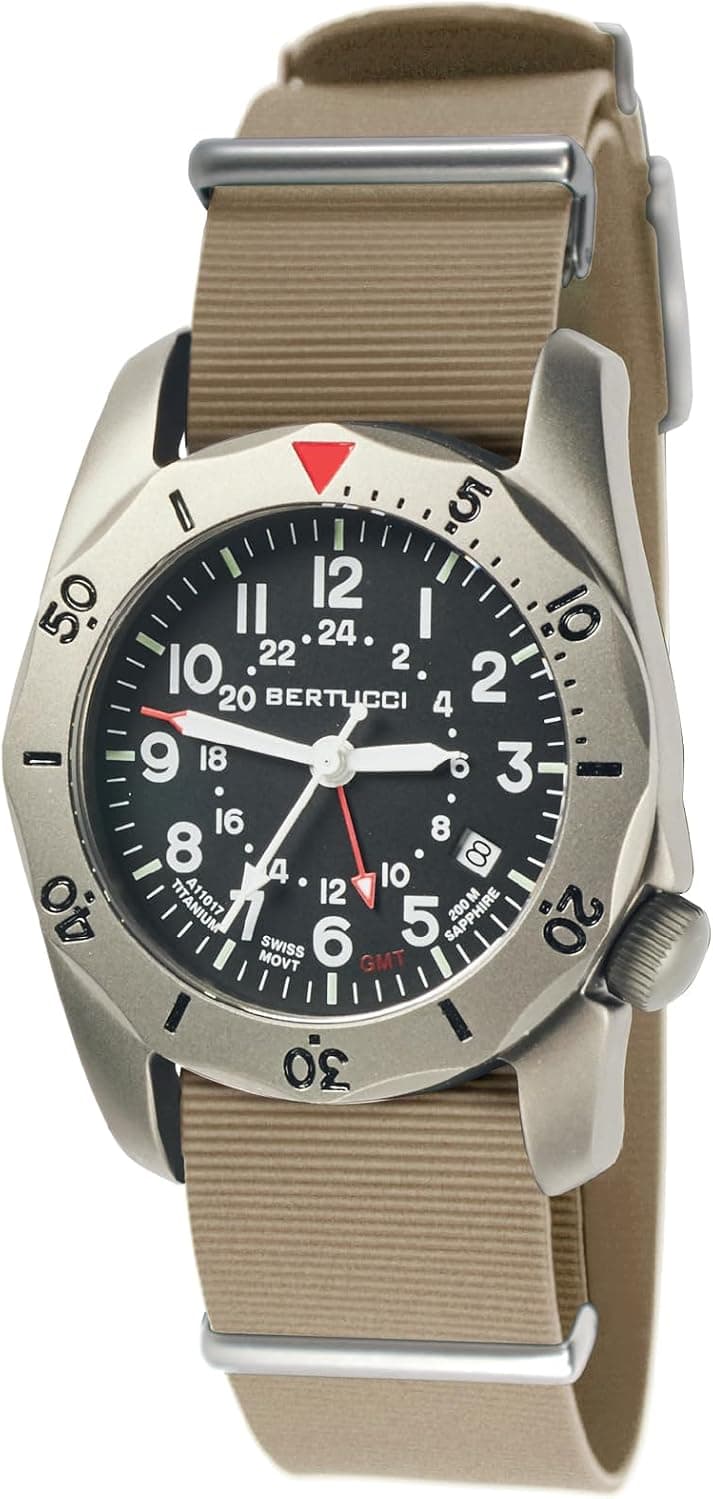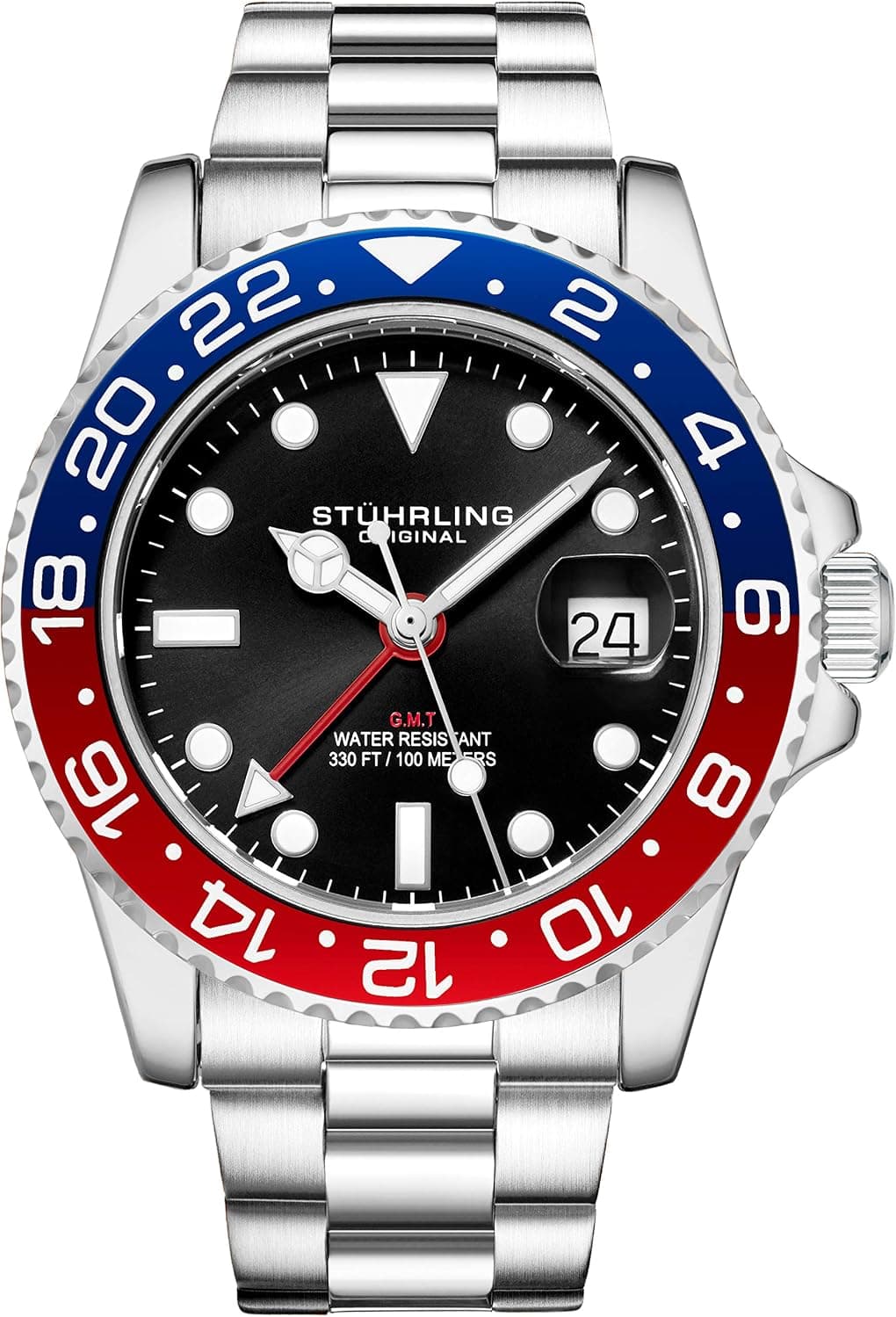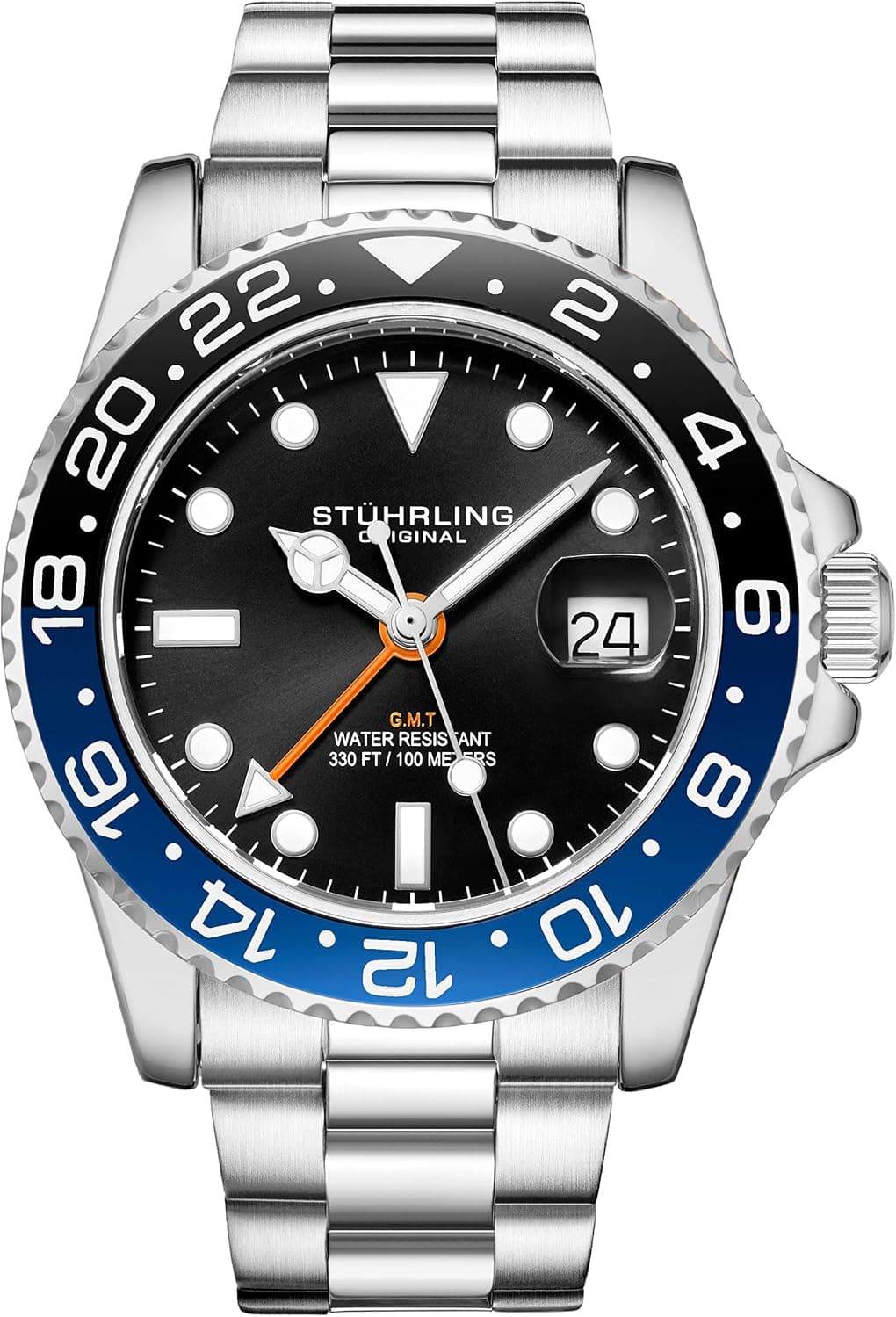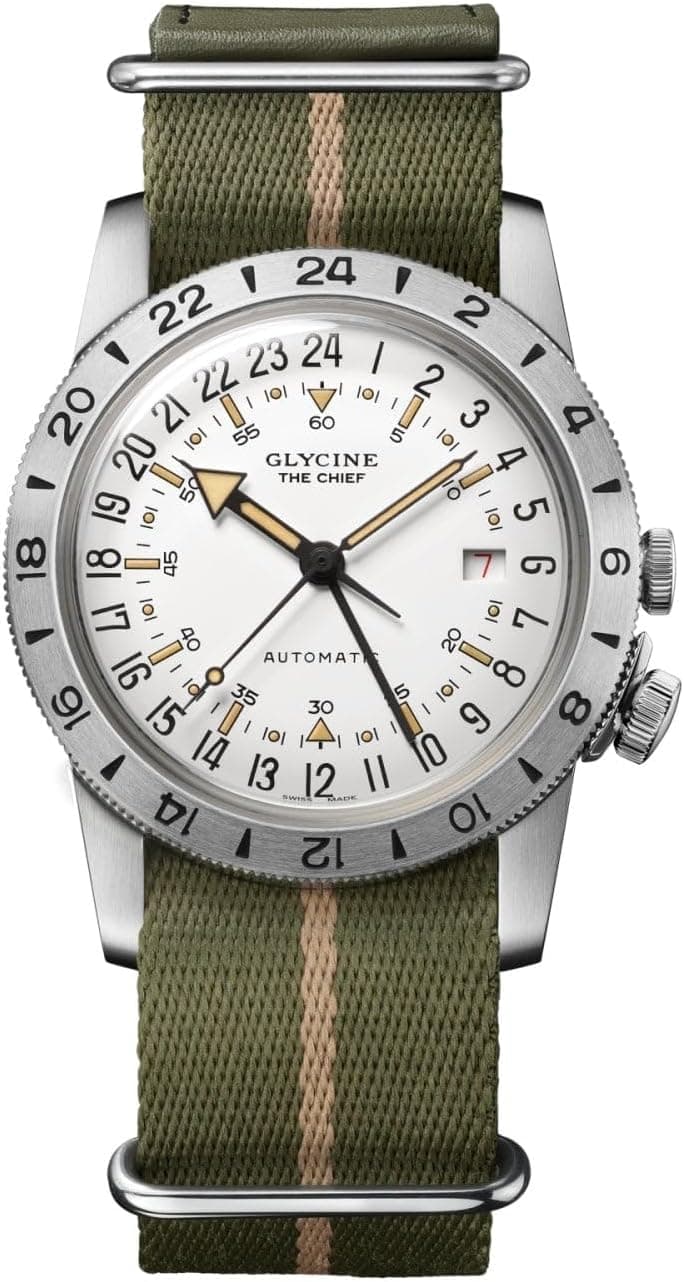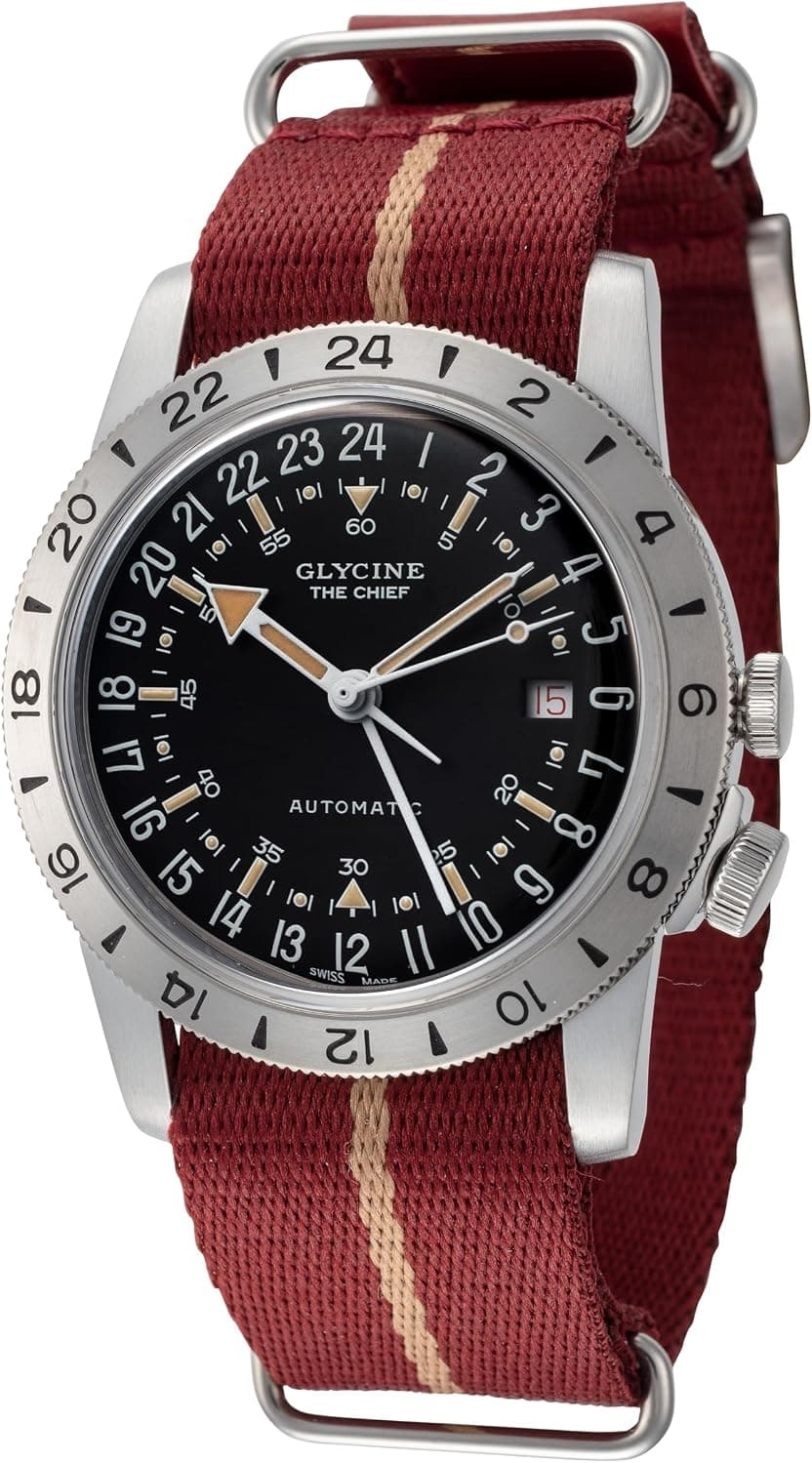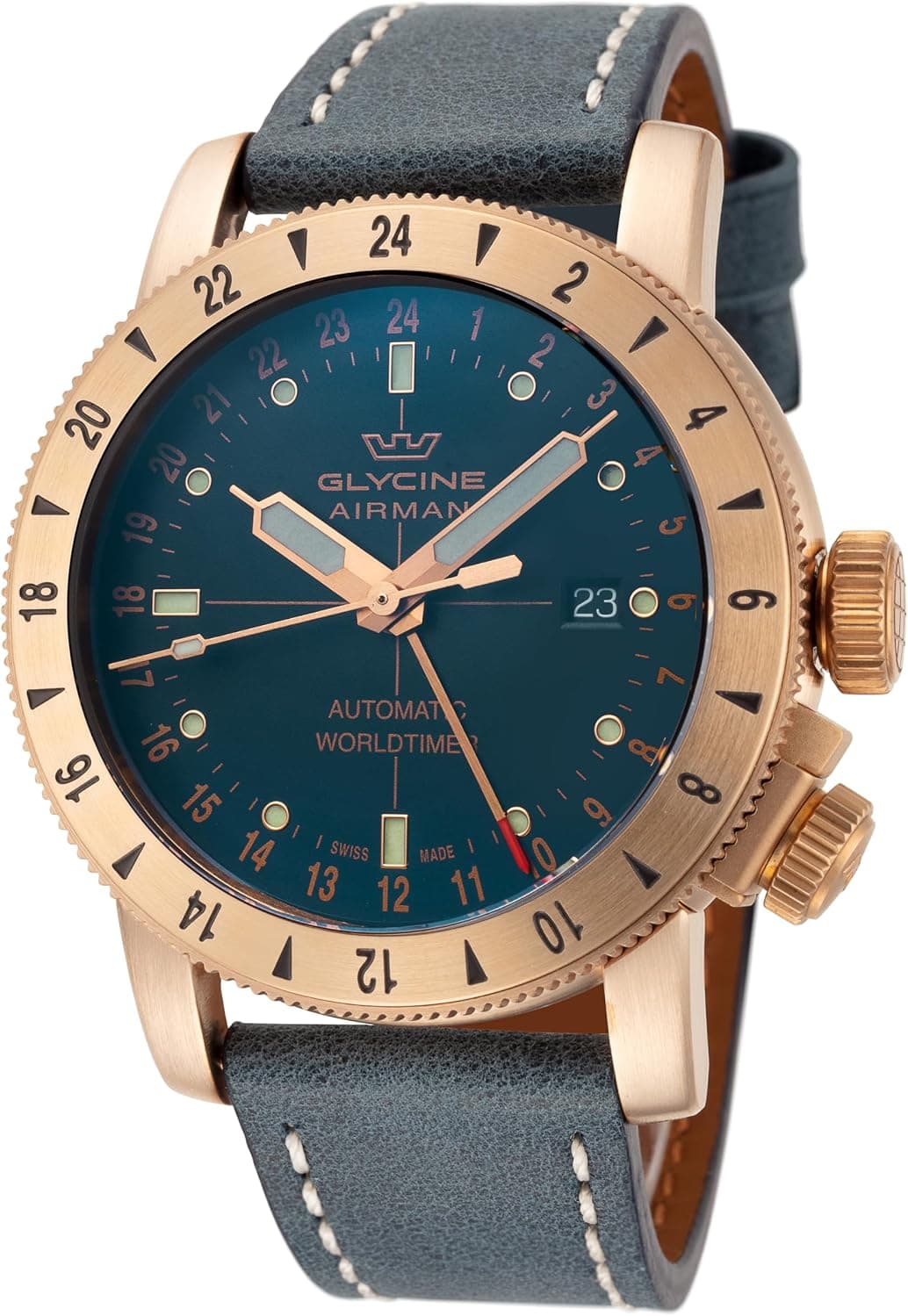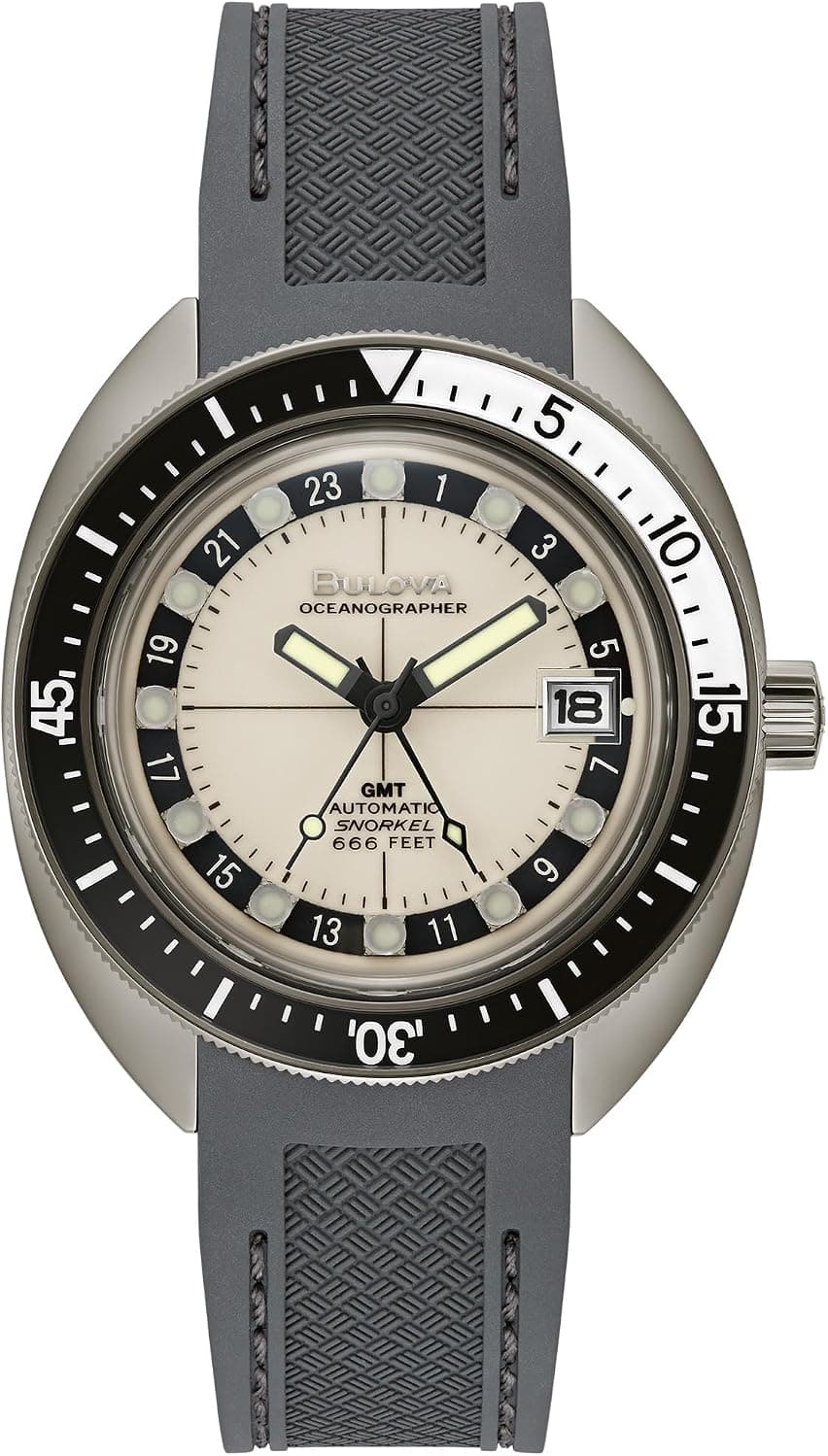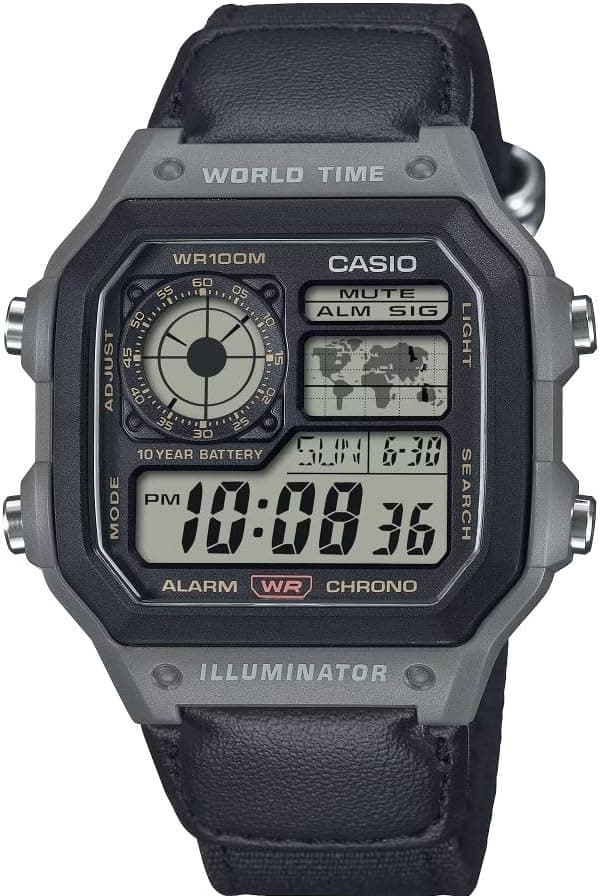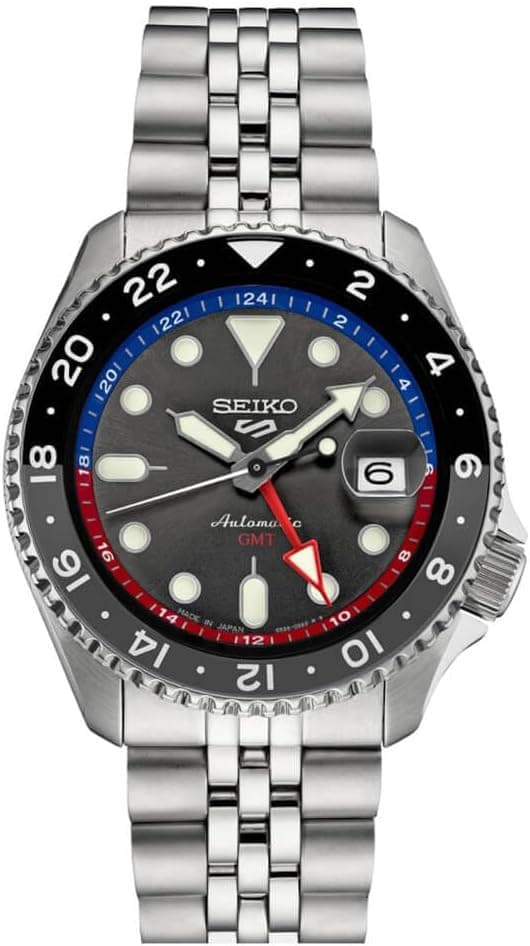
GMT / World Time is the family of complications that lets a watch show a second time zone, or many, alongside local time. The modern template starts with Rolex's GMT-Master, reference 6542, launched in 1954 for Pan American Airways pilots. The recipe is a 24-hour hand geared to the movement plus a rotating 24-hour bezel; the red half marks day (06:00-18:00) and the blue half night (18:00-06:00), so you can tell at a glance whether it's morning or midnight back home. World time takes a different route: Louis Cottier's 1931 patent surrounds the dial with 24 city names and a 24-hour ring that turns in sync, reading every zone at once.
The field runs from accessible to serious money. A steel Rolex GMT-Master II 'Pepsi' listed around £9,400 at retail, but Rolex discontinued it in April 2026 and the secondary market now routinely clears £20,000. Tudor's Black Bay GMT in steel starts near £4,200 with a red-and-blue Pepsi bezel, while the slimmer 39mm Black Bay 58 GMT offers a black-and-red 'Coke' option. Omega's Seamaster Aqua Terra Worldtimer is a 43mm world timer running the Co-Axial Master Chronometer calibre 8938. If you want a true GMT on a budget, the COSC-certified Longines Spirit Zulu Time sits around £2,500 to £3,050. Higher up, Patek Philippe's reference 5231 represents proper world time, while Grand Seiko's GMT models offer Hi-Beat and Spring Drive movements.
The key thing to check before buying is the movement type. A true GMT, also called flyer or traveller, jumps the local hour hand independently in one-hour steps via the crown, which is what you want if you fly often, since you reset local time without stopping the watch. A caller or office GMT instead sets the 24-hour hand independently, which suits someone who stays put but tracks a distant office or family. A rotating bezel adds a third zone and eases day/night reading; fixed-bezel models look cleaner but flex less.
In short, a frequent flyer is best served by a true GMT with a rotating 24-hour bezel. Someone monitoring one fixed faraway zone will be perfectly happy with a caller movement. Anyone who needs to see several cities at once should look to world time, which trades a busier dial for unmatched coverage.