How to Read an Analog Watch
 Serdar D.Watch Editor
Reading an analog watch is three steps: read the hour with the short hand first, then the minute with the long hand, then the thin second hand. Count minutes in fives, where each number means five minutes. A date shows in a small window. After a few minutes of practice, you read it at a glance.
Key takeaways
- Tell the three hands apart: the short, thick hour hand for the hour, the long, slim minute hand for minutes, the thinnest hand for seconds.
- Read minutes in fives: for the minute hand, each number means five times its value (the 3 means 15 minutes).
- The date window advances on its own around midnight; on a mechanical or automatic watch with a date, avoid setting the date by hand between about 9 PM and 3 AM.
- The dial counts to 12, but a day is 24 hours; context tells you which half you are in.
- Follow the same order every time: hour first, then minutes, then seconds.
Get to know the dial first
An analog watch has three main parts. The dial is the face, marked with numbers from 1 to 12 or with lines. The hour hand, the short, thicker one, shows the hour. The minute hand, the long, slim one, shows the minutes. Most watches also carry a very thin second hand that turns continuously. When the numbers on the dial are replaced by lines, dots, or bars, those are called indices; the logic is the same whether you read numbers or markers.
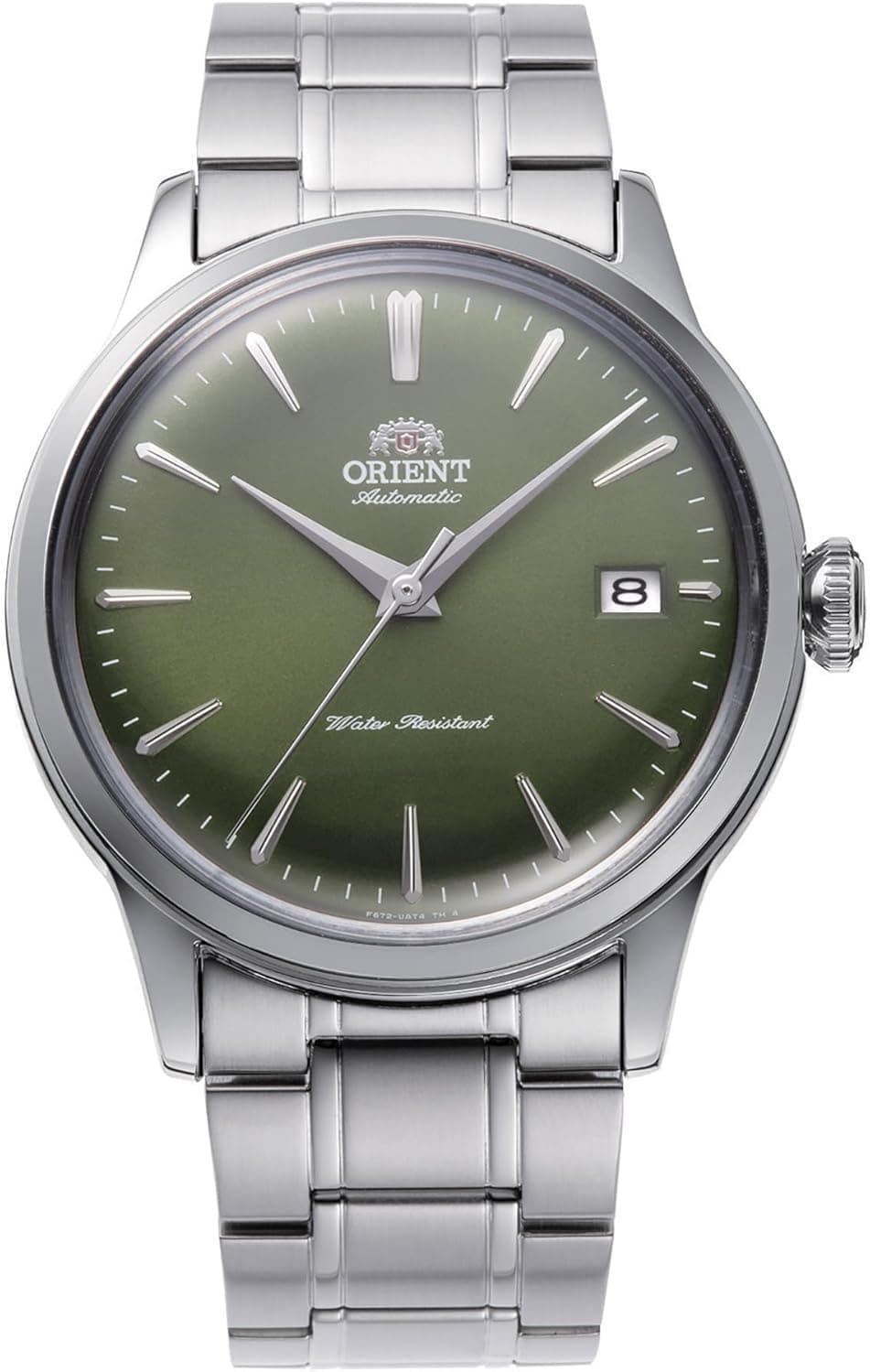
A clean, uncluttered dial helps a great deal when you are learning. The Orient Bambino is a good example: simple, legible, with slim hands. For more on the parts, see dial and hand styles.
Read the hour, then the minutes
The order matters. Look at the short hour hand first: whichever two numbers it sits between, the smaller number is the hour you are in. If the hand is between 3 and 4, it is past three o'clock.
Now move to the long minute hand. Here is the one trick worth learning: for the minute hand, each number stands for minutes counted in fives, not for its own value.
- Minute hand on 12: on the hour, 00 minutes
- On 1: 5 minutes
- On 2: 10 minutes
- On 3: 15 minutes (quarter past)
- On 6: 30 minutes (half past)
- On 9: 45 minutes (quarter to)
So step through each number by multiplying it by five. When the minute hand sits between numbers, the small lines around the dial mark the single minutes.
Read the second hand and the sweep
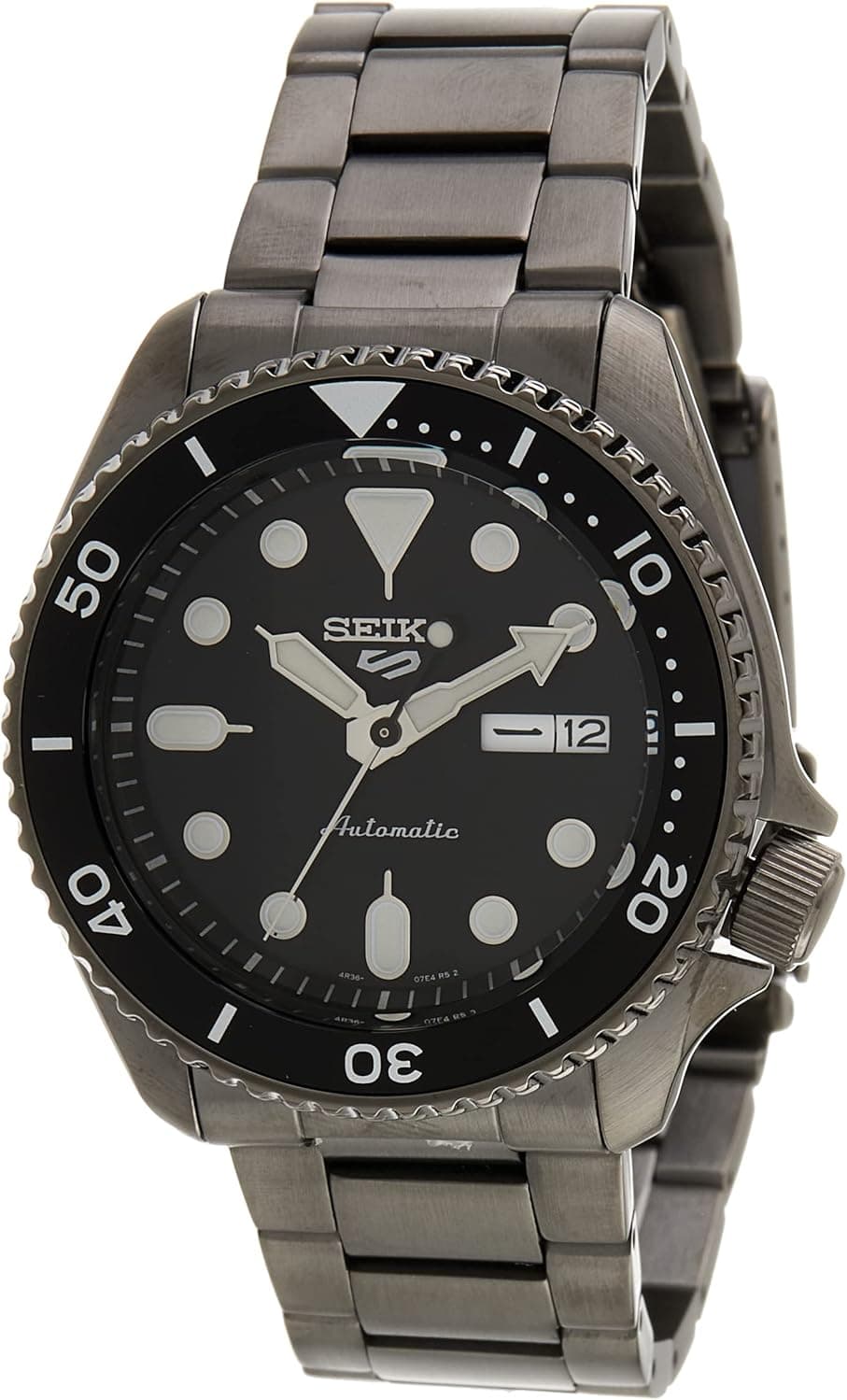
The thinnest, constantly moving hand counts seconds; one full turn is sixty seconds, or one minute. On a mechanical watch this hand glides in a smooth sweep, while on a quartz watch it ticks once per second. On an automatic like the Seiko 5 Sports, that sweep is easy to see. To read the markers and lines, the term indices will help.
Read the date window
Most watches have a small date window, usually at the 3 position, showing the day of the month. It advances on its own around midnight. On a mechanical or automatic watch with a date, such as the Orient Bambino, avoid setting the date late in the evening or overnight, roughly 9 PM to 3 AM, because the date-change gears are partly engaged near midnight and forcing them can cause wear. This window is an approximation, and the exact span varies by movement. For more, see date complication.
Think in 24 hours
The analog dial only counts 1 to 12, but a day is 24 hours. The hour hand goes around twice a day. You know which 12-hour half you are in from context: at breakfast it is 8 in the morning, at dinner it is 8 at night. 13:00 means the hour hand reaching 1 in the afternoon; subtract 12 from 13 and you get 1.
A simple, repeatable method
Follow the same three steps every time:
- Short hour hand: gives the hour
- Long minute hand: count in fives for the minutes
- Thin second hand: gives the seconds if you need them
Read in this order on purpose a few times a day, and within a week it becomes automatic. For a broader start, see the best watches for beginners; for watches with extra hands, how to read a chronograph watch; and to choose a first classic, the best dress watches.
Specifications
| Specification | Value |
|---|---|
| Reading order | Hour, minute, second |
| Minute rule | Each number is five minutes |
| Date advance | Automatic at midnight |
| Day cycle | Hour hand twice a day, 24 hours |
Pros
- The ordered method (hour, minute, second) makes learning easy and repeatable.
- The count-in-fives rule lets you read minutes at a glance.
- Teaching through clean, legible dials is clear for absolute beginners.
- Practical details such as the date and 24-hour logic are covered too.
Cons
- In the first days, converting minutes in fives can feel a little slow.
- On very busy dials with extra hands, this basic method may not be enough.
- A 12-hour dial alone does not tell morning from evening; context is needed.
Verdict
Learn to tell the three hands apart, read minutes in fives, and always follow the same order, and within a few days you will read the time at a glance. The easiest way to start is with a clean, legible dial, and for that the Orient Bambino is a fine first watch.
Watches we recommend
Frequently asked questions
On an analog watch, which hand shows the hour and which shows the minutes?
The short, thicker hand is the hour hand and shows the hour; the long, slim hand is the minute hand and shows the minutes. Most watches also have a thinnest second hand. When the hour hand sits between two numbers, the smaller number is the current hour.
How do I read the minutes in fives?
For the minute hand, multiply each number by five: the 1 means 5 minutes, the 2 means 10, the 3 means 15, the 6 means 30. When the minute hand sits between numbers, the small lines around the dial mark the single minutes.
How do I tell morning from evening on an analog watch?
The dial only counts 1 to 12 and the hour hand goes around twice a day, so you tell morning from evening by context. To find 24-hour time on a 12-hour dial, subtract 12 from afternoon hours: 13:00 means the hour hand at 1.

About the author
Serdar D.Watch Editor
View profileSerdar D. is the editor at BraveryWatch. He believes a good watch should be not just expensive but right. He gets deep into the details, then turns them into something that is genuinely a pleasure to read. He gives relaxed, useful advice through the eyes of someone who truly cares about watches.