How to Set a GMT Watch
 Serdar D.Watch Editor
Setting a GMT watch is simpler than it looks. First work out which type you own: on a caller GMT you set the 24-hour hand on its own, while on a true flyer GMT you jump the hour hand independently. Then set home time on the 24-hour hand and local time on the main hand.
Key takeaways
- A GMT watch is built on an extra hand that circles the dial once every 24 hours, telling you at a glance whether the second zone is in morning or evening.
- A caller GMT jumps the 24-hour hand independently and suits a desk-bound user, while a true flyer GMT jumps the main hour hand and suits a frequent traveler.
- The classic setup is to keep the 24-hour hand on your unchanging home time and set the main hand to your current local time.
- A rotating 24-hour bezel lets you read a third time zone by offsetting it against the GMT hand.
- An accessible Japanese caller GMT is the best place to learn the routine because its 24-hour hand jumps independently.
The logic of a GMT watch
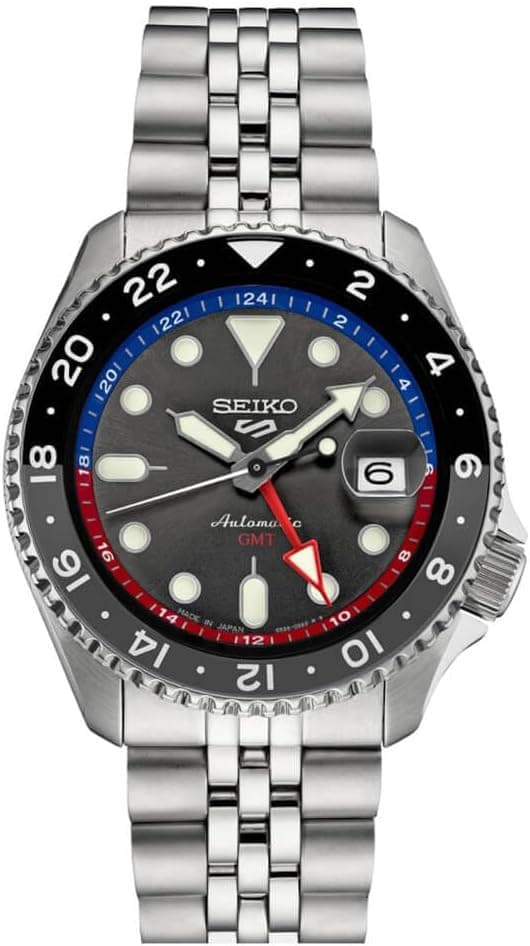
A GMT watch differs from an ordinary three-hander in one way: it has a fourth hand on the dial, the 24-hour GMT hand. The normal hour hand sweeps the dial once every 12 hours, while the GMT hand makes a single rotation every 24 hours. That slow rotation is what lets you tell at a glance whether the place it points to is in daytime or night, because a 24-hour scale separates morning from evening.
To read a second zone, you compare the tip of that 24-hour hand against the 24-hour scale on the chapter ring or the bezel. For the idea itself and where it comes from, see the definition of GMT.
Caller GMT versus true GMT
There are two basic architectures, and the setting method depends entirely on which you have.
- Caller GMT (office GMT): A middle crown position jumps the 24-hour hand on its own while the main hour hand stays put. It suits the person who sits at a desk and tracks a distant zone, the one deciding when to place a call.
- True GMT (flyer GMT): The crown jumps the main hour hand in one-hour steps without disturbing the minutes or the GMT hand. When you land, you set the new local time in seconds while your home time stays on the 24-hour hand.
The difference sounds small, but it shapes daily use. To see which type fits you, read this comparison of caller and true GMT.
Step by step: home and local time
The classic approach is to keep the 24-hour hand on your unchanging home (reference) time and move the main hand to wherever you are.
- Pull the crown all the way out and stop the seconds.
- Set the 24-hour hand to your home time, confirming morning or evening against the 24-hour scale.
- Push the crown in one notch and move the main hour hand to your current local time.
- Push the crown fully home, and screw it down if it is a screw-down crown. The main hand now shows local time and the GMT hand shows home. Many accessible GMTs, including the Seiko 5 Sports GMT, use a push/pull crown, so there is nothing to screw down; you simply push it in.
When you change places on a caller watch you only move the 24-hour hand, while on a true GMT you move the main hour hand, which is why a flyer GMT feels easier on long trips. On an affordable caller GMT like the Seiko 5 Sports GMT recommended below, relocating means resetting the main time and nudging the 24-hour hand, not jumping the hour hand alone.
Reading a third zone off the bezel
The rotating 24-hour bezel gives you a third time zone for free. Offset the bezel zero from the number the GMT hand points to, and you have physically added that hour difference. For example, if your GMT hand shows home and you turn the bezel two hours forward, the GMT hand's new reading against the bezel gives you a third city's time.
This should not be confused with a world timer; anyone who wants more cities at once should look at the idea of a world timer. For how the rotating ring works mechanically, follow the term bezel.
Where to start
The most affordable way to learn this logic on a real watch is an accessible Japanese GMT. Automatic and built around an independently jumping 24-hour hand, the Seiko 5 Sports SKX GMT is a caller (office) GMT, which makes it a solid place to learn caller-GMT setting and bezel reading, while anyone who does not want the GMT complication but wants the same toughness can look at the Seiko 5 Sports.
If you want to widen the brand and budget, my guides to the best Seiko watches, the best Japanese watches, and the best watches under $300 will point the way.
Common mistakes
- Reading the 24-hour hand like AM/PM. It runs on 24, not 12, so read it against the 24-hour scale, where on a standard layout noon falls at 12 and midnight at 24/00; the watch's own markings govern.
- Trying to change local time on a caller watch. On a caller, when you move zones you move the 24-hour hand, not the main hand.
- Leaving the crown out. Water resistance and dust sealing only apply when the crown is fully closed; on a screw-down crown that means screwing it back down, while a push/pull crown like the Seiko 5 Sports GMT's just needs to be pushed all the way in.
Specifications
| Specification | Value |
|---|---|
| GMT hand | One rotation per 24 hours |
| Two types | Caller (office) and true (flyer) |
| Bezel scale | 24-hour, rotating |
| Zones tracked | Second, third off the bezel |
Pros
- You can track a second zone, and a third off the bezel, on a single watch.
- Once the caller versus flyer distinction is clear, setting takes seconds rather than minutes.
- The 24-hour hand makes day and night unambiguous, which cuts down on misreading.
- Accessible Japanese GMTs make the skill cheap and durable to learn.
Cons
- On a caller watch, trying to change local time with the main hand is a common error.
- Reading the 24-hour hand with a 12-hour AM/PM mindset causes confusion.
- Reading a third zone off the bezel can be confusing until it becomes a habit.
- Leaving the crown out, whether a screw-down crown unscrewed or a push/pull crown not pushed fully home, defeats the water resistance.
Verdict
For anyone learning GMT logic from scratch, the best place to start is the automatic Seiko 5 Sports SKX GMT, an affordable caller (office) GMT that lets you practice caller-GMT setting and bezel reading on one watch. If you do not need the GMT complication but want the same toughness, begin with the plain Seiko 5 Sports.
Watches we recommend
Frequently asked questions
What does the 24-hour hand on a GMT watch actually show?
It shows a second time zone. Because this hand circles the dial once every 24 hours, you can also tell whether it is morning or evening where it points. You read its tip against the 24-hour scale on the chapter ring or the bezel.
What is the difference between a caller GMT and a true flyer GMT?
On a caller GMT, a middle crown position jumps the 24-hour hand independently while the main hour hand stays put, which is ideal for desk-bound tracking. On a true flyer GMT, the crown jumps the main hour hand in one-hour steps while home time stays on the 24-hour hand, which is more practical for frequent travel.
How do I read a third time zone off the rotating bezel?
You turn the bezel by the hour difference you want, offsetting it from the number the GMT hand points to. The GMT hand's new reading against the bezel gives the third zone. For example, with the GMT hand on home, turning the bezel two hours forward makes its bezel reading show a city two hours ahead.

About the author
Serdar D.Watch Editor
View profileSerdar D. is the editor at BraveryWatch. He believes a good watch should be not just expensive but right. He gets deep into the details, then turns them into something that is genuinely a pleasure to read. He gives relaxed, useful advice through the eyes of someone who truly cares about watches.