How to Read a Seiko Reference Number
 Serdar D.Watch Editor
On a Seiko, two numbers matter: the reference number and the caliber number, both on the caseback. The reference identifies the exact model, while the caliber identifies the movement inside. Reading both correctly makes spare parts easy to source and quickly exposes a fake. Below I explain where they sit and what they tell you.
Key takeaways
- A Seiko has two numbers: the reference identifies the model, and the caliber identifies the movement inside.
- Both numbers are almost always engraved on the caseback, and on many dials, especially vintage ones, the caliber is also printed at the very bottom near 6 o'clock.
- Recognizing known caliber families (7S26, 4R36, NH35) is far more reliable than inventing meanings for individual digits.
- The right spare part is determined by the exact reference and caliber number, so note them when buying secondhand.
- A caliber that does not match between dial and caseback, or poor engraving, are the most common signs of a fake.
Two separate numbers: reference and caliber
The confusing part of a Seiko is that there are really two separate numbers. The first is the reference number, the identity of the exact model, something like SRPD55K1. The second is the caliber number, the identity of the movement inside, something like 4R36. The reference is the watch's outward identity; the caliber is its heart. They tell you different things, and knowing how to read both is the foundation for sourcing the right spare parts and for telling a fake from the real thing. You can read more about what a reference is in our reference number glossary entry.
Where the numbers sit on the caseback
Both numbers are almost always engraved on the caseback, the rear cover of the watch. On display-back models with a glass cover, the engraving runs around the caseback rim rather than across the centre. On a typical Seiko caseback you will see:
- The reference number, often next to the word "CASE," as a mix of letters and digits.
- The caliber and case code, usually two parts separated by a hyphen: the first part is the caliber, the second is the case number.
- The serial number, a separate code that points to the production date.
The caliber can also show up on the dial: many Seiko dials, especially vintage ones, carry a tiny code at the very bottom near 6 o'clock that begins with the movement caliber followed by the dial code, something like 6119-6020S. It is very fine print and is not present on every model. The caliber is the factory code for the movement inside the watch.
What the caliber number tells you
When you read the caliber number, do not invent meanings for digits you are not sure about. It is far more reliable to recognize well-known caliber families. The families you will run into most often in the Seiko world are:
- 7S26: for years the base automatic movement in Seiko 5s; no hand-winding and no hacking, but very durable.
- 4R36: the successor to the 7S series; it adds hand-winding and hacking (the seconds stop), and shows the day and date.
- NH35: the Seiko Instruments equivalent of the 4R35, sold to outside brands, which is why it turns up in so many microbrands.
Recognizing these families tells you how a watch works and what sort of servicing it will need. You can read why these movements are so widespread in our Japan movement glossary entry and our automatic watch glossary entry.
How the reference and caliber help with spares
Walking into a watchmaker and saying "replace the crystal" is not enough. The right crystal, the right crown, the right dial, or the right movement part is determined by the exact reference and caliber number. Two Seikos that look identical can differ by a millimeter in case diameter, and the wrong part will not fit. So when you buy a watch secondhand, note the numbers on the caseback; later, when you are hunting for a gasket, a dial, or a movement part, those numbers will save you years of trouble.
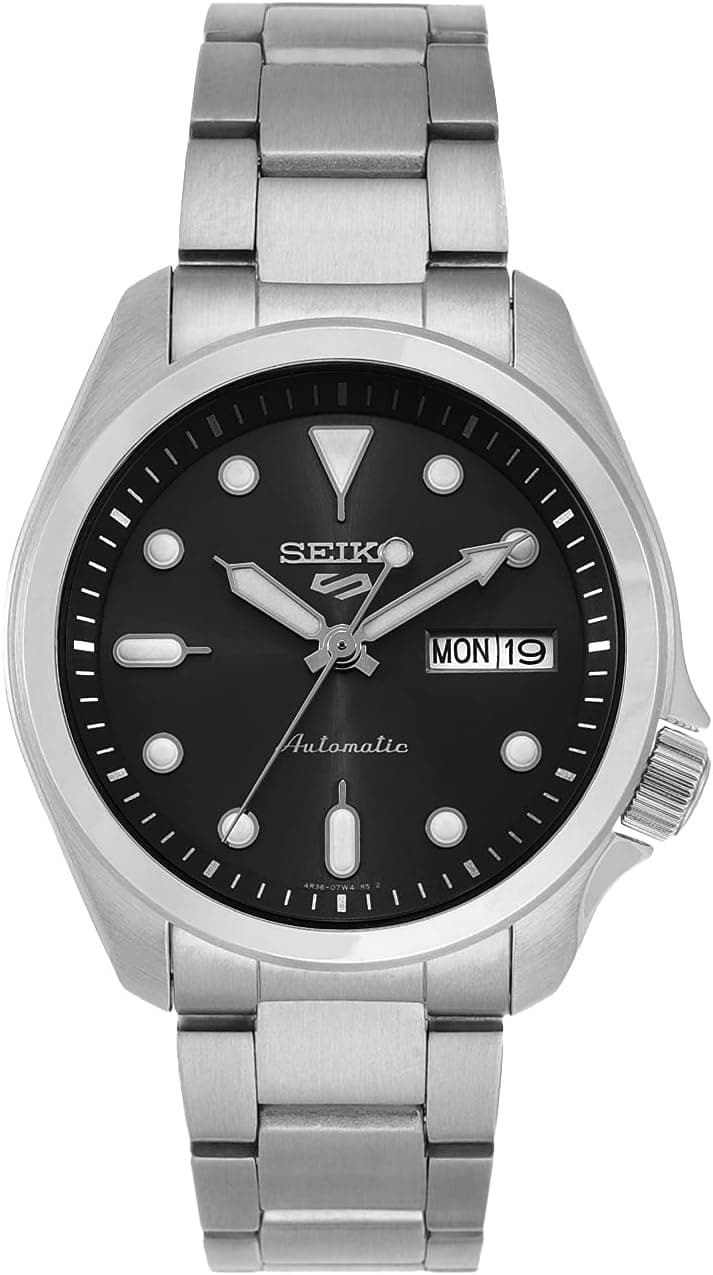
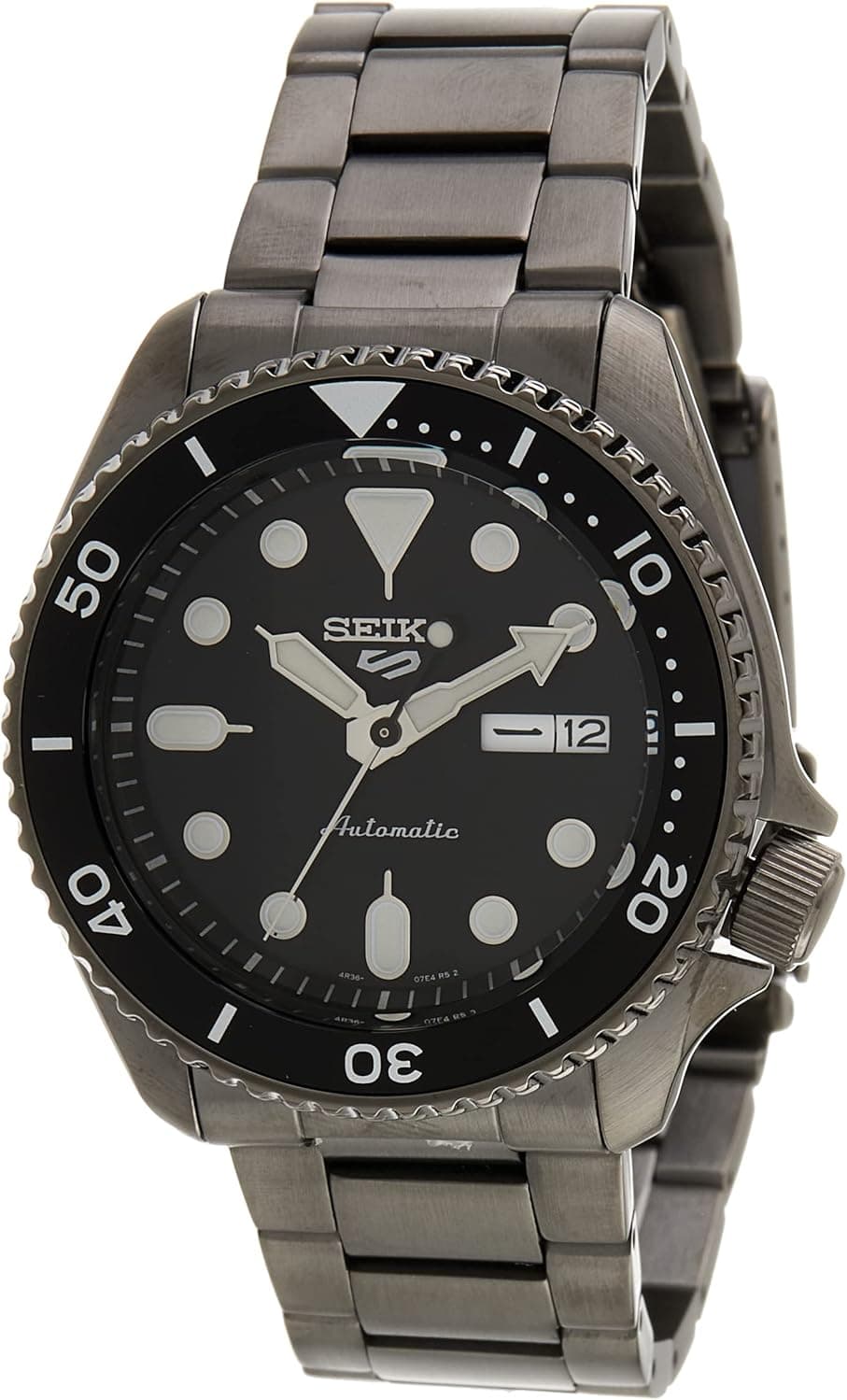
If you want to see this logic at work at entry level, the modern Seiko 5 Sports line is a good example. The Seiko 5 Sports and the more classic Seiko SNK355K are both plain starting points for learning to read the caliber code on the back.
How the numbers expose a fake
The caseback is where fake Seikos are caught most often. Points to watch:
- Inconsistency: if the caliber printed on the dial does not match the caliber on the caseback, something is wrong.
- Wrong family: a cheap fake may carry the reference of an expensive model while hiding an unrelated movement inside.
- Poor engraving: genuine Seiko engraving is crisp; blurry, shallow, or crooked text is a warning sign.
Checking the reference number against the maker's official records is the safest route. I would suggest looking at our guide to spotting a fake watch, where we cover this in more detail.
Which Seiko to start with
You do not need an expensive watch to learn to read a reference and caliber. For a more current, fuller movement, a 4R-caliber Seiko 5 such as the Seiko SRPH92K1 is ideal for practicing on the caseback. We weighed up that model's value in our is the Seiko 5 worth it piece, and for a broader list there is our best Seiko watches guide.
Specifications
| Specification | Value |
|---|---|
| Where to look | Caseback (reference, caliber, serial); caliber also under the dial on many older models |
| Two numbers | Reference number (model) and caliber number (movement) |
| Known families | 7S26, 4R36, NH35 |
| Main use | Sourcing the right spares and spotting a fake |
Pros
- Once you learn to read the caseback, you can identify any Seiko correctly.
- You can quote the numbers yourself to source the right spare part without relying on a watchmaker.
- Known caliber families quickly tell you how a watch works and what servicing it needs.
- Checking the numbers for consistency exposes a fake Seiko before you buy it.
Cons
- Trying to decode digit by digit is misleading; unofficial sources spread wrong meanings.
- On very old or worn casebacks the engraving can be too faint to read.
- The same caliber appears across different references, so the caliber alone does not pin down the model.
- Without official records, verifying a reference with full certainty is not always possible.
Verdict
To identify a Seiko correctly, read the two numbers: the reference on the caseback names the model, and the caliber names the movement inside. Rather than decoding digit by digit, recognize known families such as 7S26, 4R36, and NH35. If you want a concrete pick to start with, the 4R-caliber Seiko SRPH92K1 is ideal for practicing on the caseback.
Watches we recommend
Frequently asked questions
Where is the Seiko reference number located?
The reference number is almost always engraved on the caseback, usually next to the word "CASE," as a mix of letters and digits. On the same caseback you will also find the caliber and case code and the serial number; on many dials, especially vintage ones, the caliber is also printed at the very bottom near 6 o'clock.
What is the difference between the reference number and the caliber number?
The reference number identifies the exact model, the outward identity of the watch. The caliber number identifies the movement inside. Because the same caliber can appear across different references, the caliber alone does not pin down the model; you use both together to find the right spare part.
Can the caliber number help me spot a fake Seiko?
Yes. If the caliber printed on the dial does not match the caliber on the caseback, or the engraving is blurry, shallow, or crooked, that is a warning sign. A cheap fake may carry the reference of an expensive model while hiding an unrelated movement inside. The safest route is to check the reference against the maker's official records.

About the author
Serdar D.Watch Editor
View profileSerdar D. is the editor at BraveryWatch. He believes a good watch should be not just expensive but right. He gets deep into the details, then turns them into something that is genuinely a pleasure to read. He gives relaxed, useful advice through the eyes of someone who truly cares about watches.