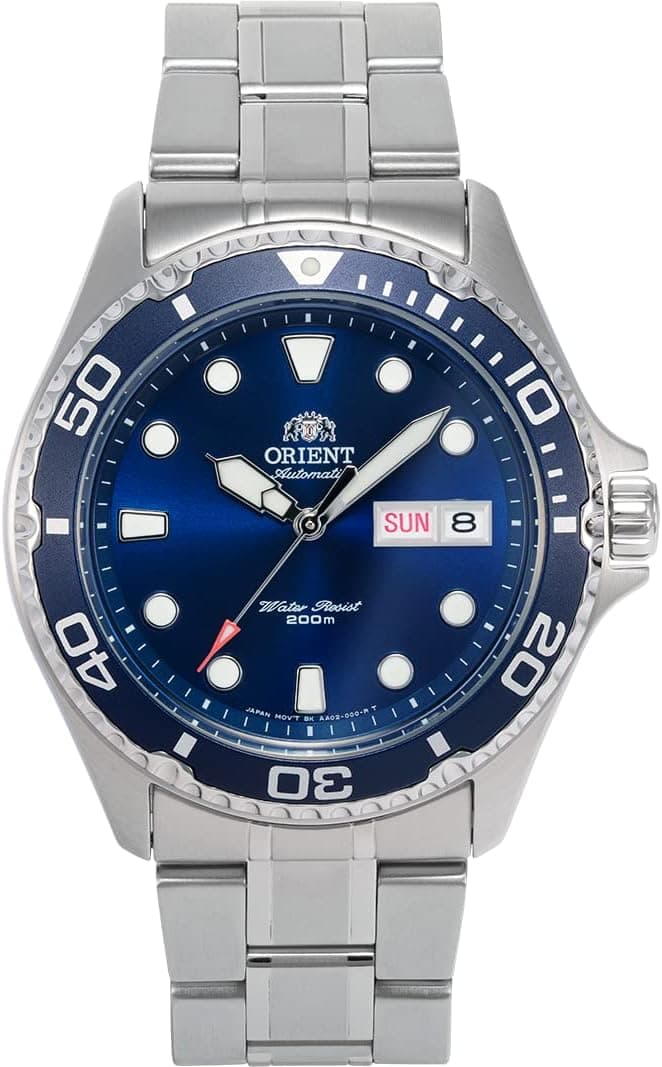
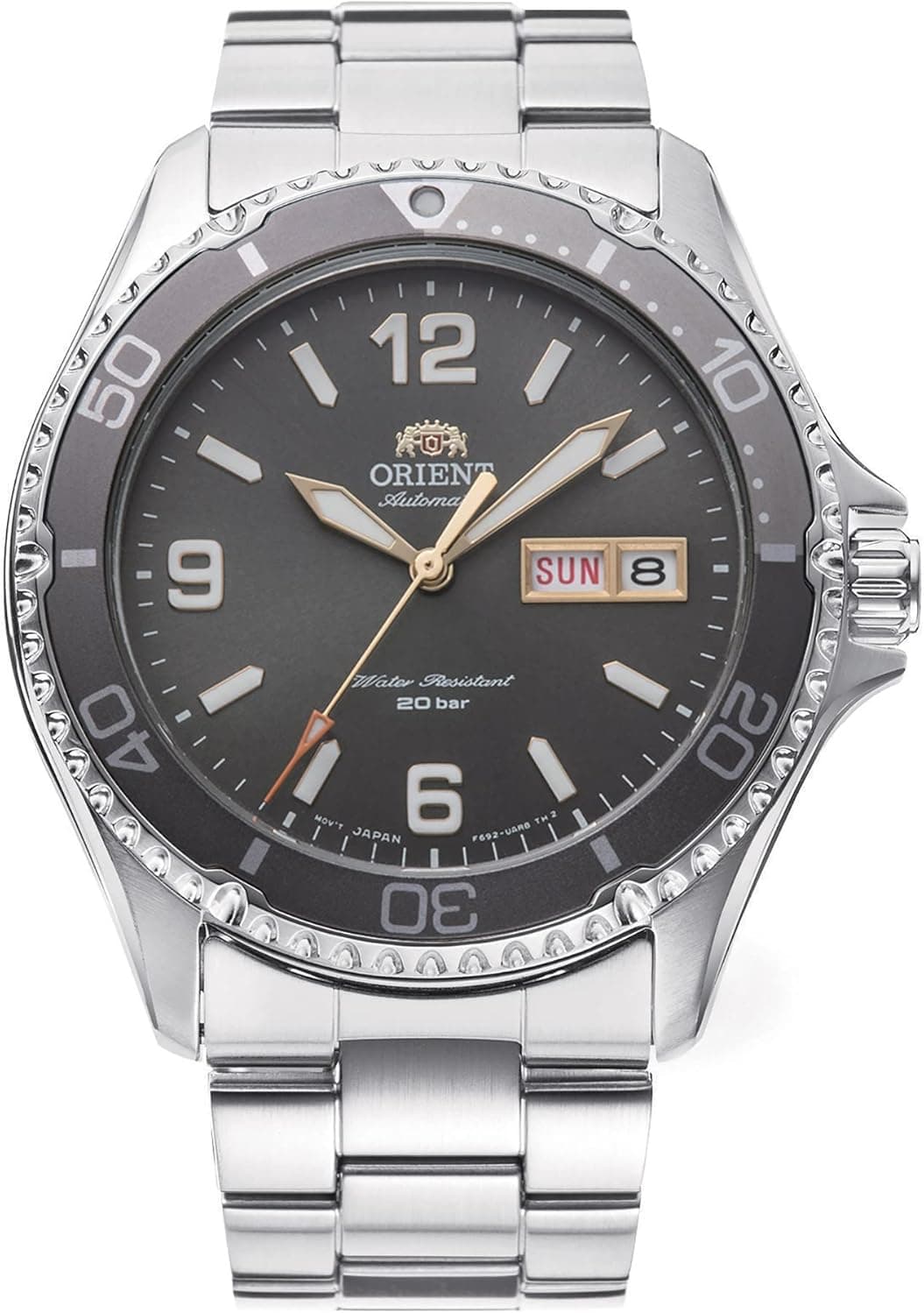
Orient Kamasu Review
 Serdar D.Watch Editor
The Orient Kamasu is the Mako's sapphire-crystal sibling: the same in-house F6922 automatic, the same genuine 200 meters, but with a far more scratch-resistant crystal and usually better lume. For daily, hard wear that crystal is the key upgrade over the older Mako II. The current Mako 3 has sapphire too, so between them dial and lume decide.
Key takeaways
- The Kamasu is the Mako's sapphire-crystal sibling: same F6922 caliber, same genuine 200 meters, but a far more scratch-resistant crystal.
- Sapphire is much harder than mineral; it stays clear for years, while mineral collects hairline scratches over time.
- The in-house F6922 automatic both hand-winds and hacks, a combination that is rare at this price.
- It usually arrives with slightly better lume than the Mako, so nighttime legibility is a touch easier.
- If you'll wear it daily and hard, the small premium is the most sensible upgrade; if only occasionally, the Mako 3 is enough.
What the Kamasu is and what sets it apart
The Orient Kamasu is the sapphire-crystal member of the Mako family. In a sentence: it carries the same in-house automatic caliber, the same genuine 200 meters and, like the Mako 3, a sapphire crystal; the differences are mainly the dial and hands. When you're shopping for a dive watch, that's the detail most people overlook: even when the caliber and the depth rating are identical on paper, the crystal is the part that lives a daily life. Who is it for? Anyone after a first serious automatic who plans to use the watch like a real tool, not a museum piece.
The sapphire crystal, the real upgrade over the Mako
The older Mako II uses a mineral crystal; the Kamasu gives you a sapphire crystal, as does the current Mako 3. What does that mean in practice? Sapphire is much harder than mineral and far more scratch-resistant; it shrugs off the steel keychain, the doorframe, the desk edge that would mark mineral over time. A mineral crystal collects hairline scratches; sapphire stays clear for years. The one nuance is that under a very hard impact sapphire can be a touch more prone to cracking than mineral, but for daily wear sapphire wins clearly. The Kamasu also usually arrives with slightly better lume than the Mako, so nighttime legibility is a little easier.
The Orient Kamasu is the subject of this review; it comes in several dial and bracelet options on the same roughly 41.8mm case, so the choice is about color, not size.
The movement inside, Orient's F6922
The heart is the same as the Mako: the F6922, Orient's own automatic caliber. 22 jewels, 21,600 beats per hour, roughly 40 hours of power reserve. Two features matter. You can hand-wind it (turn the crown to start a stopped watch), and it hacks (pull the crown and the second hand stops, so you can set it to the second). That combination is not a given on every automatic watch in this price band. Keep your accuracy expectations realistic: a few seconds of drift per day is normal, this is not a chronometer, and if you wear it regularly and rest it in a consistent position you can rein the drift in yourself.
On the wrist and in daily use
The case is about 41.8mm, with a screw-down crown and a unidirectional rotating bezel. The steel bracelet has none of the hollow rattle of cheaper watches and settles nicely on the wrist. The bezel turns with crisp clicks and inspires confidence when timing a dive. A genuine 200 meters comfortably covers swimming and snorkeling, and it is rated well beyond recreational scuba depths, provided the crown is screwed down and sealed before it touches the water. This is where the sapphire really pays off: if you actually use the watch, the crystal stays as clear years later as it was on day one.
Specs at a glance
| Spec | Kamasu |
|---|---|
| Caliber | Orient F6922, automatic |
| Crystal | Sapphire |
| Water resistance | 200m, screw-down crown |
| Case | ~41.8mm |
Kamasu or Mako
This is the question I get asked most. Both run the same F6922 caliber and the same genuine 200 meters. The difference is almost entirely the crystal. If you plan to wear it daily and knock it around, sapphire is the feature most worth paying for over the long run, and the Mako 3 has it too, so between those two the choice comes down to dial and lume. If you'll wear it occasionally and with care, the Mako 3 is more than enough and saves you a little. For the bigger picture, see my Orient Mako 3 review, the best dive watches under $500 guide, and the roundup of the best Japanese watches.
Specifications
| Specification | Value |
|---|---|
| Caliber | Orient F6922, automatic |
| Crystal | Sapphire |
| Water resistance | 200m, screw-down crown |
| Case | ~41.8mm |
Pros
- A far more scratch-resistant sapphire crystal that stays clear for years
- An in-house automatic caliber (F6922) at this price, with hand-winding and hacking
- A full-fledged diver with genuine 200 meters, a screw-down crown, and a unidirectional bezel
- Usually slightly better lume than the Mako
Cons
- It carries a small premium over the Mako 3
- Sapphire can be a touch more prone to cracking than mineral under a very hard impact
- The lume is strong and competitive with Seiko, though Seiko's high-end Lumibrite divers can still edge it
- At ~41.8mm with real diver heft, it can wear large on a thin wrist
Verdict
If you'll actually use the watch, wearing it daily and beating on it, my pick is clear: the Orient Kamasu. Because it carries the same caliber and the same genuine 200 meters and adds a sapphire crystal that stays clear for years, the small premium is the most sensible upgrade over the long run. If you'll wear it occasionally and with care, you lose nothing by choosing the Mako 3.
Watches we recommend
Frequently asked questions
Is the Orient Kamasu worth buying?
Yes. At this price it is one of the few divers that combine an in-house automatic caliber, a genuine 200 meters, and a scratch-resistant sapphire crystal. It is one of the most sensible picks if you'll wear it daily and hard; the Mako 3, which also has a sapphire crystal, is an equally sensible alternative.
Should I buy the Orient Kamasu or the Mako 3?
Both carry the same F6922 caliber and the same genuine 200 meters. Both also have a scratch-resistant sapphire crystal, so the difference is mainly the dial and hands, and the Kamasu usually has better lume. If you prefer its look and lume, get the Kamasu; otherwise the Mako 3 is enough and costs a little less.
Is the Kamasu's sapphire crystal really better than mineral?
For scratches, yes, clearly. Sapphire is much harder than mineral and stays clear for years, while mineral collects hairline scratches over time. The one nuance is that it can be a touch more prone to cracking under a very hard impact, but for daily wear sapphire wins clearly.

About the author
Serdar D.Watch Editor
View profileSerdar D. is the editor at BraveryWatch. He believes a good watch should be not just expensive but right. He gets deep into the details, then turns them into something that is genuinely a pleasure to read. He gives relaxed, useful advice through the eyes of someone who truly cares about watches.