Watch Water Resistance Explained
 Serdar D.Watch Editor
A watch's water resistance number is a static-pressure value measured in a lab, not the splashy reality of daily wear. Thirty meters handles rain, 100 covers swimming, and 200 is what serious divers look for, ideally with ISO 6425 (DIVER'S) certification for scuba. ATM and bar say the same thing, and the screw-down crown makes the difference. Below I explain what the numbers actually mean.
Key takeaways
- The water resistance number is measured in a lab under static pressure, so read it one rung conservatively because real-world water moves.
- The ladder is clear: 30m for rain, 50m tolerates brief shallow swimming, 100m for genuine swimming, and 200m is what serious divers look for.
- ISO 6425 sets the certified dive-watch minimum at 100m; for scuba, look for the DIVER'S (ISO 6425) marking, not depth alone.
- ATM and bar are practically equal: 1 ATM is about 1 bar, roughly 10 meters of water, so 20 ATM means 200 meters.
- The screw-down crown is the most critical part of water resistance on most dive watches; always confirm it is fully closed before you get in the water.
- Whatever the number, hot water and steam tire the gaskets, so the shower and sauna are best avoided at any rating.
What the water resistance number actually measures
The 100 meters printed on your dial does not mean you can take the watch to a depth of 100 meters. That figure is measured in a lab under static pressure: it shows how much pressure the watch withstands while sitting perfectly still. In real life, water moves. An arm stroke, a jump into the sea, even holding the watch under a running tap spikes the momentary pressure well above the value on paper. So water resistance is a safety margin, not a depth promise. As a watchmaker, I tell people to read the number one rung more conservatively than it sounds.
The 30, 50, 100, 200-meter ladder
Think of the numbers as a practical ladder:
- 30 meters (3 ATM): Rain, hand washing, the occasional splash. No swimming.
- 50 meters (5 ATM): Tolerant of brief, shallow swimming and hand washing, but not diving. Skip the shower at any rating, since heat and steam degrade the gaskets.
- 100 meters (10 ATM): Genuine swimming, snorkeling, the pool. This covers most daily needs.
- 200 meters (20 ATM): What a serious diver looks for in practice. ISO 6425 actually sets the certified dive-watch minimum at 100 meters, but 200 meters is the real-world benchmark for hard water use, and for scuba you ideally want a watch carrying the ISO 6425 (DIVER'S) marking, which adds shock, salt, and overpressure testing.
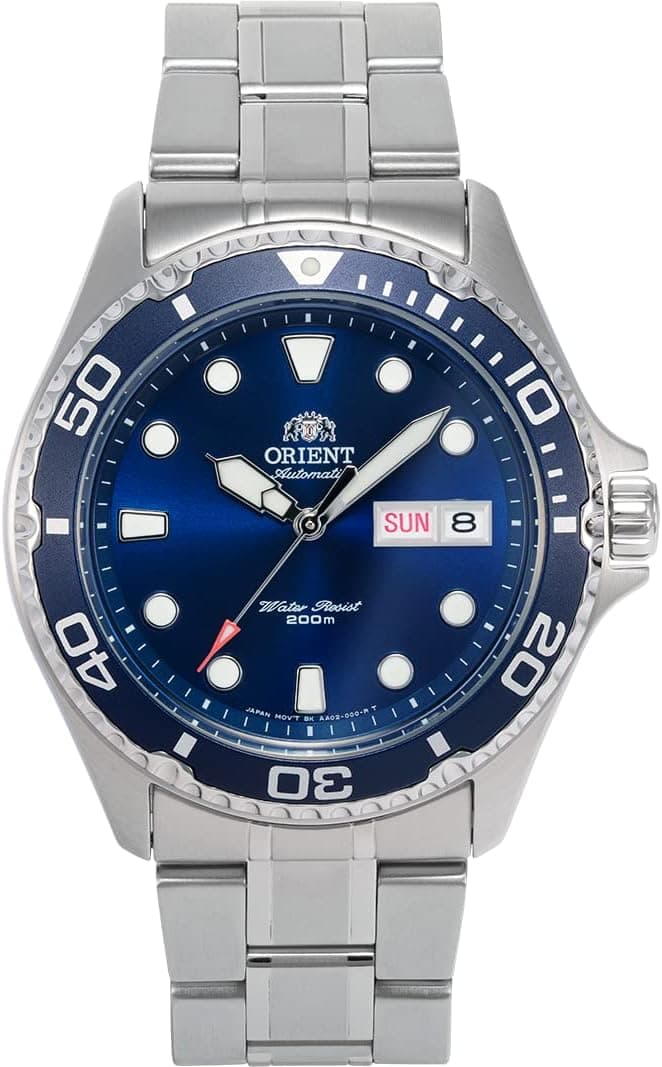
This is exactly where a real dive watch separates from a dive-styled one. With a true 200-meter depth rating and a screw-down crown, the Orient Mako 3 is ideal for swimming, snorkeling, and skin diving; for scuba, look specifically for an ISO 6425 (DIVER'S) certified model.
What ATM and bar mean
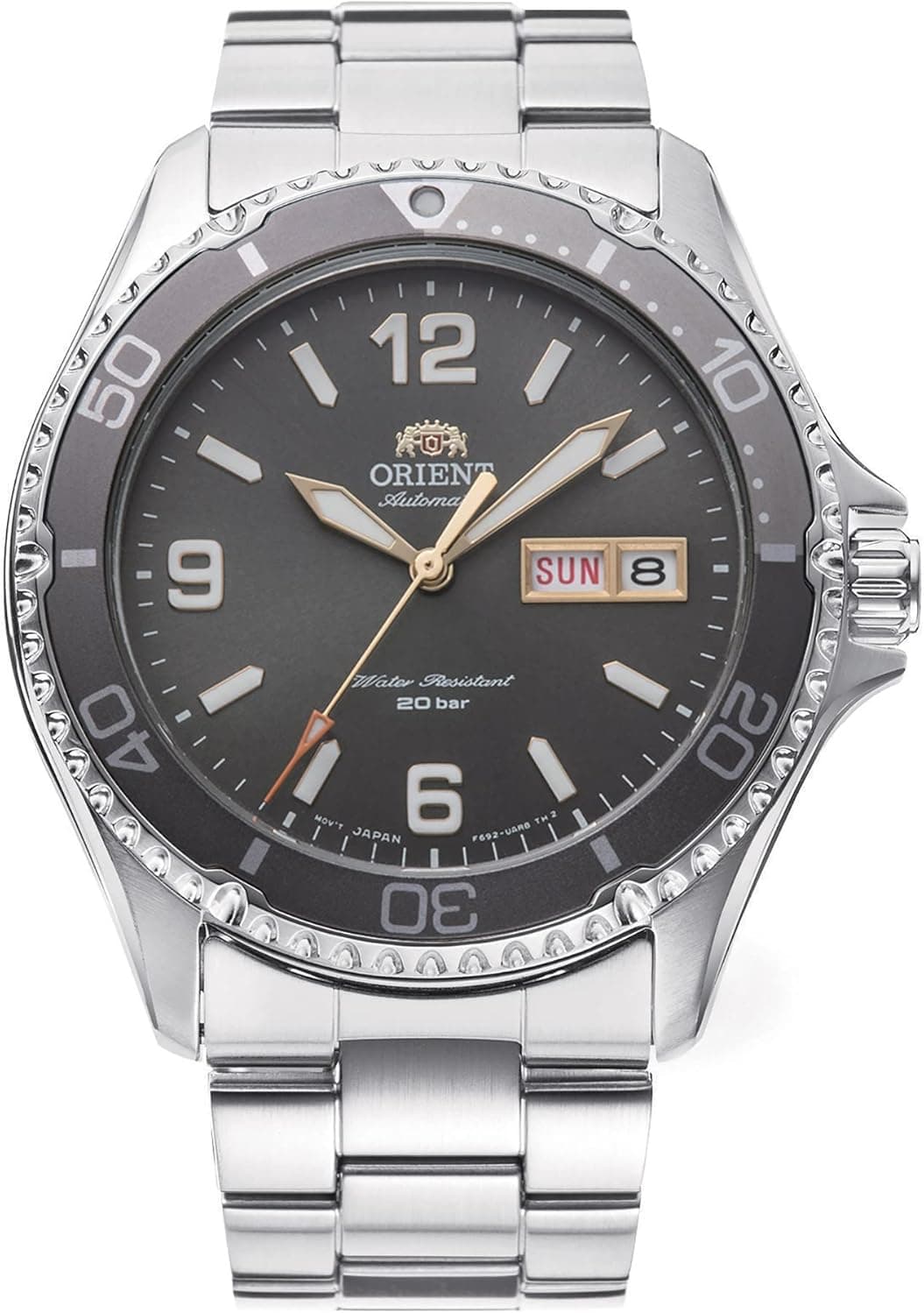
Sometimes the dial shows ATM or bar instead of meters. Both are pressure units, and in practice they are equal: 1 ATM is about 1 bar, roughly the pressure of a 10-meter column of water. So 20 ATM means 200 meters. For the finer technical distinction, see the ATM and bar entry. If you want the same genuine 200 meters in a smaller case, the Orient Mako 40 is a good example.
/en-us/products/orient-mako-40
Why the screw-down crown matters so much
The weakest point of water resistance is almost always the crown. An ordinary crown closes with nothing more than a push gasket and can leak under pressure. A screw-down crown threads into the case, sets a firm gasket seal, and keeps water out. Most serious 200-meter watches use one, though it is not strictly required: gasketed push-pull crowns and crownless designs reach 200 meters too, and ISO 6425 asks a watch to pass the pressure test, not to use a specific crown type. The single rule is this: make sure the crown is fully screwed down and closed before you get in the water. Going in with an open crown is the most common mistake people make with these watches. Tough-built watches like the classic crownless Casio G-Shock reach the same confidence by a different route, through sealed construction and a rugged case; note that several analog G-Shock lines (Mudmaster, Frogman, Gulfmaster) do use screw-down crowns, so this only holds for the crownless models.
What you can really do with each rating
A simple summary:
- Hand washing, rain: 30 meters is enough.
- Swimming, the pool, snorkeling: 100 meters is safe.
- Scuba and free diving: 200 meters and, ideally, an ISO 6425 (DIVER'S) certified model with a screw-down crown. Treat the certification, not depth alone, as the real green light.
Hot water and steam expand the gaskets, so whatever the number, watchmakers advise against the shower and the sauna. Rinsing the watch in fresh water after the sea is a good habit too.
Care, the number tires over time
The figure on the dial is a factory value; it drops as the gaskets age. If you genuinely get the watch wet, have a pressure (water resistance) test done every few years, a check that takes only minutes. Ask for the gaskets to be renewed when the case is opened for a battery or service. To pick the right watch, see the beginner's watch guide, and for genuine divers, the best dive watches under $500.
Read the number honestly, close the crown, test the gaskets. That is how water resistance lasts.
Specifications
| Specification | Value |
|---|---|
| Everyday swimming threshold | 100 meters (10 ATM) |
| ISO 6425 certified dive minimum | 100 meters |
| Recommended for serious diving | 200 meters (20 ATM) plus ISO 6425 |
| Unit equivalence | 1 ATM is about 1 bar, roughly 10 m |
| Critical part | Screw-down crown (on most dive watches) |
Pros
- Explains the real meaning of the numbers and the static-pressure logic in plain terms
- Offers a practical decision ladder from 30 to 200 meters
- Clears up confusing terms like ATM, bar, and the screw-down crown
- Backed by glossary terms and genuine 200-meter watches
Cons
- It is not a detailed head-to-head comparison of specific brand models
- It does not replace real dive training or a professional dive protocol
- It does not list every watch's exact ISO 6425 certification one by one
Verdict
Read the number as a safety margin, not a depth promise. For daily wear, 100 meters is enough; if you take water seriously, the Orient Mako 3 with its screw-down crown and genuine 200 meters is a fine starting point for swimming, snorkeling, and skin diving. For scuba, look specifically for an ISO 6425 (DIVER'S) certified model rather than depth alone. The Orient Mako 40 gives the same class for a slimmer wrist, and the Casio G-Shock suits anyone who wants absolute toughness. Whichever you pick, close the crown and have the gaskets tested periodically.
Watches we recommend
Frequently asked questions
Can I dive with a watch rated 100 meters of water resistance?
A 100-meter rating is more than safe for swimming, the pool, and snorkeling, but it is not designed for scuba diving. Real diving calls for 200 meters and a screw-down crown. The number is measured under static pressure, so always read the depth conservatively.
What is the difference between ATM, bar, and meters?
In practice they say the same thing. 1 ATM is about 1 bar, and that roughly equals the pressure of a 10-meter column of water. So 10 ATM means 100 meters and 20 ATM means 200 meters. Whichever one the dial shows, the logic does not change.
Why does water resistance decrease over time?
Water resistance is provided by the gaskets, and gaskets tire over time with heat and use. The number on the dial is a factory value that drops as they age. If you get the watch wet, have a pressure test done every few years and renew the gaskets when the case is opened.

About the author
Serdar D.Watch Editor
View profileSerdar D. is the editor at BraveryWatch. He believes a good watch should be not just expensive but right. He gets deep into the details, then turns them into something that is genuinely a pleasure to read. He gives relaxed, useful advice through the eyes of someone who truly cares about watches.