The Best Citizen Eco-Drive Watches
 Serdar D.Watch Editor
Citizen Eco-Drive is a quartz system that turns light into energy, so it runs for years with no battery changes. The most balanced starting point is the classic Citizen Corso. Watch out for lookalike battery models such as the BF2013 and BF2018, which are not Eco-Drive. Below I set out who it suits and where it sits against an automatic.
Key takeaways
- Eco-Drive is a quartz system that turns light (sun and indoor) into energy, so there is no disposable button cell and no periodic battery swap.
- For a first Eco-Drive, the safest start is the classic Citizen Corso: neither too sporty nor too formal, sitting right in the middle.
- Before buying any affordable Citizen, check that the dial says Eco-Drive: battery lookalikes such as the BF2013 and BF2018 are not light-powered.
- Eco-Drive gives quartz accuracy (seconds per month) and zero battery fuss; if you want mechanical feel and the ritual of winding, look at an automatic.
- Light-powered does not mean maintenance-free forever: the internal rechargeable cell is very long-lived but may need a service after a decade or more.
The Best Citizen Eco-Drive Watches
What Eco-Drive is and why no battery changes
Citizen Eco-Drive takes the accuracy of a quartz watch and changes its power source. A cell beneath the dial captures both sunlight and indoor artificial light, converts it to electricity, and stores it in a built-in rechargeable battery. That means no disposable button cell and no periodic battery swaps. Fully charged, the watch keeps running in the dark for about six months, and on power-save models considerably longer. It is the Citizen-perfected branch of the wider solar movement family, and you can find the technical definition in our Eco-Drive glossary entry.
One honest caveat: light-powered does not mean zero maintenance forever. The internal rechargeable cell is very long-lived but not eternal, and after a decade or more of use it may need a service. Even so, for most people in daily practice, an Eco-Drive is a watch that feeds itself as you wear it and can simply be forgotten about.
The best classic Eco-Drive
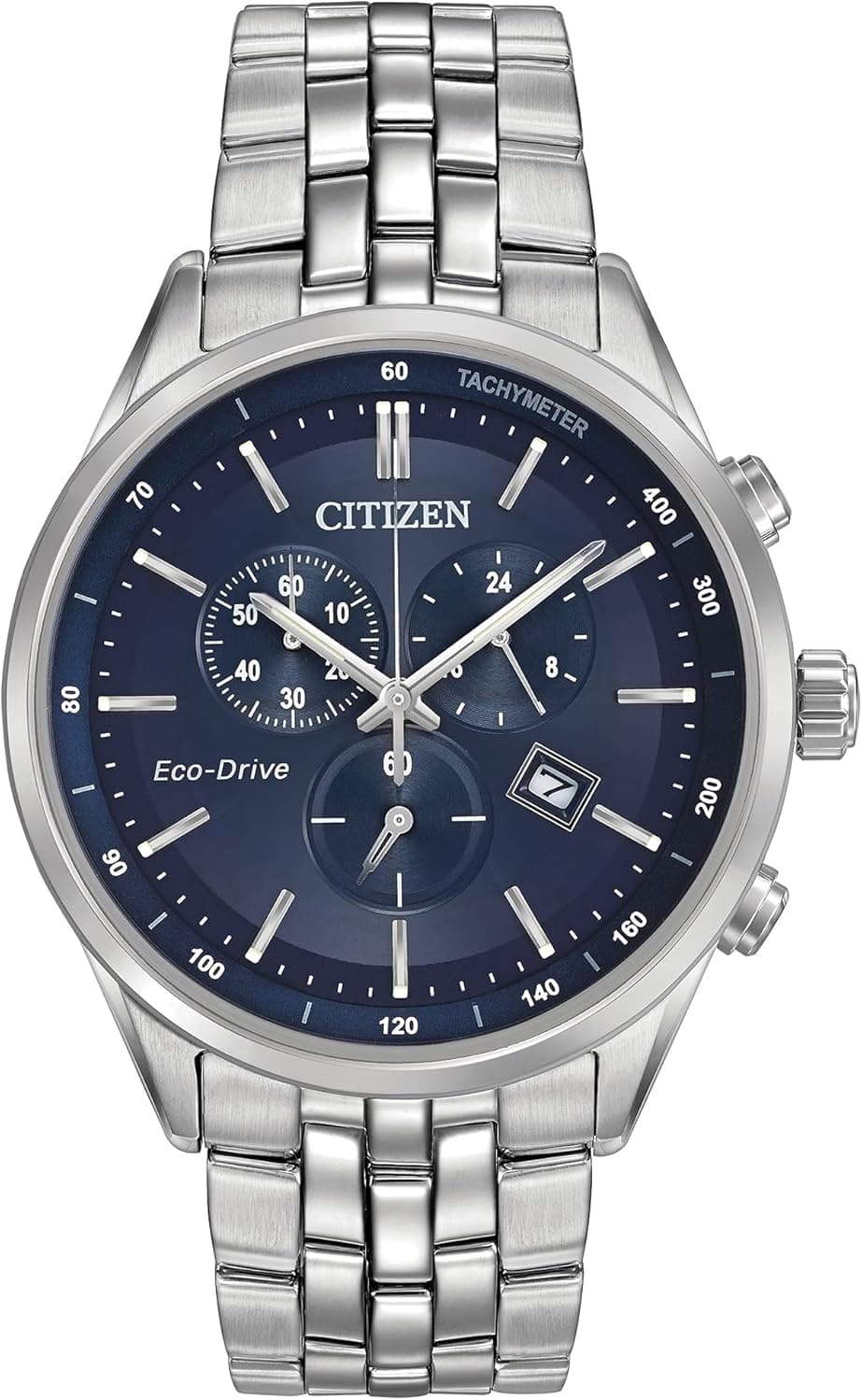
Citizen Classic Corso
This is the centrepiece. The Corso is where Eco-Drive is defined most cleanly: a clean dial, a slim steel case, a classic face that moves from casual to the office. Because it charges from light, it tops up on the desk by day and on the wrist by evening. For a first Eco-Drive it is the safest starting point, because it is neither too sporty nor too formal and sits right in the middle.
Citizen Classic Corso product page
Check the product page for the current price and stock.
Who Eco-Drive suits
Eco-Drive suits anyone who wants to put a watch on and forget it. For someone who dislikes trips to a watchmaker for a battery, who likes how quartz shrugs off knocks and daily life, but who does not want that one nagging battery problem, it is close to ideal. It makes a great deal of sense in the office, while travelling, and on someone buying a first serious watch. By contrast, if you are after a mechanical heart, the ritual of winding, and a gliding seconds hand, Eco-Drive may leave you cold. If you want a wider view of Japanese watchmaking, our best Japanese watches guide is a good place to start.
How it compares with an automatic
The most common question is Eco-Drive or automatic. They are two philosophies. An automatic winds from the motion of your wrist, has a turning mechanism inside, sweeps the seconds hand, and, well looked after, can last for generations; in return you accept a few seconds of drift a day and a service every few years. Eco-Drive offers quartz accuracy (seconds per month) and zero battery fuss, but without that mechanical bond. If you are weighing Citizen against Seiko on exactly this point, our Seiko vs Citizen comparison opens up the decision.
In short: if you want daily accuracy and zero maintenance, go Eco-Drive; if you want mechanical feel and a long repair culture, go automatic. If this is your first Citizen, starting with the Classic Corso is the safest route.
Specifications
| Specification | Value |
|---|---|
| Technology | Eco-Drive light-powered quartz |
| Power source | Sun and indoor light, built-in rechargeable cell |
| Accuracy | Quartz, seconds per month |
| Reserve in the dark | Several months on a full charge, far longer on power-save models |
| Maintenance | No battery changes, service at long intervals |
Pros
- No battery-change hassle: a genuine Eco-Drive charges from light and feeds itself as you wear it.
- Quartz accuracy: seconds per month, reliable day to day.
- With the Classic Corso, one watch covers casual to the office.
- Tough against knocks and daily life, with low maintenance.
Cons
- No mechanical feel: it lacks the winding ritual and gliding seconds hand of an automatic.
- Not entirely maintenance-free: the internal rechargeable cell can need a service after a decade or more.
- Left in the dark for a long time, it can run down and need resetting.
- It may not carry the same collector sentiment as an automatic.
- Not every cheap Citizen quartz is an Eco-Drive: battery models such as the BF2013 or BF2018 are not light-powered, so check the movement before you buy.
Verdict
If this is your first Eco-Drive, start with the Citizen Classic Corso: balanced, slim, casual to the office, and free of battery worry. If you are chasing a mechanical heart and the ritual of winding, lean towards an automatic, but if daily accuracy and zero maintenance are your priority, Eco-Drive is hard to beat.
Watches we recommend
Frequently asked questions
Does a Citizen Eco-Drive never need a battery change?
There is no disposable button-cell swap. Eco-Drive turns light into energy and stores it in an internal rechargeable cell, so it feeds itself as you wear it. That cell is very long-lived but not eternal, and after a decade or more it may need a service.
Which Citizen model should I start with for a first Eco-Drive?
Start with the classic Citizen Corso. It is neither too sporty nor too formal, with a slim steel case and a clean dial that covers casual to the office on its own. Just make sure the dial says Eco-Drive: similar-looking Citizen models such as the BF2013 and BF2018 run on a regular battery.
Is an Eco-Drive or an automatic watch better?
There is no single right answer; it depends on your needs. If you want daily accuracy, zero battery fuss and low maintenance, Eco-Drive is better. If you want a mechanical heart, the ritual of winding and a gliding seconds hand, an automatic is more satisfying, in return for a few seconds of drift a day and a service every few years.

About the author
Serdar D.Watch Editor
View profileSerdar D. is the editor at BraveryWatch. He believes a good watch should be not just expensive but right. He gets deep into the details, then turns them into something that is genuinely a pleasure to read. He gives relaxed, useful advice through the eyes of someone who truly cares about watches.