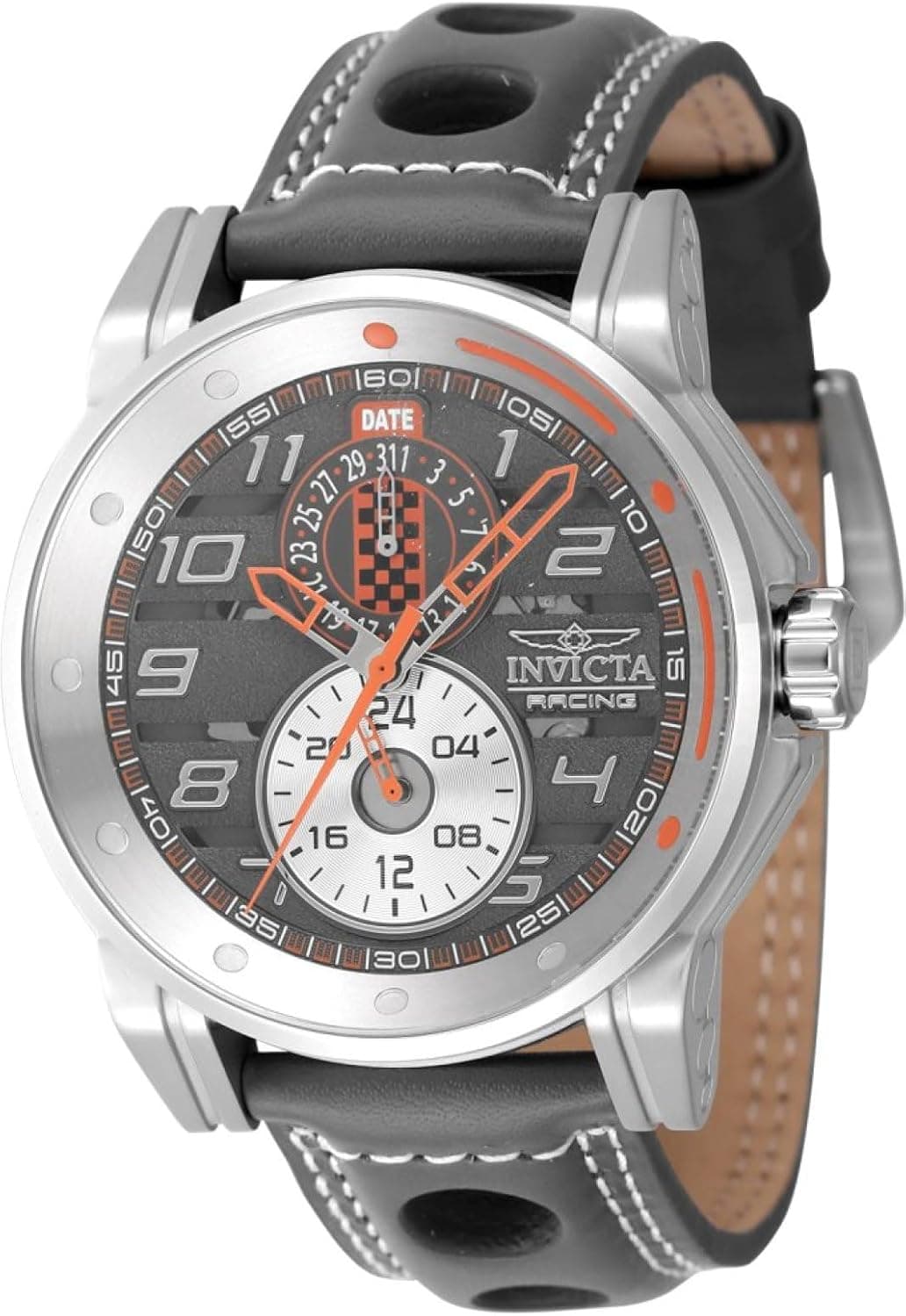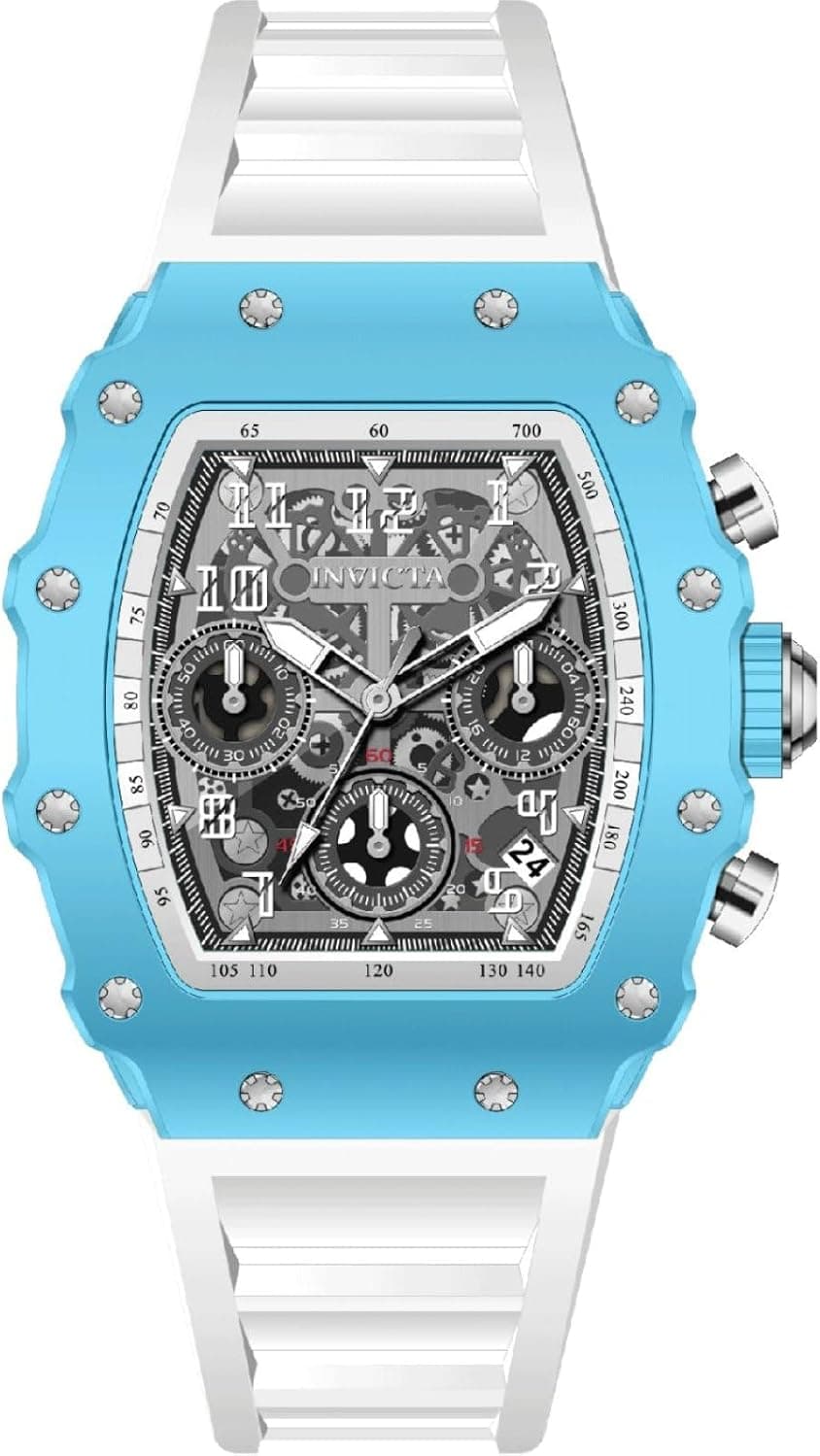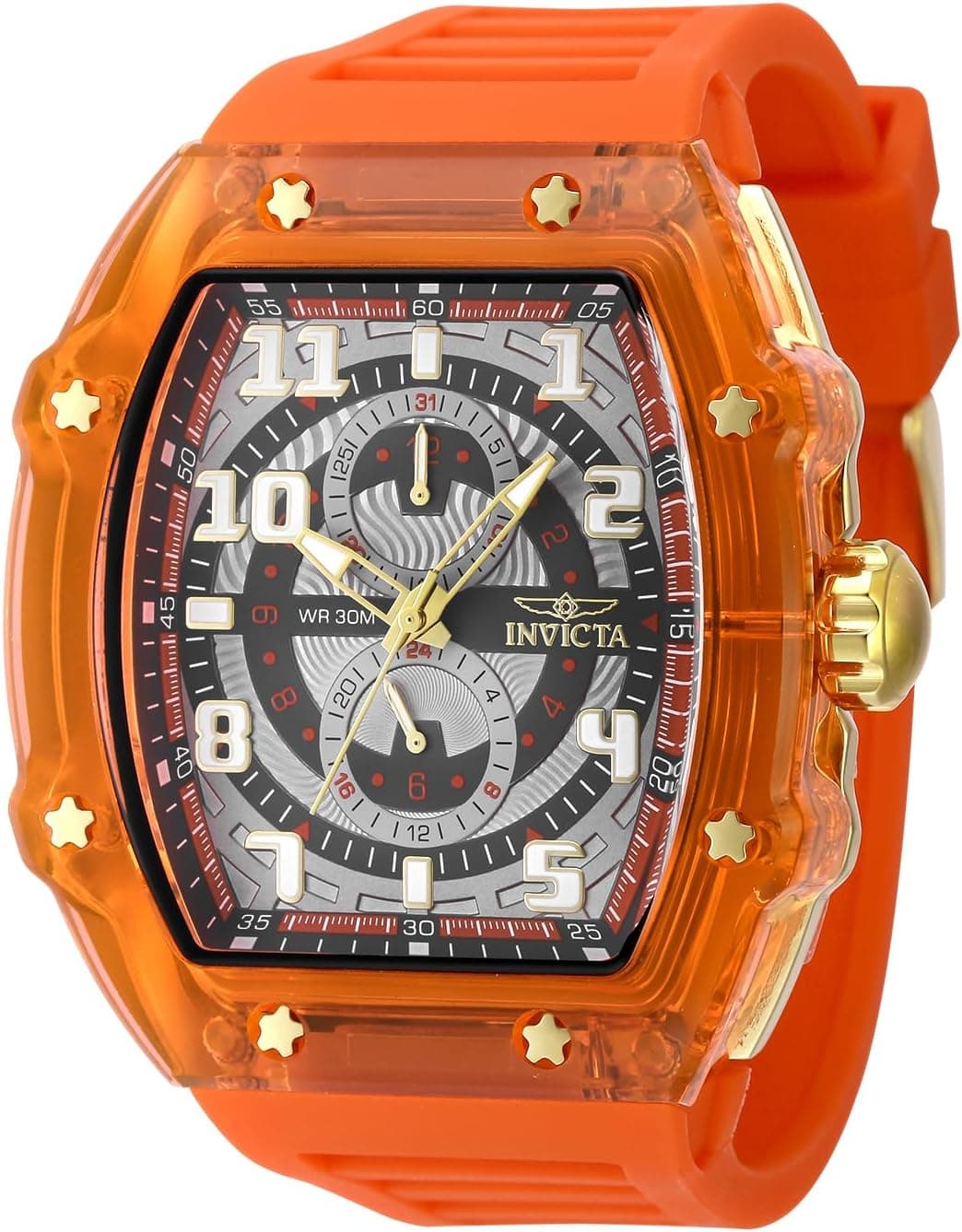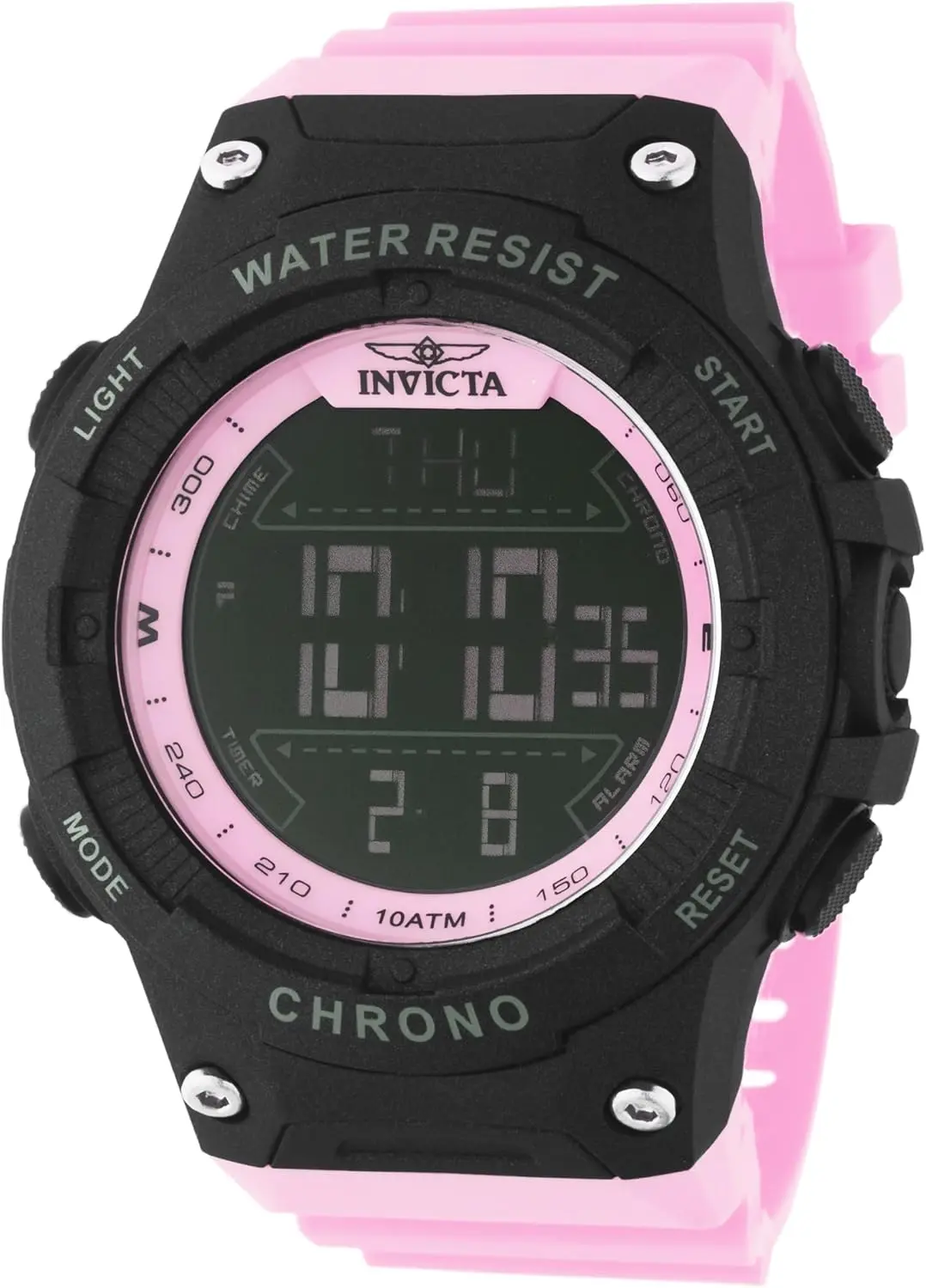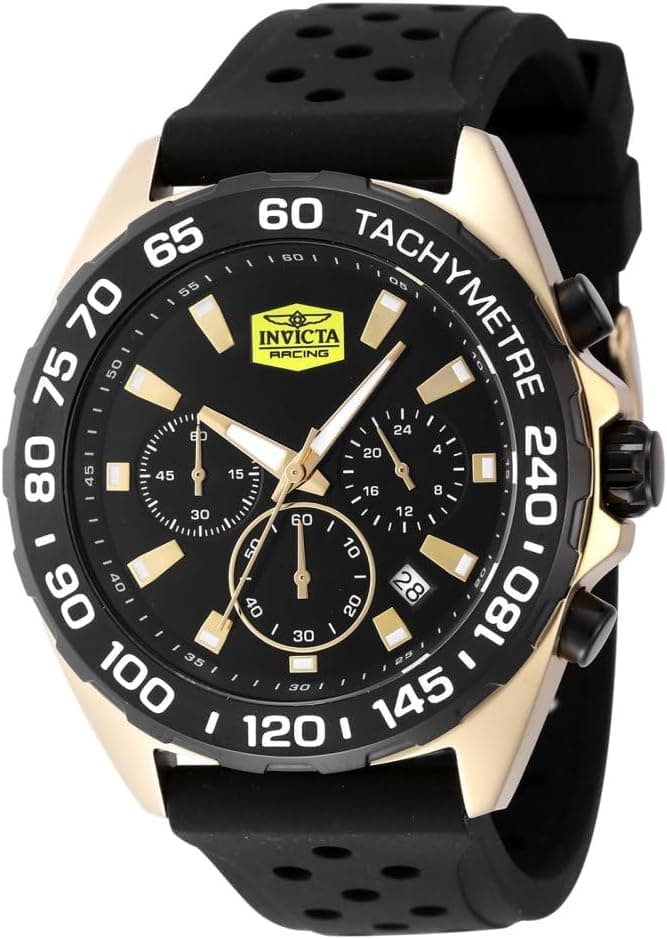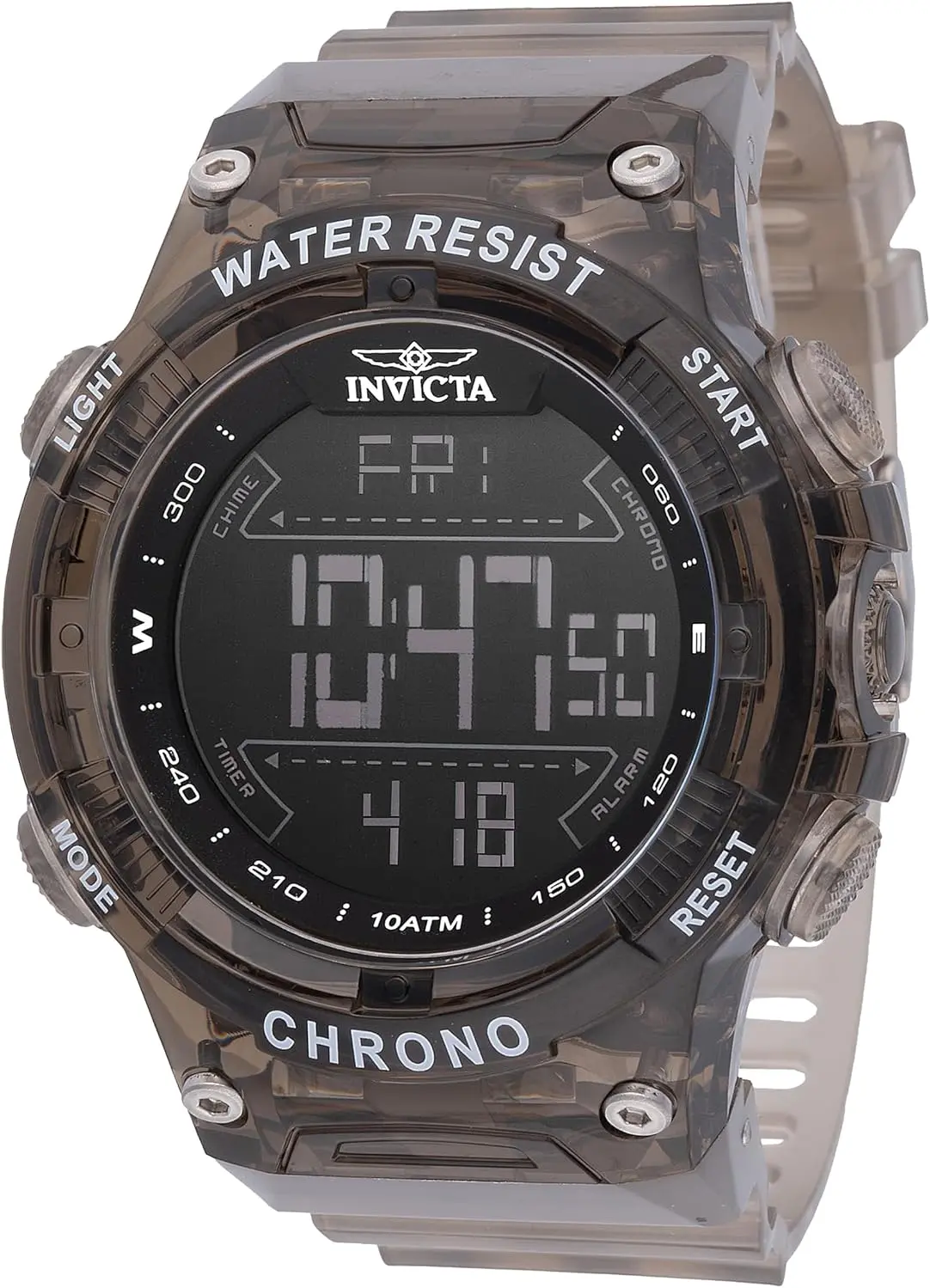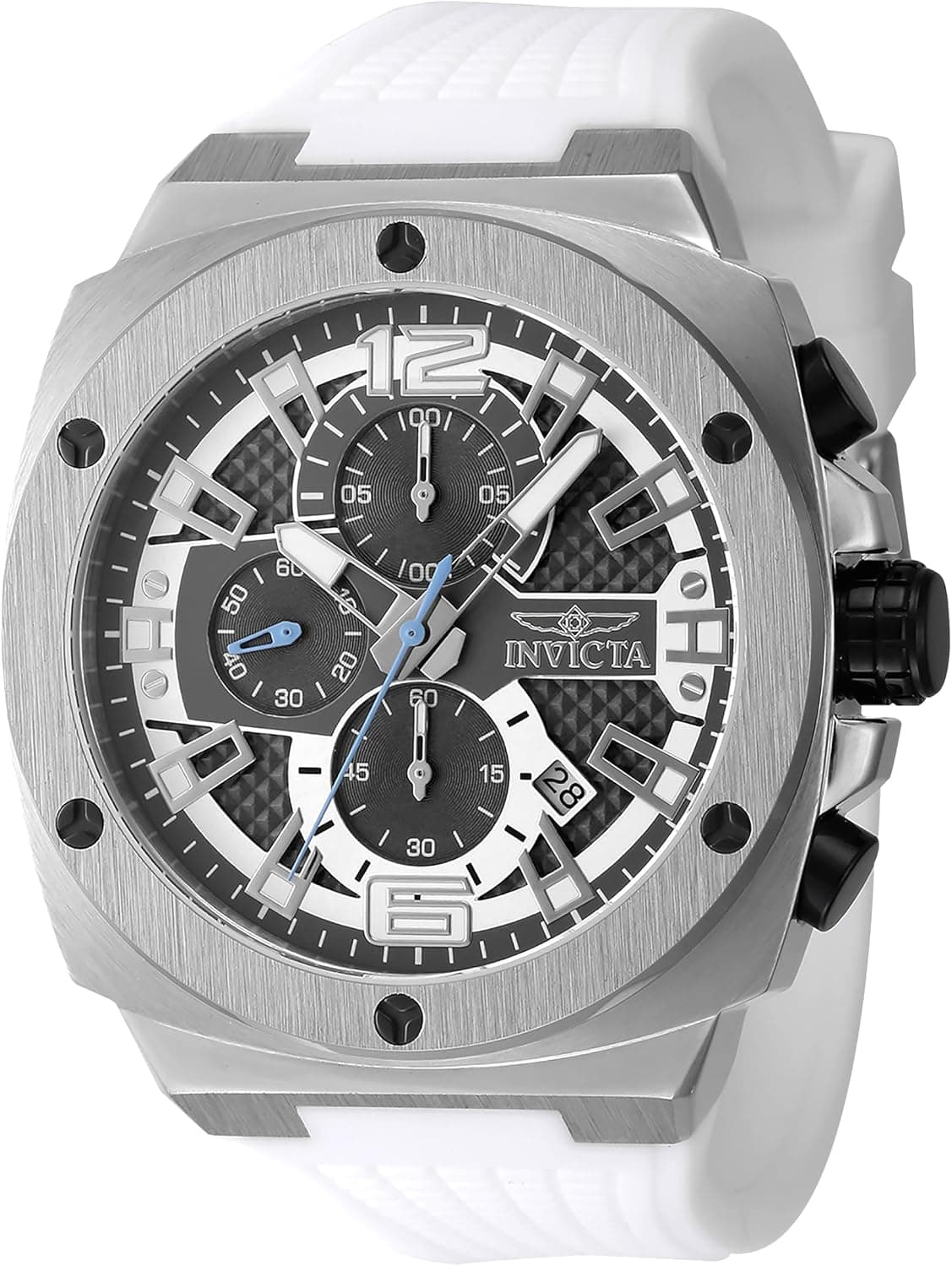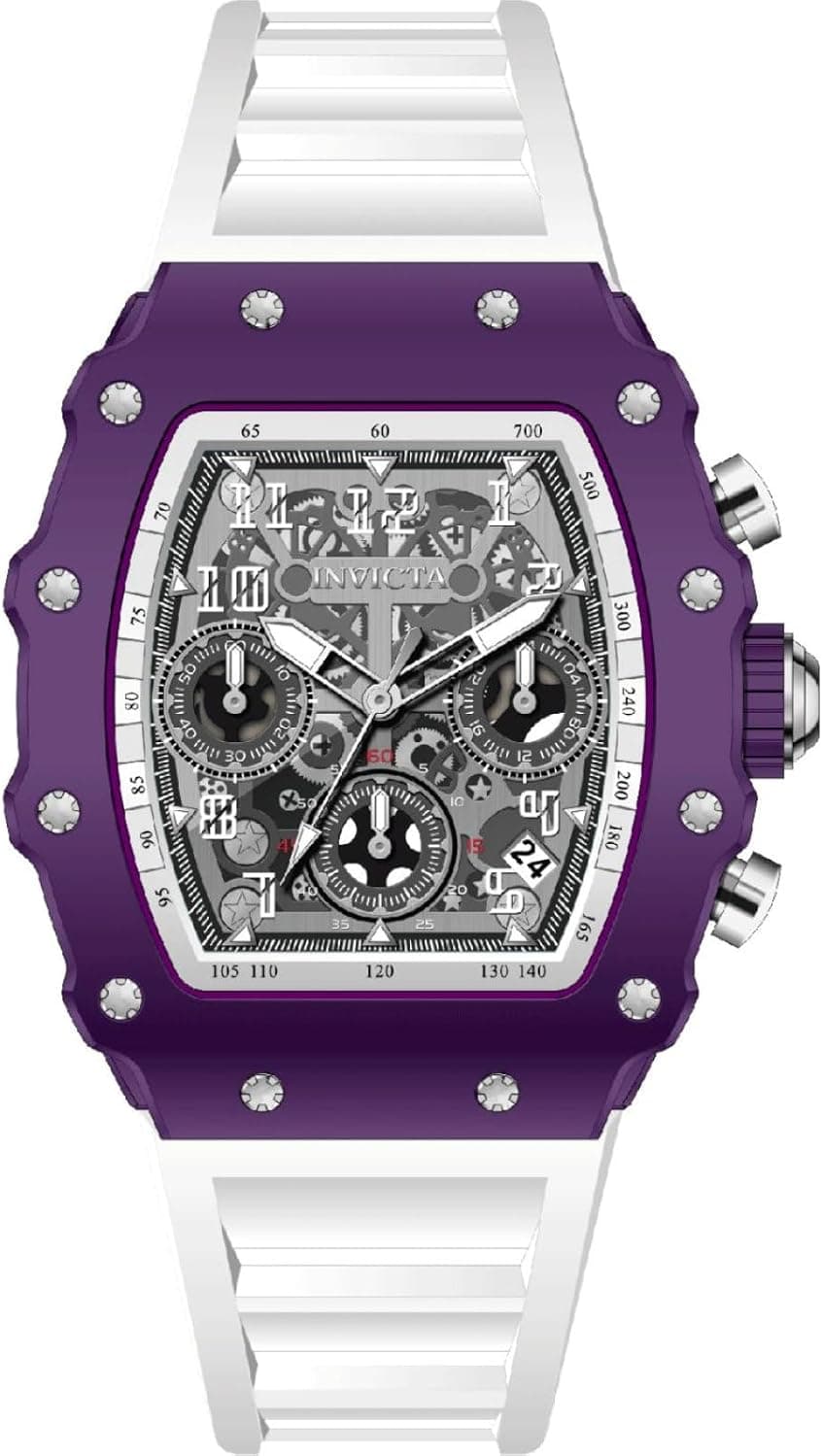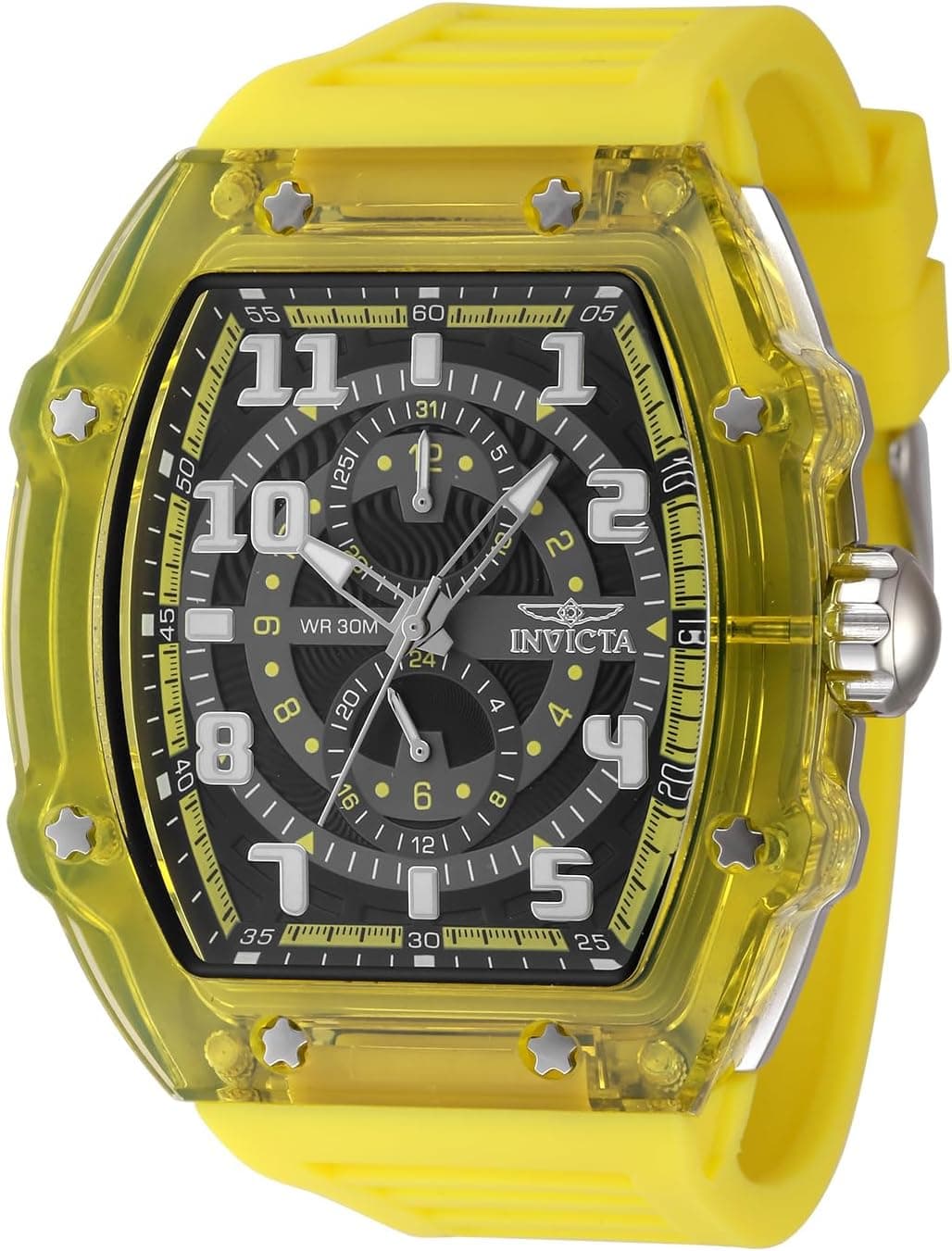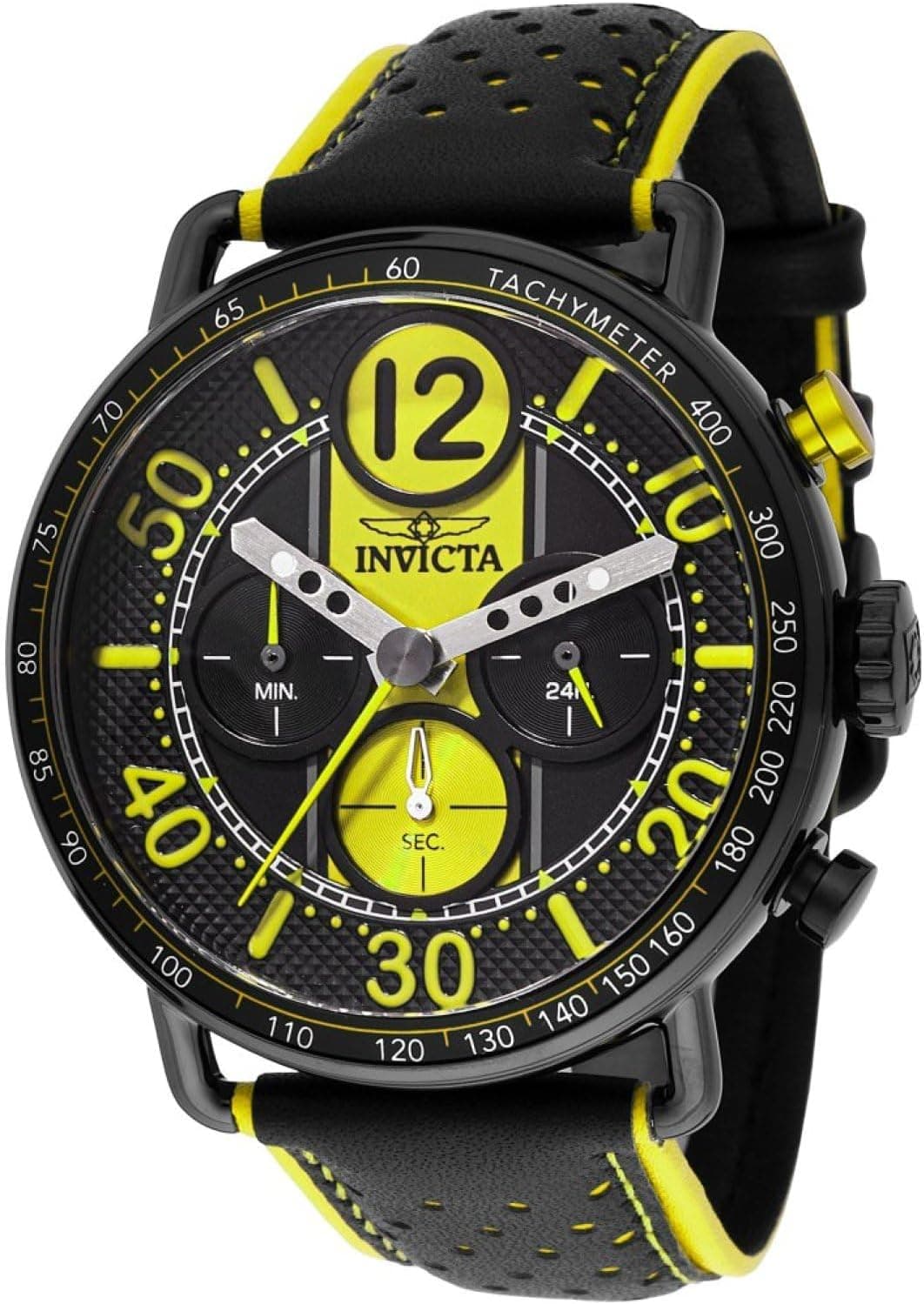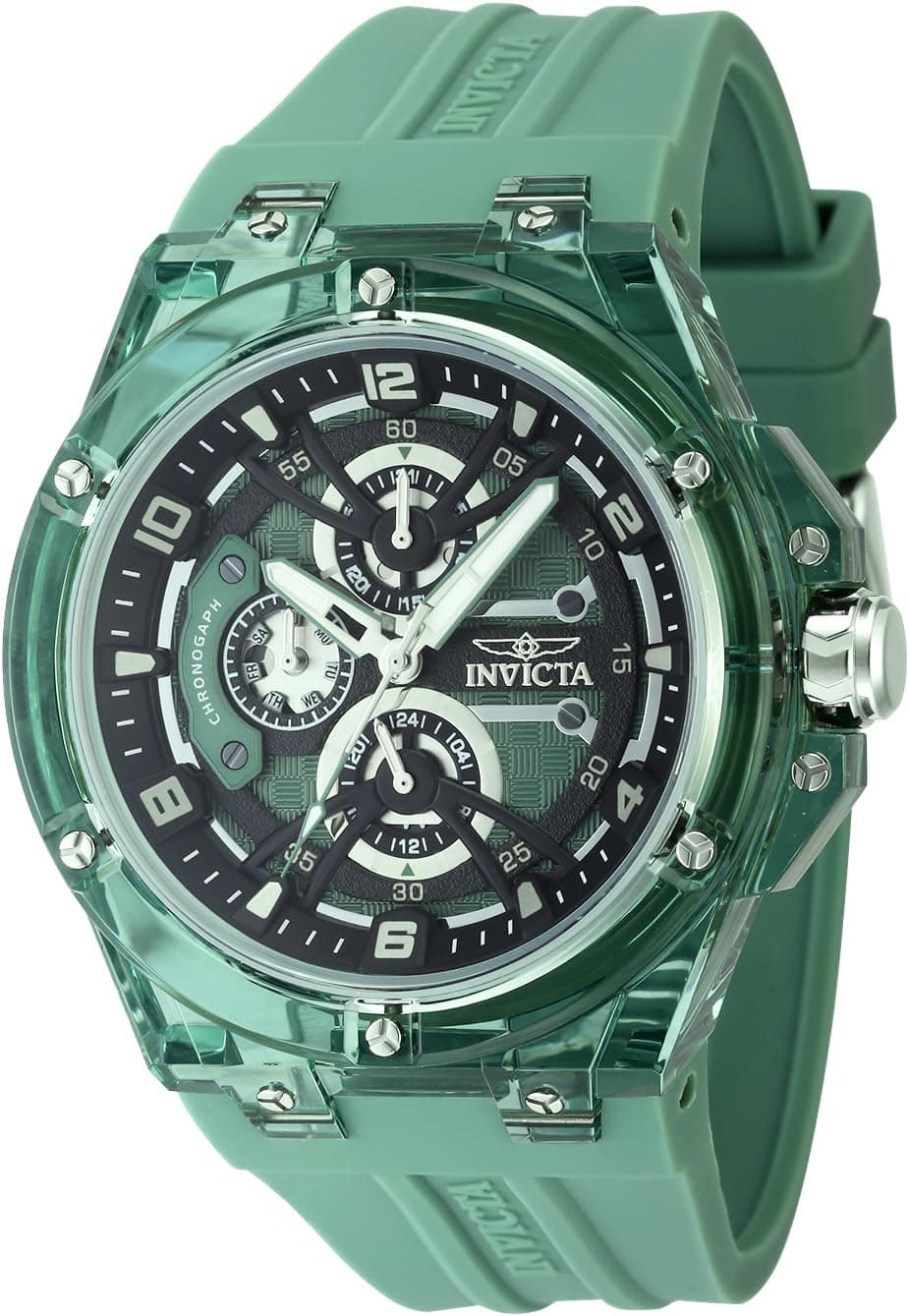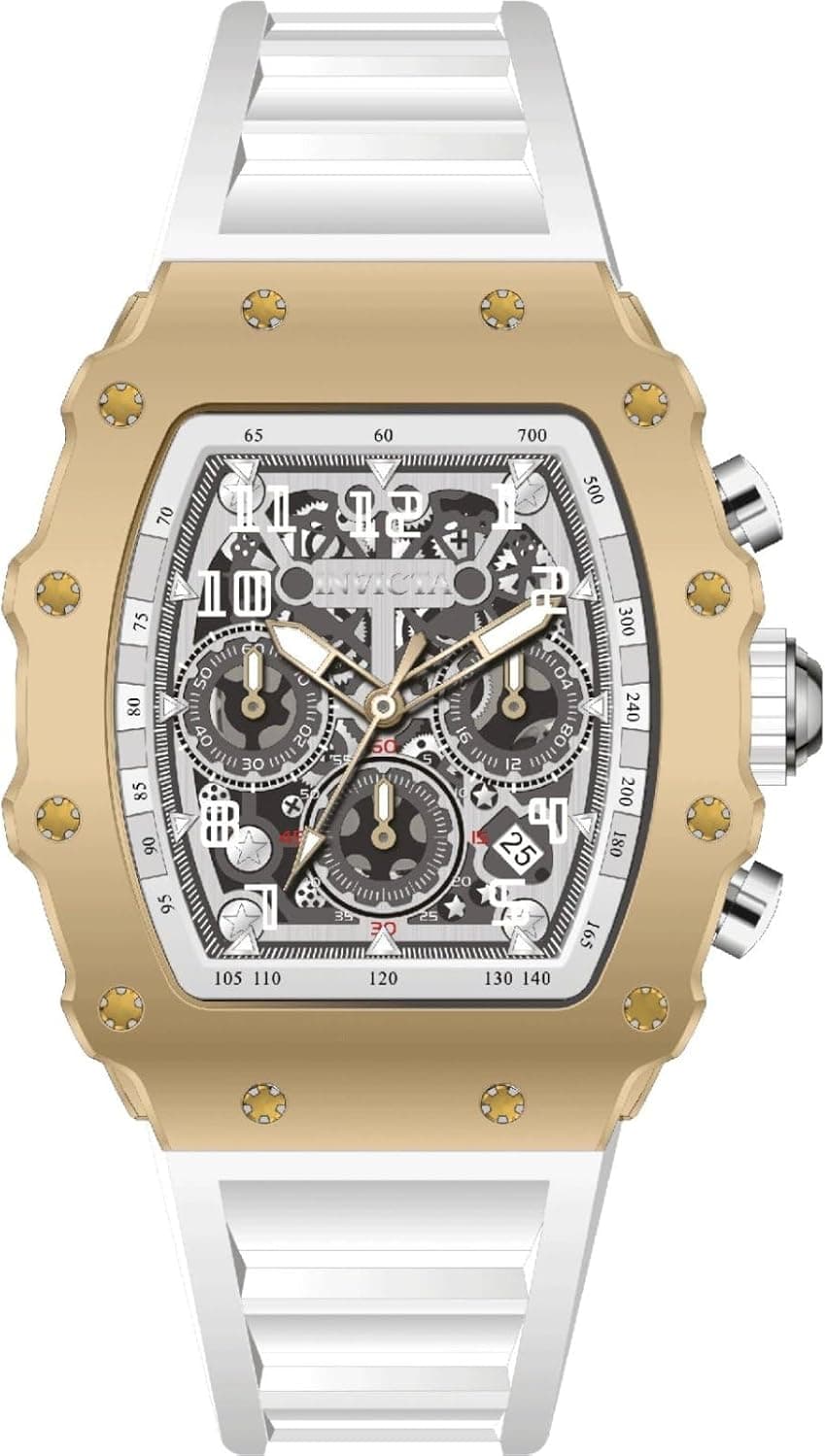
Racing Watches are chronographs born on the motorsport circuit, and their defining traits are clear: a tachymeter scale that converts elapsed time over a known distance into average speed, high-contrast subdial layouts for instant legibility, and pushers you can work with gloved hands. The type took shape across the 1950s and 60s. Omega launched the Speedmaster in 1957, the first chronograph to move its tachymeter scale onto the bezel; Heuer introduced the Jack Heuer-designed Carrera (reference 2447) in 1963, named for Mexico's brutal Carrera Panamericana road race; and that same year Rolex released the Cosmograph, soon renamed Daytona after the speedway. These were tools for reading the race, not the clock.
Real examples define the field. The steel Rolex Cosmograph Daytona (126500LN) runs the in-house Calibre 4131 under a ceramic bezel; it retails around £12,400 to £12,800 in 2025, while the secondary market sits closer to £23,000 to £29,000, with the white panda dial commanding more than the black. The TAG Heuer Carrera mostly lives in the £2,400 to £4,800 band; the 39mm version with the in-house Calibre TH20-00 is roughly £5,200, and the Heuer 02-powered Carrera Porsche Chronograph Special Edition runs about £4,700 to £4,900. The Zenith Chronomaster Sport, with its 1/10th-second El Primero, sells from £7,600 to £8,400, and the Omega Speedmaster Racing in Master Chronometer guise spans £5,800 to £16,800.
When buying, start with the dial: a real racing chronograph keeps its subdials cleanly separated, its tachymeter legible, and its movement type honest to your budget, whether automatic, meca-quartz or hand-wound. The Daytona suits collectors chasing heritage and value retention, though the waiting list and premium are real. The Carrera and Chronomaster Sport reward buyers who want a daily-wearable balance of pedigree and presence. On the value end, the Seiko Prospex Speedtimer SSC813 panda (under £800), the Hamilton Intra-Matic Auto Chrono, and the roughly £600 Junghans Form C carry the genre's spirit affordably.
The type holds distinct sub-threads. The square-case Monaco arrived in 1969 as the first water-resistant automatic chronograph, its left-side crown a signature of the Calibre 11, and it became inseparable from Steve McQueen and the 1971 film Le Mans. Panda and reverse-panda dials, perforated rally straps and pump-style pushers are this family's visual grammar. Choosing among Racing Watches is really a question of intent: vintage feel, modern precision, or track-derived ruggedness for everyday wear.