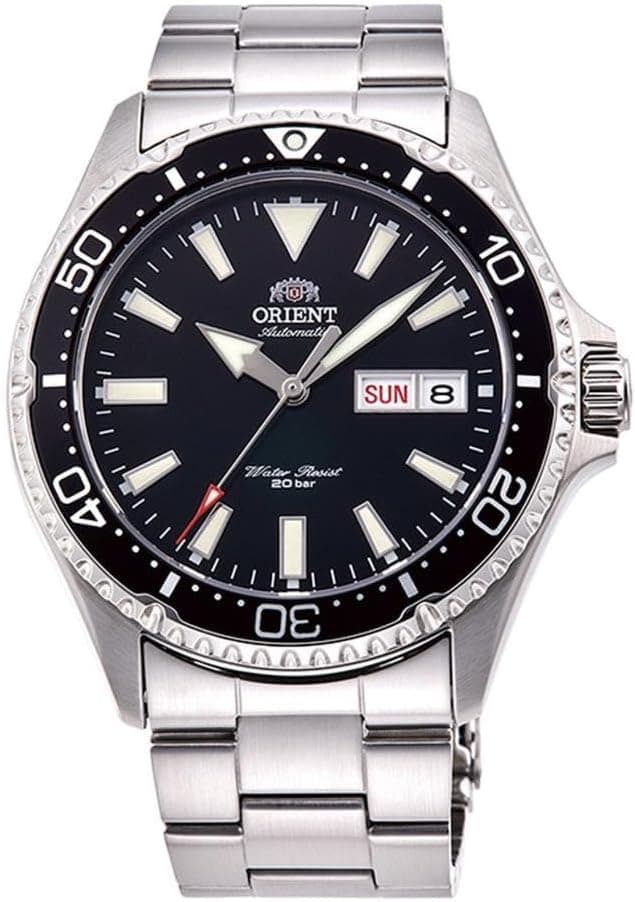
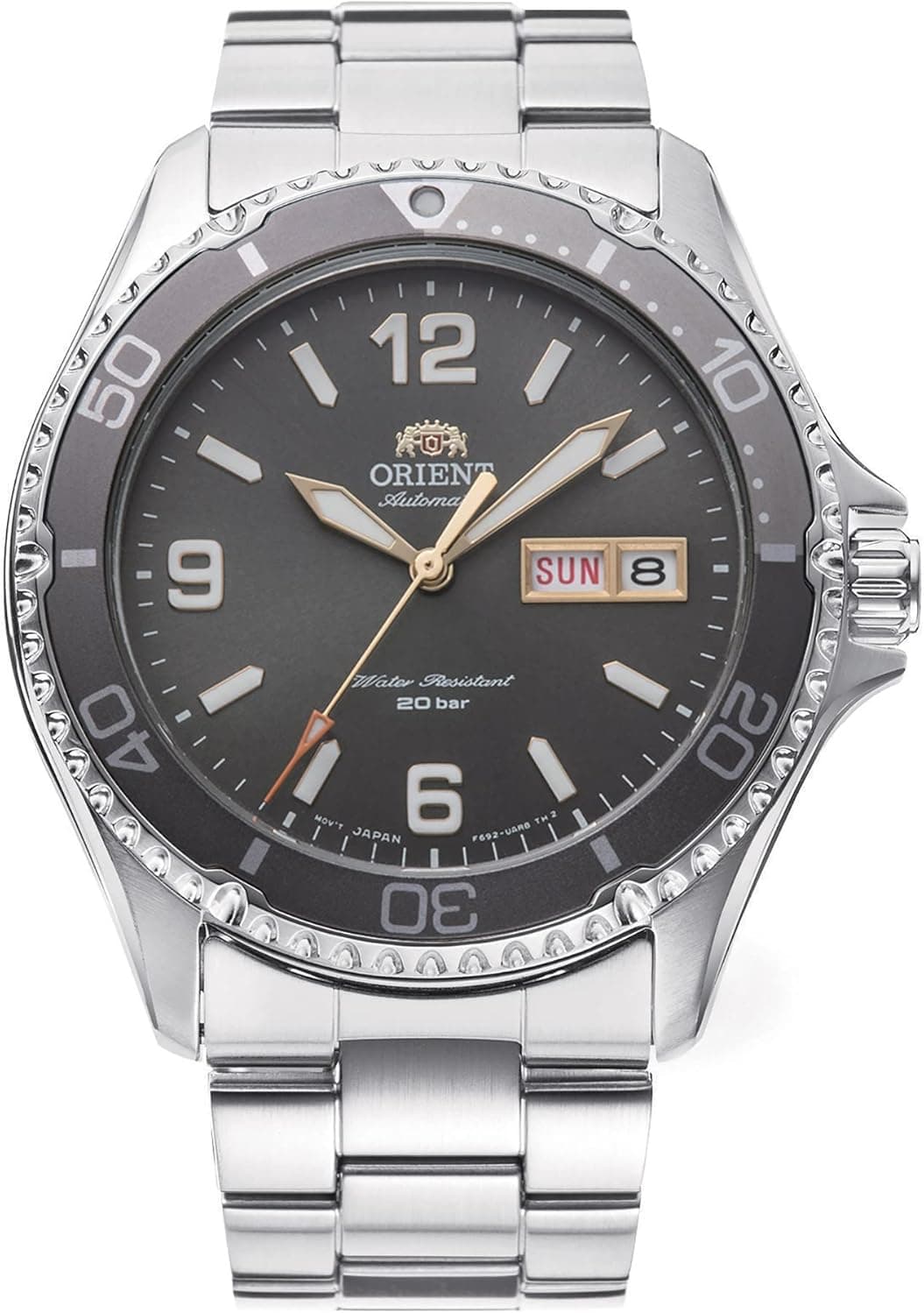
Orient Mako vs Kamasu vs Ray, Which Orient Diver Should You Buy?
 Serdar D.Watch Editor
For smaller wrists, the pick is the Orient Mako 40 (RA-AC0Q14L): a 39.9 mm case, sapphire crystal and 200 m water resistance for around $250 to $300. Go for the Kamasu if you want a 41.8 mm day-date with sapphire, the Mako II or Ray II for the classic look on a budget, and the Kano Big Mako if you want size.
Editor's verdict
If you have a slimmer wrist or want sapphire for around $250 to $300, buy the Mako 40 (RA-AC0Q14L). If you want a day-date with sapphire in a 41.8 mm case, the Kamasu (RA-AA0004E39B) is worth the step up. For the classic look at the lowest cost, choose between the Mako II (FAA02001B) and Ray II (TAA02005D9) by dial color, and get the Kano Big Mako only if you want a 44 mm case.
Key takeaways
- Every Orient diver in this comparison is listed with 200 m water resistance and a stainless steel case.
- The Mako 40 family runs 39 to 39.9 mm and pairs the date-only F6722 caliber with a sapphire crystal.
- The Kamasu pairs a 41.8 mm case with the F6922 day-date caliber and a synthetic sapphire crystal.
- The Mako II and Ray II share a 41.5 mm case, the F6922 caliber and a mineral crystal, so choose by dial color and price.
Orient Mako vs Kamasu vs Ray at a glance
The Orient divers in this comparison have more in common than not. Every one is rated to 200 m, runs an Orient automatic caliber and comes in a stainless steel case. The real choices come down to case size, caliber, crystal and strap.
Orient was founded in Japan in 1950 and is now part of Seiko Epson. The dive watch lineup covered here splits into three size groups: the Mako 40 family at 39 to 39.9 mm; the Mako 3, Kamasu, Mako II and Ray II at 41.5 to 41.8 mm; and the Kano Big Mako at 44 mm.
Prices in this guide come from Amazon US in October 2026. They change, so check the product cards for the current price.
Two calibers matter. The F6722 shows the date only, while the F6922 shows the day and date. Both are in-house automatics that hand-wind and hack, so you can wind them through the crown and stop the seconds hand to set the time. The F6922 has 22 jewels, beats at 21,600 vph and offers about 40 hours of power reserve.
Comparison table
| Model | Case | Thickness | Caliber | Crystal | Strap | Water resistance | Price range |
|---|---|---|---|---|---|---|---|
| Mako 40 Blue (RA-AC0Q14L) | 39.9 mm | 12.8 mm | F6722 | Sapphire | Steel bracelet | 200 m | $250 to $300 |
| Mako 40 Brown (RA-AC0Q15Y) | 39 mm | 12 mm | F6722 | Sapphire | Steel bracelet | 200 m | $250 to $300 |
| Mako Green (RA-AC0Q11E) | 39 mm | 12 mm | F6722 | Sapphire | Rubber | 200 m | $250 to $300 |
| Mako White (RA-AC0Q03S30B) | 39.9 mm | 12.8 mm | F6722 | Synthetic sapphire | Steel bracelet | 200 m | $300 to $350 |
| Mako 3 (RA-AA0819N39B) | 41.8 mm | 12.8 mm | F6922 | Not listed | Steel bracelet | 200 m | $250 to $300 |
| Kamasu Green (RA-AA0004E39B) | 41.8 mm | 12.8 mm | F6922 | Synthetic sapphire | Steel bracelet | 200 m | $300 to $350 |
| Mako II Black (FAA02001B) | 41.5 mm | 13 mm | F6922 | Mineral | Steel bracelet | 200 m | $200 to $250 |
| Ray II Blue (TAA02005D9) | 41.5 mm | 13 mm | F6922 | Mineral | Steel bracelet | 200 m | $250 to $300 |
| Kano Big Mako Blue (RA-AA0916L) | 44 mm | 12.9 mm | F6722 | Mineral | Rubber | 200 m | $200 to $250 |
A 200 m rating covers swimming and snorkeling. Some listings qualify that rating as suitable for surface water sports or skin diving, not scuba.
The Mako 40 family, the smaller sapphire option
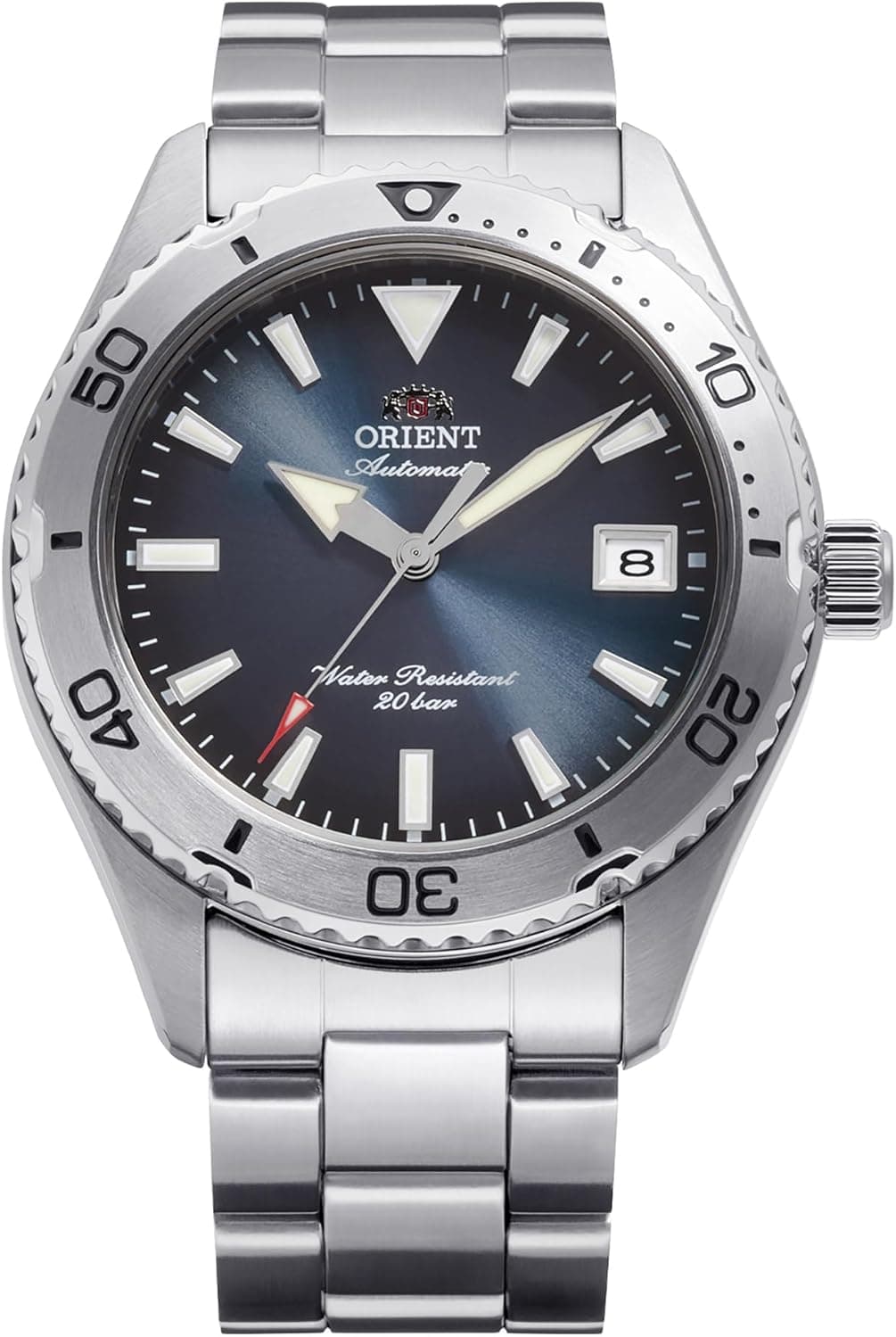
Orient Mako 40 RA-AC0Q14L, 40mm, Blue Dial, Silver Stainless Steel Bracelet
View productThe Orient Mako 40 (RA-AC0Q14L) measures 39.9 mm across and 12.8 mm thick, with a 46.5 mm lug-to-lug. That's noticeably smaller than the 41.5 mm-plus models here. The listing also includes a flat sapphire crystal, a screw-down crown, a screw-in case back, a unidirectional rotating bezel, luminous hands and indices, and a steel bracelet with a trifold deployant clasp.
The Mako 40 Brown (RA-AC0Q15Y) uses the same F6722 caliber and sapphire crystal but has a brown dial. It's listed at 39 mm across and 12 mm thick. Both cost around $250 to $300.
If you prefer rubber, the Mako Green (RA-AC0Q11E) pairs a 39 mm case and sapphire crystal with a rubber strap and a standard 20 mm lug width. The Mako White (RA-AC0Q03S30B) puts a white dial on a steel bracelet with synthetic sapphire, but it costs more, around $300 to $350.
Mako 3 and Kamasu, the 41.8 mm day-date pair
The Orient Mako 3 (RA-AA0819N39B) steps up to a 41.8 mm case, 12.8 mm thick, with a 22 mm lug width and a gray sunburst dial. The listing mentions a screw-down crown, a 120-click unidirectional bezel, lume and a day-date display driven by the F6922. We couldn't confirm the crystal type, so check our Orient Mako 3 review for details. It runs around $250 to $300.
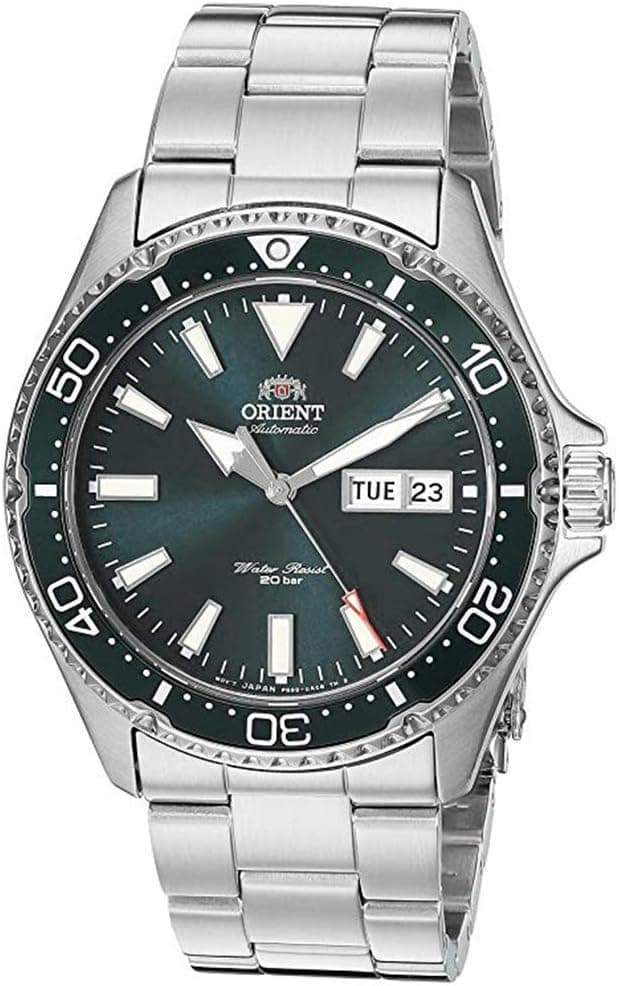
Orient Kamasu RA-AA0004E39B, 42mm, Green Dial, Silver Stainless Steel Bracelet
View productThe Orient Kamasu (RA-AA0004E39B) has the same 41.8 mm diameter and 12.8 mm thickness, with a 46.8 mm lug-to-lug and 22 mm lugs. It's listed with synthetic sapphire, a screw-down crown, the 120-click bezel and a green dial. That combination costs more, around $300 to $350. Our Orient Kamasu review goes into more depth.
If you're new to timing things with a rotating bezel, see how to use a dive watch bezel.
Mako II and Ray II, the classic sibling design
The Mako and Ray are sibling designs. On paper, the Mako II (FAA02001B) and Ray II (TAA02005D9) share a 41.5 mm case, 13 mm thickness, a 22 mm lug width, the F6922 caliber, a 120-click unidirectional bezel and a steel bracelet.

Orient Mako II FAA02001B, 42mm, Black Dial, Silver Stainless Steel Bracelet
View product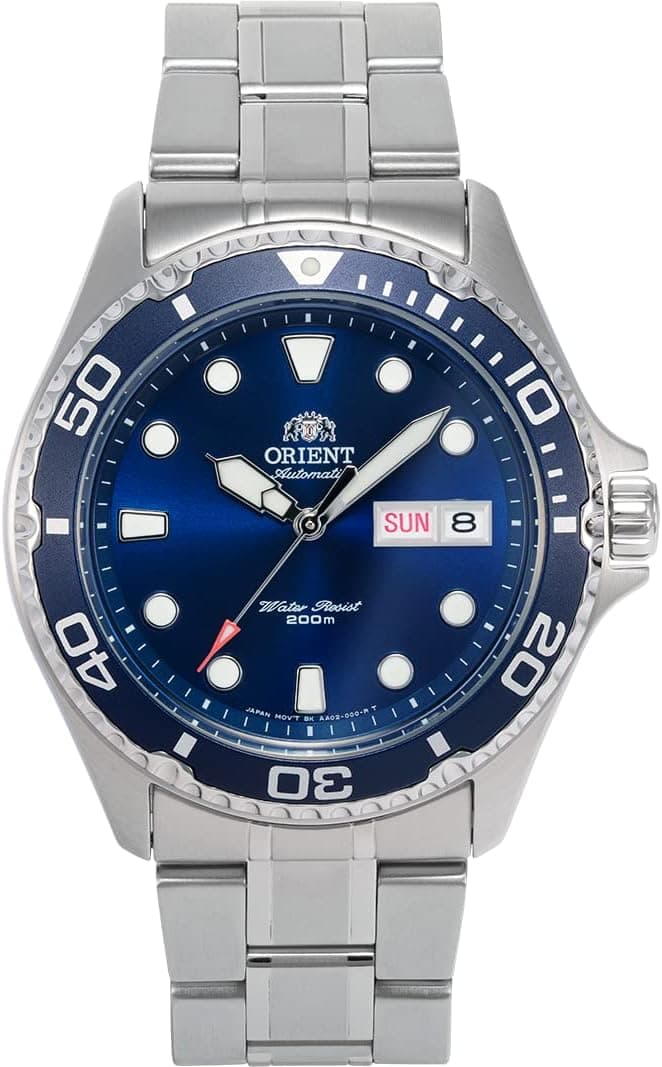
Orient Ray II TAA02005D9, 42mm, Blue Dial, Silver Stainless Steel Bracelet
View productBoth use a mineral crystal, which scratches more easily than sapphire. Only two things differ: the Mako II has a black dial and runs about $200 to $250, while the Ray II has a blue dial and costs about $250 to $300. Choose by dial color and budget.
Kano Big Mako, the largest option
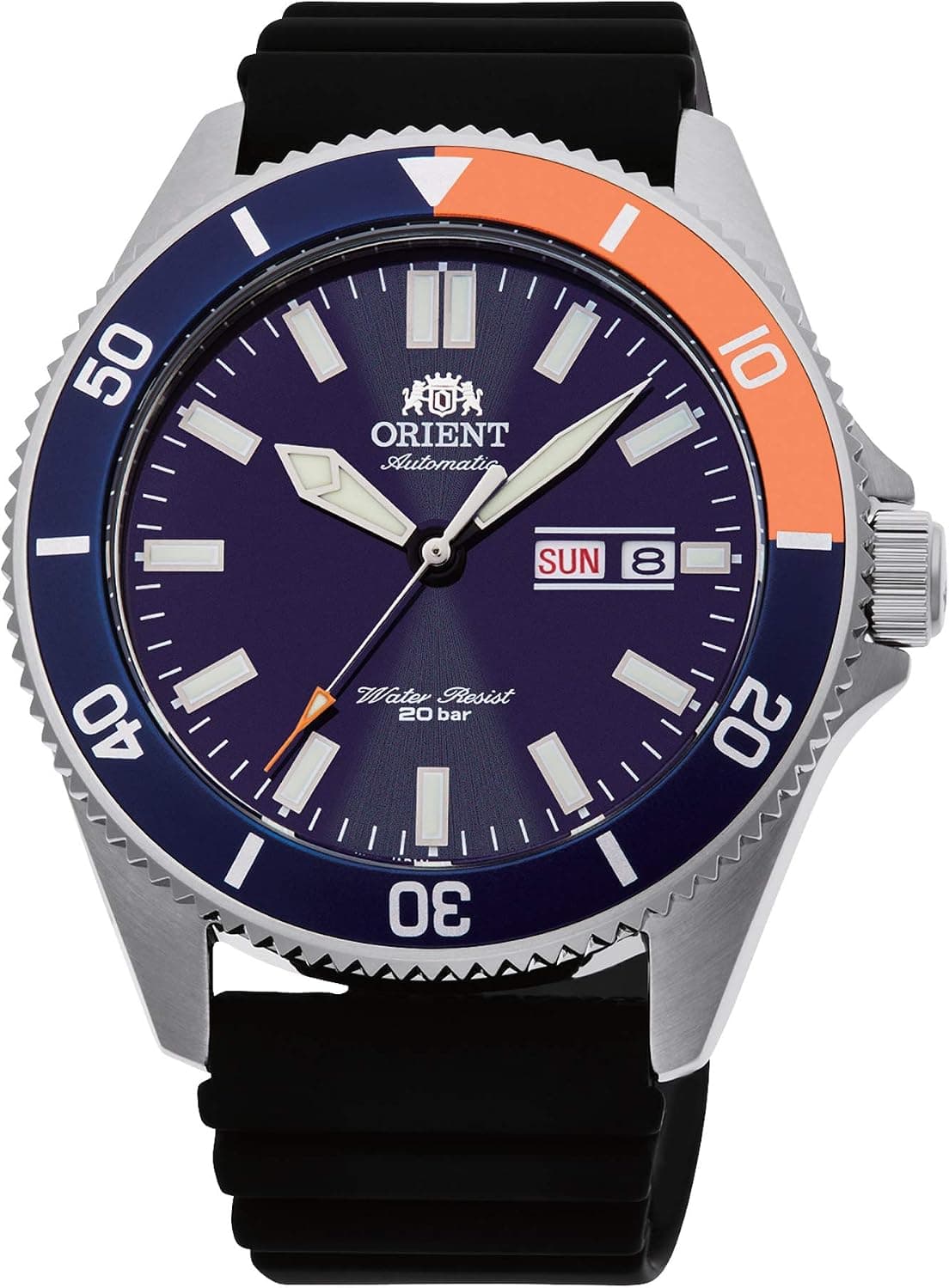
Orient Sports RA-AA0916L, 44mm, Blue Dial, Blue Rubber Band
View productThe Kano Big Mako (RA-AA0916L) is the outlier at 44 mm, 12.9 mm thick, with 22 mm lugs. It runs the date-only F6722 and is listed with a mineral crystal, a screw-down crown, a screw-in case back, lume and a blue two-piece rubber strap. It's in the lowest price range here, around $200 to $250, and suits buyers with larger wrists who want more dial presence.
Which Orient diver to buy
For smaller wrists, get the Mako 40 Blue, or the brown or green versions if you prefer a different color or strap. Either way, you get sapphire and a 39 to 39.9 mm case for $250 to $300.
For a day-date with sapphire, the Kamasu is the one to get. It costs more, but it's the only watch here confirmed with both the F6922 and sapphire.
If you want the classic Mako II or Ray II look, take the Mako II if price matters most and the Ray II if you want blue. If you want the biggest case, the Kano Big Mako is the only 44 mm option.
To compare these with other brands, browse our diver watches page or our list of the best dive watches under $500.
Specifications
| Specification | Value |
|---|---|
| Case sizes | 39 to 44 mm |
| Calibers | F6722 (date) or F6922 (day and date) |
| Water resistance | 200 m on every listing |
| Crystals | Sapphire, synthetic sapphire or mineral (not listed for the Mako 3) |
| Lug widths | 20 mm or 22 mm where listed |
| Price range on Amazon US, October 2026 | Around $200 to $350 |
Pros
- Mako 40: sapphire crystal and a 39.9 mm case for around $250 to $300.
- Kamasu: synthetic sapphire crystal and the F6922 day-date caliber in a 41.8 mm case.
- Mako II: the lowest price range of the 41.5 mm group, around $200 to $250, plus a 120-click unidirectional bezel.
- Kano Big Mako: a 44 mm case and a screw-down crown at the lowest price in this group.
Cons
- Mako II and Ray II: both use a mineral crystal rather than sapphire.
- Kamasu: it sits in the highest price range in this comparison, around $300 to $350.
- Kano Big Mako: the 44 mm case is large for slimmer wrists, and the crystal is mineral.
Verdict
If you have a slimmer wrist or want sapphire for around $250 to $300, buy the Mako 40 (RA-AC0Q14L). If you want a day-date with sapphire in a 41.8 mm case, the Kamasu (RA-AA0004E39B) is worth the step up. For the classic look at the lowest cost, choose between the Mako II (FAA02001B) and Ray II (TAA02005D9) by dial color, and get the Kano Big Mako only if you want a 44 mm case.
Watches we recommend
Frequently asked questions
What's the difference between the Orient Mako II and Ray II?
On paper they share a 41.5 mm case, 13 mm thickness, a 22 mm lug width, the F6922 caliber, a mineral crystal, a 120-click unidirectional bezel and 200 m water resistance. The Mako II listed here has a black dial and costs around $200 to $250, while the Ray II has a blue dial and costs around $250 to $300.
Does the Orient Mako 40 have a sapphire crystal?
Yes. Both Mako 40 listings (RA-AC0Q14L and RA-AC0Q15Y) specify a sapphire crystal, along with the F6722 automatic caliber, 200 m water resistance, a unidirectional rotating bezel and a stainless steel bracelet. Both cost around $250 to $300 on Amazon US.
Is the Orient Kamasu bigger than the Mako 40?
Yes. The Kamasu (RA-AA0004E39B) measures 41.8 mm with a 46.8 mm lug-to-lug, versus 39.9 mm and 46.5 mm for the Mako 40 (RA-AC0Q14L). Both are 12.8 mm thick, and the Kamasu adds a day display courtesy of the F6922 caliber.
Which Orient divers have a day-date display?
In this comparison, the Mako 3, Kamasu, Mako II and Ray II use the F6922 caliber, which shows the day and date. The Mako 40 family, the other Mako listings and the Kano Big Mako use the F6722, which shows the date only.

About the author
Serdar D.Watch Editor
View profileSerdar D. is the editor at BraveryWatch. He believes a good watch should be not just expensive but right. He gets deep into the details, then turns them into something that is genuinely a pleasure to read. He gives relaxed, useful advice through the eyes of someone who truly cares about watches.