The Watch Date Danger Zone
 Serdar D.Watch Editor
If your watch has a date, do not change it by hand between roughly 9pm and 3am. In those hours the date gears are already engaged for the midnight switch, and forcing them from outside can wear the teeth. The safe routine is simple: move the hands to six o'clock first, set the date there, then bring the time back.
Key takeaways
- On any watch with a date, do not change it by hand between roughly 9pm and 3am; the gears are meshed for the switch in those hours.
- The rule applies to mechanical watches, and as a precaution the same habit does no harm on some quartz watches that use a mechanical date wheel.
- The safe routine: move the hands to six o'clock, quick-set the date there, then bring the time back.
- Damage is usually not sudden; the teeth wear over time and show up months later as a skipped or stuck date.
- Setting the date in the morning or at noon is always the cleanest choice, well clear of the danger zone.
What the danger zone is
A watch with a date does not flip over at a single instant at midnight. The gears inside it start preparing to push the date disc hours before midnight. On most watches that preparation begins around 9pm and runs until the switch finishes, roughly 3am. That window is the date danger zone. While you are inside it, the gears are already meshed together, so if you turn the crown to set the date from outside, you load the delicate teeth in a way the mechanism never intended.
This is not only true of mechanical watches. Some quartz watches also use a mechanical date wheel, so as a precaution the same habit does no harm on those either. If you don't know whether your watch has a danger zone, the safest habit is to follow this rule for every date adjustment.
How the gears work around midnight
A date complication looks simple, but there is a small choreography inside it. The hour wheel turns slowly, and as it nears midnight a trigger finger leans against a tooth on the date disc. Between 9pm and midnight that finger has begun pushing the disc but has not released it yet. At midnight the disc advances by one digit, then the finger withdraws slowly until about 3am. For the whole length of that engagement, the date train is "busy."
- Before 9pm and after 3am: the gears are free, quick-set adjustment is safe
- 9pm to midnight: the finger is leaning on the disc and under load
- Midnight to 3am: the switch completes and the gears slowly disengage
Watches that show the day-date have two separate discs, so the window can be a little longer. That is why the rule is kept broad, like "9 to 3."
What damage can happen
Forcing the date inside the danger zone rarely breaks the watch on the spot; the danger is that it is gradual. Each time, you shave a tiny amount off the tips of the teeth. Months or years later, the date starts skipping a day, sticking, or failing to change at midnight at all. With a harder push, the trigger finger can bend or a tooth can break, and that means a service bill.
The frustrating part is that it is hard to trace the damage back to its cause afterwards. That is why the right approach is to never take the risk in the first place.
The safe setting routine
The rule fits in one sentence: move the gears out of the danger zone before you set the date. The steps are:
- Pull the crown all the way out and move the hour and minute hands to six o'clock. That position is well clear of the middle of the danger zone, and the gears are fully free
- Push the crown back one click and quick-set the date to the day you want
- When you set the time again, watch whether the hand is at noon or midnight. Set it 12 hours off and the date will roll a day early or late
- On watches with a screw-down crown, screw it back down when you are done
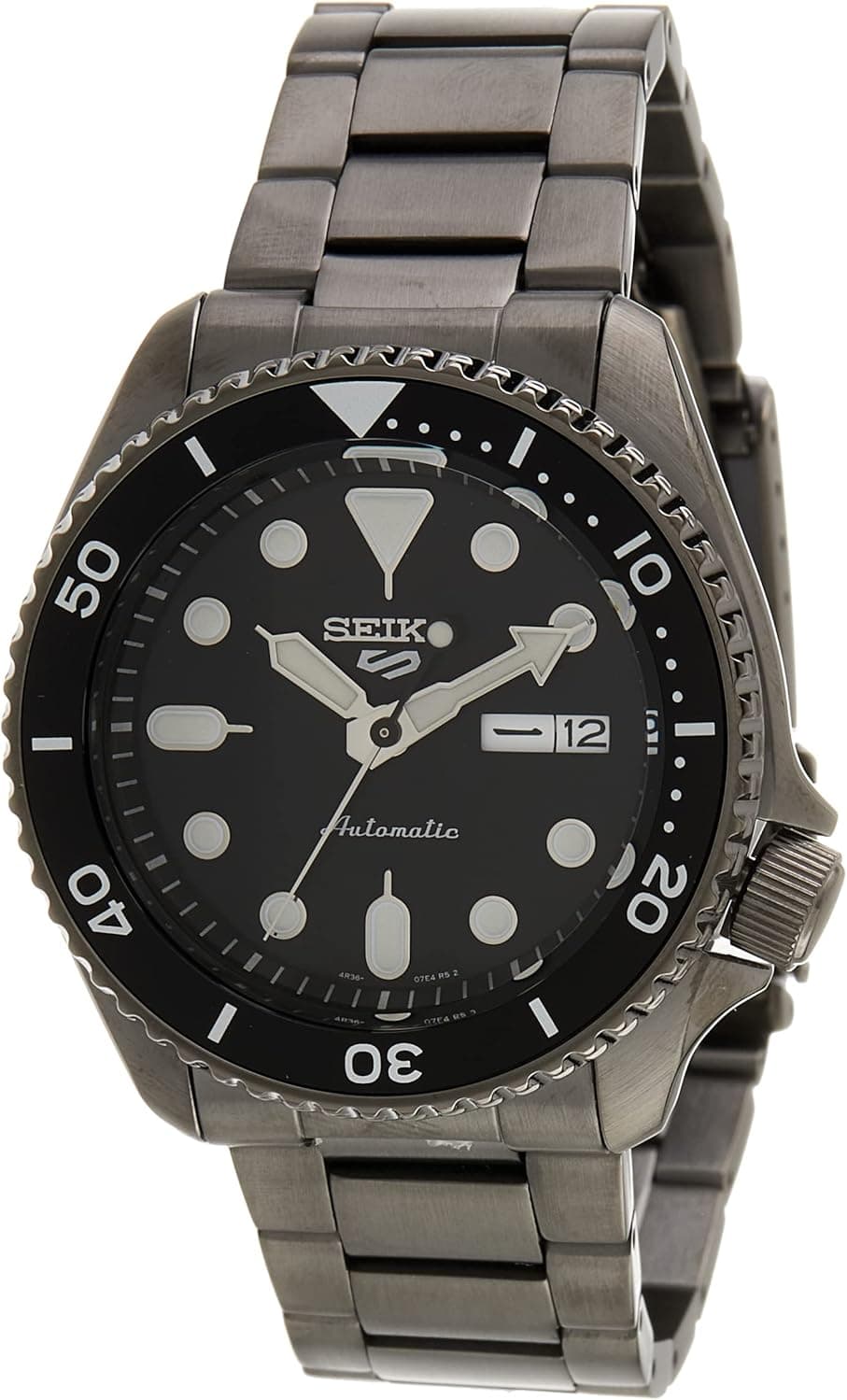
This applies to every watch with a date complication. For example, the day-and-date Seiko 5 Sports, the dated Orient Mako 3, and the Orient Bambino Version 7 with its neat date window all want the same six-o'clock habit.
What to do in practice
The situation you meet most often is putting a watch back on after it has sat for a few days. If you'll wear it in the evening, wait rather than setting it then: adjusting the date in the morning or at noon, away from the danger zone, is cleanest. If you wear your automatic regularly and keep it wound correctly, you will almost never need to change the date by hand.
For broader habits, see the guide to caring for a mechanical watch. This six-o'clock habit is the cheapest insurance for the life of your watch, especially on a dated model chosen from among the best Japanese watches.
Specifications
| Specification | Value |
|---|---|
| Danger zone | Roughly 9pm to 3am |
| Safe setting position | Hands at six o'clock |
| Watches affected | Dated mechanical, some quartz |
Pros
- A single habit protects the date mechanism for years
- Works on mechanical watches, and as a precaution on some quartz watches too
- Requires no tools and no extra cost
- Noticeably reduces gear wear and the need for service
Cons
- If the watch is set in the evening, it takes a little waiting or planning
- The exact edges of the window vary by model, so the rule is kept broad
- Moving the hands to six can briefly pass through the danger zone by accident
- It requires checking afterwards whether the hour hand is at noon or midnight
Verdict
On any watch with a date complication there is one right habit: never force the date inside the danger zone, and always move the hands to six o'clock first. The day-and-date Seiko 5 Sports is a good watch to practice it on, and the same routine carries over to the Mako 3 and the Bambino Version 7.
Watches we recommend
Frequently asked questions
What exactly are the hours of the watch date danger zone?
Roughly 9pm to 3am. In that window the date gears are meshed for the midnight switch, so changing the date by hand strains the teeth. The exact edges vary by model, which is why the window is kept broad to stay safe.
Will my watch break right away if I change the date in the danger zone?
Usually not on the spot; the danger is gradual. Each time you force it, you shave a little off the tips of the teeth, and months later the date may start skipping or sticking. A hard push can break a tooth and need a service, so the right move is never to take the risk.
What is the correct way to set the date safely?
First pull the crown out and move the hands to six o'clock, where the gears are free. Then push the crown back one click and quick-set the date. Finally, set the time, watching whether the hour hand is at noon or midnight, and screw the crown back down on watches that have one.

About the author
Serdar D.Watch Editor
View profileSerdar D. is the editor at BraveryWatch. He believes a good watch should be not just expensive but right. He gets deep into the details, then turns them into something that is genuinely a pleasure to read. He gives relaxed, useful advice through the eyes of someone who truly cares about watches.