


RadoMidrange
Founded as Schlup & Co. in 1917 and rebranded Rado in 1957; the DiaStar (1962) with hard-metal case was one of the world's first scratch-resistant watches.
Founded in Lengnau, Switzerland in 1917, Rado is a Swatch Group brand best known for pioneering high-tech ceramic. Its Captain Cook, True Square and DiaStar lines pair scratch-resistant cases with accessible Swiss automatic movements.
Rado began in 1917 when the Schlup brothers, Fritz, Ernst and Werner, turned their family home in Lengnau, in the Swiss canton of Bern, into a movement workshop. For decades Schlup & Co. supplied calibres to other makers, and the Rado name itself only arrived in 1957, borrowed from the Esperanto word for wheel. The first model, the Golden Horse, was sold on its antimagnetic credentials. The real turning point came in 1962 with the DiaStar Original, the world's first scratch-resistant wristwatch. From 1986 onward Rado committed itself to high-tech ceramic, and that material now defines the brand more than any single design.
Four collections carry the current catalogue. The Captain Cook is the dive-inspired line: the monobloc-cased High-Tech Ceramic 43mm (reference R32127162) runs roughly £3,500 to £3,850 and uses the calibre R734, built on the Powermatic 80 base with a Nivachron hairspring and an 80-hour power reserve. The friendlier steel Captain Cook 42mm (R32505203, calibre R763) starts near £2,000 at retail. The True Square Automatic Open Heart, with its 38mm monobloc ceramic case and skeletonised R734, sits around £2,100 to £2,500. The Centrix Open Heart 38mm (R30178152) lands near £1,300, while the Alfredo Haberli-designed DiaStar Original 60-Year Anniversary (R12163118), with its Ceramos bezel and calibre R764, sells for about £1,770.
From a collector's chair, Rado is a brand that spends your money on materials. Ceramic cases and bracelets shrug off scratches for decades, which is a genuine advantage on a daily watch where steel would scuff. The honest counterpoint is the secondary market: most references trade well below retail, and the steel Captain Cook R32505203 routinely changes hands for roughly £900 to £1,450 pre-owned. Buy a Rado as a long-lived everyday watch, not as something that holds value. When buying used, check the ceramic case edges for chips, inspect the bracelet links and the crown seal; service runs cleanly through the Swatch Group network, though ceramic component replacement is not cheap.
The modern Rado positions itself deliberately as a design-led midrange brand rather than a heritage chaser. The 2023 return of the Anatom (R10202209, calibre R766, around 3,800 euros in Europe) and the architectural lines of the True Square show a house experimenting with form and material more than with nostalgia. For a first Rado my advice is simple: if you want a light, low-maintenance ceramic watch that survives years of daily wear, the Centrix Open Heart or True Square is a solid entry, and if you want dive-watch presence, the Captain Cook High-Tech Ceramic is the most fully realised choice.
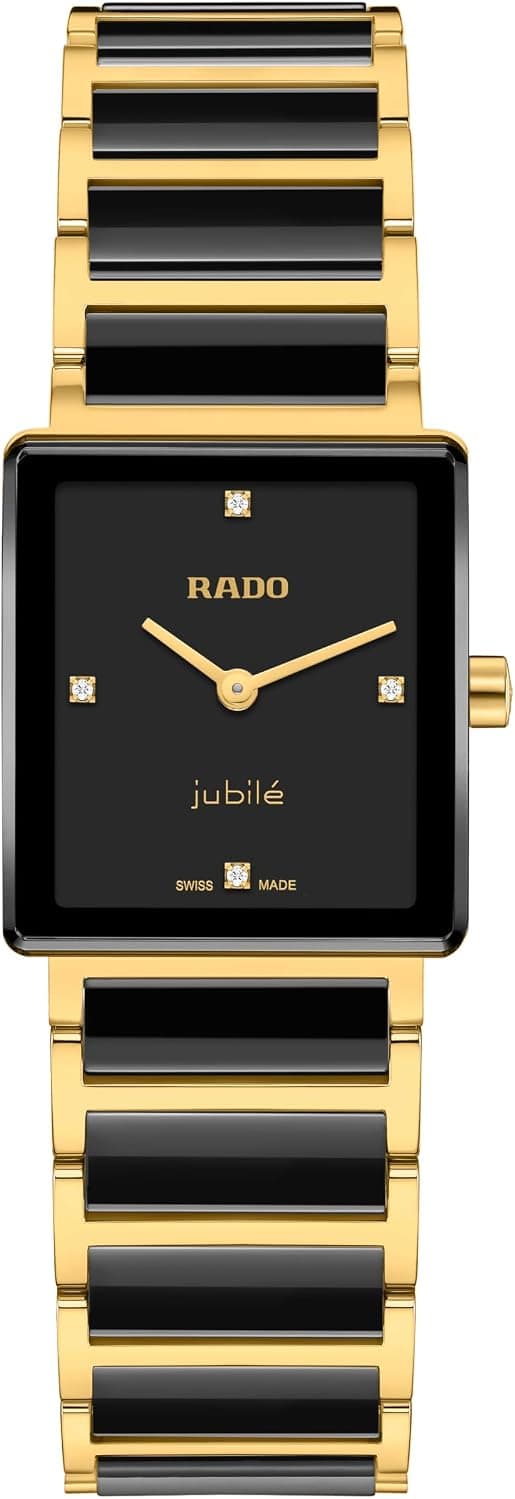
Rado watches




Frequently asked questions
Do Rado watches hold their value?
Generally no. Most Rado references trade well below retail on the secondary market; the steel Captain Cook R32505203, for example, often sells for roughly £900 to £1,450 pre-owned. Buy a Rado as a durable everyday watch rather than an investment that appreciates.
Which Rado should I buy first?
If you want a light, low-maintenance ceramic watch for daily wear, the Centrix Open Heart, starting near £1,300, is a solid entry, with the True Square a step up. If you prefer dive-watch presence, the Captain Cook High-Tech Ceramic is the most fully realised choice.
Is Rado's high-tech ceramic really scratch-resistant?
In practice, yes. Ceramic cases and bracelets resist the daily scuffs that mark steel and stay looking new for years. The trade-off is that ceramic, while very hard, is brittle, so a sharp knock can chip or crack it. Avoid hard impacts.
Are Rado calibres made in-house?
Not fully in-house. Rado uses ETA-based movements from within the Swatch Group; the R734, for instance, is built on the Powermatic 80 with a Nivachron hairspring and an 80-hour power reserve. That means a reliable, easily serviced mechanical base.
Is Rado service expensive, and where do I go?
Service runs cleanly through the authorised Swatch Group network, and a standard overhaul is reasonable for the midrange. The cost climbs, however, if a ceramic case or bracelet component needs replacing, since those parts are pricier than steel equivalents.