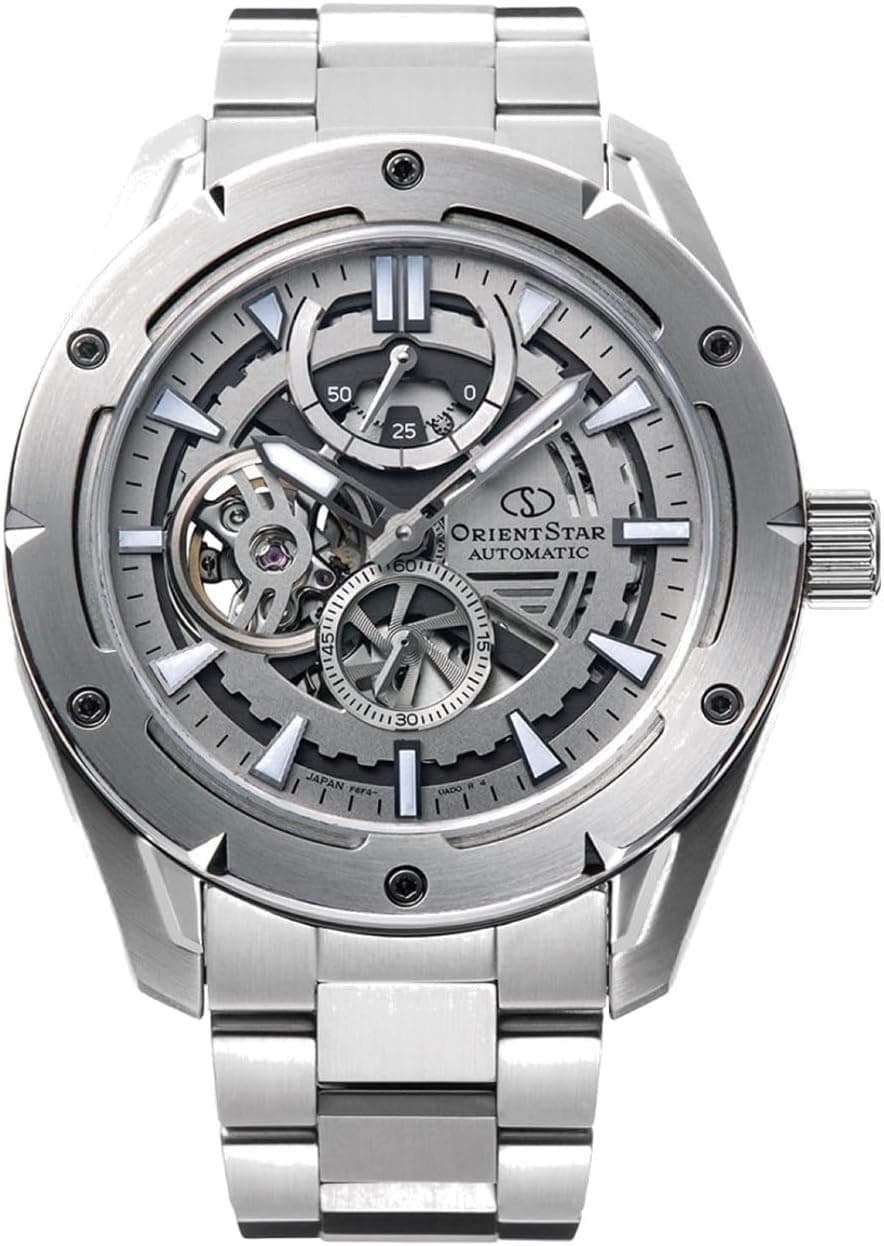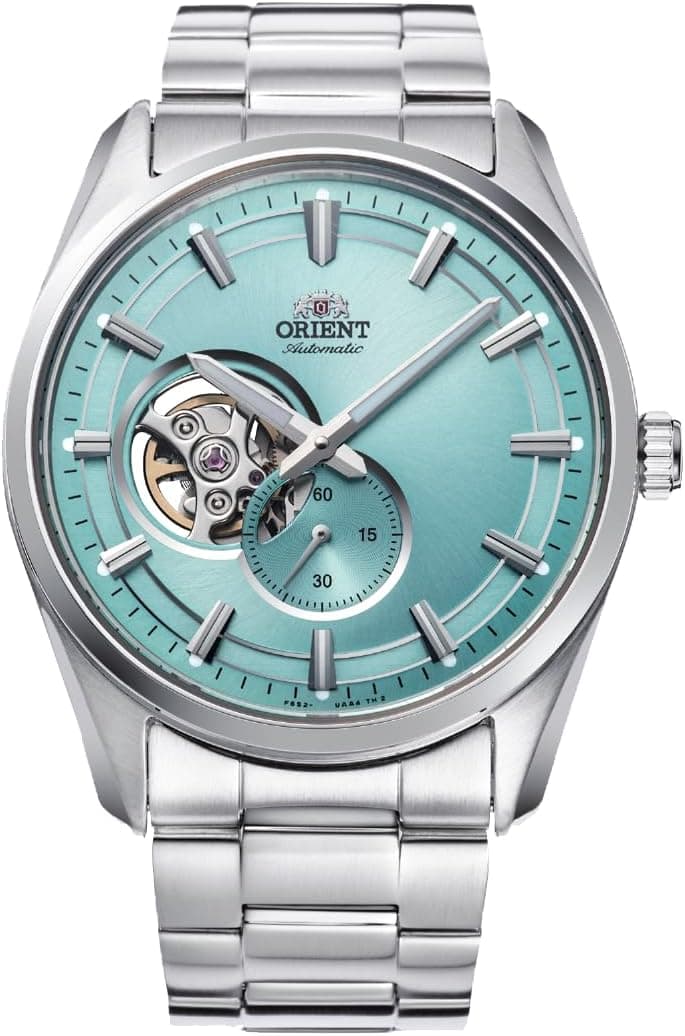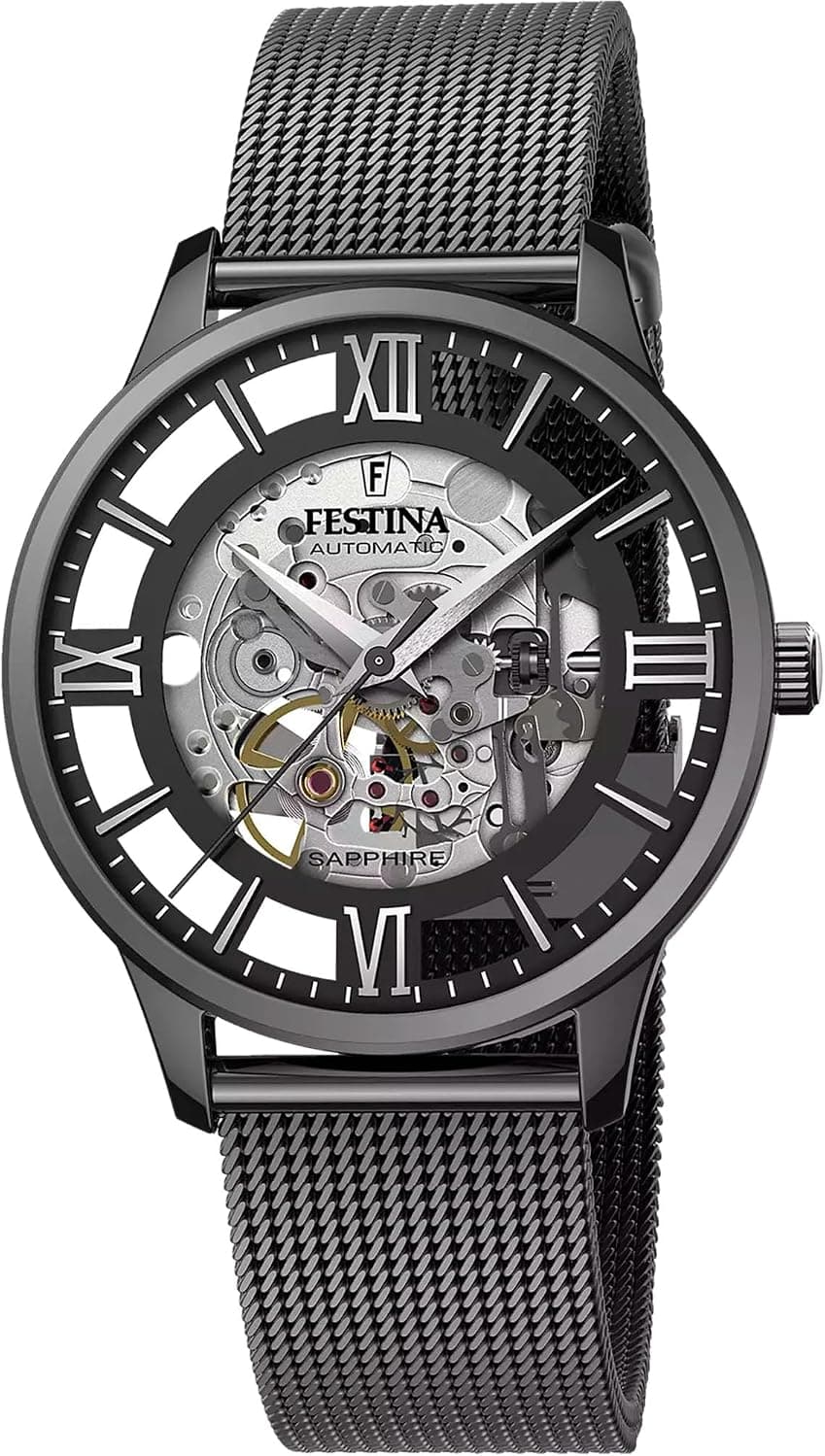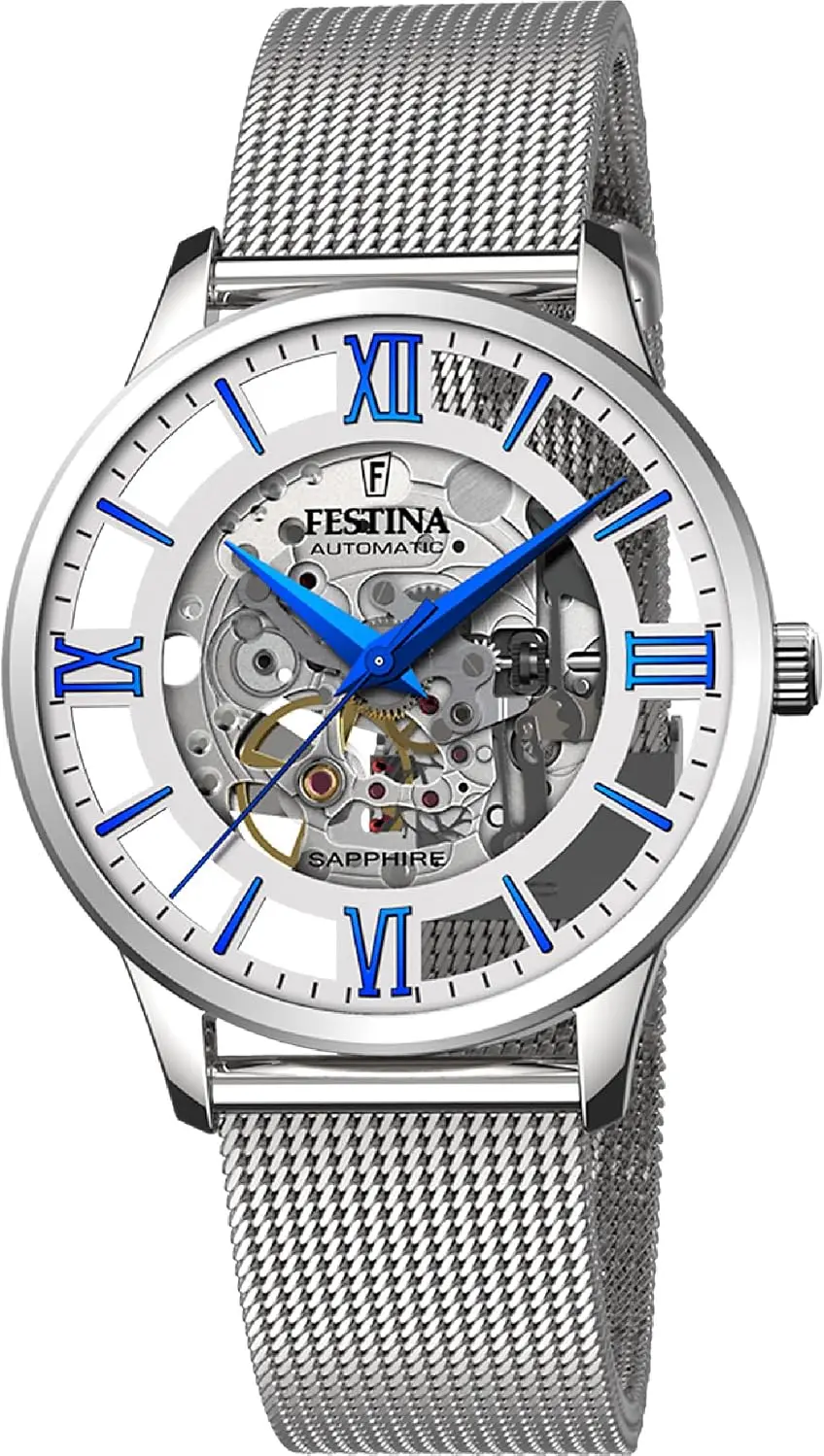
Skeleton Watches remove the non-essential metal from a movement's plates and bridges so the gears, wheels and balance are laid bare. The technique traces back to around 1760 and André-Charles Caron, court clockmaker to Louis XV, who pared away material to make watches thinner while turning the mechanism into the view. The correct umbrella term is openworked. An open-heart shows only the balance wheel through a small aperture, while a full skeleton cuts the bridges and plates back to expose almost everything. In a good example the removal never compromises structure, and the surfaces that remain are chamfered, engraved and polished by hand.
At entry level the Seiko Presage Open Heart frames the balance of its 4R38 calibre for roughly £360 to £440. The 2024 Tissot Chemin des Tourelles Skeleton houses the Powermatic 80 in a 39mm case and lands from around £835, a genuinely accessible way in. The Frederique Constant Highlife Automatic Skeleton, 41mm in steel on a bracelet, sits near £2,000. Step up and the Cartier Santos Skeleton Noctambule (ref. WHSA0009) uses the skeletonised 9612 MC with a 72-hour reserve, roughly £16,000 to £19,000 on the secondary market. At the top sit the Audemars Piguet Royal Oak Double Balance Wheel Openworked 41mm in steel, near £64,000 at 2024 launch, the H. Moser Streamliner Tourbillon Skeleton, and Hublot's Big Bang Unico skeleton chronograph from about £10,000.
Two things matter when buying: legibility and finishing. On a full skeleton the hands can disappear into the busy wheelwork behind them, so look for diamond-cut or luminous hands that lift clear of the movement. Inspect the bevels on the bridges and ask whether those anglages are hand-cut or machined, and how crisp the engraving really is. An open-heart suits anyone who wants a taste of the mechanics without losing daily readability; a full skeleton suits the collector happy to wear a kinetic object first and a timekeeper second.
Be honest about the tier. On cheap skeletons the cutaway is decorative and the movement is mass-produced; real hand-finishing only begins in the mid-to-upper bracket. Skeletons that add a tourbillon, minute repeater or perpetual calendar demand both a bigger budget and a different kind of commitment. Whatever you spend, judge the slimness of the case and the balance of the bridge architecture: a skeleton is defined not by its emptiness but by the elegance of the lines left behind.