How Thick Should a Watch Be? Case Thickness by Watch Type

 Serdar D.Watch Editor
How thick should a watch be? About 12 mm is normal for a men's watch and about 8 mm for a women's watch; 10 mm or less is slim, and 14 mm or more is thick. At Bravery Watch we track case thickness next to case size and price, and on November 5, 2026, half of the 1,337 men's watches with a stated thickness were between 10 and 13 mm.
Key takeaways
- Type tells you more than brand: the typical men's dress watch is 11 mm thick and the typical dive watch 13 mm, while divers 45 mm or larger are typically 15 mm.
- To slide under a shirt cuff, a watch should be 10 mm or less, and that mostly means quartz: only 6% of men's automatics are that thin.
- Paying more doesn't buy a thinner watch: the typical men's watch is 11.3 to 12 mm in every US price band, and a men's dress watch at $100 or less is far more likely to be 10 mm or thinner than one at $200 to $500.
How thick should a watch be?
For a men's watch, about 12 mm. That is the middle of the market, so a men's watch of 12 or 13 mm is nothing out of the ordinary; 10 mm or less counts as slim, and from 14 mm up a watch is thick. Women's watches are thinner, typically about 8 mm. At Bravery Watch we track case thickness next to case size and price, and on November 5, 2026, we had a stated thickness for 2,673 wristwatches in stock in the US, the UK or Germany. Half of the 1,337 men's watches among them were 10 to 13 mm thick, and half of the 881 women's watches 7.6 to 9.8 mm.
Which number suits you depends on what the watch is for. If it has to slide under a shirt cuff, I'd stay at 10 mm or less, and in practice that mostly means quartz. For everyday wear, 11 to 12 mm is perfectly normal. Dive watches are thicker, typically 13 mm, so a 14 mm diver is nothing to worry about.
"Typical" here means the median, the watch in the middle of the lineup, and the middle half leaves out the thinnest and the thickest quarter of the watches.
| Watch type | Watches | Typical thickness | Middle half | 10 mm or thinner |
|---|---|---|---|---|
| Men's dress | 267 | 11 mm | 9 to 12 mm | 42% |
| Men's field | 88 | 11.3 mm | 10.5 to 12 mm | 22% |
| Men's chronograph | 126 | 12 mm | 11 to 13 mm | 9% |
| Men's sport | 243 | 12 mm | 11 to 14 mm | 17% |
| Men's pilot | 34 | 12.7 mm | 11.5 to 14 mm | 15% |
| Men's dive | 145 | 13 mm | 12 to 14.4 mm | 1% |
| All men's watches | 1,337 | 12 mm | 10 to 13 mm | 25% |
| Women's dress | 352 | 8 mm | 7.5 to 9 mm | 93% |
| All women's watches | 881 | 8.1 mm | 7.6 to 9.8 mm | 83% |
Dress and dive watches differ in much more than thickness, and our field, pilot, dive and dress watch guide walks through the rest, from case size to water resistance.
What is the average watch thickness?
The average men's watch is about 12 mm thick: 11.8 mm as a mean and 12 mm as a median. For women's watches the two figures are 8.7 and 8.1 mm. Everywhere else I use the median, because a few extreme values pull a mean around and barely move the median.
The 12 mm median holds in all three markets we track. Women's watches are a little thicker in the UK, typically 9 mm against 8.3 mm in the US and 8.2 mm in Germany, and watches sold as unisex land in between, at 10.1 mm.
The spread is wide all the same: 13% of men's watches are 9 mm or thinner, and 11% are 15 mm or more. Our glossary entry on case thickness explains what the figure measures and why it matters as much as diameter.
Paying more won't buy you a thinner watch. At US prices, the typical men's watch is between 11.3 and 12 mm thick in every price band, from $100 or less to over $500.
Is 12mm thick for a watch?
Not for a men's watch. At 12 mm you're right in the middle: 49% of men's watches are thinner, 38% are thicker and the rest are exactly 12 mm. On a women's watch, 12 mm is thick, since 94% of women's watches are thinner. If yours is another size between 10 and 15 mm, find its row below.
| Case thickness | Men's watches thinner | Men's watches thicker | Women's watches thinner |
|---|---|---|---|
| 10 mm | 18% | 75% | 75% |
| 11 mm | 31% | 60% | 87% |
| 12 mm | 49% | 38% | 94% |
| 13 mm | 70% | 22% | 98% |
| 14 mm | 82% | 14% | 99% |
| 15 mm | 89% | 9% | 99% |
So on a men's watch, 10 mm is slim and 11 mm is on the slim side of normal, 12 mm sits in the middle, and 13 mm is a little thick but common. At 14 mm a watch is clearly thick, with only about one men's watch in seven thicker still, and a 15 mm watch is thicker than nearly nine in ten.
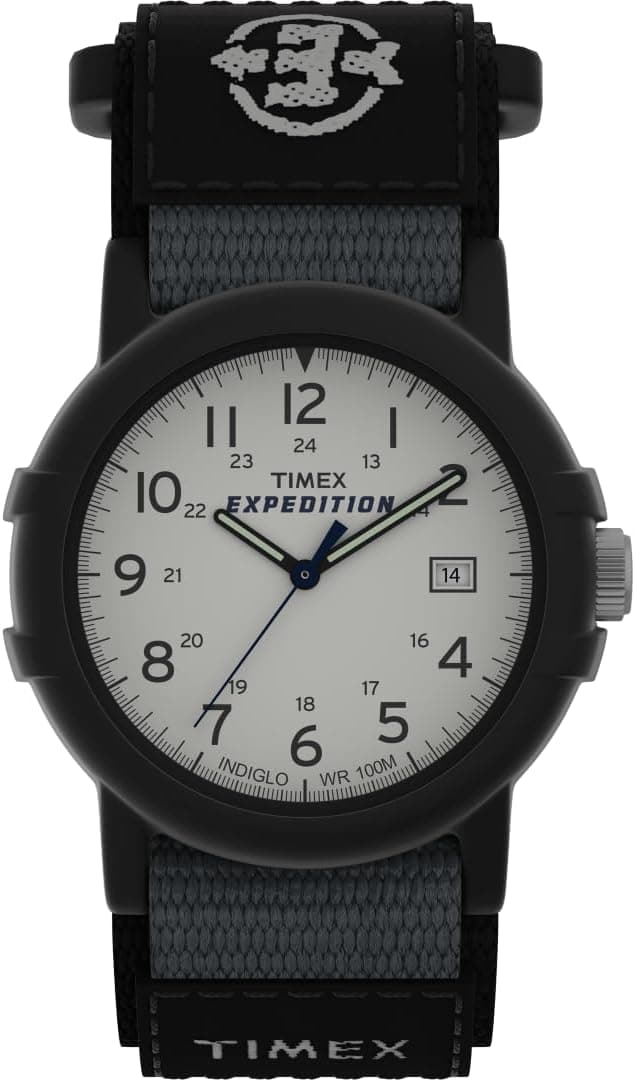
For a sense of scale, the Timex Expedition Scout 40, a 40 mm quartz watch with a brass case rated to 50 meters, is 11 mm thick and costs $50 to $100. The Casio G-Shock GA-100 shows what thick looks like: a resin analog-digital watch rated to 200 meters, 16.9 mm thick and thicker than 96% of men's watches, in the same $50 to $100 band.
How thick should a dress watch be?
Thin enough to slip under a shirt cuff, and for that I'd aim for 10 mm or less. The dress label alone won't get you there: only 42% of men's dress watches are 10 mm or thinner, and the typical one is 11 mm.
What decides it is the movement. Men's quartz dress watches are typically 9.9 mm, and 59% of them come in at 10 mm or less, while automatic dress watches are typically 12 mm and only one in ten gets down to 10 mm. That is also why price works backwards here. At US prices of $100 or less, 68% of men's dress watches are 10 mm or thinner, against 21% between $200 and $500, because nearly all of the cheaper ones are quartz while most of the pricier ones are automatic.
If a friend asked me for a cheap, thin dress watch, I'd point them to the Casio MTP-V001GL, a 38 mm quartz watch on a leather strap, 8 mm thick and under $50. The Daniel Wellington Classic Sheffield goes further: a 40 mm quartz watch with a stainless steel case and a leather strap, only 6 mm thick, which makes it thinner than 99% of the men's watches we counted. It costs $200 to $300. Both are rated to 30 meters, enough for rain and hand washing but not for swimming. More options are on our dress watches page.
Women's dress watches are thinner to begin with: typically 8 mm, and 93% are 10 mm or less. The Casio LTP-V007L, a rectangular quartz watch 22 mm wide on a leather strap, is 7.5 mm thick and costs under $50.
How thick is a dive watch?
The typical men's dive watch is 13 mm thick, and the middle half runs from 12 to 14.4 mm. Thin divers barely exist: only 2 of the 145 men's dive watches with a stated thickness are 10 mm or less, while 36% measure 14 mm or more.
Two things push the number up. One is water resistance. Across all men's watches, each step up the scale adds about a millimeter, from a typical 10.3 mm at 30 meters to 12 mm at 100 meters and 14 mm at 300 meters or more. What each rating means in the water is in our water resistance guide.
The other is size. Men's dive watches 39 to 44 mm across are typically 12 to 13 mm thick, but from 45 mm up the typical one is 15 mm, and 72% of them are 14 mm or thicker.
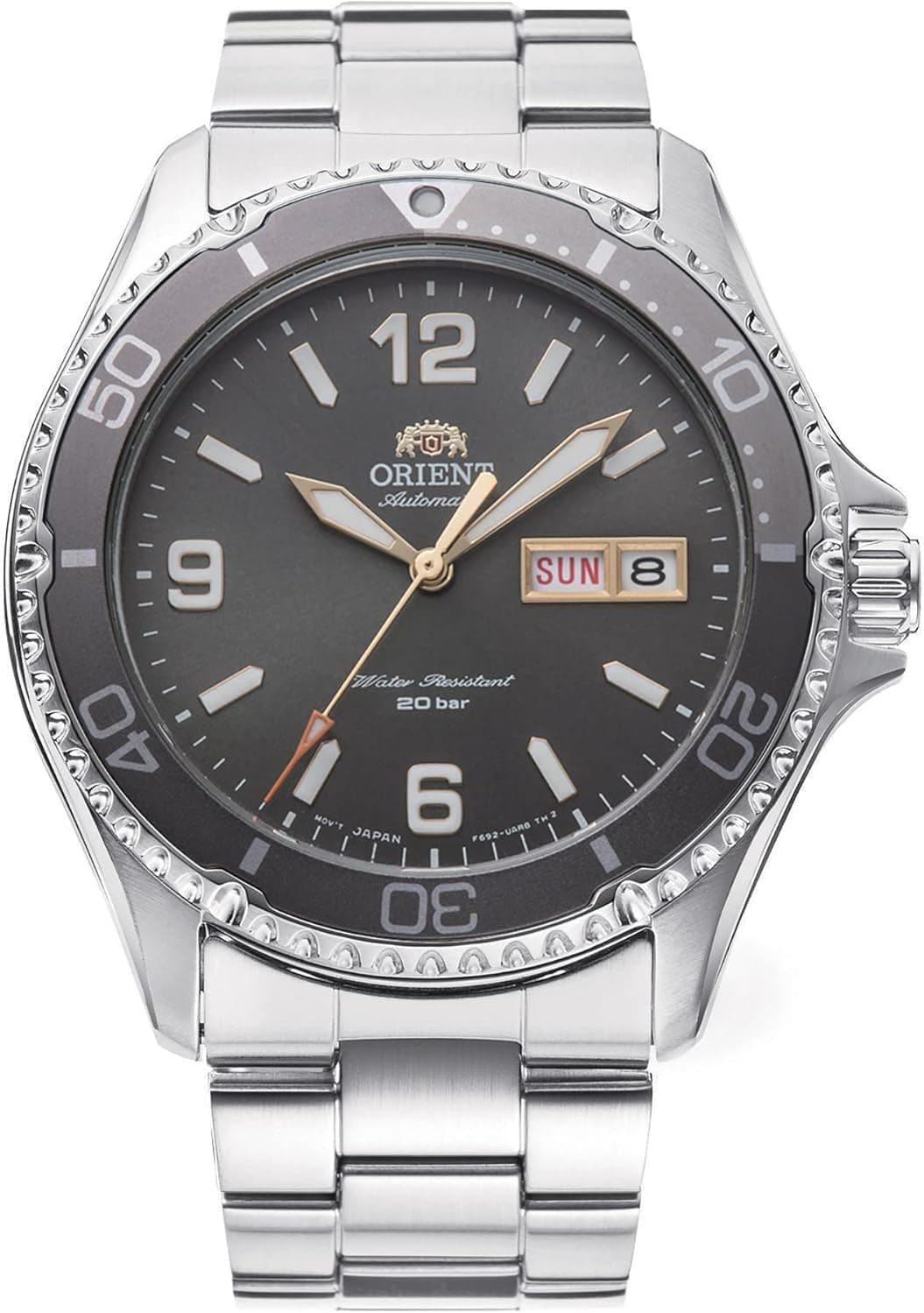
A 200-meter diver of ordinary size looks like the Orient Mako 3: a 41.8 mm automatic with a screw-down crown and a one-way bezel, 12.8 mm thick, for $200 to $300. A deeper rating doesn't have to mean a much taller case, though. The Certina DS Action Diver, a 43 mm Swiss automatic rated to 300 meters, is 13.1 mm, barely thicker than the Mako, and costs over $1,000. Our dive watches page has more.
How thick is a 40mm watch?
About 11 mm. Men's watches 39 to 40 mm across are typically 11.1 mm thick, and half of them fall between 10 and 12 mm. Smaller cases are thinner, typically 10 mm at 36 to 38 mm, and bigger ones are thicker: 12 mm at 41 to 42 mm and 13 mm from 45 mm up, where almost half the watches measure 14 mm or more. The one dip comes at 43 to 44 mm, typically 11.4 mm, partly because that size holds many Guess and Tommy Hilfiger watches, which are typically about 10 to 10.5 mm there.
Diameter and thickness aren't the whole fit. Lug-to-lug length counts as well, and our watch sizing guide shows how to weigh all three, while the watch size calculator turns your wrist measurement into a case size. On a small wrist a thick case shows more, which is why our picks for small wrists keep an eye on it. How men's case diameters have shifted since 2010 is in our case size data.
Are automatic watches thicker than quartz?
A little. Across all men's watches the difference is smaller than among dress watches: the typical automatic is 12.2 mm thick against 11.4 mm for a quartz watch. It grows at the slim end, where only 6% of men's automatics are 10 mm or thinner, against 31% of quartz watches. Light-powered quartz watches sit with the rest of quartz, typically 11.2 mm.
An everyday automatic such as the Seiko 5 Sports SRPD55, a 42.5 mm stainless steel watch rated to 100 meters, is 13.4 mm thick, thicker than about four in five men's watches, and costs $200 to $300.
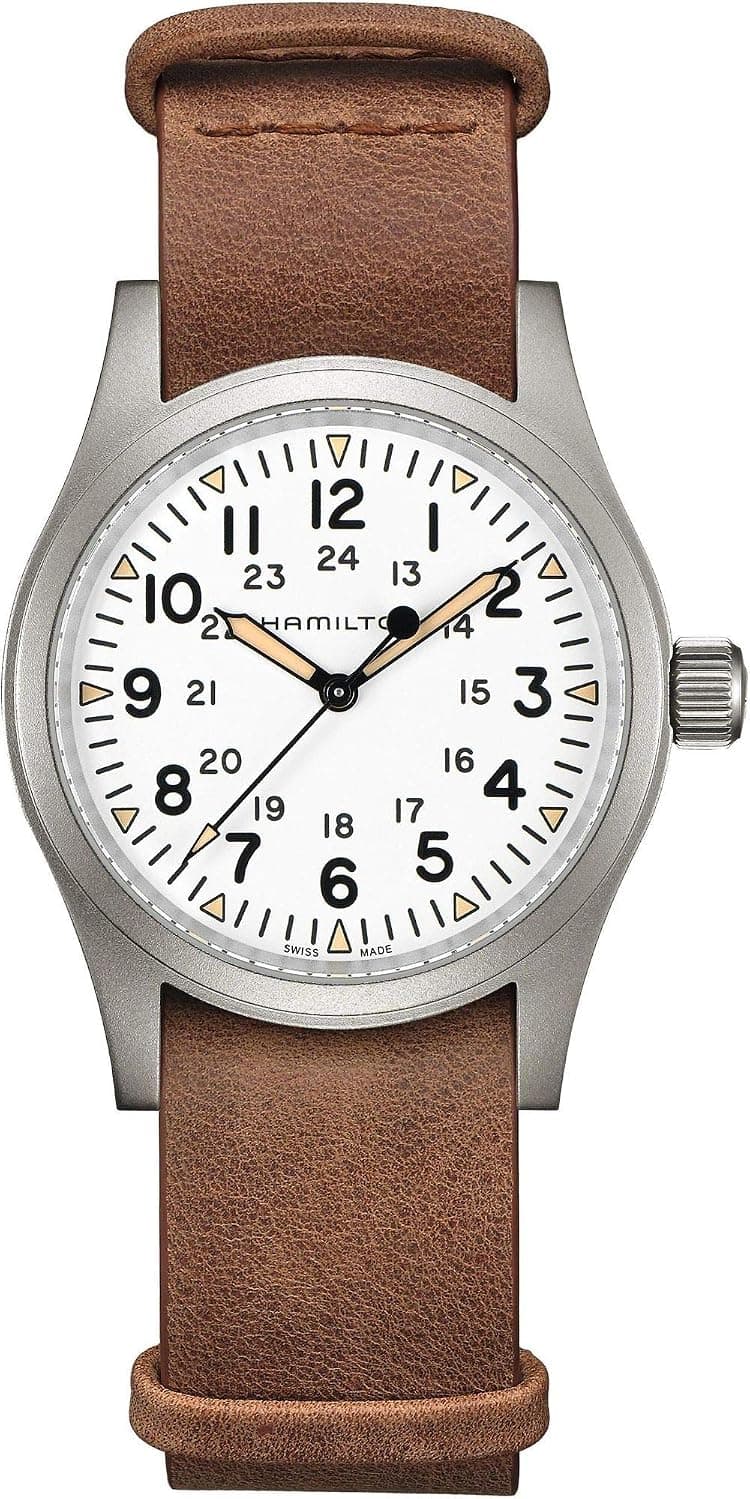
If you want a mechanical watch and a slim case, look at hand-wound models instead: 11 of the 23 men's hand-wound watches are 10 mm or thinner. The Hamilton Khaki Field Mechanical in 42 mm is one of them, a stainless steel field watch with a sapphire crystal, 9.9 mm thick and rated to 50 meters, for $500 to $1,000. Our automatic vs quartz guide covers the rest of the difference between the two.
Do some brands make thicker watches?
Yes, but brand tells you less than type does. Here are the brands with at least 40 men's watches with a stated thickness in our data.
| Brand | Men's watches | Typical thickness | Middle half |
|---|---|---|---|
| Invicta | 217 | 13 mm | 12 to 16 mm |
| Orient | 80 | 12 mm | 12 to 13 mm |
| Bulova | 47 | 12 mm | 10.2 to 13 mm |
| Hamilton | 61 | 11.4 mm | 11 to 12.8 mm |
| Citizen | 86 | 11 mm | 9.7 to 12.4 mm |
| Timex | 115 | 11 mm | 9 to 12 mm |
| Casio | 105 | 11 mm | 8.5 to 13.6 mm |
| Tommy Hilfiger | 54 | 10.5 mm | 10 to 11 mm |
| Guess | 84 | 10.2 mm | 9.8 to 12 mm |
Invicta sits at the thick end, and its range explains much of it: about half of its men's watches in our data are dive or sport models, and its typical men's case is 46 mm. Casio has the widest spread, 8.5 to 13.6 mm in the middle half, which fits a brand that sells both the 8 mm MTP-V001GL and the 16.9 mm G-Shock GA-100. Seiko and Fossil had too few men's watches with a stated thickness for a fair typical figure (17 and 15).
How we looked
The figures come from the Bravery Watch catalog on November 5, 2026: 2,673 wristwatches in stock at Amazon in the US, the UK or Germany, each with a price updated in the past seven days and a case thickness in its listing's spec table (in one case, in its title). We left out watches whose thickness wasn't in the spec table or the title, including those where our software had filled it in, along with 3 whose stated thickness wasn't smaller than their diameter, 127 smartwatches and 19 pocket, fob and ring watches. Men's or women's, diameter, water resistance and movement also come only from the spec table or the title. The watch types are our catalog's style labels, which are loose: a watch can carry two, and some sit in the wrong group. A few stated thicknesses look wrong, such as a 38 mm women's watch listed at 20 mm; leaving out the 12 most doubtful ones moves no typical figure here by more than 0.1 mm. For every watch named above, the thickness in the listing matches the figure its maker publishes. Price bands use US prices before sales tax. Prices change every day, and our product pages show the current price for your market.
Sources
- Casio: product specifications for the G-SHOCK GA-100-1A1, MTP-V001GL-7B and LTP-V007L-1B (checked November 5, 2026)
- Certina: DS Action Diver 43mm Powermatic 80, reference C032.607.11.051.00 (checked November 5, 2026)
- Daniel Wellington: Classic watch size guide (checked November 5, 2026)
- Hamilton: Khaki Field Mechanical 42mm, reference H69529933 (checked November 5, 2026)
- Orient: RA-AA0819N specifications (checked November 5, 2026)
- Seiko: 5 Sports SRPD55 specifications (checked November 5, 2026)
- Timex: Expedition Scout 40mm, models T49963 and TW4B14000 (checked November 5, 2026)
Watches we recommend
Frequently asked questions
Is 12mm thick for a watch?
Not for a men's watch: 12 mm is the median thickness of the 1,337 men's watches with a stated thickness in our catalog on November 5, 2026. Of those, 49% are thinner and 38% are thicker. On a women's watch, 12 mm is thick, since 94% of women's watches are thinner.
Is 13mm thick for a watch?
A little, but it's common on a men's watch: 70% of men's watches are thinner than 13 mm, 22% are thicker, and the typical men's dive watch is exactly 13 mm. On a dress watch or a women's watch, 13 mm is thick; 98% of women's watches are thinner.
Is 14mm too thick for a watch?
It's thick for an everyday or dress watch: 82% of men's watches are thinner than 14 mm. On a dive watch it's normal, though. More than a third of men's dive watches are 14 mm or thicker, and those 45 mm and larger are typically 15 mm.
Is 10mm thick for a watch?
No, a 10 mm men's watch is slim: only 18% of men's watches are thinner, and 10 mm is the line I'd use for a watch that has to go under a shirt cuff. For a women's watch, 10 mm is on the thick side, as three in four women's watches are thinner.
What is the average thickness of a men's watch?
About 12 mm. Across the 1,337 men's watches with a stated thickness in our catalog on November 5, 2026, the median was 12 mm, the same in the US, the UK and Germany, and the mean 11.8 mm.
How thick should a women's watch be?
About 8 mm is typical. In our catalog, half of the women's watches in stock are between 7.6 and 9.8 mm thick and 83% are 10 mm or thinner, so a women's watch over 10 mm is on the thick side.
How thick should a dress watch be?
Ideally 10 mm or less, if it has to slide under a shirt cuff. Only 42% of men's dress watches in our catalog meet that, and the typical one is 11 mm. Quartz is the easier route: men's quartz dress watches are typically 9.9 mm, automatic ones 12 mm.
What is the average dive watch thickness?
About 13 mm for a men's dive watch, and about 15 mm once the case is 45 mm or larger.

About the author
Serdar D.Watch Editor
View profileSerdar D. is the editor at BraveryWatch. He believes a good watch should be not just expensive but right. He gets deep into the details, then turns them into something that is genuinely a pleasure to read. He gives relaxed, useful advice through the eyes of someone who truly cares about watches.