The Best Orient Watches
 Serdar D.Watch Editor
Orient's real strength is fitting its own automatic calibre to your wrist at a fair price. Across the range the best diver is the Mako-3, the Mako 40 for slimmer wrists, the Ray II for a classic face under mineral and the Kamasu for a cleaner dial. The best dress watch is the Bambino, with the Sun and Moon if you want a complication.
Key takeaways
- Orient's real value is its own automatic calibre at this price, while most rivals buy a movement and drop it in.
- On the dive side there are three genuine 200-metre choices: the balanced Mako-3 and its cleaner-dial Kamasu sibling, both under sapphire, plus the Mako 40 for slim wrists and the Ray II under mineral for a plain face.
- For a classic dress watch the Bambino is the right answer, with a domed crystal and slim case that slips under a cuff.
- If you want a complication, the Sun and Moon offers a day-night display that is rare theatre at this price.
- Which model to buy comes down to your wrist and your use; every end of the Orient range is a right answer.
The Best Orient Watches
Why Orient
One thing sets Orient apart from other entry-level brands: it makes its own automatic movement. Where many rivals at this price buy a movement and drop it into a case, Orient uses calibres it designs and builds itself, such as the F69 family of automatic mechanical movements. That makes servicing simpler and lends the watch a coherence you can feel. The result is a range that wears far above its price, which is why Orient is a fixture in any conversation about the best Japanese watches.
Best diver: Mako, Ray, Kamasu
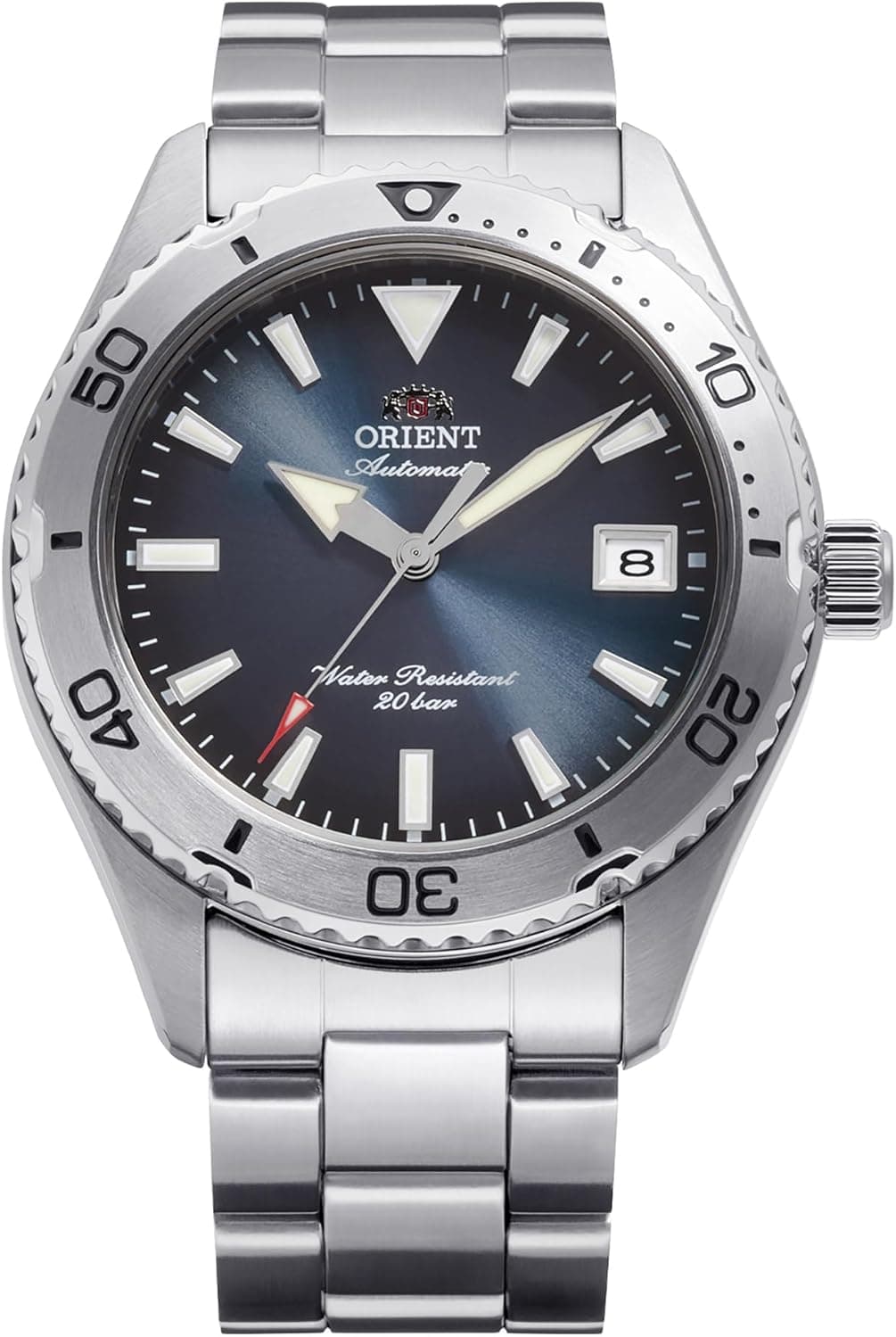
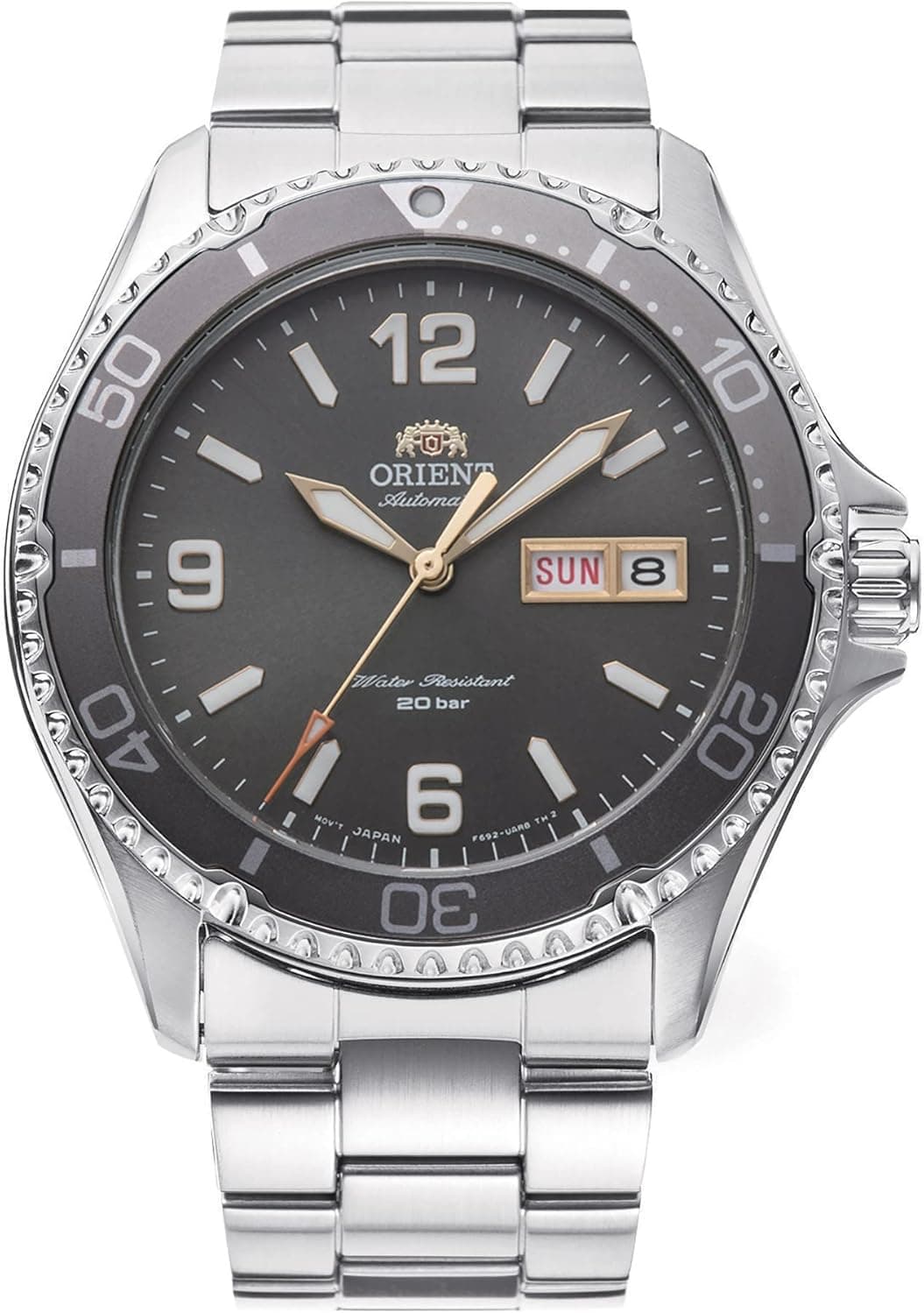
The dive side is where Orient is strongest. All three are genuine 200 metres with a screw-down crown and a rotating bezel; the difference lies in the character and the crystal. The centrepiece is the Orient Mako-3: its own automatic calibre, a 41.8 mm case, hand-winding and hacking, and a scratch-resistant sapphire crystal. If 41 to 42 mm wears large on you, the 39.9 mm Orient Mako 40 gives you much the same diver, also under sapphire, in a more comfortable case.
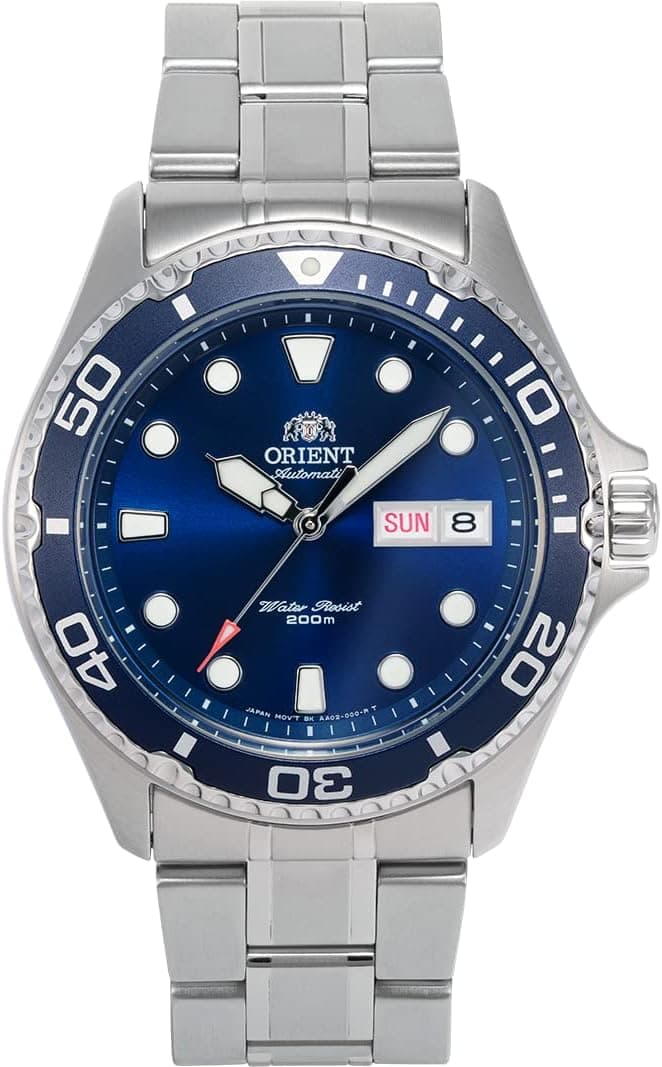
If the Mako's sharp applied indices feel like too much, its plainer dot-index sibling, the Orient Ray II, offers a more classic dive watch face under a mineral crystal. And if you want the same sapphire diver in a cleaner, more conservative dial, the Orient Kamasu is the sensible call: it shares the Mako-3's case and sapphire, and trades the busy numerals for calmer markers. For a closer look, read my Mako-3 review.
Best dress: the Bambino
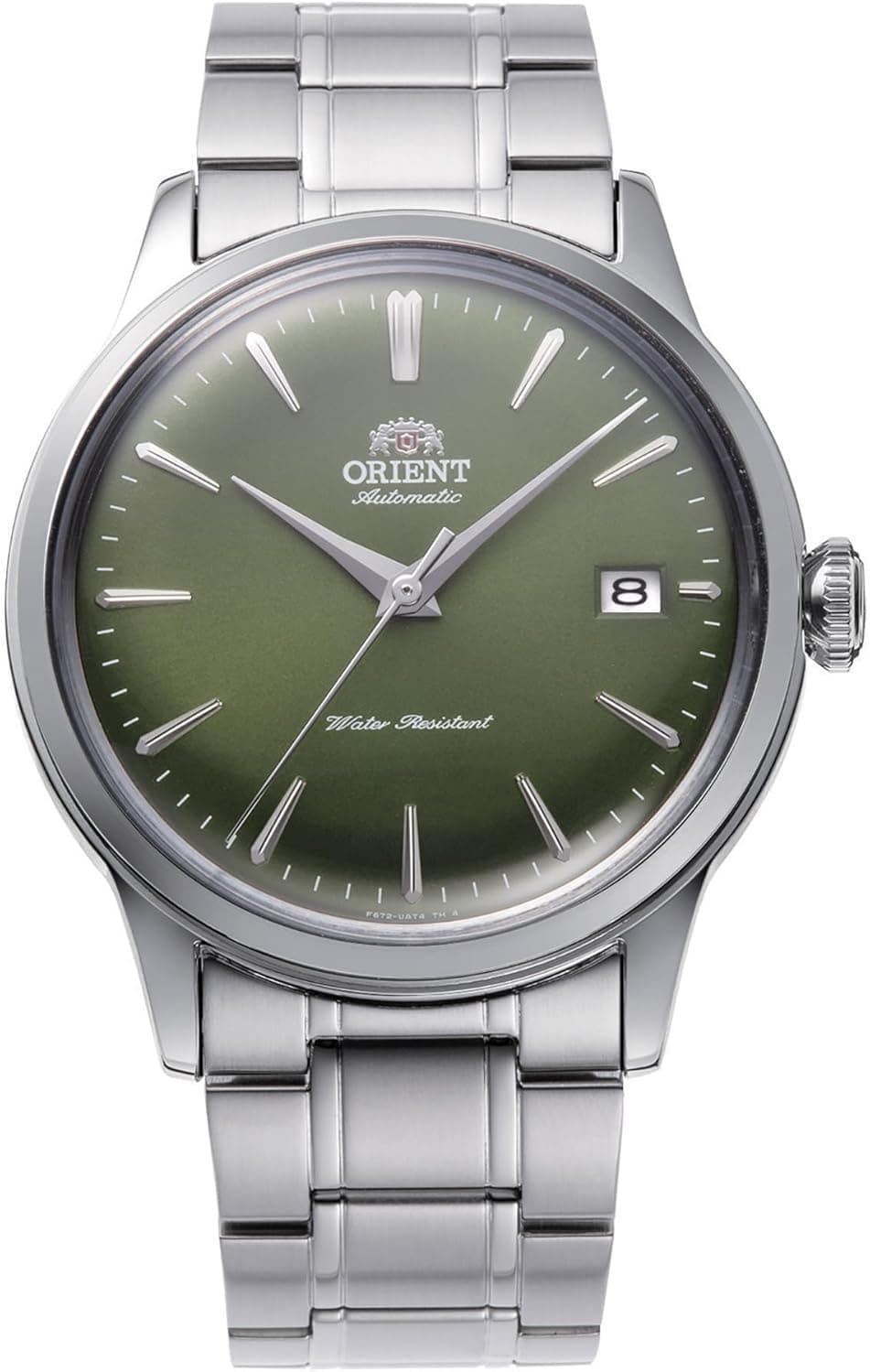
Step out of the dive world and into a jacket, and Orient's answer is the Bambino. The Orient Bambino draws a proper dress watch silhouette with its domed crystal, slim case and clean dial, and it slips easily under a shirt cuff. The same philosophy holds: an automatic classic from another brand at this price is hard to find. For the detail, see my Bambino review.
Best with a complication: Sun and Moon
For a little mechanical theatre on the dial without stretching the budget, look at the Orient Sun and Moon. Its day-night indication walks a sun and a moon across a small sub-dial in the upper-left of the dial. It is far more enjoyable than a plain date window and lovely to watch, a rare bit of generosity at this price.
Who buys which
- First serious automatic: the Mako-3, the most balanced way in.
- Slimmer wrist: the Mako 40, much the same diver in a smaller case.
- Classic, plain diver's face: the Ray II, the value pick under a mineral crystal.
- A cleaner, more conservative dial: the Kamasu, the same sapphire diver with calmer markers.
- A jacket, a slim classic: the Bambino.
- Mechanical theatre on the dial: the Sun and Moon.
Always check the product page for the current price. The best thing about Orient is that whichever end of the range you enter, you land on a right answer. If you want a wider comparison, my guide to the best automatic watches under £500 is a good place to start.
Specifications
| Specification | Value |
|---|---|
| Movement | Orient automatic calibre, hand-winding and hacking |
| Water resistance | 200 metres, screw-down crown |
| Case | About 41.8 mm steel, rotating bezel |
| Crystal | Sapphire on the divers (Mako-3, Mako 40, Kamasu), mineral on the Ray II and Bambino |
Pros
- Its own automatic calibre, an above-class coherence for the money
- A broad range from diver to dress, an answer for every wrist and use
- Genuine 200-metre divers with a screw-down crown and rotating bezel
- Mechanical character without the mark-up, via the Bambino and Sun and Moon
Cons
- On the classic and value models such as the Ray II and the Bambino you get a mineral rather than a sapphire crystal
- Lume brightness isn't quite as strong as some rivals
- A narrow complication range; little beyond the Sun and Moon
- Case thickness can challenge slim wrists outside of the Mako 40
Verdict
The whole range is strong, but if I have to name one place to start, it's the Orient Mako-3. Its own automatic calibre, a genuine 200 metres and a balanced case make it the clearest summary of what Orient offers. A slim wrist should move to the Mako 40 and a jacket to the Bambino, but for most people the right first Orient is the Mako-3.
Watches we recommend
Frequently asked questions
Which Orient is the best start for a first automatic watch?
For most people the Orient Mako-3 is the most balanced way in. Its own automatic calibre, a genuine 200-metre rating and a balanced 41.8 mm case sum up what Orient offers. A slimmer wrist will find the Mako 40 more comfortable.
What is the difference between the Mako, Ray and Kamasu?
All three share the same Orient automatic calibre family and a genuine 200 metres. The Mako has sharp applied indices, the Ray has plainer dot indices, and the Kamasu adds a far more scratch-resistant sapphire crystal. The difference is in character and crystal.
Which Orient watch suits a suit?
For a suit, the Orient Bambino is the right answer. Its domed crystal, slim case and clean dial draw a classic dress watch silhouette that slips under a shirt cuff. If you want a complication on the dial, look at the Sun and Moon.

About the author
Serdar D.Watch Editor
View profileSerdar D. is the editor at BraveryWatch. He believes a good watch should be not just expensive but right. He gets deep into the details, then turns them into something that is genuinely a pleasure to read. He gives relaxed, useful advice through the eyes of someone who truly cares about watches.