






About Amazfit
Amazfit began as the consumer brand that Chinese wearables maker Huami launched in 2015, with the first Amazfit smartwatch arriving in August 2016. The company traces back to 2013, when Wang Huang founded Anhui Huami, originally a Xiaomi-backed spinoff; Huami renamed itself Zepp Health Corporation in February 2021. The brand now sells in more than 90 countries, and the group has shipped over 200 million units. Everything runs on Zepp OS, the company's proprietary operating system, paired with the Zepp Flow voice assistant, the Zepp companion app and a BioTracker PPG sensor that carries across the entire lineup.
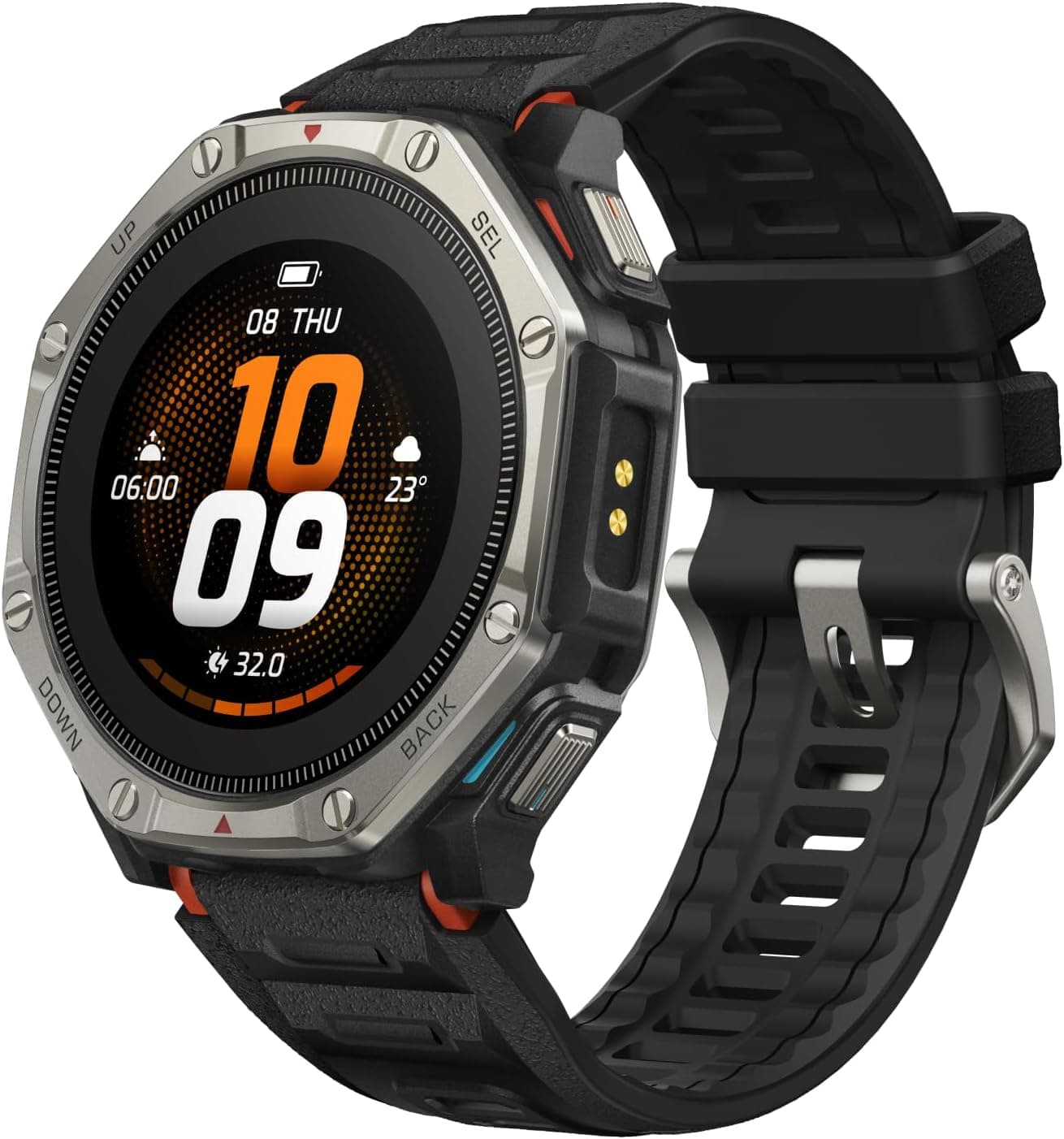
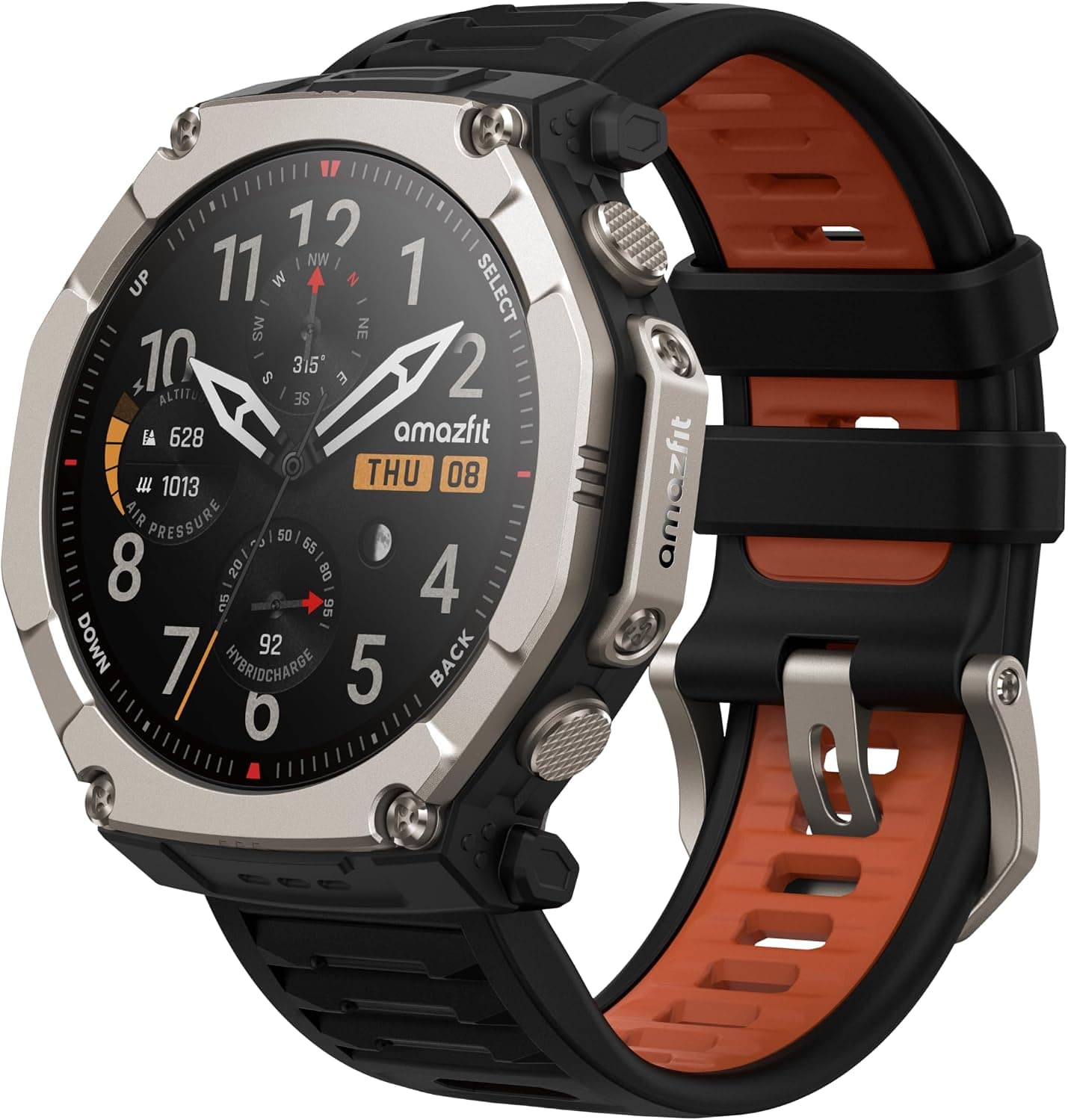
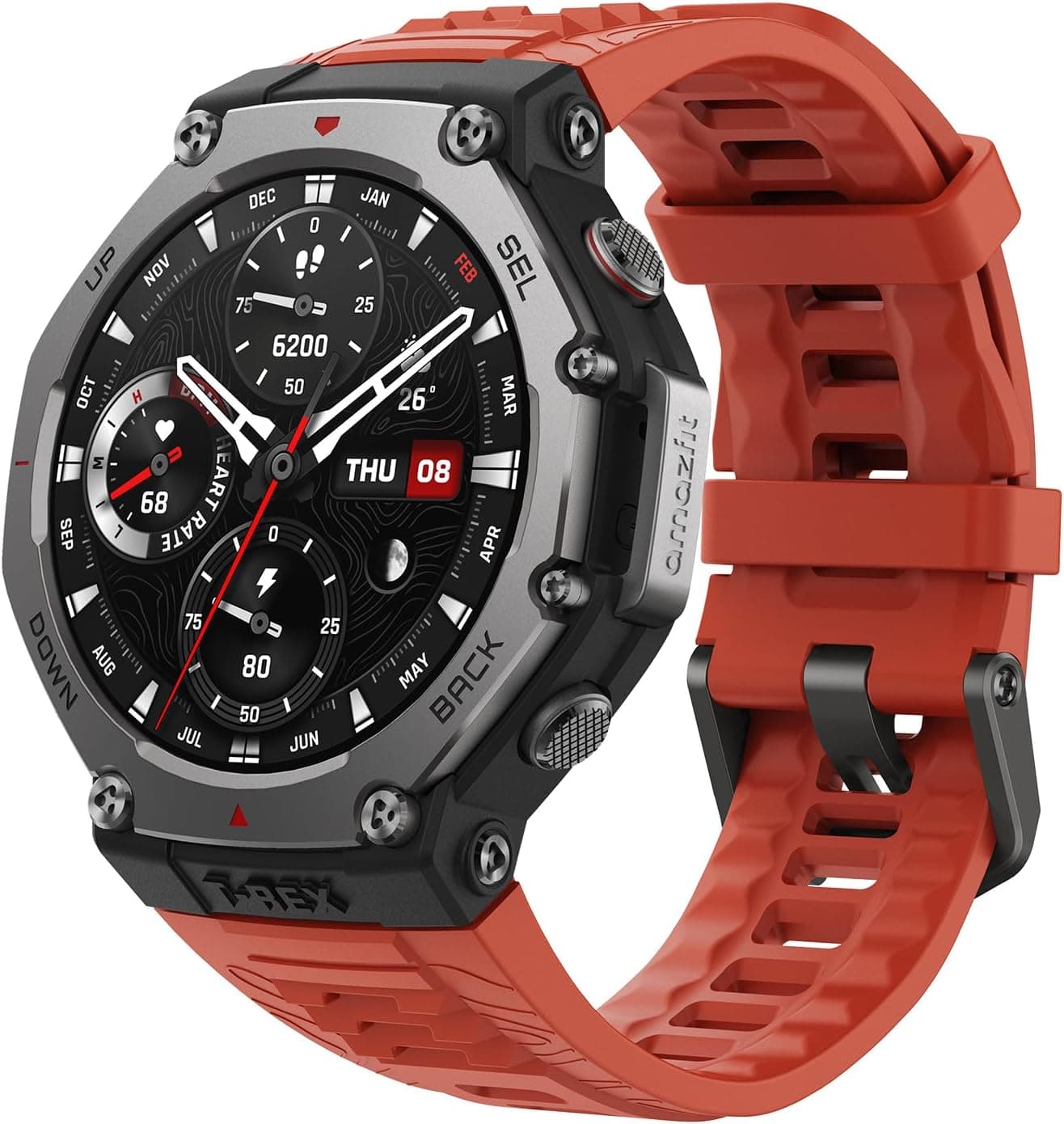
The range is a genuine price ladder, and that is the point. At the entry level sits the Bip 6 at $79.99: a 46mm case, a 1.97-inch AMOLED, built-in GPS across five satellite systems, up to 14 days of battery and Bluetooth calling. The Active 2 starts at $99.99 in a 44mm stainless case on Zepp OS 4.5, with a sapphire-and-leather premium version at $129.99. Higher up, the Balance 2 is the one I steer most buyers toward at around $299: 47mm, sapphire crystal, an aluminum body, 10 ATM and a 45m dive rating, dual-band L1+L5 GPS, offline maps, a 658 mAh cell good for up to 21 days, and FDA-cleared ECG in North America. For the outdoors there is the T-Rex 3 Pro from a $399 MSRP, with a 48mm titanium bezel, MIL-STD-810H toughness, a 3000-nit display, a built-in flashlight and up to 25 days of runtime. The T-Rex Ultra 2 pushes the brand into a roughly $550 bracket.
What makes Amazfit compelling to a buyer is how much hardware lands for the money. Finding sapphire glass, dual-band GPS and a dive rating in one sub-$300 package is rare in this segment. There are things to check before buying: certain health features, ECG in particular, can be region-locked, so confirm what is actually active in your market. The core tracking needs no subscription; only the Zepp Aura AI layer carries an extra fee, roughly $70 a year. Resale value in this tier is effectively nil, so buy an Amazfit to wear and use, not to hold value.
On positioning, Amazfit is clearly reaching upmarket in 2026. Zepp Health is chasing the performance category that Garmin has long led, with pricier models and smarter training tools. Even so, the brand's heart stays at the accessible end, and that is where it earns its keep: for a first-time smartwatch buyer who wants weeks of battery and no ecosystem lock-in, Amazfit remains one of the smartest starting points on the market.